
Calypso is the topical song tradition of Trinidad and Tobago: syncopated, brass-driven, sung in a Caribbean English full of wordplay, and built around one job: telling the audience what happened this year, and who is to blame for it. It grew up inside Trinidad's Carnival alongside the steelpan, and through its descendant soca it feeds much of modern Caribbean party music.
This guide covers where calypso came from, how a calypso is put together, why the competition system matters more than the charts, and what separates it from soca, reggae and mento. To hear how a Carnival record reads to a classifier, run a few seconds through our free AI music genre detector.
What Is Calypso?
Calypso is a song form defined by its lyric function. The music is a moderate-tempo, syncopated Caribbean dance groove with brass, guitar and hand percussion; the words are commentary: political scandal, neighbourhood gossip, sexual innuendo delivered under a straight face, national pride, and direct insults aimed at rival singers. A calypsonian is closer to a satirical columnist than to a pop star; Attila the Hun, one of the first recording stars, went on to win elected office.
Three features distinguish it from the Caribbean styles it is most often confused with. Against mento, the Jamaican rural style that sounds similar to outsiders, calypso is Trinidadian, more urban and brass-heavy. Against reggae, it has no offbeat guitar skank and no bass-first mix. Against soca, its own descendant, it is slower, wordier and designed for listening as much as for dancing.
The older name for it is kaiso, a word whose origin is disputed (West African and French sources have both been proposed), still used as a term of approval shouted from the audience when a singer lands a line. Its home is Carnival, and its institutions are the calypso tent, where singers perform new material through the season, and the competitions that close it: the Calypso Monarch crown and the Road March, awarded to the song played most often by bands crossing the stage on Carnival Tuesday.
History & Origins
The roots are West African praise-and-insult singing carried to Trinidad by enslaved people, filtered through French Creole plantation society: chantwell singers led the call-and-response of the kalinda stickfighting yards and the Canboulay processions that freed Africans carried into Carnival after emancipation in 1834. Songs were sung in French Creole patois into the early twentieth century, then shifted to English.
Commercial recording began in the 1910s and accelerated in the 1930s, when American labels brought Trinidadian singers to New York. The first stars carried mock-aristocratic sobriquets (Attila the Hun, Roaring Lion, Lord Invader, Growling Tiger), and their records travelled far beyond the island.
Two events made calypso international. Lord Invader's "Rum and Coca-Cola" (1943), a bitter song about American servicemen and local women, was recorded by the Andrews Sisters without credit to him and became one of the biggest American hits of 1945; Invader later won a US copyright suit over it. Then in 1956 Harry Belafonte's album Calypso, with "Day-O (The Banana Boat Song)" and "Jamaica Farewell", became, by the usual count, the first LP to sell a million copies in the United States. Belafonte was American of Jamaican heritage and much of that repertoire was Jamaican mento, which is why Trinidadians have argued about the "King of Calypso" title ever since.
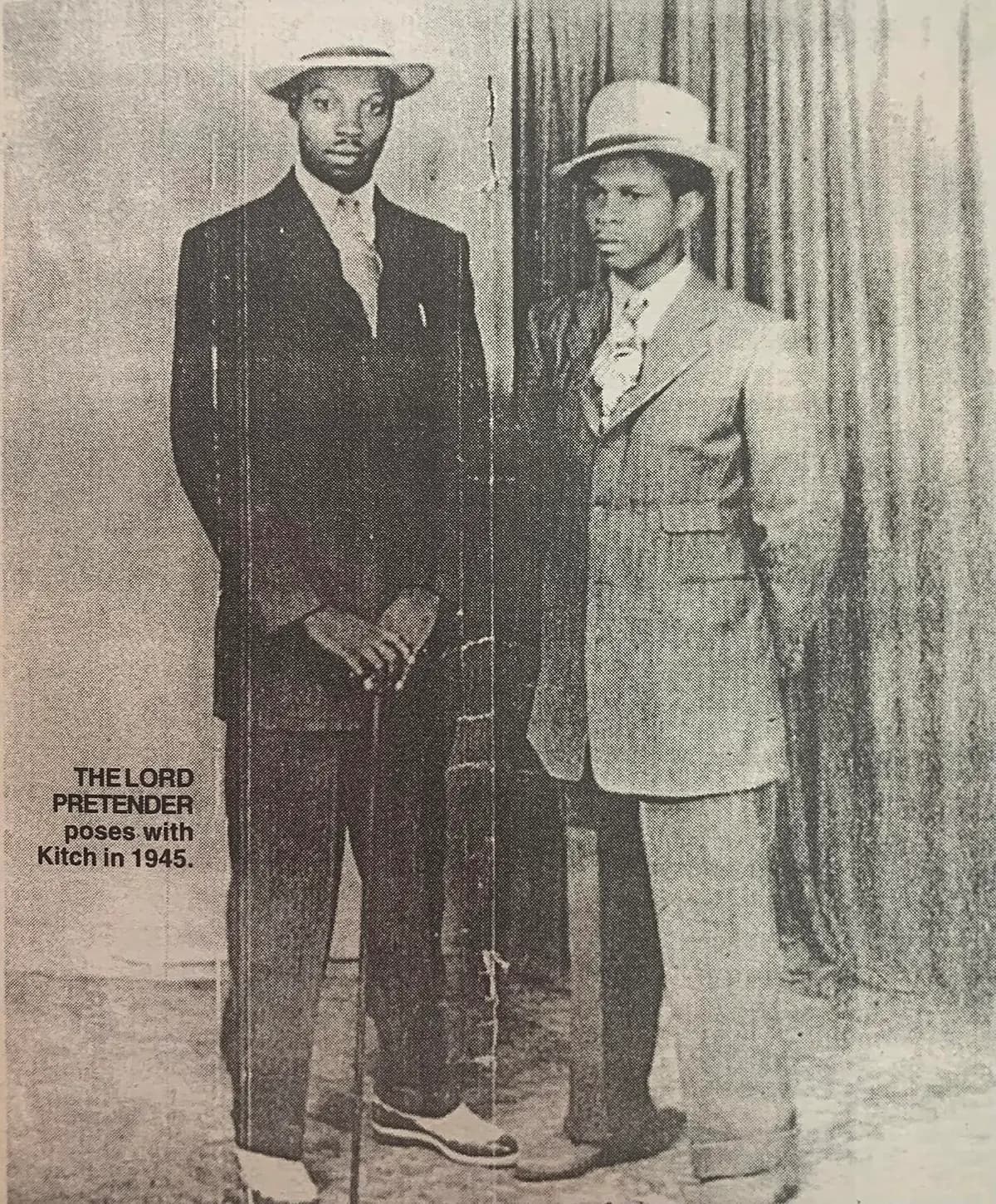
Meanwhile the domestic scene reached its own peak. Lord Kitchener arrived in Britain on the Empire Windrush in 1948 and sang "London Is the Place for Me" for the Pathé newsreel cameras at Tilbury, becoming the voice of Caribbean migration to Britain. Back in Trinidad, Mighty Sparrow took the Calypso King crown and the Road March in 1956 with "Jean and Dinah", and went on to win each title eight times; he and Kitchener were the two dominant calypsonians of the next three decades.
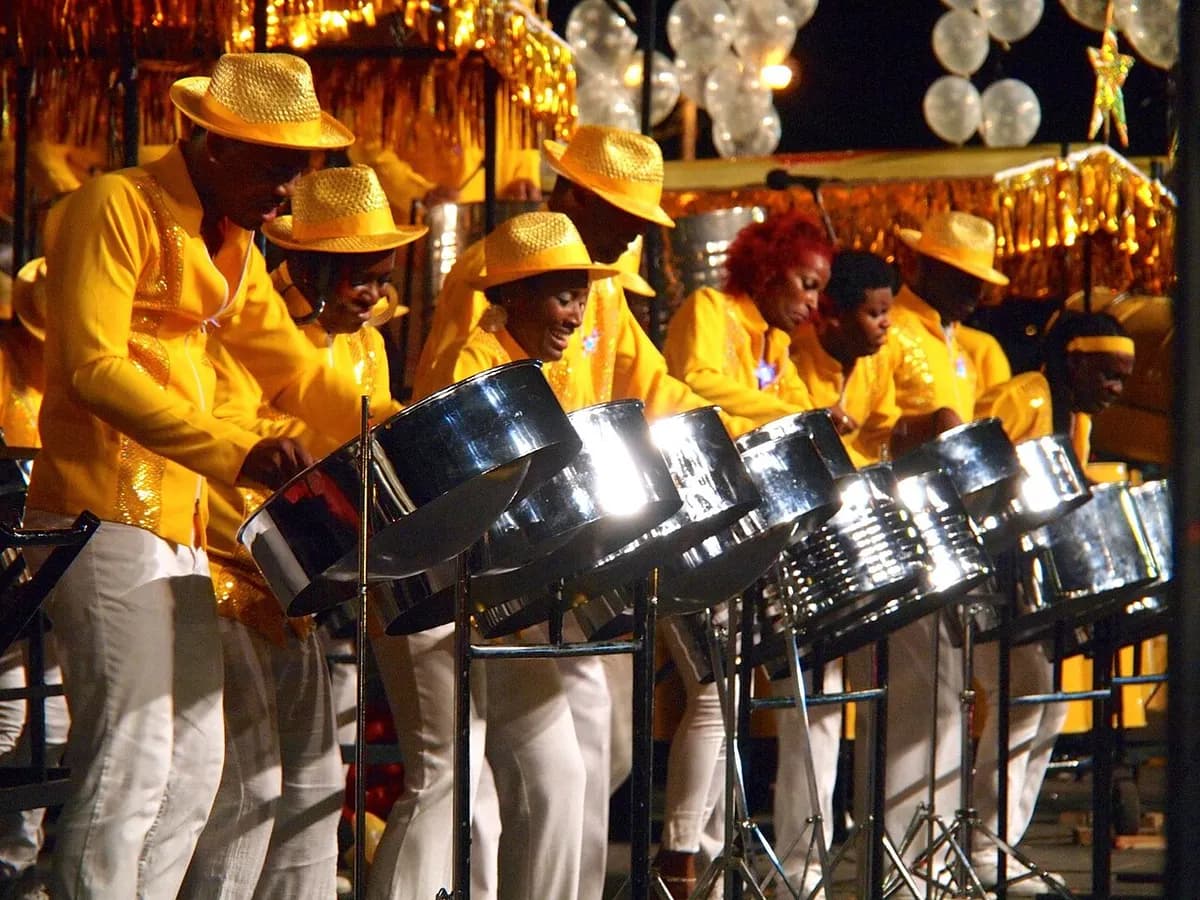
The same decades produced the steelpan. Colonial restrictions on drumming had pushed Carnival bands first to tamboo bamboo and then to metal containers, and by the 1940s pans were being hammered out of discarded oil drums in Port of Spain's yards. Steelbands and calypso grew up together, and Panorama, the national steelband competition held since 1963, is one of the main events of the Carnival season.
In the early 1970s Lord Shorty (later Ras Shorty I) fused calypso rhythm with Indo-Trinidadian instrumentation and a faster, bass-driven pulse, calling the result "sokah", later spelled soca. His Endless Vibrations (usually dated 1974, sometimes 1975) marks the handover. Calypso continued as the lyric-driven, competition-based tradition, while soca took over the party.
Key Characteristics & Sound
What identifies a calypso record:
- Tempo: calypso is mid-tempo and varies a good deal from song to song. Soca is generally faster; Trinidad's International Soca Monarch splits groovy from power soca at a tempo line, set at 125 BPM when the two categories began in 2005 and later raised to 135.
- Metre and feel: 4/4 or 2/4 with heavy syncopation: the accents land off the beat, with a characteristic pattern often written as a 3+3+2 division of the bar.
- Brass front line: trumpets, trombones and saxophones playing punched, riff-like answers to the vocal.
- Percussion: congas, shak-shak (maracas), iron (literally a struck brake drum) and, in the pan tradition, tenor pans, double seconds, cellos and basses.
- Guitar and cuatro strumming an offbeat chop, with a walking or arpeggiated bass line.
- Vocals: conversational, mid-range, phrased for intelligibility, often in Trinidadian English Creole; the lyric always wins over the melody.
- Structure: verse–chorus with many verses; a calypso can run six or eight verses because the story needs them.
- Devices: picong (competitive insult trading between singers), plus double entendre, extended metaphor and topical name-checking.
Where it sits among its neighbours:
| Trait | Calypso | Soca | Mento | Reggae |
|---|---|---|---|---|
| Origin | Trinidad | Trinidad | Jamaica | Jamaica |
| Peak era | 1930s–1970s | 1975 onward | 1940s–1950s | 1968 onward |
| Typical BPM | 90–140 | 110–165 (groovy to power) | 80–120 | 70–100 |
| Lyric focus | Satire, news, picong | Party, jump and wave | Rural life, innuendo | Social and spiritual |
| Lead colour | Brass riffs | Synths and brass stabs | Banjo and rumba box | Offbeat guitar skank |
| Reference track | Jean and Dinah | Endless Vibrations | Linstead Market | One Love |
Instruments & Production
Calypso's instrument list changed more than its function did:
- String band era (1900s–1930s): cuatro, guitar, violin, flute, bottle-and-spoon, and the tamboo bamboo ensembles that replaced banned drums.
- Brass orchestra era (1940s–1960s): trumpet, trombone, clarinet, saxophone, upright bass and drum kit, the sound of most classic recordings.
- Steelpan: the national instrument of Trinidad and Tobago, tuned from oil drums and played by large steel orchestras at Panorama.
- Iron section: brake drums struck with steel rods, cutting through everything else in an open-air setting.
- Electric era (1970s onward): bass guitar, keyboards, drum machines and synth horn stabs, the shift that produced soca.
- Recording context: from New York sessions for American labels in the 1930s to Port of Spain studios releasing a fresh crop of songs for every Carnival season, a release cycle organised around a date on the calendar.
Subgenres & Descendants
The family around it:
- Kaiso: the older name and the traditional, lyric-heavy style still judged in Monarch competitions.
- Road March calypso: up-tempo songs written to be played by bands on the road, the direct ancestor of soca.
- Soca: Lord Shorty's 1970s fusion, faster and bass-driven; now the dominant Caribbean party genre, with power soca and groovy soca as its own branches.
- Chutney soca: the Indo-Trinidadian branch, with dholak, harmonium and Hindi-English lyrics.
- Rapso: spoken-word Trinidadian style, calypso commentary delivered closer to hip-hop cadence.
- Ringbang and bouyon: later regional fusions from Barbados and Dominica.
- Mento: the Jamaican cousin, frequently mislabelled calypso during the 1950s boom, and a direct ancestor of ska.
Key Artists & Tracks
Where to start:
- Mighty Sparrow: "Jean and Dinah" (1956), "Congo Man"; eight times Calypso King or Monarch and eight times Road March winner.
- Lord Kitchener: "London Is the Place for Me" (sung on arrival in 1948, recorded in 1951), "Sugar Bum Bum" (1978).
- Lord Invader: "Rum and Coca-Cola" (1943).
- Roaring Lion: "Ugly Woman" (1934), one of the earliest calypsos still in circulation.
- Attila the Hun (Raymond Quevedo): a 1930s recording star who was elected to the Port of Spain City Council in 1946 and to the Legislative Council in 1950.
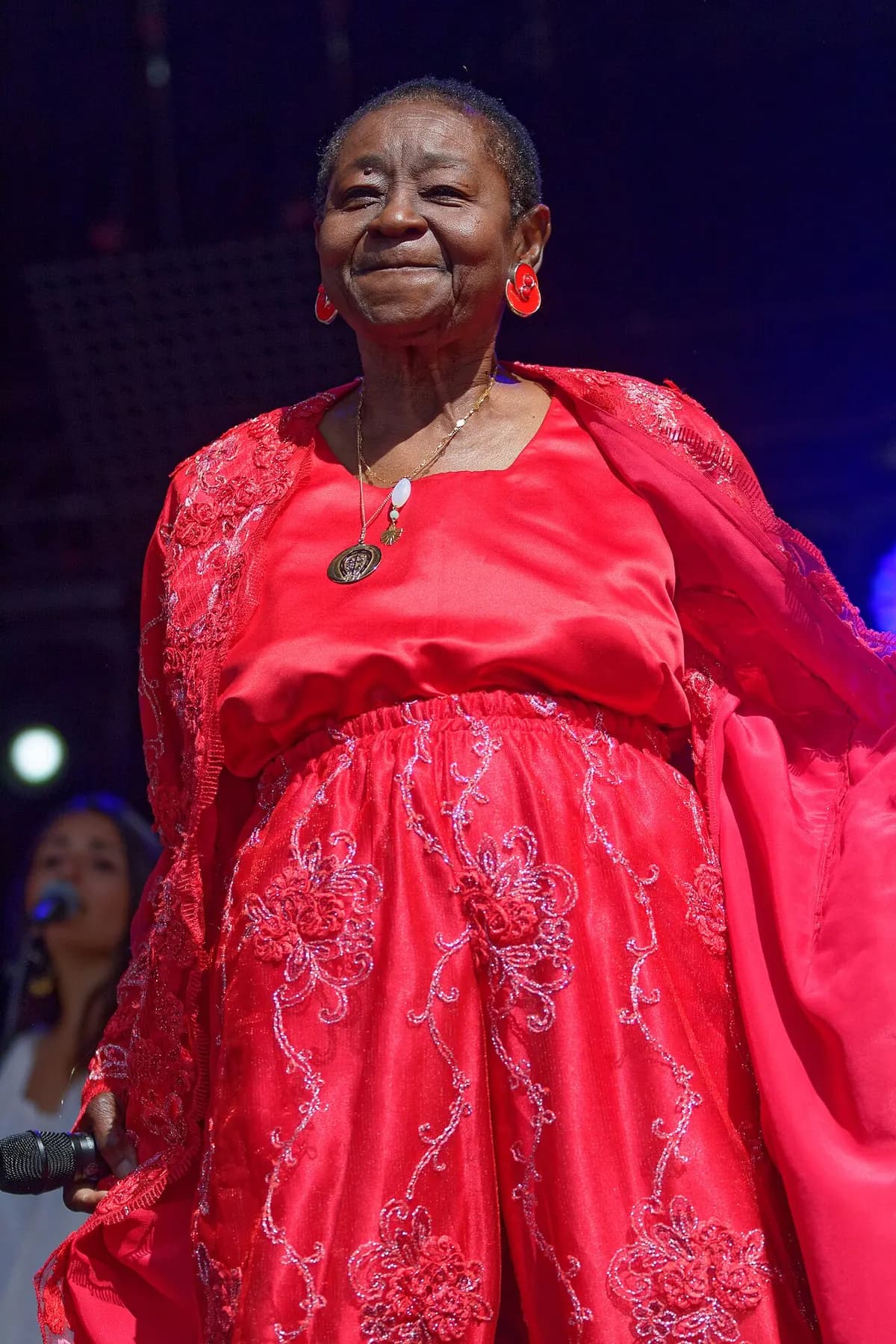
- Calypso Rose: "Fire in Me Wire"; first woman to win the Road March (1977) and the Calypso King title (1978), which was renamed Calypso Monarch after her win; still performing in her eighties.
- Harry Belafonte: Calypso (1956), the album that made the word global.
- Lord Shorty / Ras Shorty I: Endless Vibrations (1974), the pivot to soca.
- David Rudder: "The Hammer" and "Bahia Girl" (1986), the year he won the Young King, Calypso Monarch and Road March titles together.
- Machel Montano: the contemporary soca star whose career shows where the tradition went.
Three records for the arc: "Jean and Dinah" for the classic form, Calypso for the export version, Endless Vibrations for the moment soca took over.
How AI Detects Calypso
Calypso gives a classifier a clear rhythmic profile and a weak stylistic one. The rhythmic part is the syncopation: accents that keep falling between the main beats, brass riffs answering the vocal in short bursts, and a bright percussion layer of iron, shak-shak and congas sitting high in the spectrum. Where steelpan is present, the sound of tuned oil drums is unlike any other instrument in common use.
The weak part is that calypso shares that rhythmic family with soca, mento, ska and a great deal of Latin music, and the thing that actually defines a calypso, what the words are doing, is invisible to audio analysis. Tempo is only a partial guide: power soca is clearly faster, but groovy soca can sit at a calypso's pace. Genre AI's production taxonomy has no calypso or soca label. Latin, Reggae and African are the nearest coarse labels, and because none of them has finer subgenres, they rarely come up at all. Try a Carnival track in the Genre AI music genre detector.
Genre AI has no calypso label, so the answer comes from a neighbouring family. The classifier prefers coarse labels that have finer subgenres, which means a calypso is more likely to be filed under one of those families than under Latin or Reggae. For the 1930s–1950s New York sessions, cut with brass and clarinet ensembles of the same era, Jazz is a plausible family, with Big Band / Swing or Latin Jazz as the subgenre. Electric soca with drum machines and synth stabs may lean toward Electronic Dance, and a horn-heavy dance arrangement toward Funk / Soul. A steel orchestra is the hardest case: a band of tuned, pitched percussion has no obvious relative, so expect a less stable answer than for a sung calypso. Latin or Reggae as the answer is unlikely, since it would require no family with subgenres among the top five candidates.