
Reggae is a Jamaican music style built on a relaxed, swung groove, a guitar or keyboard "chop" that lands on the offbeat, and a deep, melodic bass that often carries more of the tune than the vocal. It usually sits around 60–90 BPM, slow enough to sway to. Reggae emerged in Jamaica in the late 1960s out of the faster ska and the smoother rocksteady that came before it, and by the mid-1970s Bob Marley and the Wailers were touring Europe and North America on Island Records.
This guide explains what reggae actually is, how it grew out of ska and rocksteady, how to recognise its signature one-drop drums and offbeat skank by ear, the instruments and roles that build the sound, its major subgenres, how it differs from ska and dub, and the artists worth knowing. Not sure whether a track is reggae? Drop it into the free AI music genre detector, which listens for that offbeat chop and laid-back pulse and tells you within seconds whether you've got reggae or one of its faster Jamaican relatives.
What Is Reggae?
Reggae is a popular music genre that originated in Jamaica in the late 1960s. Its defining trait is rhythmic: a steady chord "chop," played on muted electric guitar, organ, or both, that falls on the offbeats of the bar (the "and" between the main counts) and gives the music its spring. Underneath it sits a slow, heavy four-beat pulse and a roving, prominent bassline that functions almost like a lead instrument.
Rock and pop put their weight on the downbeat; reggae shifts it off the beat, which makes the groove feel relaxed. Tempos are slow and the gaps between notes matter: instruments drop out and come back in, leaving room for the bass and drums. Lyrically, reggae has long been tied to the Rastafari movement and to songs about poverty, resistance, faith, and love, which is why it is often discussed as protest music as well as dance music.
History & Origins: Ska → Rocksteady → Reggae
Reggae's family tree starts with ska, which took shape in Jamaica in the late 1950s and early 1960s. Ska was fast and upbeat, with a walking bassline, jazzy horns, and the guitar/keyboard accent landing on the offbeat, a feature every later Jamaican style kept. As the 1960s wore on (and, the story goes, as a sweltering summer made the frantic ska tempo hard to dance to), musicians began slowing things down.
Around 1966 that slowdown produced rocksteady: a cooler, more relaxed sound with fewer horns, a stronger emphasis on the bassline, and romantic, soul-influenced vocals. On rocksteady records the bass started to lead, and reggae kept that arrangement.
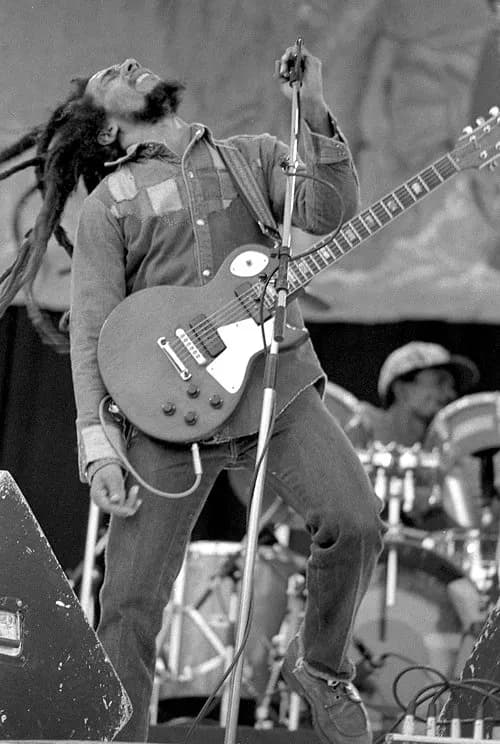
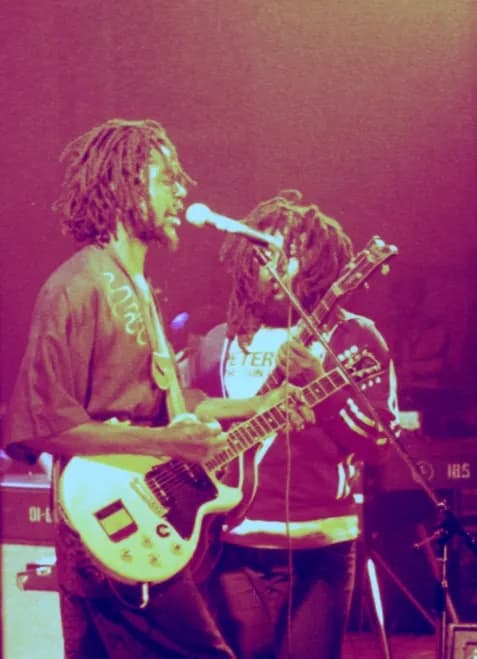
By 1968, the rhythm slowed and thickened again into reggae. The word itself was popularised by Toots and the Maytals, whose 1968 single "Do the Reggay" was the first hit to put the name to the music. Early records like Larry Marshall's "Nanny Goat" (1968) and the Maytals' own singles had a choppier organ-and-guitar shuffle that set them apart from rocksteady. At the same time the Rastafari movement was spreading, and reggae's lyrics shifted from pure romance toward Black consciousness, spirituality, politics, and protest. In the early 1970s two things took the sound beyond Jamaica: Jimmy Cliff starred in the 1972 film The Harder They Come, whose soundtrack album reached audiences abroad, and Bob Marley and the Wailers (with Peter Tosh and Bunny Wailer) signed to Island Records and released Catch a Fire in 1973.
Key Characteristics & Sound
You can usually identify reggae by these traits:
- Tempo: slow and unhurried, typically ~60–90 BPM, slower than its ancestors ska and rocksteady.
- The skank: a short, muted chord chop on the offbeat (the "and" of each beat), played on guitar, organ, or both. This is the easiest feature to recognise.
- One drop drums: a pattern where the kick and snare hit together on beat 3, leaving beat 1 "dropped" and empty.
- Bass: deep, round, and melodic, often the most prominent instrument and the real hook of the song.
- Space: sparse arrangements with instruments dropping in and out, and heavy use of echo and reverb (especially in dub-influenced production).
- Mood: relaxed, often carrying spiritual, social, or political lyrics.
The offbeat skank and one drop are worth understanding together. In most pop, you feel the pulse on the downbeats (1-2-3-4). Reggae inverts that: the chord chop deliberately avoids the downbeat and stabs the gap right after it, while the one-drop drum leaves beat 1 empty and lands its main accent on beat 3. Together they make reggae feel laid-back instead of driving. Tempo and feel also shift noticeably across its styles:
| Style | Typical BPM | Feel |
|---|---|---|
| Roots Reggae | 60–80 | Slow, spiritual, one-drop heavy |
| Classic / 70s Reggae | 70–90 | Warm, melodic, bass-led |
| Lovers Rock | 70–85 | Smooth, romantic, soulful |
| Dub | 60–80 | Sparse, echo-drenched, instrumental |
| Dancehall | 90–110 | Faster, harder, beat-driven |
| Ragga | 90–115 | Digital, syncopated, MC-led |
Instruments & Roles
Reggae is an ensemble sound where each instrument plays a tightly defined role. The core toolkit:
- Bass guitar: the heart of reggae. Lines are deep, melodic, and repetitive, and on many records the bassline is the part you remember. Producers often reuse a bassline (a "riddim") under many different vocals.
- Rhythm guitar (the skank): a clean, heavily muted electric guitar playing short, staccato chord chops on the offbeat. This is the "chick" sound most people associate with reggae.
- Organ / keyboard: often doubles the offbeat skank ("bubble" organ), filling the gaps the guitar leaves and adding a bouncing, percolating texture.
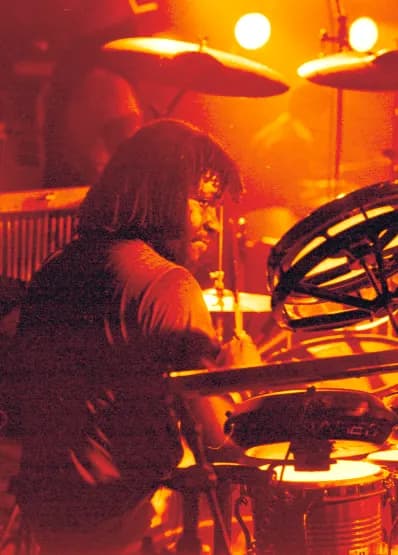
- Drums: built around the one drop, with the snare/rim and kick accenting beat 3. Other patterns push harder: steppers puts the kick on every beat, and rockers, associated with drummer Sly Dunbar in the mid-1970s, adds a busier, more driving feel. The one drop is the classic pattern.
- Horns and percussion: brass stabs, melodica, and hand percussion add colour, carried over from ska's horn sections.
Production matters as much as the playing. In the early 1970s Jamaican engineers, most famously King Tubby and Lee "Scratch" Perry, began stripping the vocal out of B-side versions and soaking the rhythm track in echo, reverb, and delay, muting and unmuting instruments at the mixing desk. That studio work became dub, and its echo-heavy mixing spread into regular reggae production.
Subgenres of Reggae
Reggae has branched into several distinct styles, some of which became genres in their own right:
- Roots Reggae: the spiritual, Rastafari-centred style of the 1970s, with slow one-drop grooves and lyrics about faith, Africa, and social justice. Bob Marley and Burning Spear are typical examples.
- Dub: instrumental remixes of existing tracks where the engineer strips the vocal, pushes the drum and bass forward, and adds heavy echo, reverb, and delay. Its remix techniques were later borrowed by hip-hop and electronic producers.
- Lovers Rock: a smooth, soul-flavoured strand of love songs that emerged in London in the mid-1970s; Louisa Mark's "Caught You in a Lie" (1975) is often named as the first.
- Dancehall: a faster, sparser, more rhythm-driven style that arose in the late 1970s, built around the riddim and a deejay (MC) toasting over it; lyrics turned more secular and party-focused.
- Ragga (Raggamuffin): digital dancehall, where the live band is replaced by programmed riddims. Wayne Smith's "Under Mi Sleng Teng" (1985), produced by King Jammy on a Casio keyboard preset, started the shift.
Reggae also fed into neighbouring genres. Jamaican-born DJ Kool Herc brought sound-system habits and toasting to the Bronx parties where hip-hop started, and UK soundsystem culture later helped produce drum and bass and jungle.
Reggae vs Ska vs Dub
Reggae is easy to confuse with its closest Jamaican relatives. Ska is its faster ancestor; dub is a studio offshoot of reggae itself. All three share the offbeat accent, but the tempo, focus, and texture differ:
| Trait | Reggae | Ska | Dub |
|---|---|---|---|
| Origin | Jamaica, late 1960s | Jamaica, late 1950s | Jamaica, early 1970s |
| Tempo | ~60–90 BPM (slow) | ~120–150 BPM (fast) | ~60–80 BPM (slow) |
| Drum feel | One drop, accent on beat 3 | Driving, upbeat shuffle | One drop, stretched by echo |
| Lead element | Melodic bass + vocal | Horns + walking bass | Drum & bass + studio effects |
| Focus | Song, message, groove | Energy, dancing, brass | Instrumental remix, space |
Notable Artists & Tracks
Foundational and influential reggae acts include:
- Bob Marley and the Wailers: their 1984 compilation Legend is listed by Guinness World Records as the best-selling reggae album; "No Woman, No Cry," "Redemption Song," "Get Up, Stand Up."
- Toots and the Maytals: Toots Hibbert named the genre with "Do the Reggay" (1968); "54-46 That's My Number," "Pressure Drop."
- Jimmy Cliff: star of The Harder They Come; "Many Rivers to Cross," "You Can Get It If You Really Want."
- Peter Tosh & Bunny Wailer: the other two original Wailers, who both left in 1974 for solo careers (Tosh's Legalize It, Bunny Wailer's Blackheart Man, both 1976).
- Burning Spear, Black Uhuru, Culture: leading roots acts of the 1970s and early 1980s; Black Uhuru won the first reggae Grammy in 1985.
- King Tubby & Lee "Scratch" Perry: the producer-engineers most closely linked with the early development of dub.
Start with "Pressure Drop," "No Woman, No Cry," and "Many Rivers to Cross" to hear the genre's range, from an upbeat dance record to a slow ballad.
Reggae Around the World & Today
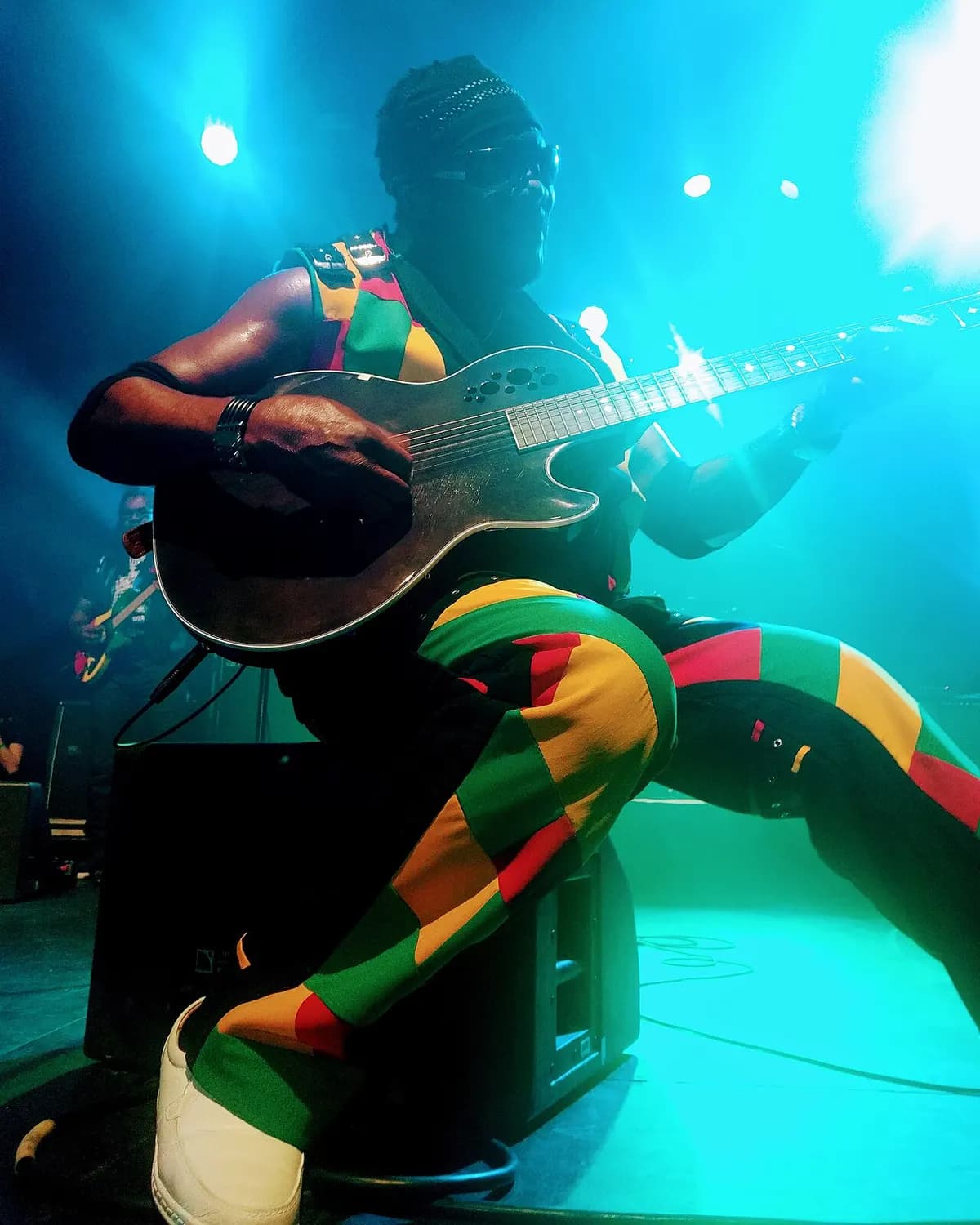
Reggae spread well beyond Kingston. Britain produced lovers rock and a large soundsystem scene; in Africa, artists such as Alpha Blondy (Côte d'Ivoire) and Lucky Dube (South Africa) built major careers on it; and Latin America, Japan, and the United States grew their own scenes. On 29 November 2018, UNESCO inscribed "Reggae music of Jamaica" on its Representative List of the Intangible Cultural Heritage of Humanity.
Its influence shows up in many places today. Dancehall rhythms turn up in chart pop; the offbeat skank appears in ska-punk and reggae-rock; and dub's echo-heavy, bass-first mixing runs through dubstep and much of UK bass music. Jamaican "reggae revival" artists such as Chronixx and Protoje returned to roots sounds in the 2010s, while others mix reggae with hip-hop, R&B, and Afrobeats. The offbeat chop from 1968 is still the quickest way to recognise it.
How AI Detects Reggae
An AI genre detector spots reggae less by tempo alone and more by where the energy sits in the bar. The model picks up the chord chops landing on the offbeat (the gap right after each main beat), the one-drop drum pattern with its empty beat 1 and accented beat 3, and a low end dominated by a round, melodic bass instead of a driving kick. Few other genres combine that offbeat-heavy rhythm with a relaxed ~60–90 BPM pulse and so much open space in the mix.
Put it to the test in real time. Aim the Genre AI music genre detector at whatever is playing, let it sample a few seconds, and it names the genre in a couple of seconds, leaning toward dub or dancehall when the cues shift. For the mechanics behind it, our guide to how AI music genre detection works lays it out.
In our own testing, the surest path to a strong Reggae reading is chord chops parked on the offbeat, a one-drop drum pattern (beat 1 empty, snare and kick together on beat 3), and a deep, melodic bass sitting out front at a relaxed 60–90 BPM. Strip the rhythm track to drums and bass and soak it in echo and the verdict slides toward Dub; let the tempo climb past 90 with a harder, more digital groove and it leans Dancehall. The cue the model relies on most is that empty downbeat, where most genres would put their accent.