TL;DR. House is warm, groovy and soulful, built on a swinging four-on-the-floor beat around 120–128 BPM, with roots in disco and funk. Techno is colder, more mechanical and hypnotic, usually faster at 125–150 BPM, built from synthetic, futuristic sounds. Both use a steady kick on every beat, but house wants you to dance with a smile while techno pulls you into a darker, more relentless trance.
Techno vs house: the short version
House and techno are the two foundational pillars of electronic dance music, they emerged in the same mid-1980s Midwest moment, and they share the same skeleton — a four-on-the-floor kick drum on every beat — which is exactly why beginners mix them up. But their souls are different. House came out of Chicago and carries the warmth of disco, soul and funk; it feels human, groovy and often uplifting. Techno came out of Detroit and leans into machinery and the future; it feels colder, more repetitive and hypnotic, built to pull a dark room into a trance.
A quick mental shortcut: house is warm and soulful, techno is cold and mechanical. House invites you to groove; techno locks you into a hypnotic drive. Neither is better — they just create very different rooms and moods.
What is house?
House music was born in Chicago in the early 1980s, named after the Warehouse club where DJ Frankie Knuckles played extended, disco-rooted sets. When disco faded commercially, Chicago DJs kept its spirit alive by looping and re-editing tracks over a steady drum-machine beat, and house was the result. You can hear the disco and soul DNA in its warm basslines, piano stabs, gospel-tinged vocals and joyful, dance-floor-friendly energy.
House typically runs between 120 and 128 BPM with a swinging, groovy feel. The classic building blocks are a punchy but warm four-on-the-floor kick, open hi-hats on the off-beats, soulful vocal samples, and melodic bass and chords. It has grown into many subgenres — deep house, tech house, progressive house and more. Foundational names include Frankie Knuckles, Marshall Jefferson and Larry Heard, while modern stars like Disclosure, Fisher and Black Coffee keep it on festival main stages.
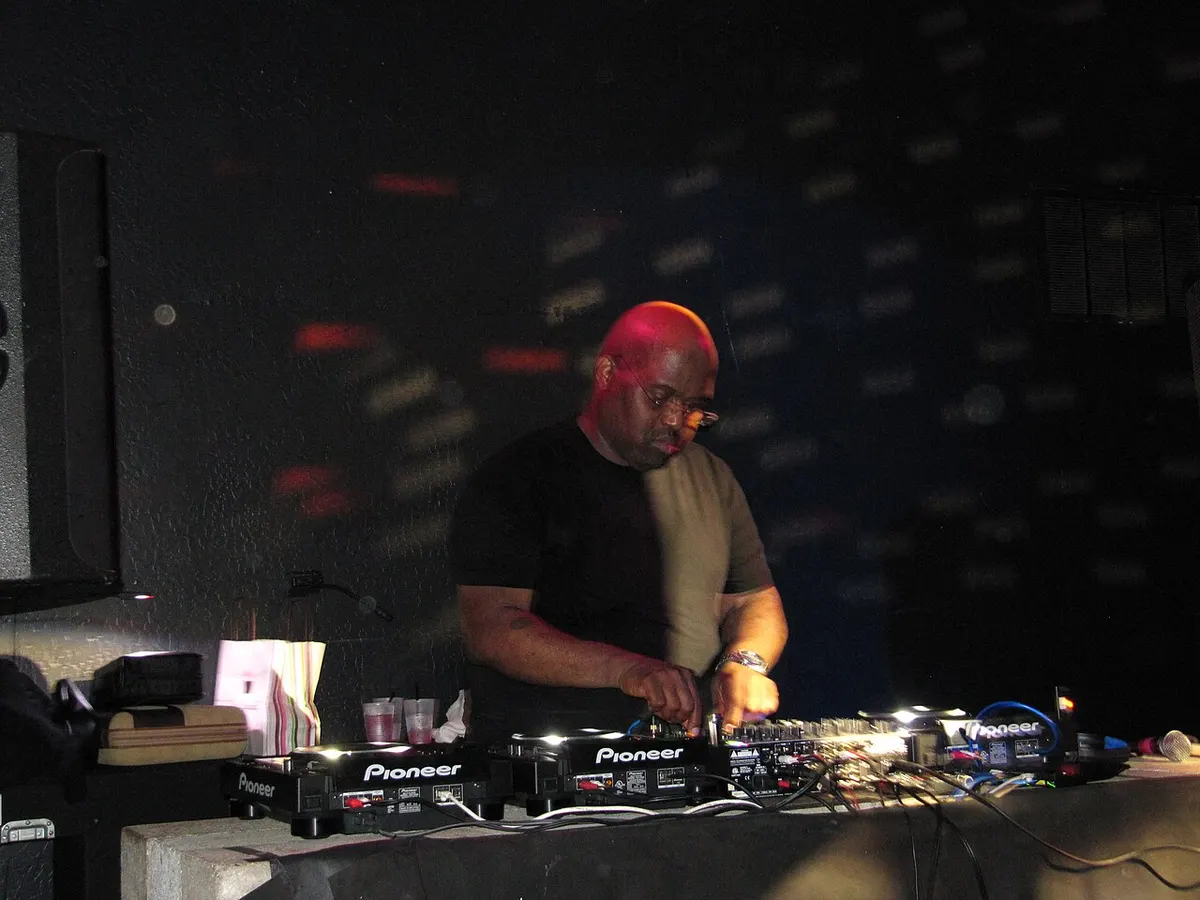
What is techno?
Techno was created in Detroit, also in the mid-1980s, by the trio often called the Belleville Three — Juan Atkins, Derrick May and Kevin Saunderson. Where house looked back to disco's warmth, techno looked forward to a machine future, drawing on European electronic acts like Kraftwerk and imagining music made by and for machines. The result is more synthetic, more repetitive and more futuristic than house.
Techno usually runs faster and harder, roughly 125 to 150 BPM depending on the style, with a driving, insistent kick and far less swing than house. Melody is often minimal or abstract; the hooks come from evolving synth textures, industrial sounds and hypnotic loops rather than soulful vocals. The mood is darker, colder and more mechanical, engineered to keep a dark warehouse in a sustained trance. Pioneers include the Belleville Three and Underground Resistance, while artists like Jeff Mills, Charlotte de Witte and Amelie Lens define the modern peak-time sound.

Techno vs house: side-by-side comparison
The fastest way to internalize the contrast is to put the two genres next to each other across the traits that actually matter when you listen.
| Trait | House | Techno |
|---|---|---|
| Origin | Chicago, early 1980s | Detroit, mid 1980s |
| Typical tempo | 120–128 BPM, swinging | 125–150 BPM, driving |
| Roots | Disco, soul, funk | Kraftwerk, electro, the machine future |
| Mood | Warm, soulful, uplifting | Cold, hypnotic, mechanical |
| Groove | Swung, funky, human feel | Straight, relentless, repetitive |
| Melody & vocals | Soulful vocals, piano, chords | Minimal, abstract, synth textures |
| Setting | Clubs, terraces, festivals | Dark warehouses, late-night raves |
| Key artists | Frankie Knuckles, Disclosure, Black Coffee | Jeff Mills, Charlotte de Witte, Amelie Lens |
How to tell them apart by ear
Both genres pound a kick on every beat, so the kick alone will not save you. Focus instead on three cues and the answer usually reveals itself within the first minute.
Feel the warmth and the swing
House almost always feels warm and slightly swung — the groove breathes, the hats bounce on the off-beats, and there is often a funky, human looseness to the rhythm. If it makes you want to smile and groove, and you hear soulful chords or a vocal, lean house. Techno feels straighter, colder and more relentless; the rhythm is tight and mechanical rather than funky, and it pulls you into a hypnotic forward drive rather than a bouncy groove.
Check the melody, vocals and mood
Soulful vocals, piano stabs, warm basslines and clear chord progressions point to house. Minimal or abstract melody, industrial textures, evolving synth drones and few or no traditional vocals point to techno. Then read the mood: bright, uplifting and party-friendly is house; dark, intense and trance-inducing is techno. Combine the warmth test, the melody test and the mood test and you will be right the vast majority of the time.
If you want to skip the guesswork, drop a clip into our AI music genre detector and let the model name whether it is house, techno or a specific subgenre in seconds.
The blurry middle: where they overlap
Plenty of tracks live between the two. Tech house borrows house's groove and techno's stripped-back drive, and it is the single biggest source of confusion in this whole debate — we break it down further in our guide to deep house vs tech house. Progressive house and melodic techno also blur the line, sharing hypnotic builds and lush synth work. DJs regularly mix across the boundary in a single set, opening with warm house and sliding into darker techno as the night deepens. So if a track feels like both, that is not a failure of your ears — it genuinely sits in the overlap.
Why the label matters in 2026
Getting the genre tag right is about discovery, not trivia. A large and growing share of new music is machine-made; Deezer reported in April 2026 that roughly 44% of daily uploads, around 75,000 tracks a day, were AI-generated. AI tools like Suno's v5 can now produce convincing four-on-the-floor tracks in seconds, and a lot of that output reaches Spotify and Apple Music with vague or wrong genre tags.
If you release music through DistroKid or a similar distributor, the genre you choose feeds the algorithms that decide which playlists and radio shows surface it. Mislabel a peak-time techno cut as generic "electronic" or "house" and you may miss the exact crowd most likely to love it. When you are unsure where your track lands on the house-techno spectrum, run it through our AI music detector before you upload and tag it with confidence.
FAQ
Is techno faster than house?
Usually, yes. House typically sits around 120 to 128 BPM with a swinging groove, while techno often runs 125 to 150 BPM with a straighter, more driving feel. The ranges overlap at the lower end, so tempo is a strong hint rather than absolute proof.
Do house and techno use the same beat?
They share the same four-on-the-floor foundation — a kick drum on every beat — which is why they sound related. The difference is in the feel: house swings and grooves warmly, while techno stays tight, straight and hypnotic.
Which came first, house or techno?
House came first by a few years, emerging in Chicago in the early 1980s out of disco culture. Techno followed in mid-1980s Detroit, drawing on electronic acts like Kraftwerk. They developed close together in the American Midwest and heavily influenced each other.
How can I identify the subgenre quickly?
Focus on warmth, melody and mood: soulful, swung and uplifting leans house, while cold, minimal and hypnotic leans techno. To confirm the exact subgenre, run a short clip through our AI music genre detector and let the model classify it for you.