Dub is a style of Jamaican music that grew out of reggae in the late 1960s and 1970s, in which a recording engineer takes an existing track apart at the mixing desk and rebuilds it live: the vocal mostly disappears, the drums and bass are pushed to the front, and instruments drop in and out through waves of echo, spring reverb and filtering. It usually moves at reggae's relaxed 60–90 BPM, often felt as a slow one-drop. Its pioneers, King Tubby, Lee "Scratch" Perry, Errol Thompson, Scientist and King Jammy among them, played the mixing console the way other musicians play an instrument.
Most dub tracks are "versions" of existing reggae songs, which makes dub a studio branch of reggae more than a separate tradition. This guide explains how that practice began, the studio techniques that define it, its main producers and records, its long reach into UK sound systems, post-punk, trip-hop, jungle, dub techno and dubstep, and how it differs from roots reggae and dancehall. To hear how an echo-soaked riddim reads to a machine, try a clip in our free AI music genre detector.
What Is Dub?
A dub track starts as someone else's song. Jamaican producers recorded rhythm tracks (drums, bass, guitar, keyboards, horns) on multitrack tape and voiced them with singers. An engineer could then return to the multitrack and make a new mix in which the arrangement itself was the raw material. He might mute the vocal after a line or two, let the bass and drums play alone, send a single rimshot or guitar chop into a long echo, sweep the high frequencies away with a filter, and bring everything back in with a crash. Each mix was a performance, done in real time on the desk, so two dubs of the same rhythm can sound completely different.
The result is music of space and weight. The bass is huge and melodic, the drums are dry and precise, and everything else floats in and out of a cloud of delay and reverb. Vocals appear as fragments: a word, a breath, a phrase repeated by the echo until it dissolves. Dub was mixed for the speaker stacks of Jamaican sound systems, where the low end is felt in the chest as much as heard.
"Dub" also names an approach to sound that spread far beyond Jamaica: a mix can be a composition, taking parts away can be as creative as adding them, and echo and bass can carry a track on their own.
History & Origins
Dub's roots are in the sound-system culture of Kingston. In the late 1960s, during the rocksteady era, producers began pressing instrumental versions of their hits on the B-sides of singles. A much-repeated story involves the Spanish Town sound-system operator Ruddy Redwood: in producer Bunny Lee's telling, an engineer cutting a dub plate for Redwood left the vocal out by mistake, Redwood played it at his dances anyway, and Lee later heard him dropping the vocal in and out of the mix. The details (which studio, which engineer) differ between tellings, but the "version" B-side became standard practice, giving DJs a rhythm to toast over and producers a cheap way to fill a single.
The engineer most closely tied to turning versions into an art is King Tubby (Osbourne Ruddock), a sound-system operator and electronics technician who ran a small studio in his home in Kingston's Waterhouse district. Working from multitrack tapes supplied by producers such as Bunny Lee, who stored his rhythms at Tubby's studio, he used a customised mixing desk, a high-pass filter, spring reverb and tape echo to strip and rebuild rhythms in real time. Tubby's collaboration with the melodica player and producer Augustus Pablo produced King Tubby Meets Rockers Uptown (1976), one of the most celebrated dub albums.
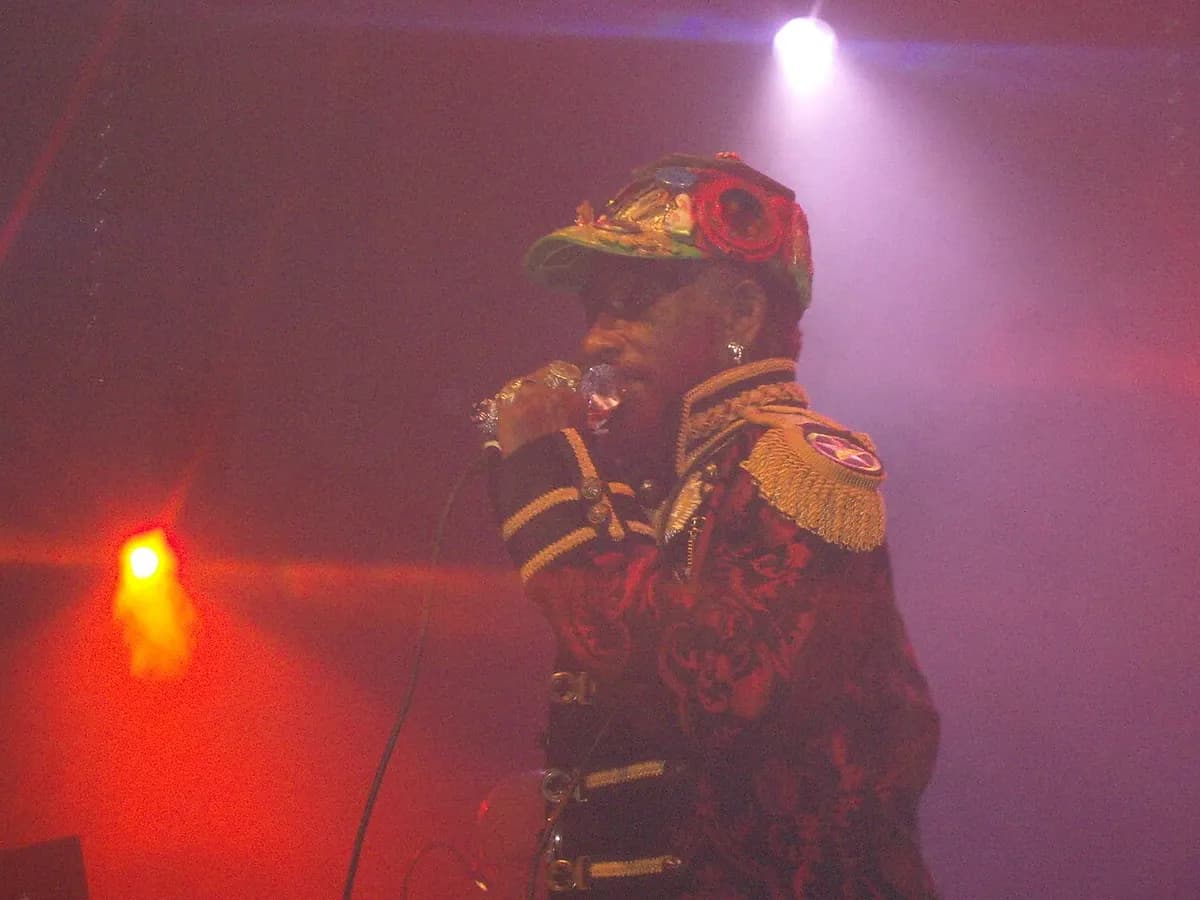
In 1973 Lee "Scratch" Perry built his Black Ark studio behind his family home in Washington Gardens, Kingston, and there he developed a denser, murkier, more eccentric sound with his house band the Upsetters, heard on Blackboard Jungle Dub (1973) and Super Ape (1976). Errol Thompson at Randy's studio and the singer-producer Keith Hudson, whose Pick a Dub (1974) is often cited as one of the first albums conceived as dub, helped define the form too.
A second generation came through Tubby's studio. King Jammy (Lloyd James) and Scientist (Hopeton Brown, born in 1960) mixed many of the late-1970s and early-1980s classics, and Scientist's themed albums, such as Scientist Rids the World of the Evil Curse of the Vampires (1981), carried dub to international audiences. Session bands supplied many of the rhythms: the Revolutionaries at Channel One, with drummer Sly Dunbar, and later the Roots Radics.
Dub travelled with the Jamaican diaspora to Britain, where it became a culture of its own. Sound systems such as Jah Shaka's kept roots and dub alive through the 1980s. Dennis Bovell and the dub poet Linton Kwesi Johnson made British dub records, and Mad Professor (Neil Fraser) founded the Ariwa label and studio in London and later remixed Massive Attack's Protection as No Protection (1995). Adrian Sherwood's On-U Sound, launched at the turn of the 1980s (sources give dates from 1979 to 1981), brought dub techniques into post-punk and industrial music.
Key Characteristics & Studio Techniques
What defines a dub track:
- Tempo: usually 60–90 BPM, the relaxed tempo of roots reggae; many tracks feel half-time, with the snare or rimshot on beat three in the one-drop pattern.
- Bass first: a deep, round, melodic bassline at the centre of the mix, often louder than anything else.
- Drums exposed: crisp kick and rimshot, hi-hat patterns, and drum fills thrown into echo.
- Subtraction: instruments and vocals muted and reintroduced, so the arrangement keeps changing even though the rhythm loops.
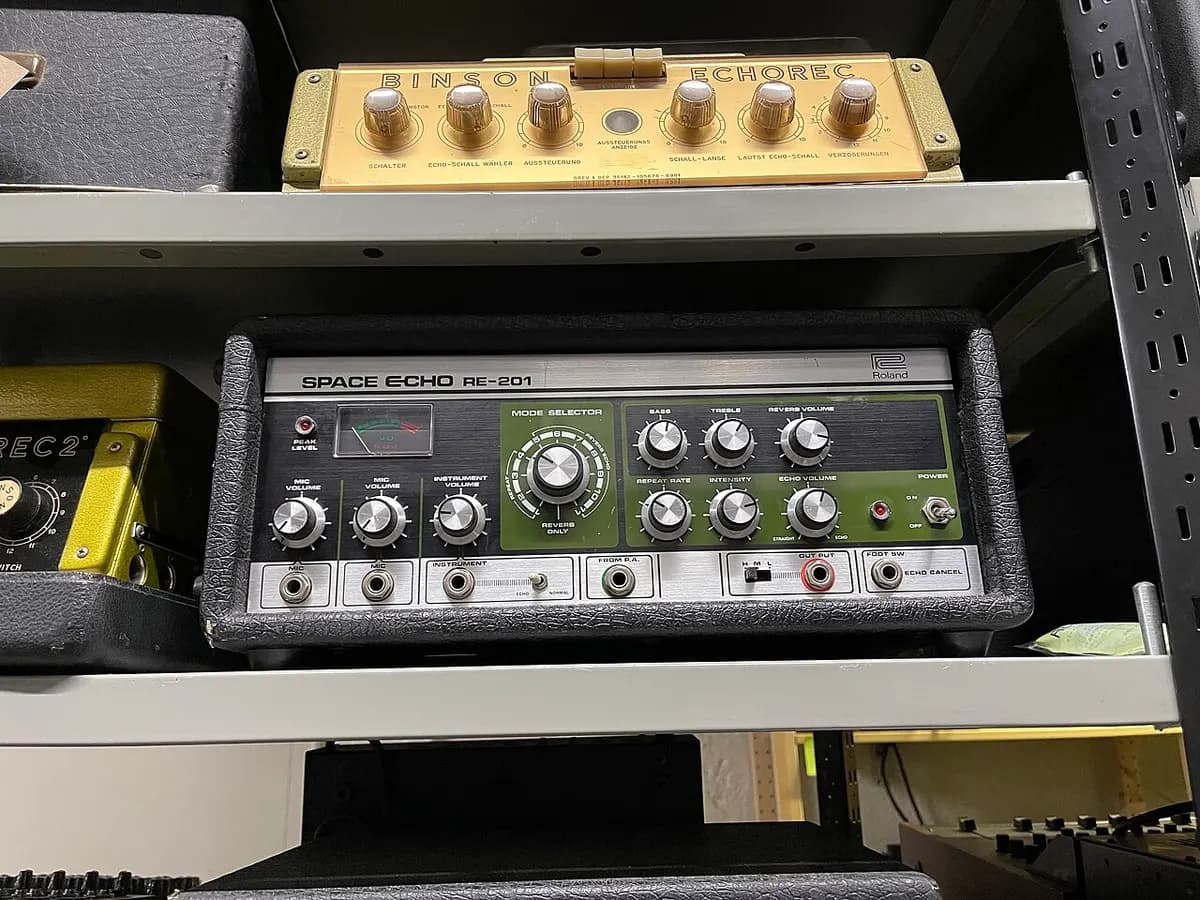
- Echo and delay: tape echo and dedicated delay units (Perry famously used the Roland Space Echo) creating trails that repeat and decay in time with the beat.
- Spring reverb: often struck or overloaded for a crashing "thunder" sound.
- Filtering: high-pass and low-pass sweeps that drain an instrument of bass or treble, then restore it.
- Vocal fragments: snippets of the original song's vocal, left to echo out.
How dub compares with the Jamaican styles around it:
| Trait | Dub | Rocksteady | Roots Reggae | Dancehall |
|---|---|---|---|---|
| Peak period | Late 1960s–early 1980s, ongoing | 1966–1968 | 1970s | 1980s–present |
| Typical tempo | 60–90 BPM | 70–90 BPM | 60–90 BPM | 80–110 BPM |
| Focus | The mix: bass, drums, effects | Song, vocal harmony, bass | Song and message | DJ or singer over a riddim |
| Vocals | Fragments, mostly removed | Smooth vocal groups | Lead singer with harmonies | Toasting, singjay |
| Key technique | Live desk mixing, echo, reverb | Slower ska rhythms | One-drop, rockers, steppers | Digital riddims (from 1985) |
| Key names | King Tubby, Lee Perry, Scientist | Alton Ellis, The Paragons | Bob Marley, Burning Spear | Yellowman, Shabba Ranks |
Dub's Legacy & Offshoots
Much of the dance and electronic music made since the 1980s uses ideas that dub worked out first: the remix, the extended version, bass as the lead instrument and the mixing desk played live.
- The remix and the 12-inch mix: disco and later dance producers took the idea of a stripped, extended "version" into the 12-inch single.
- Toasting and hip-hop: DJs toasting over version sides in Jamaica, and the Jamaican-born Kool Herc in the Bronx, link dub culture to the birth of hip-hop.
- Post-punk: The Clash, The Slits (whose Cut was produced by Dennis Bovell) and Public Image Ltd's Metal Box borrowed dub's bass and space. See post-punk.
- UK steppers and digital dub: faster, militant sound-system dub with a four-on-the-floor kick, from the 1980s and 1990s.
- Trip-hop and downtempo: Bristol's Massive Attack and others built on dub bass and echo; see trip-hop.
- Jungle and drum and bass: reggae and dub bass culture is central to jungle.
- Dub techno: Berlin's Basic Channel and Rhythm & Sound in the 1990s fused dub delays and chords with minimal techno.
- Dubstep: the name, the half-time feel and the obsession with sub-bass come straight from UK sound-system dub; see dubstep and our dubstep explainer.
Key Producers & Essential Dub Albums
A starter shelf:
| Album | Artist / Engineer | Year | Why it matters |
|---|---|---|---|
| Blackboard Jungle Dub | The Upsetters / Lee "Scratch" Perry | 1973 | Early full-length dub statement from Perry |
| Pick a Dub | Keith Hudson | 1974 | Often cited among the first albums conceived as dub |
| King Tubby Meets Rockers Uptown | Augustus Pablo & King Tubby | 1976 | Melodica, deep bass and Tubby's mixing at their peak |
| Super Ape | The Upsetters | 1976 | The thick, murky Black Ark sound |
| Scientist Rids the World of the Evil Curse of the Vampires | Scientist | 1981 | Second-generation dub with a pop-culture twist |
| No Protection | Massive Attack v Mad Professor | 1995 | British dub meets trip-hop |

Dub vs Reggae, Dancehall and Dubstep
Against reggae: dub is reggae remixed. A roots reggae record is a song, with a singer, a message, verses and choruses. Its dub version keeps the rhythm and removes most of the song, turning attention to the bass, the drums and the space between them. If you can follow the lyrics, it is reggae; if the singer vanishes after one line and the snare echoes for four bars, it is dub.
Against dancehall: dancehall grew out of the same sound systems but puts the DJ or singer over the riddim in the foreground, and since the mid-1980s has relied increasingly on digital rhythms. Classic dub is mostly instrumental and analogue. Against ska and rocksteady, the difference is era and tempo: those came first, faster and song-driven.
Against dubstep: dubstep is an electronic style from early-2000s London that inherited dub's sub-bass, half-time feel and sound-system culture, but runs at 140 BPM and is built with software instead of tape. For the reggae family more broadly, see our reggae vs reggaeton comparison.
How AI Hears Dub
Dub carries strong reggae signals: the off-beat skank on guitar or keyboard (when it is left in the mix), the one-drop drum pattern with its emphasis on beat three, a slow tempo and a deep, prominent bass. What is harder is the dub treatment itself. Echo, reverb and missing vocals are production choices, and a heavily stripped section can also sound like downtempo, ambient or trip-hop.
There is a second difficulty specific to Genre AI. Its production taxonomy has a coarse Reggae label but no reggae subgenres, and the model prefers families that do have subgenres: Reggae is returned only when none of them (Electronic Dance, Rock, Jazz, Funk / Soul and the rest) is among its five strongest candidates. A dub track can therefore come back as an electronic or jazz subgenre even when the model also hears reggae. The choice of clip matters. A section with the skank and drums in place gives Reggae its best chance; a breakdown where only the bass and a cloud of echo remain is much more ambiguous. Try a few sections of the same track in the Genre AI music genre detector to hear the difference.
Genre AI's live taxonomy has a coarse Reggae label but no separate dub label, and Reggae itself has no subgenres. That matters for dub. The model gives priority to families with subgenres, so Reggae is the answer only when no such family is among its top five candidates. On a section with the skank, the one-drop and the vocal still in, Reggae has a fair chance. Sparse passages of bass, drums and echo, which share slow tempo, sub-bass and long reverbs with downtempo and trip-hop, are more likely to be pulled into Electronic Dance, where the answer may be Abstract / IDM / Leftfield or Deep House (one of Deep House's text prompts is "deep dub"); Ambient is another coarse label that may appear. Later, electronically produced forms such as UK steppers and dub techno are likely to lean further towards Electronic Dance. A Reggae answer for a dub track is correct, but the label set cannot tell dub from a vocal reggae mix: for that, listen for the disappearing vocal and the echo.