
Ragtime is American piano music that peaked between the late 1890s and the 1910s, built on one rhythmic idea: a strictly regular march bass in the left hand under a persistently syncopated melody in the right. It came out of Black musical communities, it sold mainly as printed sheet music, not as records, and it is one of the direct ancestors of jazz.
This guide covers where ragtime came from, how the syncopation works, why it is written out in full, and which pieces to start with. To hear how a rag reads to a classifier, run a few seconds through our free AI music genre detector.
What Is Ragtime?
Ragtime is defined by a rhythmic collision. The left hand plays a steady oom-pah (bass note on the beat, chord on the offbeat) in a march-like 2/4. The right hand plays a melody whose accents deliberately fall between those beats. The style lives in the tension between the two, and the term "ragged time" describes exactly that.
Two things set it apart from the jazz that followed. Ragtime is composed and notated, not improvised: the sheet music is the work, and Joplin in particular wanted his pieces played as written. And it is formally strict, borrowing the multi-strain structure of the military march. Each strain is usually sixteen bars long and repeated, in layouts such as AABBCCDD or AABBACCC′, with a key change when the trio begins.
Its natural instrument is the piano, though rags were arranged for banjo, brass band and orchestra from the beginning. Scott Joplin, its most important composer, put a note on the sheet music of "Leola" that performers have ignored ever since: "Notice! Don't play this piece fast. It is never right to play 'ragtime' fast."
History & Origins
Ragtime came out of Black communities in the American Midwest and South in the 1890s, combining the syncopations of banjo music, cakewalk dances and minstrel-show repertoire with the harmony and form of European marches and dances. The 1893 World's Columbian Exposition in Chicago was an early public stage for it: the pianist Jessie Pickett played "The Dream" there, and Scott Joplin was among the musicians in town.
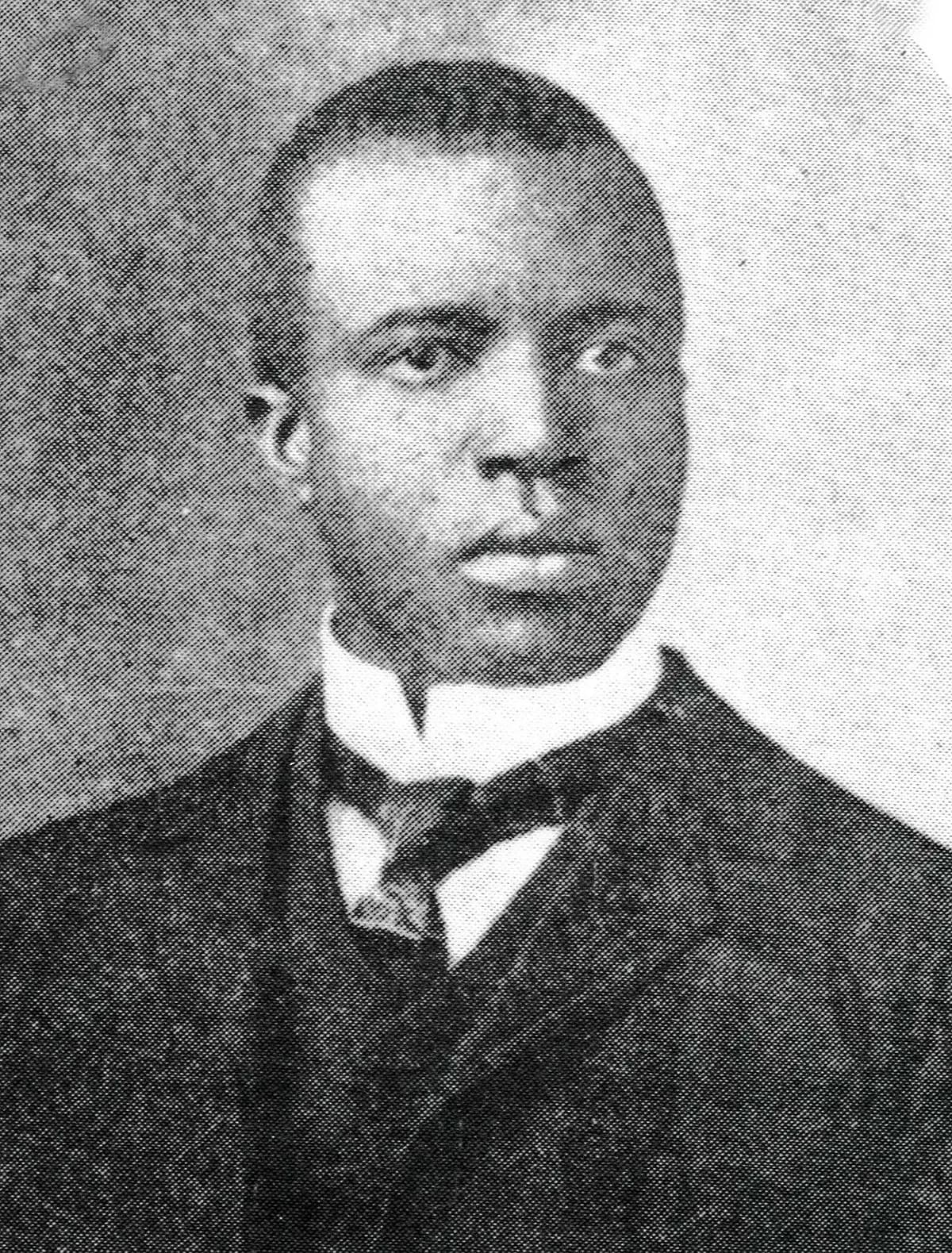
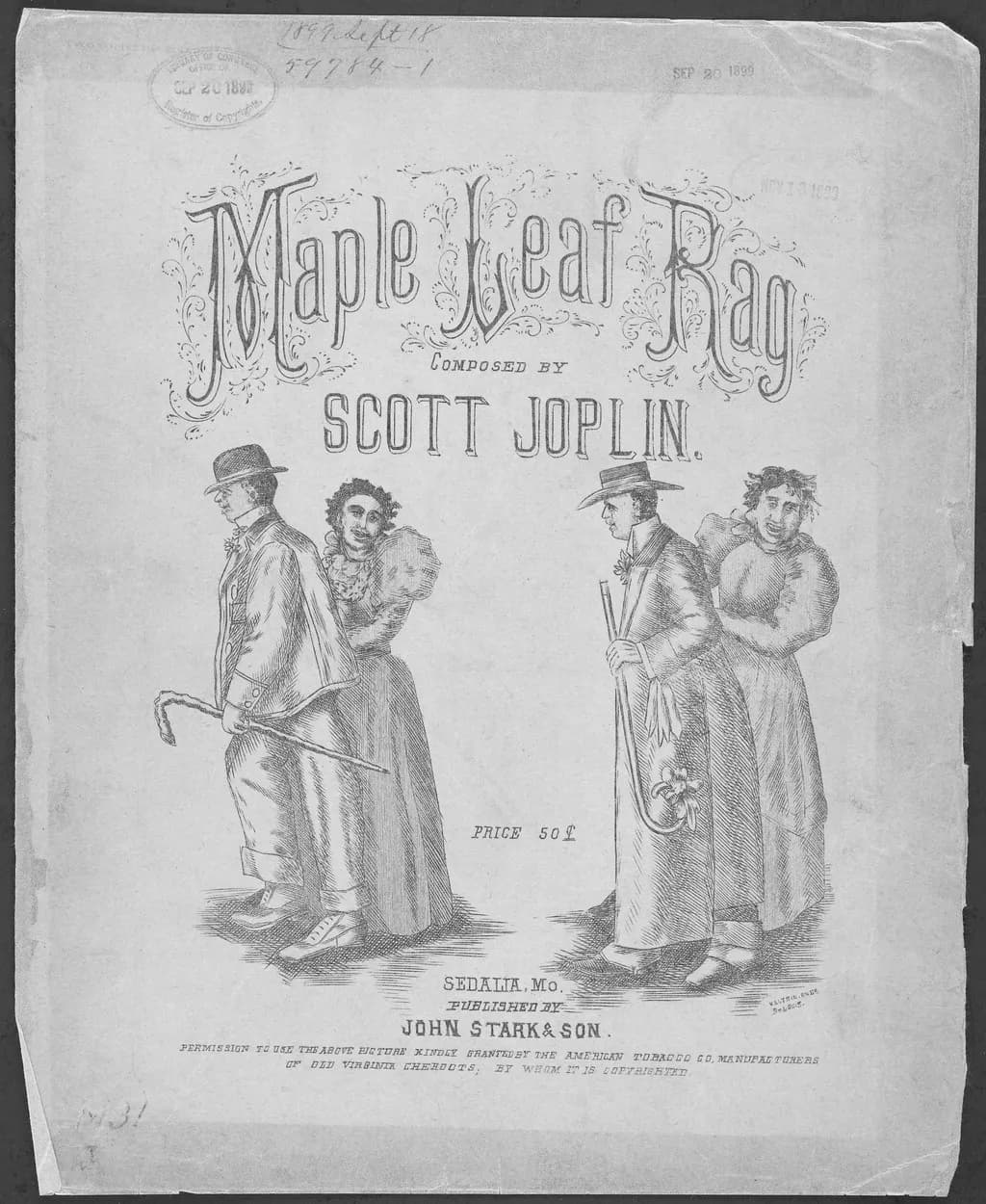
Scott Joplin is the central figure. He settled in Sedalia, Missouri, in 1894 and moved to St. Louis in 1901. "Maple Leaf Rag", published by John Stark in 1899, became the best-known rag of the era. How many copies it sold is disputed: older accounts credit it with a million in Joplin's lifetime, while the researcher Edward A. Berlin found that the first print run of 400 took a year to sell and that later sales were steady but modest. "The Entertainer" followed in 1902. Joplin's ambitions ran well past dance music. He wrote a ragtime ballet, The Ragtime Dance, and two operas: A Guest of Honor, whose score is lost, and Treemonisha, which he spent his last years trying to stage.
Around him worked James Scott, Joseph Lamb (the one white composer usually ranked with Joplin and Scott as the "big three" of classic ragtime), Tom Turpin, Eubie Blake and, at the boundary with jazz, Jelly Roll Morton.
The business model explains a lot. Around 1900 the American music industry sold mostly printed paper: songs and piano pieces bought to be played at home on the family piano, plus piano rolls for player pianos. Ragtime's success was counted in copies sold, and composers were paid as writers, not as performers.
In 1917, the year Joplin died and the year the first jazz records were issued, the style was already being displaced by jazz, which took ragtime's syncopation and added improvisation, blues inflection and a swing feel. Ragtime's own descendants continued: stride piano in Harlem through James P. Johnson and Fats Waller, and novelty piano in the 1920s.
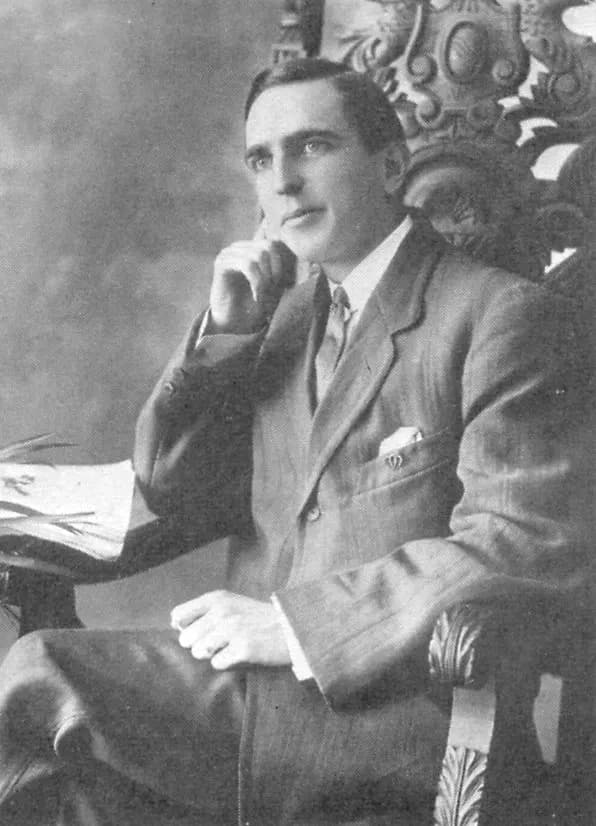
The revival came in the 1970s. In November 1970 the musicologist Joshua Rifkin released Scott Joplin: Piano Rags on Nonesuch, treating the rags as concert music; it is reported to have become the label's first million-selling album. Marvin Hamlisch's Joplin adaptations for the film The Sting (1973) followed, and his version of "The Entertainer" reached No. 3 on the Billboard Hot 100 in May 1974. Joplin received a special posthumous Pulitzer Prize in 1976 for his contributions to American music.
Key Characteristics & Sound
What identifies a ragtime piece:
- Syncopated right hand: melodic accents falling between the beats, most often as a short–long–short figure across the bar.
- March bass in the left hand: alternating bass note and chord, absolutely steady, no swing.
- Metre: 2/4, occasionally 4/4, with the feel of a march.
- Tempo: a moderate march pace; the scores give no metronome figure that defines the style. Joplin's note on "Leola" warns against playing fast; recorded performances range from stately to frantic.
- Multi-strain form: usually four sixteen-bar strains, each repeated, with a key change at the trio.
- Diatonic harmony with chromatic passing chords and diminished sevenths, drawn from European practice; blue notes are rare.
- No improvisation: the printed score is the piece.
- Straight eighths: rags are notated without swing, though many modern players swing them anyway.
Where it sits among its relatives:
| Trait | Ragtime | Early Jazz | Stride Piano | Blues |
|---|---|---|---|---|
| Period | 1895–1918 | 1917–1930 | 1919–1940 | 1900 onward |
| Improvisation | None | Central | Central | Central |
| Rhythm feel | Straight, march | Swung | Swung | Shuffle or straight |
| Left hand | Steady oom-pah | Band supplies bass | Leaping tenths | Repetitive figure |
| Form | Repeated 16-bar strains | 32-bar and 12-bar | Song forms | 12-bar |
| Reference work | Maple Leaf Rag | Dippermouth Blues | Carolina Shout | Cross Road Blues |
Instruments, Notation & Recording
Most ragtime predates recorded sound as a mass medium, so the technical context looks unusual today:
- Upright piano: the domestic instrument the whole trade was built around.
- Printed sheet music as the main product. Publishers such as John Stark played the role record labels would later play, and cover art did the marketing.
- Piano rolls: perforated paper for player pianos, and the closest thing to a recording of a rag performance from the period. Some rolls were edited or hand-punched, so they are not always literal documents.
- Banjo, brass band and orchestral arrangements: rags circulated well beyond the piano.
- Acoustic recordings after 1900, mostly of band arrangements, because early recording horns captured ensembles better than a lone upright.
- Modern performance practice split between the concert approach (measured tempo, exact notation, following Rifkin) and the honky-tonk approach, fast and loose, which is how most people have heard ragtime.
Related Styles & Descendants
The family around it:
- Cakewalk: the syncopated dance form that immediately preceded and fed into ragtime.
- Classic ragtime: the notated Missouri school of Joplin, Scott and Lamb.
- Stride piano: the Harlem successor, with a wider, leaping left hand and improvisation; James P. Johnson, Fats Waller.
- Novelty piano: the fast, virtuosic commercial branch of the 1920s; Zez Confrey.
- Ragtime song: the vocal Tin Pan Alley version that borrowed the name loosely.
- Jazz: the direct descendant, which added improvisation, blues and swing.
- Swing and bebop: the later jazz traditions that grew from that turn.
Key Composers & Pieces
Where to start:
- Scott Joplin: "Maple Leaf Rag" (1899), "The Entertainer" (1902), "Solace" (1909).
- James Scott: "Frog Legs Rag" (1906), his first hit and, among John Stark's titles, second in sales only to "Maple Leaf Rag".
- Joseph Lamb: "American Beauty Rag" (1913).
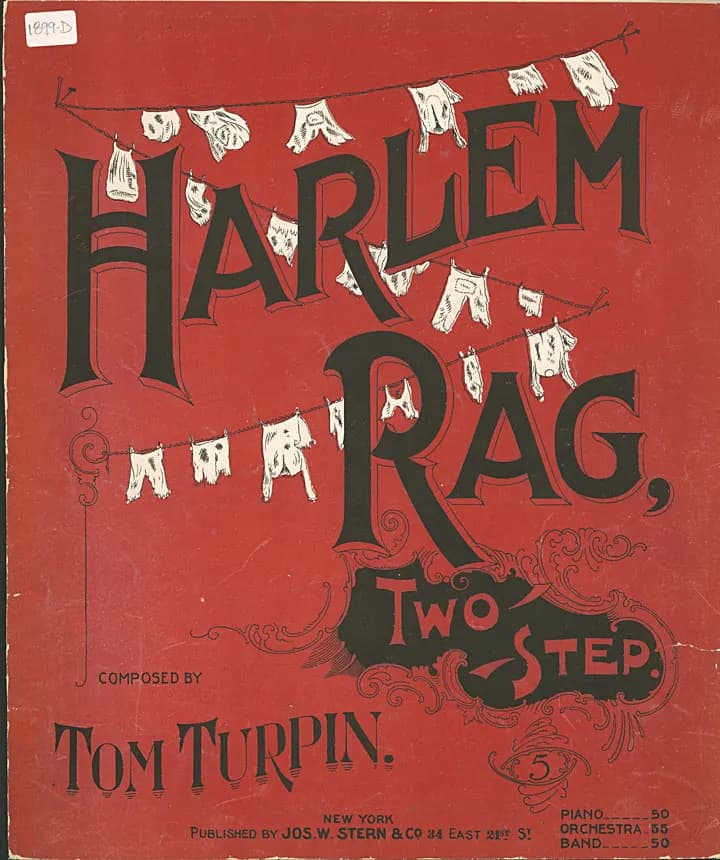
- Tom Turpin: "Harlem Rag" (1897), generally cited as the first published rag by an African-American composer.
- Eubie Blake: "Charleston Rag", which Blake said he wrote in 1899; he deposited it for copyright in 1917.
- Jelly Roll Morton: "King Porter Stomp", which Morton dated to 1906 and first recorded in 1923, ragtime turning into jazz.
- Zez Confrey: "Kitten on the Keys" (1921), the novelty branch.
- Joshua Rifkin: Scott Joplin: Piano Rags (1970), the recording that started the revival.
- Marvin Hamlisch: The Sting soundtrack (1973).
- Scott Joplin: Treemonisha (1911), first fully staged in Atlanta in 1972.
Three pieces for the arc: "Maple Leaf Rag" for the breakthrough, "Solace" for how much range Joplin had, "King Porter Stomp" for the moment ragtime became jazz.
How AI Detects Ragtime
A solo rag has a recognisable texture: a piano with a very regular low register (bass note and chord alternating, beat after beat) and high-register attacks that keep landing off the beat. Played well and recorded cleanly, that pattern is easy to hear even in a short clip.
The complications are historical. Original-era recordings and piano rolls carry heavy noise, limited bandwidth and unstable pitch, which can swamp the musical detail, and the boundary with early jazz and stride is blurry, since the difference lies in improvisation and swing feel, not in the instrument. Genre AI has no ragtime label, so the answer will be a neighbouring family such as jazz or classical, and only rarely blues; the note below explains why. Test a rag in the Genre AI music genre detector.
Genre AI's production taxonomy has no Ragtime class, and the word is not among the text prompts of any label. Two coarse families are the likely winners. Under Classical, a solo piano rag may resolve to Classical Period, whose prompts include "classical piano", or to Gilded Age, whose prompts include "vintage" and "vintage jazz" and whose name matches ragtime's own era. Under Jazz, the nearest fine labels are Big Band / Swing and Easy Listening. Both coarse labels have fine subgenres, so whichever ranks higher among the top five decides the answer, and the alternatives shown are sibling labels within that family only: a Classical answer may list another period, a Jazz answer another jazz style. Blues has no fine labels of its own and is unlikely to be the answer. A performance that swings the eighths will probably lean further toward Jazz than a straight, measured one.