Big beat is a loud, sample-heavy style of electronic dance music that peaked in Britain in the second half of the 1990s. It takes the chopped funk drum loops of hip-hop and breakbeat, compresses and distorts them until they hit like a rock band, and piles on squelching acid synth lines, rock guitar riffs, vocal snippets and huge build-ups. Fatboy Slim, The Chemical Brothers, The Prodigy, The Crystal Method and Propellerheads are its best-known names; Brighton's Skint Records and its Big Beat Boutique club night gave it a home.
Big beat is one branch of the wider breakbeat family, which has its own guide on breakbeat; this page covers what is specific to big beat (its tempo, production tricks, scenes and essential tracks) and how it differs from breakbeat, trip-hop and EDM. To see how a 1990s block-rocker reads to a machine, drop a clip into our free AI music genre detector.
What Is Big Beat?
Big beat is dance music built like a rock record. At its core is a breakbeat: a looped drum pattern lifted from a funk, soul or rock recording, or programmed to sound like one. It runs at a mid-tempo groove and is processed with heavy compression, distortion, filtering and pumping side-chain effects. Around it, producers stack short hooks: a vocal phrase, a guitar riff, a horn stab, a TB-303 acid line, a siren.
Unlike techno or house, which favour a steady four-on-the-floor kick and long, gradual mixes, big beat is built around breaks, drops and peaks. Indie and rock fans bought it as well as clubbers. "Setting Sun" and "Praise You" were UK number-one singles, Dig Your Own Hole topped the UK album chart, and The Prodigy's The Fat of the Land reached number one on the US Billboard 200.
The name comes from the Big Beat Boutique, a Friday club night that Damian Harris's Skint Records ran at The Concorde in Brighton from 1995 to 2001, with Norman Cook (Fatboy Slim) as resident DJ. The press soon used "big beat" for the whole sound, alongside "chemical beats", after the Chemical Brothers' track of that name.
History & Origins
Big beat drew on several earlier strands. Hip-hop producers had built tracks from looped funk breaks since the 1970s and 1980s; the British rave scene of 1990–1992 sped those breaks up into breakbeat hardcore; and acid house had made the squelch of the Roland TB-303 a universal dance-floor sound. Bands such as Primal Scream (with Screamadelica, 1991) and Happy Mondays had already merged indie rock with dance culture.
The Chemical Brothers came first. Tom Rowlands and Ed Simons met at the University of Manchester in 1989 and began DJing hip-hop, house and rock together. Originally called The Dust Brothers, they took a new name around 1995, after the American production duo of the same name objected. Their residency at the Heavenly Sunday Social, which began in October 1994 at the Albany pub in London, and their debut album Exit Planet Dust (1995) established the template: hip-hop breaks, acid lines, psychedelic textures and rock-scale energy. Dig Your Own Hole (1997), with "Block Rockin' Beats" and "Setting Sun" (sung by Noel Gallagher, a UK number one in 1996), topped the UK album chart.
Norman Cook, formerly bassist in The Housemartins and leader of Beats International and Freak Power, adopted the name Fatboy Slim and released Better Living Through Chemistry (1996) on Skint. His second album, You've Come a Long Way, Baby (1998), was the genre's commercial peak, with "The Rockafeller Skank", "Praise You" and "Right Here, Right Now". "Praise You", a UK number one, is built on the vocal from Camille Yarbrough's "Take Yo' Praise" (1975). Its video, directed by Spike Jonze with Roman Coppola, was shot without permission in front of a cinema in Westwood, California, and won three MTV Video Music Awards in 1999.
The Prodigy, who had come out of the rave scene, released The Fat of the Land (1997), whose singles "Firestarter" and "Breathe" combined big beat drums with punk vocals and metal-like riffs. In the United States, record companies marketed this music as "electronica", expecting it to become the next rock; The Fat of the Land topped the US Billboard 200, and Los Angeles duo The Crystal Method released Vegas (1997) as an American answer. Propellerheads (Decksandrumsandrockandroll, 1998, including "History Repeating" with Shirley Bassey), The Wiseguys, Lionrock, Bentley Rhythm Ace and Junkie XL were other names of the scene, and big beat tracks were licensed widely for film trailers, adverts and video game soundtracks.
By 2001, when the Big Beat Boutique closed, the scene was in decline. The underground moved toward cleaner, bass-led nu skool breaks, and the leading acts outgrew the label: The Chemical Brothers and Fatboy Slim remained major live acts for decades, though no longer as part of a scene. Distorted drum buses, filter builds and rock-scale drops stayed in the toolkit of festival electronic music and of later styles such as electro house.
Key Characteristics & Sound
What identifies a big beat track:
- Tempo: Wikipedia gives a range of 100 to 140 BPM. That is slower than jungle and overlaps house, but the beat is broken, not a straight kick.
- Drums: breakbeat loops with a heavy, often distorted snare and kick, processed with compression, saturation and filters; sometimes reinforced with layered kicks for club systems.
- Bass: fat synth bass or sampled bass guitar, usually playing a riff; deep sub-bass is rare.
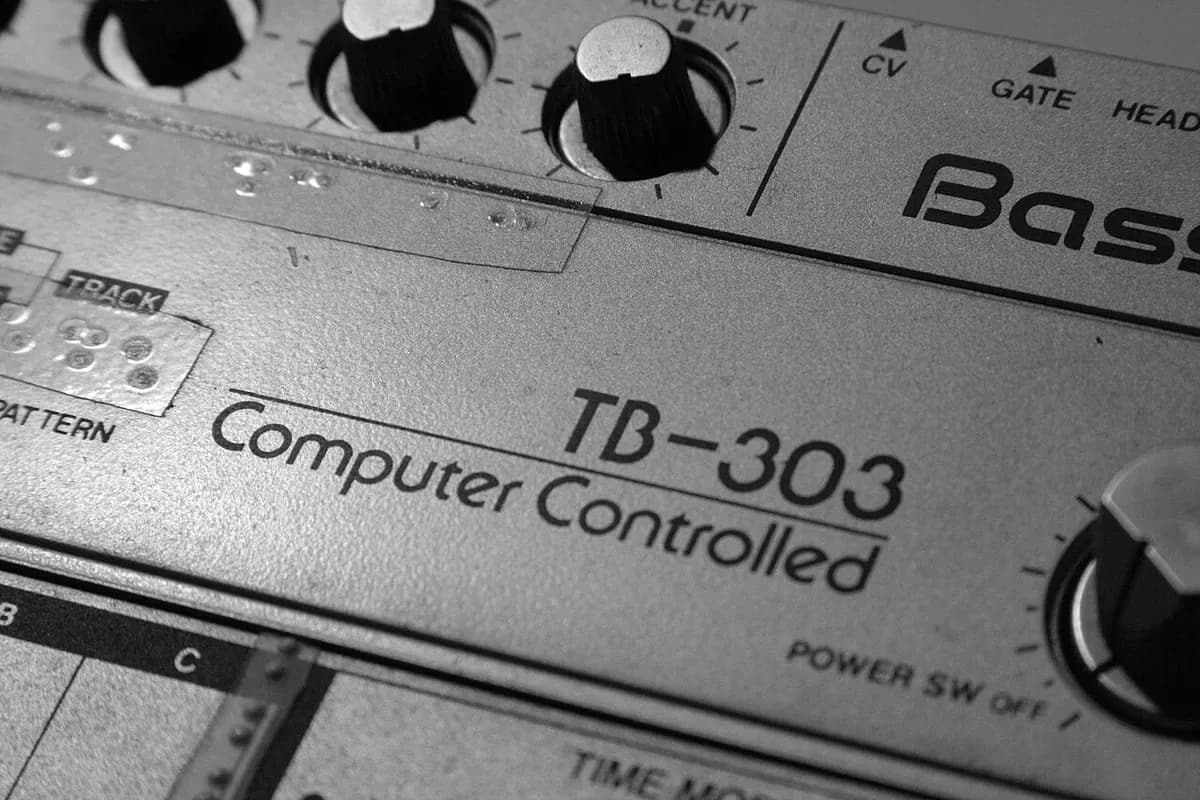
- Acid lines: resonant, squelching TB-303 or similar synth patterns, often filtered up during build-ups.
- Samples: short vocal hooks, funk and soul phrases, rock guitar riffs, horn blasts, film dialogue and sound effects.
- Structure: loops built up, broken down and dropped back in; long filter sweeps and snare-roll build-ups lead to big drops.
- Mood: loud and party-oriented, often jokey in its samples and titles.
How it compares with neighbouring styles of the same era:
| Trait | Big Beat | Breakbeat (nu skool) | Trip-Hop | House |
|---|---|---|---|---|
| Peak period | 1995–2000 | 1998–2006 | 1991–1998 | 1985–present |
| Typical tempo | 100–140 BPM | 130–140 BPM | 70–100 BPM | 118–130 BPM |
| Beat | Distorted breakbeat | Clean, syncopated breaks | Slow, dusty hip-hop breaks | Four-on-the-floor |
| Signature sounds | Acid lines, rock samples | Rolling bass lines | Strings, vinyl crackle, moody vocals | Piano, vocals, hi-hats |
| Mood | Loud, playful, peak-time | Funky, techy | Dark, cinematic | Uplifting, groovy |
| Reference track | Block Rockin' Beats | Stanton Warriors remixes | Teardrop | Your Love |
Instruments & Production
Big beat is studio music, made mostly by DJs and producers, with a toolkit typical of the 1990s:
- Samplers: Akai S-series and E-mu units were central, used to cut drum breaks, vocal phrases and guitar riffs from vinyl.
- Roland TB-303 and TR-909: the acid bass line and the drum machine of house and techno, often layered under sampled breaks.
- Analogue synthesizers: for squeals, sirens, riffs and sweeping filter effects.
- Mixing desk as instrument: heavy compression on the drum bus, overdriven channels, guitar pedals and filters applied to whole loops.
- Turntables: scratching and vinyl manipulation from hip-hop, especially on live sets.
- Live elements: The Prodigy and The Crystal Method used guitars, live vocalists and stage shows that borrowed from rock gigs.
Sampling is central to both the sound and the history. Classic tracks borrowed liberally from funk, soul, rock and novelty records: "The Rockafeller Skank" loops a riff from "Sliced Tomatoes" by the Just Brothers and a vocal phrase by the rapper Lord Finesse, taken from "Vinyl Dogs Vibe"; Wikipedia lists eight further samples in it, from the Bobby Fuller Four to Duane Eddy. Every sample in a record that sells in the millions has to be cleared, and Skint, for example, paid Camille Yarbrough for the "Praise You" vocal.
Scenes, Labels & Related Styles
- Brighton and Skint Records: Fatboy Slim, Lo Fidelity Allstars, Midfield General and the Big Beat Boutique club.
- London and the Heavenly Social: The Chemical Brothers' residency and the Wall of Sound label (Propellerheads, Wiseguys).
- US "electronica": The Crystal Method and the Astralwerks label, which released Chemical Brothers records in America.
- Breakbeat: the parent family; nu skool breaks followed big beat as the underground's breakbeat sound.
- Trip-hop: the slow, moody contemporary that used similar breaks at half the energy.
- Electro and electro house: later dance styles that inherited big beat's distortion and drops.
- Rock crossover: remixes and collaborations with bands such as Oasis and others blurred indie and dance in the late 1990s.
For a wider map of how these styles connect, see our guide to electronic music genres.
Key Artists & Essential Tracks
A starting playlist and album shelf:
| Record | Artist | Year | Why it matters |
|---|---|---|---|
| Exit Planet Dust | The Chemical Brothers | 1995 | The early 'chemical beats' template |
| Better Living Through Chemistry | Fatboy Slim | 1996 | Skint's first big album statement |
| Dig Your Own Hole | The Chemical Brothers | 1997 | 'Block Rockin' Beats' and 'Setting Sun' |
| The Fat of the Land | The Prodigy | 1997 | 'Firestarter' and 'Breathe'; punk energy, global sales |
| Vegas | The Crystal Method | 1997 | The American answer to the British sound |
| You've Come a Long Way, Baby | Fatboy Slim | 1998 | 'The Rockafeller Skank', 'Praise You'; the commercial peak |
| Decksandrumsandrockandroll | Propellerheads | 1998 | Breaks, spy-film brass and 'History Repeating' |
Big Beat vs Breakbeat, Trip-Hop and EDM
Breakbeat is the family; big beat is a member. All big beat is built on breaks, but jungle, nu skool breaks and UK garage also use broken beats, at very different tempos and moods. Big beat's own markers are its mid-tempo, its distorted rock-scale drum sound, its prominent samples and its build-and-drop structure.
Trip-hop grew up at the same time and also used hip-hop breaks, but it is slower (usually under 100 BPM) and darker: Massive Attack and Portishead were its leading acts, and its home was the headphone album more than the festival stage. EDM, in the modern sense, is the 2010s festival sound of big-room drops and four-on-the-floor kicks; it shares big beat's love of builds and drops but almost never uses breakbeats. For more on the distinction, see EDM vs electronic music.
Finally, big beat is not the same as hip-hop, even though it borrows hip-hop's breaks and scratching: there is rarely any rapping, and the tracks are arranged for the dance floor, with no space left for an MC's verses.
How AI Detects Big Beat
To an audio model, big beat combines electronic cues (synthesizers, sampled loops, heavy compression, a loud beat) with cues that point toward hip-hop and rock: a broken, swung drum pattern in place of a straight kick, distorted guitar samples and occasional vocal phrases. Syncopation in the drums is what separates breakbeat styles from house and techno.
Because one track can contain a funk break, an acid line and a rock riff, the runners-up are often as revealing as the winner. Try a track in the Genre AI music genre detector and look at how it splits its answer.
Genre AI has no big beat label of its own. A big beat track is likely to land in the coarse Electronic Dance label, and the closest fine label there is Breakbeat / Drum & Bass, which also covers much faster jungle. One quirk of the label set: the phrase "big beat" is among the text prompts of the Big Band / Swing label under Jazz, so a big beat track may occasionally be pulled into Jazz as the main answer, with Big Band / Swing as the fine label, for reasons that have nothing to do with the sound. Tracks dominated by acid lines and a steadier kick, such as some Chemical Brothers material, may read as Techno or Electro; funky, house-tempo cuts can drift toward House. The other likely confusion is with Rap Hip-Hop: a dry funk break with scratching and a vocal sample has much in common with a hip-hop instrumental. Pick a peak-time section with the full drum loop and synths for the clearest electronic reading.