EDM (electronic dance music) is the umbrella term for a large family of percussive, synthesiser-driven styles made for clubs, festivals, and radio, mostly between 120 and 150 BPM. It is a category, and house, techno, trance, dubstep, drum and bass, hardstyle, and trap all sit inside it. What they share is electronic production, structure built for the dancefloor, and a build of tension that is released in a "drop."
This guide explains what EDM means, where the term came from, how the sound is built, and how to tell its main branches apart. Since the label covers so much, the quickest way to find out which style you're hearing is to let a machine listen: play a clip into our free AI music genre detector and it will tell you whether the track is closest to house, techno, dubstep, or something else.
What Is EDM?
EDM stands for electronic dance music, a catch-all label for genres made mainly with synthesisers, drum machines, samplers, and computers, and meant for dancing. The key word is umbrella: EDM is a category in a way that house or techno are not. A trance anthem, a dubstep track, and a hardstyle kick track are all EDM, yet they sound nothing alike.
The term became common around 2010–2012, when the American festival and radio industry adopted "EDM" to sell a wave of electronic acts such as Skrillex, Avicii and Swedish House Mafia to a pop audience. In that narrower US usage, "EDM" often means the big, euphoric festival "main-stage" sound. As a family of genres, though, the label reaches back to disco and the Chicago house records of the early 1980s, and covers every style since that is built on programmed beats for a dancefloor.
History & Origins
The roots of EDM stretch back to 1970s disco and the synth-pop of Kraftwerk, but the modern lineage begins in the early-to-mid 1980s with two American cities. In Chicago, DJs like Frankie Knuckles at the Warehouse played re-edited disco records over Roland drum machines, and local producers turned that into house. In Detroit, Juan Atkins, Derrick May, and Kevin Saunderson mixed funk, Kraftwerk and science-fiction ideas into techno. Most later dance styles descend from one or both.
Through the late 1980s and 1990s the sound crossed the Atlantic and branched out: acid house drove the UK's "Second Summer of Love" in 1988, trance rose in Germany, the UK breakbeat continuum produced jungle and drum and bass, and the Netherlands built the hard-edged sounds of gabber and later hardstyle. Raves spread the music across Europe and beyond.
The word "EDM" itself took off around 2010, when US festivals such as Electric Daisy Carnival and Ultra, along with labels and promoters, repackaged dance music for a mass audience. Deadmau5, Avicii, David Guetta, and Skrillex (who brought dubstep to American festivals) played arenas and stadiums. The commercial wave faded in the mid-2010s; SFX Entertainment, which had bought up festival promoters including ID&T, filed for bankruptcy in February 2016. The underlying genres kept changing regardless.
Key Characteristics & Sound
Because EDM is an umbrella, its traits vary by style, but a few run through nearly all of it:
- Electronic production: synths, drum machines, samplers, and DAW software in place of a live band.
- Programmed percussion: often a four-on-the-floor kick (house, techno, trance) or a syncopated breakbeat (drum and bass, dubstep).
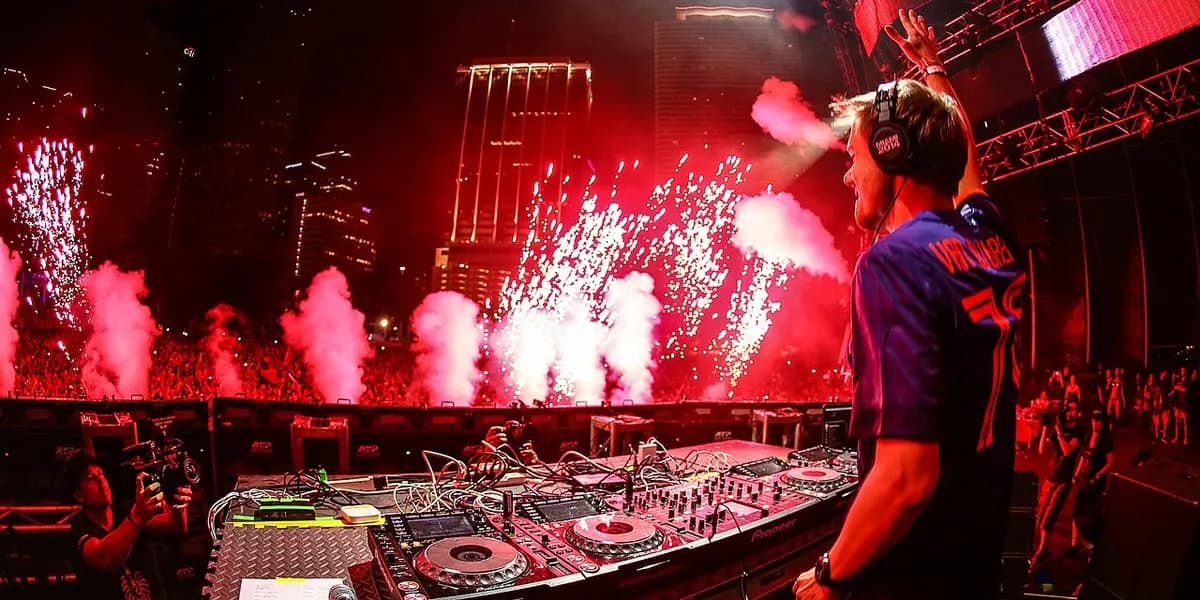
- Build and drop: tension is stacked through risers and filter sweeps, then released in a high-energy "drop," the main event of modern festival EDM.
- Loop-based structure: long intros and outros for DJ mixing, repetition, and breakdowns; strict verse-chorus form is less common.
- Wide tempo range: roughly 120–150 BPM across most styles, with outliers on both ends.
Tempo is the single most useful tell for sorting the EDM family. Each branch clusters in its own BPM band:
| Style | Typical BPM | Feel |
|---|---|---|
| House | 120–130 | Warm, groovy, four-on-the-floor |
| Techno | 125–150 | Mechanical, hypnotic, driving |
| Trance | 128–140 | Euphoric, melodic, uplifting |
| Dubstep | 138–142 (half-time) | Heavy, wobbling bass, sparse |
| Drum and Bass | 160–180 | Fast breakbeats, deep sub-bass |
| Hardstyle | 150–160 | Distorted kicks, hard and euphoric |
| Future Bass / Trap | 140–160 | Melodic drops, chopped vocals |
Instruments & Production
EDM is made by producers, and its "instruments" are mostly machines and software:
- Drum machines: the Roland TR-909 and TR-808 supplied the kicks, claps, and hats that define house, techno, and modern trap.
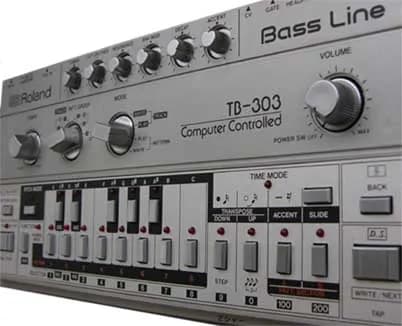
- Synthesisers: hardware classics (Roland Juno, TB-303, Access Virus) and software (Serum, Sylenth1, Massive) generate leads, basses, and pads.
- Samplers: used to chop vocals, break loops, and disco phrases.
- DAWs: Ableton Live, FL Studio, and Logic are where nearly all modern EDM is arranged, layered, and mixed.
The shared production language includes side-chain compression (the "pumping" duck under the kick), risers and white-noise sweeps to build tension, heavy reverb and delay, and the automation of filters to shape drops. Sound design (a growl bass, a supersaw lead, a distorted hardstyle kick) is often what separates one EDM style from another.
The Genres Under the EDM Umbrella
EDM contains dozens of distinct genres. The main branches, each with its own page on this site:
- House: the four-on-the-floor foundation, warm and groove-led, born in Chicago.
- Techno: mechanical and hypnotic, born in Detroit.
- Trance: melodic and euphoric, built around long builds and breakdowns.
- Dubstep: half-time and bass-heavy, known for the wobble and the drop.
- Drum and Bass: 160–180 BPM breakbeats over deep sub-bass.
- Hardstyle: distorted, pitched kicks and euphoric leads from the Dutch hard-dance scene.
- Trap: here, the EDM-trap hybrid with 808s, hi-hat rolls, and festival drops.
- Dance: the pop-facing, radio-friendly end of the spectrum.
Beyond these sit big room, electro house, future bass, hardcore, and many smaller microgenres, nearly all of which trace back to house or techno.
Notable Artists & Tracks
Because EDM spans so many styles, its best-known acts range widely:
- Daft Punk: "Around the World," "One More Time" (French house that charted worldwide).
- Avicii: "Levels," "Wake Me Up" (melodic festival house).
- Skrillex: "Scary Monsters and Nice Sprites" (US dubstep's breakout).
- Swedish House Mafia: "Don't You Worry Child," "Greyhound."
- Deadmau5: "Strobe," "Ghosts 'n' Stuff" (progressive house).
- David Guetta: "Titanium," "When Love Takes Over" (EDM-pop crossover).
- Calvin Harris: "Feel So Close," "Summer."
- Martin Garrix: "Animals" (big-room festival house).
Start with "One More Time," "Levels," and "Scary Monsters and Nice Sprites" to hear how far the umbrella stretches.
EDM Today
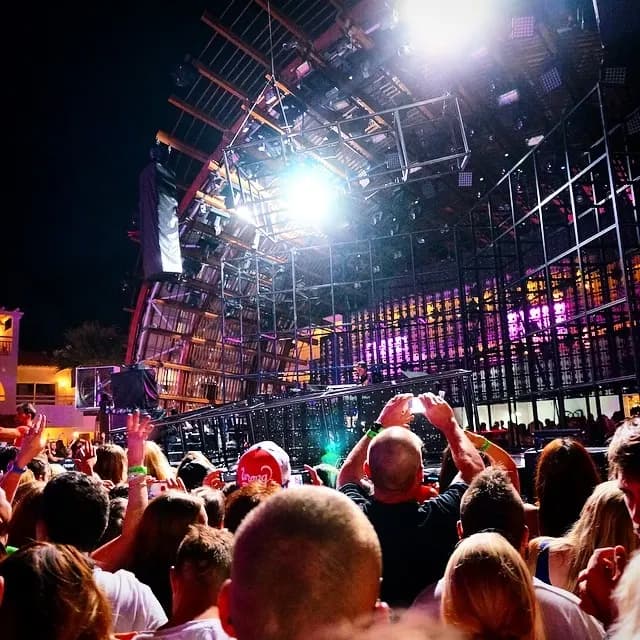
The "EDM boom" as a marketing label lost steam in the mid-2010s, but the music itself spread back into its subgenres and into pop. Tech house and Afro house fill festival line-ups, melodic techno acts play large venues, and EDM's builds and drops are now routine in mainstream pop and hip-hop production.
In the streaming era the umbrella keeps widening: hyperpop, future bass, and phonk borrow EDM's tools. The idea Frankie Knuckles and Juan Atkins worked on in the early 1980s, dance music built from machines, is now a standard part of pop production.
How AI Detects EDM
Since EDM covers many sounds, an AI model has to decide which EDM style a track belongs to. It reads the tempo, the kick pattern (four-on-the-floor vs. breakbeat vs. half-time), whether there is a build and drop, and the timbre of the synths and bass, then scores that profile against hundreds of genres. A 128-BPM four-on-the-floor with warm chord stabs reads as house; a 140-BPM half-time wobble reads as dubstep; a 174-BPM breakbeat reads as drum and bass.
Try it: open the Genre AI music genre detector, feed it a few seconds of audio, and it will place the track on the electronic map with weighted probabilities across the whole family. To understand the mechanics behind that call, read our explainer on how AI music genre detection works.
Testing this genre in Genre AI ourselves, "EDM" rarely comes back as a single flat answer; the model resolves it into a specific style. A four-on-the-floor pulse at 124–130 BPM leans House; push past 132 BPM with a supersaw lead and it tilts Trance; a half-time 140 BPM wobble reads Dubstep; and a distorted, pitched kick around 150 BPM lights up Hardstyle. The near-neighbour scores sit right below the top result, so you can see exactly where in the umbrella a track lives.