Merengue is the national music and dance of the Dominican Republic: a fast, driving 2/4 rhythm played on the two-headed tambora drum and the metal güira scraper, with either an accordion (in the rural típico style) or a horn section with saxophones (in the big-band style) carrying the melody. It is made for a close-hold partner dance with a step on every beat, and Dominican migrants carried it from Santo Domingo to the dance halls of New York as early as the 1930s.
Below: where merengue came from, how a dictator made it the national symbol, the instruments and the parts of a song, the main styles and artists, and how it differs from bachata, its fellow Dominican genre, and from salsa. To see how a classifier hears it, upload a few seconds to our free AI music genre detector.
What Is Merengue?
Merengue is defined first by its pulse. The rhythm is in a brisk duple metre, with the tambora drum marking every beat and filling the gaps with rolls and slaps, and the güira scraping a steady pattern on top. Dancers step on each beat, and the music rarely lets up: where salsa is built around the clave and bachata sways through romantic guitar lines, merengue simply drives forward.
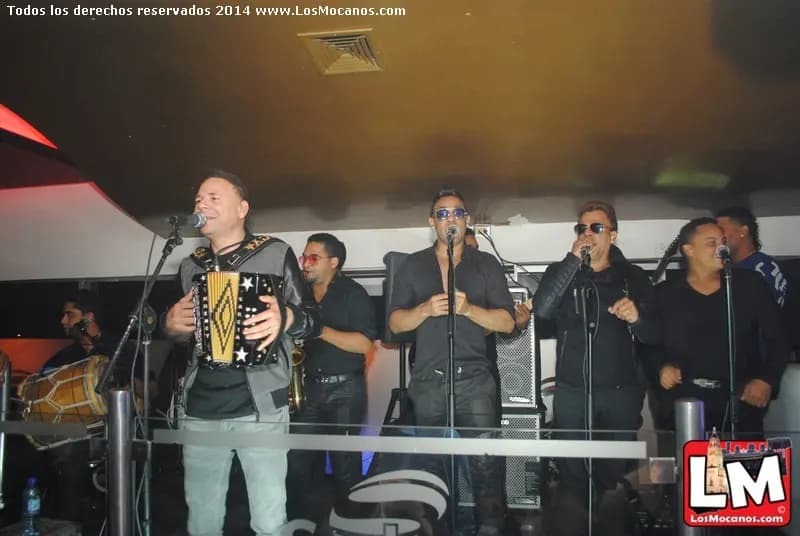
Two ensemble traditions share that rhythm. Merengue típico, also called perico ripiao, comes from the rural Cibao region in the north and is led by the diatonic button accordion. Orchestral merengue, the urban, commercial style, replaces or supplements the accordion with saxophones, trumpets, piano, bass and a lead singer backed by a chorus. The tambora and güira stay in both.
The word "merengue" is also used for related but different music elsewhere — Haiti's méringue, a cousin from the same 19th-century Caribbean roots, and Venezuela's merengue, which has a rhythm of its own and is written either in 5/8 or in 2/4 with a triplet. This page is about the Dominican form, which is what the word means on a dance floor or in a record shop.
History & Origins
Merengue's origins are debated. It is first mentioned in Dominican newspapers in the mid-19th century, in articles complaining about a "lascivious" new dance that was pushing out the older tumba, and it was first played on string instruments such as the bandurria and guitar. Until the 1930s the Dominican elite treated it as immoral, and moralists tried to ban both the music and the dance.
In the Cibao valley, around the city of Santiago, musicians built the típico ensemble that is still recognisable today: the button accordion, brought to the island by German traders in the 1880s, together with tambora, güira and, from the 1930s, a bass instrument. The accordionist Francisco "Ñico" Lora (1880–1971) is usually credited with popularising the accordion at the turn of the 20th century; asked how many merengues he had composed, he answered "thousands".
The decisive shift came under the dictator Rafael Trujillo, who ruled the Dominican Republic from 1930 until his assassination in 1961. Trujillo came from a poor rural family in the south, and he made the rural merengue the national symbol. He ordered musicians to compose merengues in his praise, with titles like "Trujillo is great and immortal". Luis Alberti and other bandleaders made the style acceptable to the urban middle class by modelling it on American big bands: a large brass section replaced the accordion, while the tambora and güira stayed as the rhythmic base.
After Trujillo's fall, merengue modernised quickly. In 1964 Johnny Ventura formed El Combo Show, with a slimmed-down brass section, salsa influences and choreographed stage shows. In the 1970s Wilfrido Vargas sped up the tempo and brought in disco and rock. Through the 1970s and 1980s, Wilfrido Vargas, Los Hermanos Rosario, Fernando Villalona and Milly Quezada kept merengue at the top of Latin radio (by the 1980s it was outplaying salsa), and the Dominican community in New York spread it across the US. At the end of the decade the Berklee-trained Juan Luis Guerra and his group 4.40 brought poetic lyrics and denser arrangements to the style with the album Ojalá que llueva café (1989).
In the 1990s New York groups mixed merengue with house and hip-hop: Proyecto Uno's "El Tiburón" (1993) is the best-known merenhouse record, and Fulanito, from Washington Heights, built its sound on típico accordion over house and hip-hop beats. Elvis Crespo's "Suavemente" (1998) became a hit across Latin America and the US. Since the 2000s a faster, stripped-down urban style (merengue de calle, or merengue de mambo) has grown up in the Dominican Republic and New York, while bachata and reggaeton have taken much of the international audience. In November 2016 UNESCO inscribed the music and dance of Dominican merengue on its Representative List of the Intangible Cultural Heritage of Humanity.
Rhythm, Tempo & Instruments
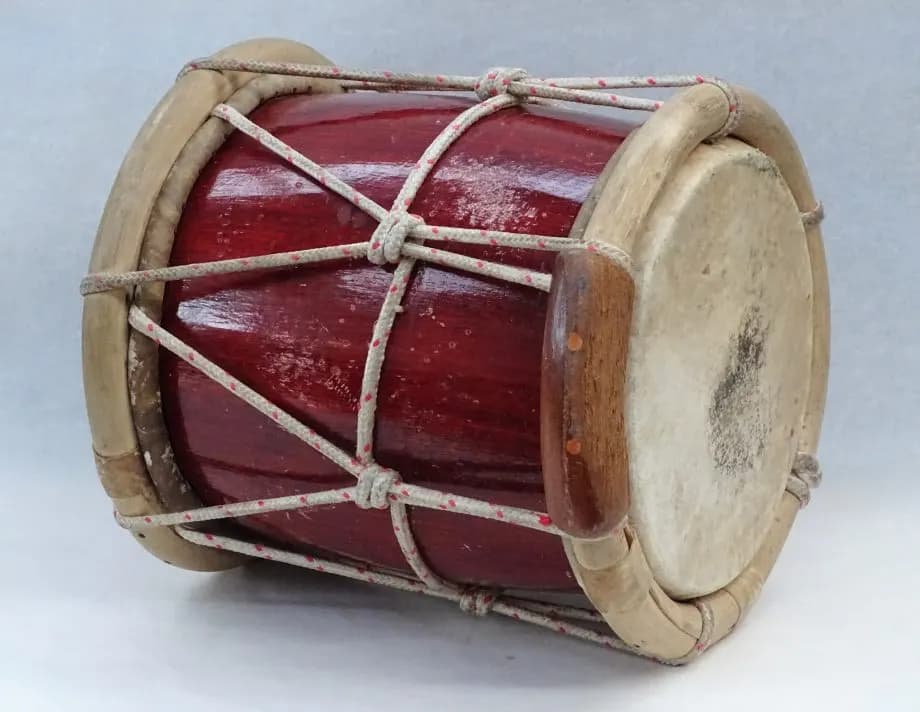
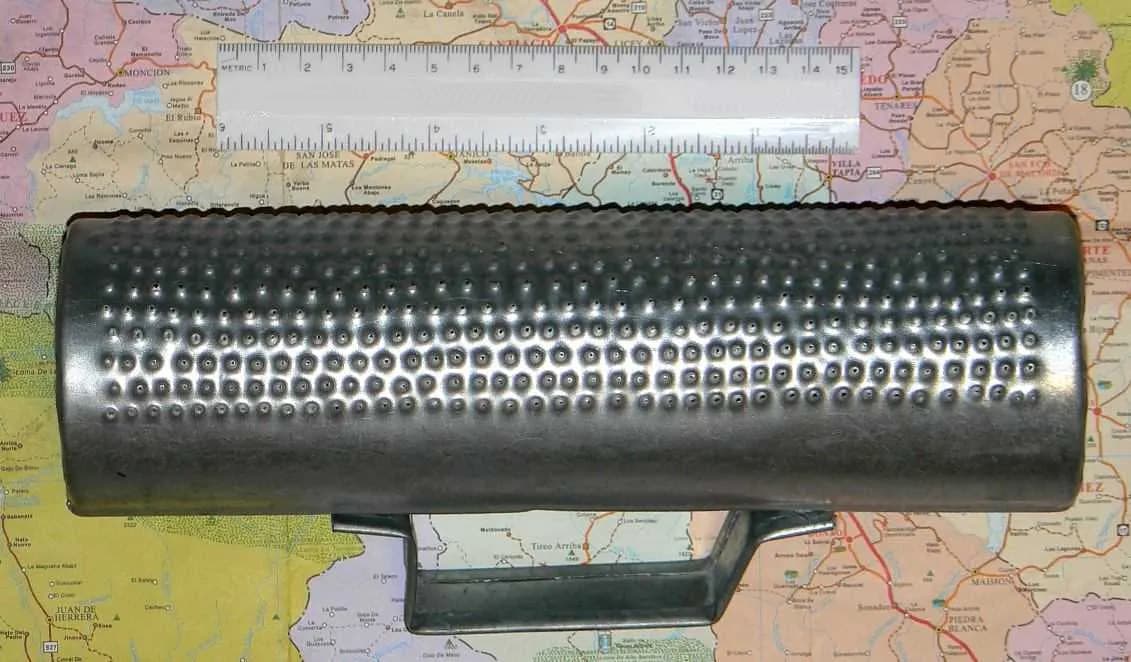
Merengue's sound rests on a small, tight rhythm section:
- Tambora: a two-headed barrel drum held on the lap, one side struck with a stick and the other with the bare hand. Its signature figure, the quintillo, is a run of five quick strokes between the second and third beats.
- Güira: a metal cylinder scraped with a brush-like scraper, playing a constant pattern that is the brightest sound in the mix.
- Accordion: the lead melodic instrument of merengue típico, played with fast runs and repeated figures.
- Saxophones and brass: in orchestral merengue, the saxophone section plays rapid, interlocking riffs; trumpets add punch.
- Bass and piano: the electric bass anchors the harmony with syncopated lines; piano plays repeated montuno-like figures.
- Congas: common in modern orchestral merengue alongside the tambora.
The tempo is fast: modern dance merengue commonly sits roughly in the 120–160 BPM range, and some típico and urban recordings go faster. Harmony is simple, often two or three chords, so the energy comes from the rhythm section and from the saxophones or accordion trading riffs over it.
| Section | What happens | Notes |
|---|---|---|
| Paseo | A short instrumental introduction | Originally a walk around the floor before dancing; often dropped in modern recordings |
| Merengue (cuerpo) | The main body with verses and chorus | The singer tells the song's story or theme |
| Jaleo | A climactic, repetitive section | Call-and-response vocals, saxophone or accordion riffs, tambora in full drive |
Styles of Merengue
The main styles, from the oldest to the newest:
| Style | Lead instruments | Character | Names to know |
|---|---|---|---|
| Merengue típico (perico ripiao) | Accordion, tambora, güira, bass or marimba | Rural, fast, raw, virtuosic accordion | Ñico Lora, Tatico Henríquez, Francisco Ulloa, Fefita la Grande |
| Orchestral (big-band) merengue | Saxophones, trumpets, piano, bass, tambora, güira | Polished, dance-band sound | Luis Alberti, Johnny Ventura, Wilfrido Vargas |
| Romantic and pop merengue | Horns, keyboards, lush vocals | Smoother, slower, love songs | Juan Luis Guerra, Eddy Herrera, Milly Quezada |
| Merenhouse and merengue-rap | Drum machines, synths plus tambora | 1990s fusion with house and hip-hop | Proyecto Uno, Fulanito |
| Merengue de calle (mambo) | Electronic beats, horns, güira | Fast, minimal, street-party | 2000s urban Dominican scene |
Key Artists & Recordings
A listening path, roughly in chronological order:
- Luis Alberti, "Compadre Pedro Juan": written in the 1930s and still the standard of orchestral merengue.
- Tatico Henríquez (1943–1976): the típico accordionist who replaced the marimba with electric bass and added saxophone to the lineup.
- Johnny Ventura: "El Caballo Mayor", whose Combo Show modernised merengue from 1964.
- Wilfrido Vargas: the bandleader who sped merengue up in the 1970s and led it through the 1980s.
- Los Hermanos Rosario and Fernando Villalona: two of the biggest acts of 1980s and 1990s merengue.
- Milly Quezada: the "Queen of Merengue", born in Santo Domingo and raised in Washington Heights, a four-time Latin Grammy winner.
- Juan Luis Guerra y 4.40, Ojalá que llueva café (1989): the album that took literary lyrics into merengue.
- Elvis Crespo, "Suavemente" (1998): his first solo single, after leaving Grupo Manía.
- Proyecto Uno, "El Tiburón" (1993): the best-known merenhouse track.

Merengue vs Bachata, Salsa, Cumbia & Soca
- Merengue vs bachata: both are Dominican. Bachata is guitar-led and slower, with romantic lyrics, with requinto lead guitar and bongos; merengue is faster and driven by tambora, güira and accordion or horns.
- Merengue vs salsa: salsa, rooted in Cuban son and shaped in New York, is organised around the clave rhythm with congas, timbales and bongos; merengue has a straighter, faster duple pulse with no clave.
- Merengue vs cumbia: cumbia, from Colombia, has a slower, loping two-beat groove carried by the guacharaca scraper and accordion or brass; merengue is faster and denser.
- Merengue vs soca: both are fast Caribbean party music, but soca comes out of Trinidad's carnival and calypso, and it is sung in English.
- Merengue vs reggaeton: reggaeton runs on the dembow rhythm at around 90–100 BPM; merengue is faster and acoustic at its core.
How AI Detects Merengue
Merengue gives an audio model clear rhythmic cues: a fast duple pulse, the bright, constant scrape of the güira, the rolling tambora, and either accordion runs or interlocking saxophone riffs under Spanish call-and-response vocals. Genre AI's production taxonomy has no merengue label. Its closest home is the coarse Latin label, which has no finer breakdown, and the classifier picks such a label only when none of the coarse labels that do have subgenres (Jazz, Electronic Dance, Folk / Country, Rock and others) makes its top five. With horn sections and accordions in the mix, one of those is often close, so the answer may come back as a Jazz or Folk / Country subgenre. Modern productions with electronic drums in place of the tambora are harder still. Upload a clip to the Genre AI music genre detector and see where it lands.
Genre AI has no separate class for merengue. The nearest label is the coarse Latin, which has no finer breakdown, so even when it wins the answer cannot tell típico from orchestral merengue. Because the classifier prefers any coarse label with subgenres that reaches its top five, the result likely depends on the style. Accordion-led merengue típico, with its polka-like drive, may be filed under Folk / Country. Orchestral merengue with saxophone riffs and piano montunos may come back as Jazz, most plausibly the Latin Jazz or Big Band / Swing subgenre. Merenhouse and electronic street merengue may lean to Electronic Dance, probably House. A cleanly recorded vocal merengue with little else competing has the best chance of landing on Latin itself.