Kizomba is a slow, sensual song and dance music from Angola that took shape in the 1980s, from roots in the late 1970s, when Angolan musicians combined their own semba with the synthesizer-driven zouk of the French Caribbean. It is built on a steady, rolling 4/4 groove with a deep bass line and soft, romantic vocals, usually in Portuguese, and it is danced in a close embrace. The word comes from Kimbundu, where kizomba means a party.
This guide covers how kizomba grew out of semba and zouk, what the music sounds like and how fast it runs, the offshoots from tarraxinha to ghetto zouk and urban kiz, the singers to start with, and how it differs from semba, zouk and bachata, its partner in the sensual dance scene. To hear where a classifier places a kizomba track, run a few seconds through our free AI music genre detector.
What Is Kizomba?
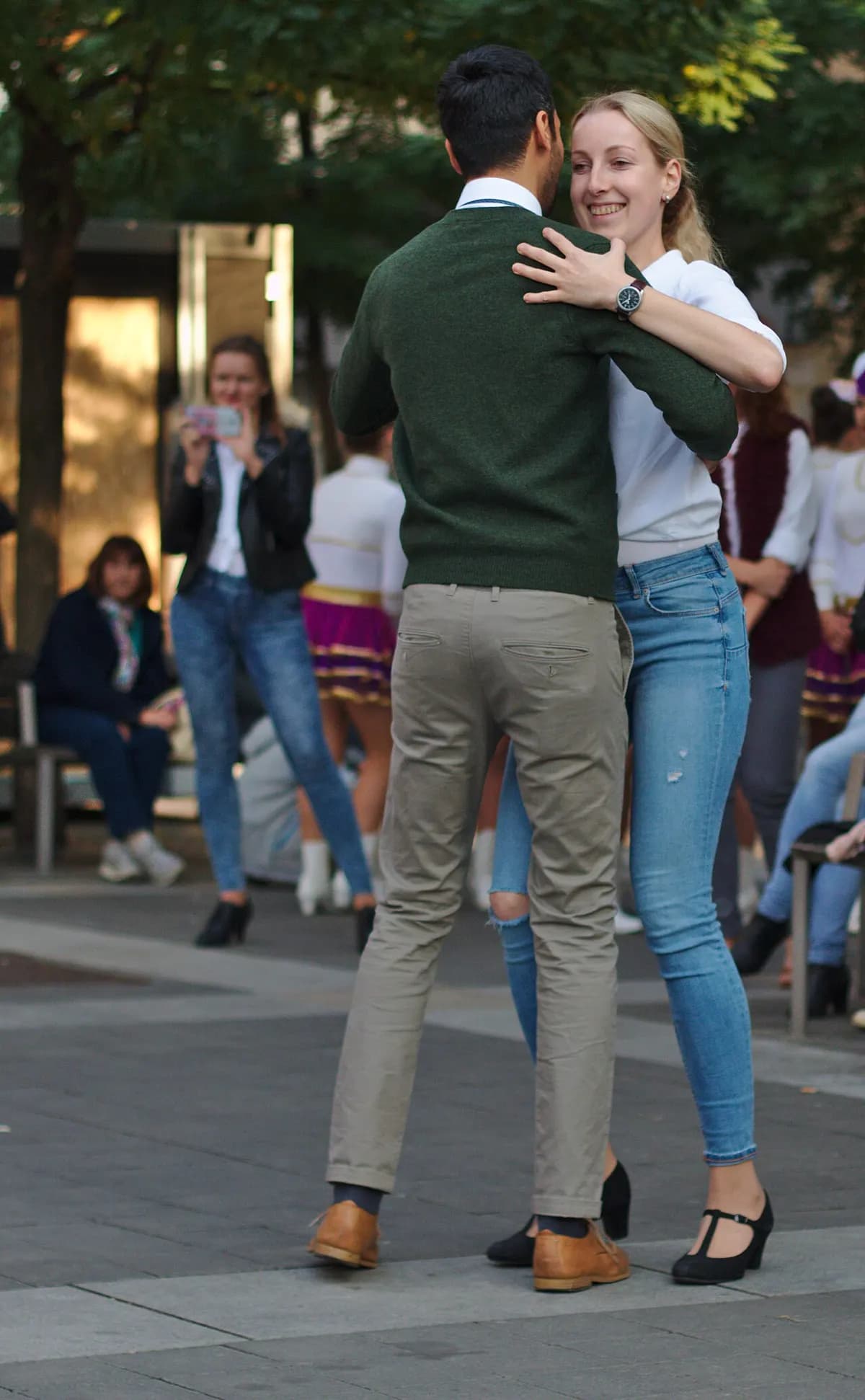
Kizomba is both a genre of music and the couple dance done to it. The music is Lusophone African pop: Angolan in origin, sung mostly in Portuguese (sometimes in Kimbundu, Cape Verdean Kriolu, French or English), and produced with drum machines, synthesizers and electric bass. Its emotional register is romantic and intimate, and its groove is slow and continuous, made for a dance in which partners stay connected chest to chest and move in small, grounded steps.
Several closely related styles sit around it:
- Semba: Angola's older, faster urban music, guitar-driven and celebratory; kizomba's direct ancestor.
- Zouk: the dance music of Guadeloupe and Martinique, pioneered by Kassav' in the early 1980s; its slower romantic form, zouk love, shaped kizomba's sound.
- Cabo love (Cape Verdean zouk): the Cape Verdean branch of romantic zouk, so close to kizomba that the two are played side by side.
- Tarraxinha, ghetto zouk and urban kiz: newer, more electronic offshoots described below.
Outside Angola, "kizomba" is often used loosely for all of this music, because the international dance scene treats it as one family.
History & Origins
Semba roots, before 1975. Angola's urban popular music developed in the musseques (informal neighbourhoods) of Luanda. Groups such as Ngola Ritmos, which Wikipedia credits with the development of modern Angolan music, set Kimbundu songs to guitars and percussion and helped make semba popular in the 1950s. Semba became tied to cultural identity and the struggle for independence, which Angola won from Portugal in November 1975. Bonga, exiled in the early 1970s for supporting independence, recorded the album Angola 72 in Rotterdam with Cape Verdean musicians and became the artist who did most to take semba abroad.
The zouk wave, 1980s. In the early 1980s the French Antillean band Kassav' pioneered zouk, a polished, synthesizer-heavy dance music that spread through Francophone and Lusophone Africa. Angola, in the middle of a long civil war, absorbed it through radio, records and parties. Angolan musicians began playing semba at a slower tempo with zouk's electronic production and romantic melodies. Singer and producer Eduardo Paim, often called the "father of kizomba", founded the band SOS in 1982, and it became popular in Angola in the mid-1980s; Paim has said the kizomba process began in the early 1980s with SOS and a second group, Afro Sound Star. Wikipedia gives 1984 as the style's year of origin. Paim moved to Portugal in 1988, and his debut album Luanda, Minha Banda followed in the early 1990s.
Lisbon and the diaspora, 1990s–2000s. Angolan and Cape Verdean communities in Portugal turned Lisbon, with suburbs such as Amadora and Almada, into a second capital of kizomba. Immigrant-run clubs played kizomba alongside cabo love, and a generation of Lusophone singers recorded for both African and European audiences.
Worldwide dance scene, 2000s–2010s. From Portugal, kizomba spread across Europe and then worldwide as a social dance. It joined salsa and bachata in "SBK" (salsa, bachata, kizomba) festivals and dedicated kizomba congresses. In France, dancers developed a more stylised, linear form known as urban kiz, with music to match. In Brazil, singer Kelly Key's 2015 album No Controle is credited with introducing kizomba to the country, and Accra has weekly kizomba sessions.
Today. In Angola, kizomba remains one of the main forms of popular music alongside semba and kuduro, a fast, electronic dance style that also descends from semba. Anselmo Ralph, C4 Pedro and Matias Damásio are among its best-known current singers.

The Sound: Tempo, Groove & Production
Kizomba is easy to recognise once you know what to listen for:
- Slow-to-mid tempo: most dance tracks sit somewhere around 80–100 BPM, with tarraxinha slower still. There is no published standard, and the figures quoted by DJs and production guides vary, so the range is a guide, not a rule.
- Rolling 4/4 pulse: a steady beat with a characteristic syncopated percussion pattern, usually programmed on drum machines, that dancers walk to.
- Deep, melodic bass: the bass line carries much of the groove and fills the low end of the mix.
- Synth pads and keys: lush, sustained chords inherited from zouk love, with electric piano or guitar licks.
- Romantic vocals: smooth, often falsetto-tinged singing in Portuguese, with harmonies and ad-libs close to R&B.
- Mostly minor or bittersweet harmony: simple, repeated chord progressions that stay behind the dance.
The family of styles around kizomba differs mainly in tempo, density and mood:
| Style | Origin | Typical tempo | Character |
|---|---|---|---|
| Semba | Angola, mid-20th century | Faster than kizomba | Guitar-led, joyful, storytelling |
| Kizomba | Angola, 1980s | Roughly 80–100 BPM | Slow, romantic, rolling electronic groove |
| Zouk / zouk love | Guadeloupe and Martinique, 1980s | Original zouk about 120–145 BPM; zouk love slow | French Creole vocals, polished synths |
| Cabo love | Cape Verde and diaspora | Slow | Romantic zouk sung in Kriolu or Portuguese |
| Tarraxinha | Angola, 2000s | Slower than kizomba | Minimal, bass-heavy, very sensual |
| Ghetto zouk / urban kiz | France and diaspora, 2000s–2010s | Slow to mid | Electronic, R&B- and hip-hop-influenced, sparse beats |
Subgenres & Offshoots
- Traditional kizomba: the Angolan sound of the 1990s and 2000s, with full arrangements, melodic bass and strong vocals.
- Tarraxinha: a slower, stripped-back Angolan style focused on bass and a heavy, hypnotic beat; also the name of a very close dance.
- Ghetto zouk: a French and Caribbean-diaspora style mixing zouk and kizomba with R&B and hip-hop production. Kaysha, born in Kinshasa and raised in France, and the Rotterdam-born Nelson Freitas are among the singers working in it.
- Urban kiz: the music of the French-led urban kiz dance style: sparse electronic beats, often remixes of pop and R&B songs, with clear accents for stylised footwork.
- Kizomba remixes: international pop hits re-produced over a kizomba beat, a staple of dance socials outside Africa.
Key Artists
- Eduardo Paim: Angolan singer and producer, founder of SOS, often called the father of kizomba.
- Bonga: semba's best-known voice abroad; Angola 72 is the place to start for the music kizomba came from.
- Kassav': the Antillean band that pioneered zouk in the early 1980s.
- Anselmo Ralph: one of Angola's biggest modern stars, known for romantic kizomba ballads.
- C4 Pedro: Angolan singer with crossover success in Portugal and the diaspora.
- Yola Semedo: one of the leading female voices of Angolan kizomba.
- Matias Damásio: singer-songwriter popular across Angola and Portugal.
- Nelson Freitas: Cape Verdean-Dutch singer, born in Rotterdam to Cape Verdean parents, who mixes Cape Verdean zouk with R&B.
- Suzanna Lubrano: Cape Verdean singer of romantic zouk.
- Kaysha: Kinshasa-born, France-based singer and producer whose catalogue spans zouk, kizomba and R&B.

Kizomba vs Semba, Zouk & Bachata
Kizomba is often lumped together with other "sensual" partner dances. Musically, they are easy to tell apart:
- Kizomba vs semba: semba is faster, guitar-led and festive; kizomba is slower, electronic and romantic.
- Kizomba vs zouk: zouk is French Caribbean and sung in Antillean Creole; kizomba is Angolan, sung mostly in Portuguese, with a heavier, more grounded groove.
- Kizomba vs bachata: bachata is Dominican, guitar-based, in Spanish, with a four-step dance accenting the fourth beat; kizomba is electronic, Portuguese-language and danced in a continuous walk.
- Kizomba vs R&B: modern kizomba and ghetto zouk share slow tempos, smooth vocals and electronic beats with R&B, which is why remixes cross over so easily, but kizomba keeps its distinctive percussion pattern.
- Kizomba vs Afro house and amapiano: all are modern African dance musics, but Afro house runs at house tempos around 120 BPM with four-on-the-floor kicks, a different world from kizomba's slow embrace.
How AI Detects Kizomba
To an audio model, kizomba presents a slow, steady electronic groove, a deep melodic bass line, lush synth pads and smooth Portuguese vocals. Its characteristic percussion pattern is the strongest genre-specific signal; the rest of the production overlaps heavily with slow R&B and Caribbean pop. Remixes of English-language pop songs over a kizomba beat are the hardest case, because the vocal points one way and the beat another.
Try a traditional Angolan track and an urban kiz remix side by side in the Genre AI music genre detector, and read why songs have multiple genres for why fusion styles split a classifier's vote.
Genre AI's production taxonomy has no kizomba label, and the labels that describe it best, African and R&B, are coarse ones without sub-labels. The model gives such a label as the answer only when none of the categories that do have sub-labels reaches its top five, which is unlikely for a track this close to slow R&B. The more likely result is Rap Hip-Hop with Contemporary RnB as the answer, because the slow tempo, drum-machine beat, synth pads and smooth, ad-libbed vocals are what contemporary R&B is made of; ghetto zouk and urban kiz remixes push further in that direction. Funk / Soul, answered as Soul or Neo Soul, is another possible reading. Alternatives only list sibling labels of the winning category, so African, Latin or Pop will rarely come up at all. A clip that includes the vocal and the full percussion pattern gives the model the most to work with; an instrumental intro may simply read as slow R&B.