Future bass is a style of electronic music from the 2010s built on big, wobbling chords: stacks of detuned saw-wave synths whose volume or filter pulses in rhythm, played over half-time trap-style drums and decorated with pitched-up vocal chops. It took the drop structure of dubstep and EDM trap and swapped the aggression for warmth: major-seventh chords, bright melodies and a lift that can feel close to euphoric. Tempos usually sit between 130 and 175 BPM, most often around 140–160.
This guide covers the Glasgow producers who started it, Flume's route to the mainstream, how the chord sound is made, the kawaii and melodic offshoots, the key records, and how future bass differs from dubstep, trap and tropical house. Curious how a classifier hears those pulsing chords? Run a clip through our free AI music genre detector.
What Is Future Bass?
The core of future bass is a single production move. A wide, sustained chord, usually built from several detuned sawtooth oscillators, is chopped rhythmically by automating its volume or a filter. In dubstep the bassline wobbles; here the harmony does. Underneath sit a kick and snare in half-time, rolling hi-hats borrowed from trap, and a sub-bass that follows the chord roots. On top go vocal chops: fragments of a singer, cut, re-pitched and played like an instrument.
The emotional register is what sets it apart from the bass music around it. The chords are extended (major sevenths, ninths, suspended voicings), and the progressions usually sound bright and wistful. The drop feels like a release, where a dubstep drop feels like an attack. That made the sound easy to fit into pop songs, and from about 2015 future bass drops began to appear inside chart singles by artists with no connection to the underground scene.
The name sounds close to future house, which is a different 2010s style: four-on-the-floor house with metallic, plucked basslines, associated with producers such as Tchami and Oliver Heldens. Our blog's tropical house vs future house comparison covers that one. Future bass is not house at all. Its drums are half-time and its centre is the chord.
History & Origins
The style grew out of the Glasgow scene around the LuckyMe and Numbers labels at the end of the 2000s. Producers there were mixing hip-hop beats, 1990s rave synths, video-game melodies and the off-grid "wonky" hip-hop of the time. Hudson Mohawke's album Butter (2009, Warp) and Rustie's Glass Swords (2011, Warp) are the two records most often cited as foundations: loud, saturated and colourful, with huge synth chords over hip-hop and trap rhythms. Hudson Mohawke then formed TNGHT with the Montreal producer Lunice; their 2012 EP helped define the EDM trap sound that ran alongside early future bass.
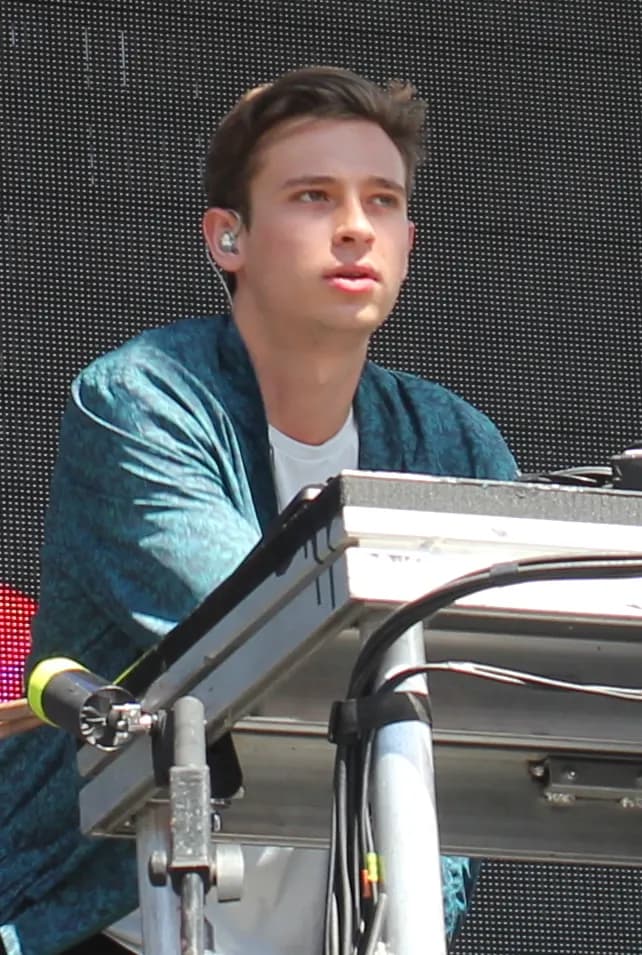
For the wider audience, the key figure was the Australian producer Flume (Harley Streten). His debut album Flume (2012, Future Classic) reached number one on the Australian albums chart, and his 2013 remix of Disclosure's "You & Me" carried the sound well beyond the producer scene. In the same years Cashmere Cat from Norway, Lido, Wave Racer and Ryan Hemsworth worked in a similar lane, often releasing through SoundCloud.
2016 is usually described as the genre's breakout year. Flume's second album Skin (Future Classic, May 2016) led with "Never Be Like You" featuring Kai, went to number one in Australia and won the Grammy for Best Dance/Electronic Album in 2017. San Holo's "Light" (2016) became a scene anthem, and Louis the Child, Illenium, Mura Masa and Marshmello took versions of the sound to festivals. Pop producers adopted the chord-stab drop, and for a couple of years it was all over the radio.
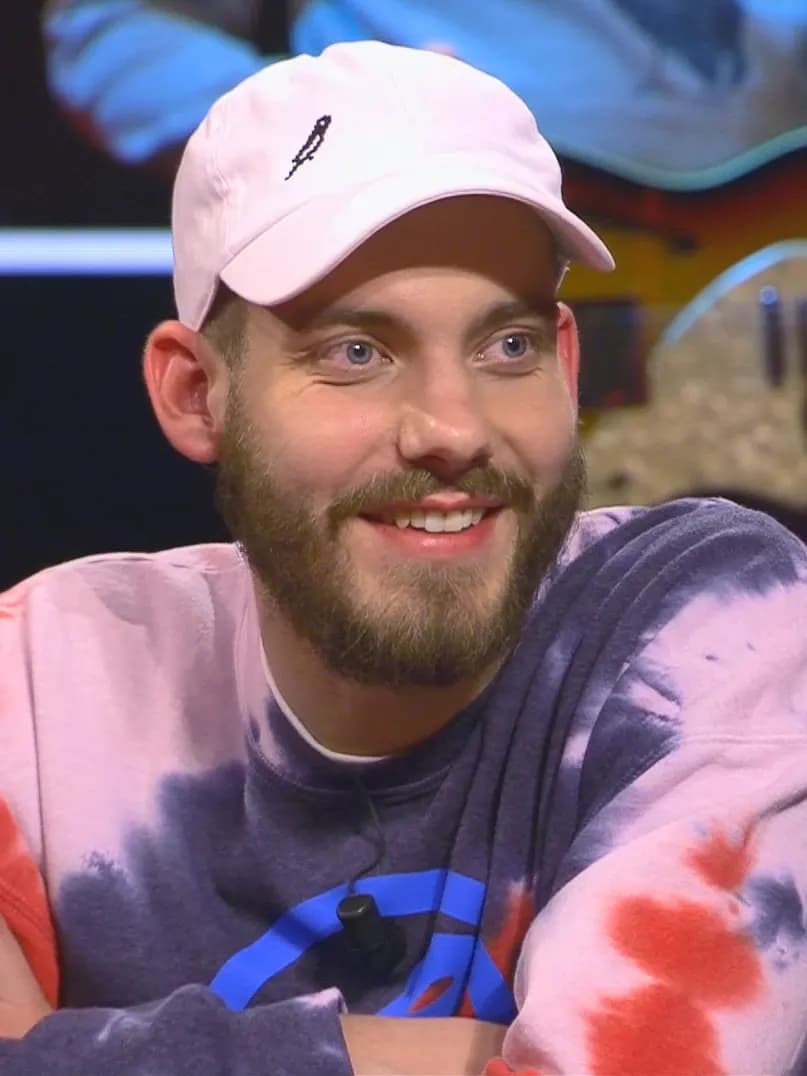
The style also took hold in Japan, Korea and China, where kawaii future bass took shape: cuter, chiptune-flavoured and anime-influenced. The Japanese producer Snail's House is widely credited as its pioneer, starting with the Kirara EP (2015). In the late 2010s and 2020s future bass became less a headline genre than a set of production habits. Its chord treatments turn up in melodic dubstep, in much hyperpop, in video-game soundtracks and in mainstream pop.
Key Characteristics & Sound
What identifies a future bass track:
- Tempo: usually 130–175 BPM, most often 140–160, played in half-time so the groove feels like 70–80 BPM.
- Chords: stacked, detuned supersaws with wide stereo spread, pulsed by volume or filter automation or an LFO. This is the "wobbly chord" people mean when they name the genre.
- Harmony: extended chords (major and minor sevenths, ninths, add9 and sus voicings) in progressions that feel bright or wistful.
- Pitch bends: chords that swoop into place, and rising pitch in the risers before the drop.
- Drums: heavy half-time snare on beat three, trap-style hi-hat rolls and triplets, layered claps, often an 808-style sub.
- Vocal chops: short, re-pitched slices of a vocal, played as a melodic lead; vocoders are also common.
- Structure: intro, verse, build, drop. It is the EDM template, except that the drop is built on chords instead of bass noise.
- Sidechain: chords and pads duck heavily under the kick, adding to the pumping feel.
Where it sits among its neighbours:
| Trait | Future Bass | Dubstep | EDM Trap | Tropical House |
|---|---|---|---|---|
| Peak period | 2012–2018 | 2008–2014 | 2012–2016 | 2013–2017 |
| Typical BPM | 130–175 (half-time) | 140 (half-time) | 140–150 (half-time) | 100–120 |
| Drop built on | Pulsing chords | Wobble / growl bass | 808 and brass stabs | No hard drop; melody |
| Harmony | Extended 7ths and 9ths | Minimal, minor | Minimal, minor | Simple, major |
| Mood | Euphoric, nostalgic | Aggressive, heavy | Hype, aggressive | Relaxed, sunny |
| Reference track | Never Be Like You | Scary Monsters and Nice Sprites | Higher Ground | Firestone |
Instruments & Production
Future bass is a software genre. Almost everything is made inside a DAW:
- Wavetable and virtual-analogue synths (Serum, Massive, Sylenth1 and similar) for the supersaw chords, usually with seven or more detuned unison voices.
- Volume and filter automation, drawn by hand or generated with LFO tools, to create the chord pulse, often in 1/8, 1/16 or triplet patterns.
- Sidechain compression or volume shaping keyed to the kick, so the chords "breathe".
- Vocal samples sliced in a sampler, pitched up or down and played on a keyboard; formant shifting is common.
- Trap drum kits: 808 kicks and subs, crisp snares, programmed hi-hat rolls.
- Risers and effects: white-noise sweeps, pitch-rising arps, reversed cymbals and impacts around the drop.
- Heavy reverb and chorus for width, so the best-known records sound huge without being crowded.
Labels that shaped the sound include Warp and LuckyMe in the early phase, Future Classic in Australia, and later Foreign Family Collective (founded by ODESZA) and San Holo's bitbird.
Subgenres & Offshoots
- Early "Glasgow" future bass, or wonky: Rustie and Hudson Mohawke. Maximal, rave-coloured, rooted in hip-hop.
- Australian future bass: Flume and the Future Classic circle. Cleaner and more spacious, with soul and R&B vocal features.
- Melodic or emotional future bass: Illenium, San Holo, Said the Sky. Guitar-like leads, big cinematic builds, often songs about heartbreak.
- Kawaii future bass: Snail's House and peers. Chiptune timbres, anime and game samples, cute sound effects; close to chiptune and nightcore aesthetics.
- Future bass pop: the 2015–2018 chart crossover, where pop vocals sit over a chord-stab drop.
- Neighbours: melodic dubstep, EDM trap and the glitchier, louder hyperpop, which inherited many of its chord treatments.
Key Producers & Tracks
Where to start:
- Hudson Mohawke: Butter (2009).
- Rustie: Glass Swords (2011).
- TNGHT (Hudson Mohawke and Lunice): the TNGHT EP (2012), the trap side of the same circle.
- Flume: Flume (2012); the remix of Disclosure's "You & Me" (2013); Skin (2016) and "Never Be Like You".
- Cashmere Cat: the early EPs, delicate and close to R&B.
- San Holo: "Light" (2016).
- Louis the Child: "It's Strange" with K.Flay (2015).
- Illenium: the melodic, emotional branch.
- Mura Masa: British producer whose early tracks sit between future bass and pop.
- Snail's House: Kirara (2015), the kawaii template.
Future Bass vs Dubstep, Trap and Tropical House
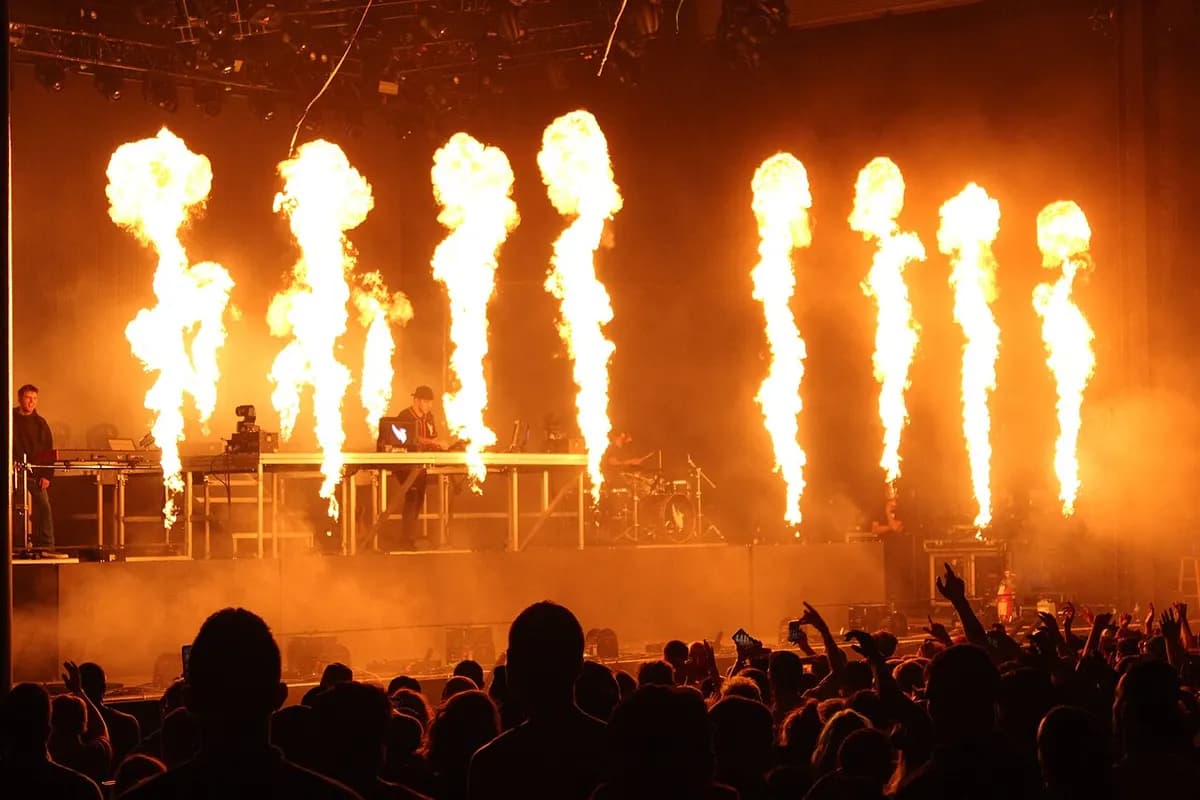
All four shared festival stages in the mid-2010s, which is why playlists blur them:
- vs dubstep: both use half-time drums around 140 BPM and a build-and-drop structure. In dubstep the drop is a growling, modulated bass; in future bass it is a pulsing wall of chords, and the mood is uplifting where dubstep is menacing.
- vs trap: future bass took trap's hi-hat rolls and 808s, but a trap drop rests on sparse 808 patterns and brass or synth stabs with little harmony. Future bass fills the space with extended chords.
- vs tropical house: tropical house is slow four-on-the-floor house at 100–120 BPM with marimbas and soft plucks and no real drop. Future bass is half-time and peaks in a drop.
- vs EDM in general: big-room EDM at 128 BPM uses lead synths over a straight kick; future bass swaps the straight kick for half-time and the lead for chords.
For an audio classifier such as Genre AI, future bass has an unusual profile: a dense, wide band of harmonic synth energy in the mid-range that pulses rhythmically, over a half-time drum pattern and a strong sub-bass. The broad answer should land in the electronic family (Electronic, EDM or Electronic Dance), since there is no dedicated future bass label. The most likely confusion is with Dubstep, because both share the 140-BPM half-time grid and the build-and-drop shape. Future bass puts harmony where dubstep puts bass noise, and a clip taken from a build instead of a drop gives the model little to separate them. Vocal-led crossover tracks are likely to read as Electropop or Pop, because the sung verse dominates the clip. For the most informative result, sample the drop.