Moombahton is a dance music style that fuses the synths and builds of Dutch house with the slow, bouncing dembow rhythm of reggaeton, running at roughly 100–115 BPM. It has a precise birth story: in late 2009 the Washington, D.C. DJ Dave Nada slowed Afrojack's remix of the house track "Moombah!" from 128 to 108 BPM to keep a room of reggaeton-loving teenagers dancing. The name joins "Moombah" to "reggaeton".
Below: that origin, how the sound spread through blogs and Mad Decent, what a moombahton track is made of, the moombahcore and moombahsoul offshoots, the records to know, and how it differs from reggaeton, dancehall and tropical house. Want to hear how a classifier reads a dembow kick under a house synth? Try a clip in our free AI music genre detector.
What Is Moombahton?
Moombahton is a tempo idea that became a genre. Take the brassy synth stabs, squelchy leads, rolling percussion and dramatic build-ups of late-2000s Dutch house (the "dirty Dutch" sound of Afrojack, Chuckie and Sidney Samson), slow them from house tempo to around 108 BPM, and lay them over the dembow, the kick–snare pattern that drives reggaeton and descends from Jamaican dancehall. The result keeps house music's energy and synth palette but swaps its four-on-the-floor stomp for a hip-swinging Caribbean bounce.
Moombahton tracks are mostly instrumental or built around short vocal samples, shouted hooks and a cappella rap snippets; full Spanish verses of the reggaeton kind are rare. They are made for DJs, with long builds and hard drops. The in-between tempo was the point: at 108 BPM a DJ could move from reggaeton to electronic dance music and back without a jarring tempo change.
It is easy to confuse with its neighbours. Reggaeton is a song genre with rap and sung vocals, usually at 90–100 BPM. Tropical house is soft, four-on-the-floor house with marimbas and no hard drop. Moombahton is electronic club music first and Latin rhythm second: the synths and drops of EDM, played at reggaeton's swing.
History & Origins
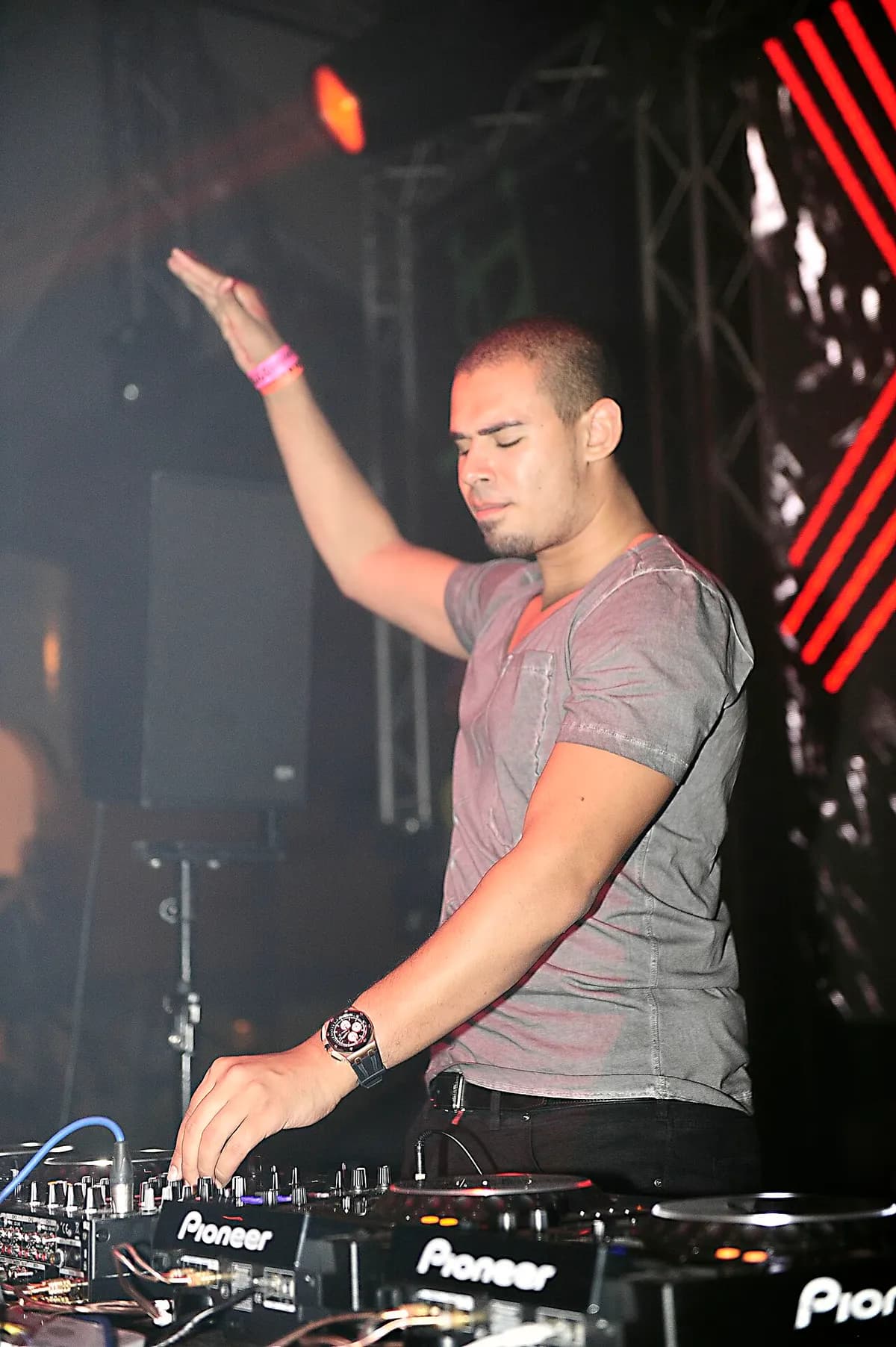
The story is unusually well documented, largely in Nada's own interviews. In late 2009 Dave Nada (David Villegas), an Ecuadorian-American DJ in Washington, D.C., was playing his cousin's high-school "cut party". The crowd wanted reggaeton and bachata; Nada had brought house and club music. He slowed down Afrojack's remix of "Moombah!", a track by the Dutch producers Silvio Ecomo and Chuckie, from 128 to 108 BPM, and, in his words, "the people went crazy". He did the same with Sidney Samson's "Riverside" and got the same reaction.
Nada named the result after the track (moombah plus reggaeton) and recorded a five-track EP of edits, released in March 2010 on T&A Records with the backing of the D.C. DJs Tittsworth and Ayres. Through blogs, SoundCloud and DJ forums the idea travelled fast, and producers in other countries were making slowed Dutch-house-meets-dembow tracks within months. Nada and his partner Matt Nordstrom, performing as Nadastrom, became the style's figureheads, and with DJ Sabo they launched Moombahton Massive, a party series built around the genre.
The early 2010s brought a wave of producers, among them Munchi, a Rotterdam producer of Dominican descent, Dillon Francis in Los Angeles, and artists around Diplo's label Mad Decent. The style split almost at once. Moombahcore, which Munchi is credited with starting, pushed the template toward dubstep wobble bass and distortion; moombahsoul pulled it toward deep house, and David Heartbreak put out one of its first compilations in 2011.
As an underground movement, moombahton peaked around 2010–2012. As a production idea, it went on to the charts. Major Lazer and DJ Snake's "Lean On" featuring MØ (2015), usually described as EDM on a moombahton rhythm, reached number four on the Billboard Hot 100, and in November 2015 Spotify named it the most streamed song in the service's history. Through the later 2010s, slowed, dembow-driven electronic production also turned up in Latin and pop crossover singles.
Key Characteristics & Sound
What identifies a moombahton track:
- Tempo: 100–115 BPM, with 108–110 as the classic setting.
- Rhythm: the reggaeton dembow, a kick on every beat with a syncopated snare figure (the "boom–ch–boom–chick" pattern), often with rolling toms and quick drum fills.
- Bass: thick, spread-out synth bass and sub, sometimes riding the dembow syncopation.
- Synths: Dutch house leads (brassy stabs, squeaky detuned leads, chopped rave synths) slowed down from their original tempo.
- Structure: the EDM build-and-drop with snare rolls and risers; reggaeton's verse–chorus song form is rare.
- Vocals: mostly short samples, shouts, a cappella rap snippets or a single sung hook; full verses are the exception.
- Percussion: congas, bongos, timbales and shakers layered over the drum machine.
- Mood: made for parties, rarely serious.
Where it sits among its neighbours:
| Trait | Moombahton | Reggaeton | Dutch House | Tropical House |
|---|---|---|---|---|
| Origin | Washington, D.C., 2009 | Puerto Rico / Panama, 1990s | Netherlands, late 2000s | Europe, early 2010s |
| Typical BPM | 100–115 | 88–100 | 126–130 | 100–120 |
| Rhythm | Dembow | Dembow | Four-on-the-floor | Four-on-the-floor |
| Vocals | Samples, shouts, hooks | Rapped / sung Spanish verses | Mostly instrumental | Soft sung hooks |
| Structure | Build and drop | Verse–chorus song | Build and drop | Song with melodic breaks |
| Reference track | Lean On | Gasolina | Take Over Control | Firestone |
Instruments & Production
Moombahton is an in-the-box club genre with a few signature moves:
- Tempo-shifted house elements: the original recipe was literally slowing down house records, and producers kept that heavy, dragged feel.
- Dembow drum programming: a punchy kick on each beat, snare or clap on the syncopated offbeats, plus tom and timbale fills.
- Dutch-house-style synths: squeaky detuned leads, stabby brass presets and short plucks from software synths.
- Latin percussion loops layered for swing and texture.
- Risers, snare rolls and impacts borrowed from EDM to frame the drop.
- Vocal chops and DJ-style shouts, often sampled from dancehall, reggaeton or hip-hop records.
Because it sits between scenes, many moombahton tracks were released as remixes and edits of pop, hip-hop and house songs, distributed free online. That helped it spread quickly, and it is also why the early discography is scattered across blogs and SoundCloud pages.
Subgenres & Offshoots
- Moombahcore: moombahton tempo with dubstep wobble bass, distortion and harder drums, plus borrowings from hardcore, breakcore and techstep.
- Moombahsoul: the soft side, with deep house chords and soul samples over the dembow.
- Moombahton pop / dembow EDM: chart singles that adopted the slowed bounce, with "Lean On" as the best-known example.
- Latin electronic crossovers: later singles that put reggaeton songwriting over EDM production at a similar tempo.
- Neighbours: reggaeton and dancehall for the rhythm, house and EDM for the synths, dubstep for moombahcore's bass, and Latin trap as a parallel Latin-meets-American-club style.

Key Artists & Tracks
Where to start:
- Silvio Ecomo & Chuckie, "Moombah!" (Afrojack remix), the record that started it when slowed to 108 BPM.
- Dave Nada: the 2010 Moombahton EP on T&A Records.
- Nadastrom: Dave Nada and Matt Nordstrom's productions, remixes and DJ sets.
- Munchi: the Rotterdam producer credited with the first original moombahton productions and with starting moombahcore.
- Dillon Francis: early-2010s moombahton and moombahcore releases.
- Major Lazer & DJ Snake feat. MØ, "Lean On" (2015): the mainstream peak.
- Diplo / Mad Decent: the label and DJ network that took the style abroad; Nadastrom also remixed for Diplo.

Moombahton vs Reggaeton, Dancehall and Tropical House
- vs reggaeton: both use the dembow. Reggaeton is a vocal genre, Spanish-language rap and singing in a verse–chorus song, typically at 88–100 BPM. Moombahton is a DJ-driven electronic style, a little faster, with house synths and an EDM build-and-drop instead of verses.
- vs dancehall: the dembow rhythm descends from Jamaican dancehall, and Shabba Ranks's "Dem Bow" (1990) gave it its name. Dancehall itself uses a wide range of riddims and is centred on the deejay's voice; moombahton is centred on synths and drops.
- vs tropical house: the tempo ranges overlap, but tropical house is mellow four-on-the-floor with marimbas and soft vocals, while moombahton is dembow club music with hard drops.
- vs house: moombahton started as slowed-down house, but the dembow kick–snare pattern takes it out of house altogether.
| If you hear… | It is more likely… |
|---|---|
| Dembow at ~108 BPM with squeaky house synths and a drop | Moombahton |
| Dembow at ~95 BPM with Spanish rap verses and a sung chorus | Reggaeton |
| Jamaican deejay vocal over a one-drop or digital riddim | Dancehall |
| Four-on-the-floor at ~110 BPM, marimba plucks, soft vocal | Tropical House |
| Dembow at ~110 BPM with wobble bass and distortion | Moombahcore |
For Genre AI, moombahton sends two conflicting signals. The rhythm, a dembow kick-and-snare pattern at around 108 BPM, belongs to reggaeton; the timbre, with bright house synths, risers and a build-and-drop, belongs to EDM. The production taxonomy has no moombahton or reggaeton label, and the way the classifier works tilts the contest. It prefers any coarse label that has subgenres once that label reaches its top five, and Electronic Dance has ten of them, while the coarse Latin label has none. So the most likely answer is an Electronic Dance subgenre: House for the Dutch-house leads, or Breakbeat / Drum & Bass when the bass is heavy, as in moombahcore. A stripped-down groove with a rap snippet may instead come back as Rap Hip-Hop, most plausibly Trap, whose prompts include "latin trap" and "trap latino". Latin itself is likely to come up only when no electronic or hip-hop label is close, which is rare for a genre built from house records.