Afrobeat (singular, no "s") is a West African genre forged in Nigeria in the late 1960s and 70s by bandleader Fela Kuti and drummer Tony Allen. It fuses Yoruba traditional music and highlife with American jazz and funk into long, horn-driven, deeply polyrhythmic grooves, often ten to twenty minutes long, built to carry sharp political messages on the dancefloor.
It is easy to confuse with Afrobeats (plural, with an "s"), the 2010s Nigerian and Ghanaian pop wave of Wizkid, Burna Boy and Davido. They are related but distinct, and this guide keeps them apart while covering both: where Afrobeat came from, how to recognise it by ear, its instruments and subgenres, how it compares to funk and Latin music, the artists who matter, and the global Afrobeats boom. Want to test a track? Run it through the free AI music genre detector, which will tell you within seconds whether you're hearing Fela's Afrobeat, the modern Afrobeats pop wave, or something else entirely.
What Is Afrobeat?
Afrobeat is a band-based African groove music defined by interlocking polyrhythms, a tight horn section, call-and-response vocals, and extended, hypnotic arrangements. A single track typically rides one or two chords for many minutes, layering talking drums, congas, shakers, electric guitar and bass into a dense rhythmic weave while horns punctuate with riffs and solos. It is dance music, but it is also concert music: songs unfold slowly and build tension over many minutes, with few choruses.
The term was coined by Fela Kuti to describe the sound he and his bands (Africa '70, later Egypt '80) developed in Lagos. Fela's Afrobeat is horn-led, jazz-schooled, overtly political and long-form; the contemporary Afrobeats of the 2010s and 2020s is short, melodic, beat-machine-driven radio pop. The singular names a specific 1970s genre; the plural is a 21st-century marketing term for a whole pop scene.
History & Origins
Afrobeat crystallised in Nigeria between roughly 1968 and 1973. Fela Kuti trained in highlife and jazz, but a 1969 tour of the United States exposed him to funk, especially James Brown, and to Black Power politics. Returning to Lagos, he fused those influences with Yoruba rhythm and highlife horns, renamed his band Africa '70, and named the new sound Afrobeat, partly to set it apart from the soul and funk it borrowed from.
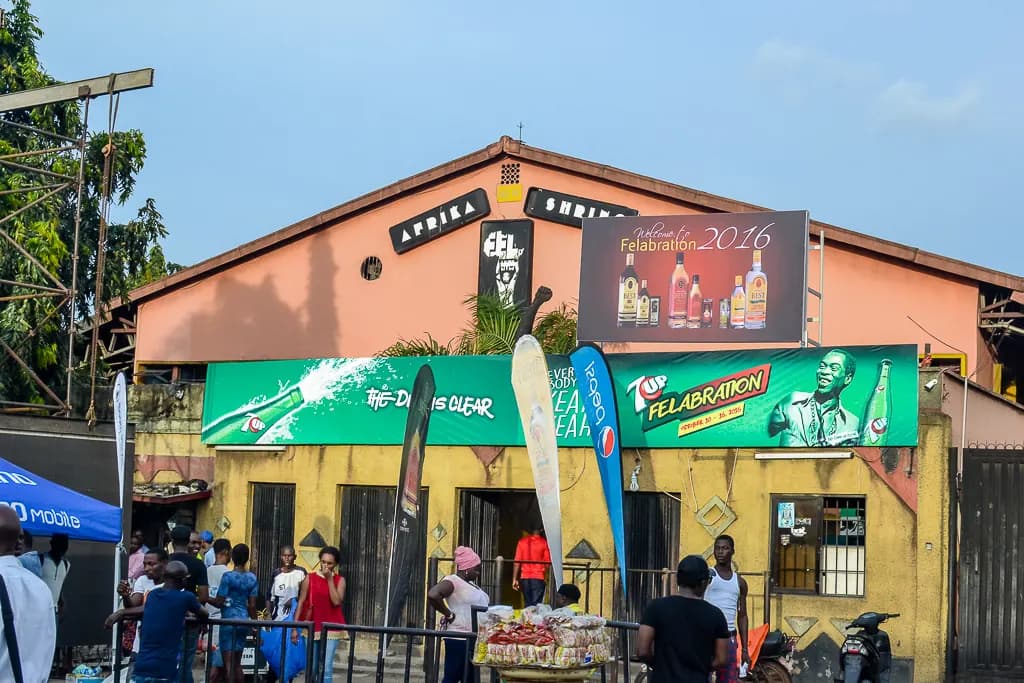
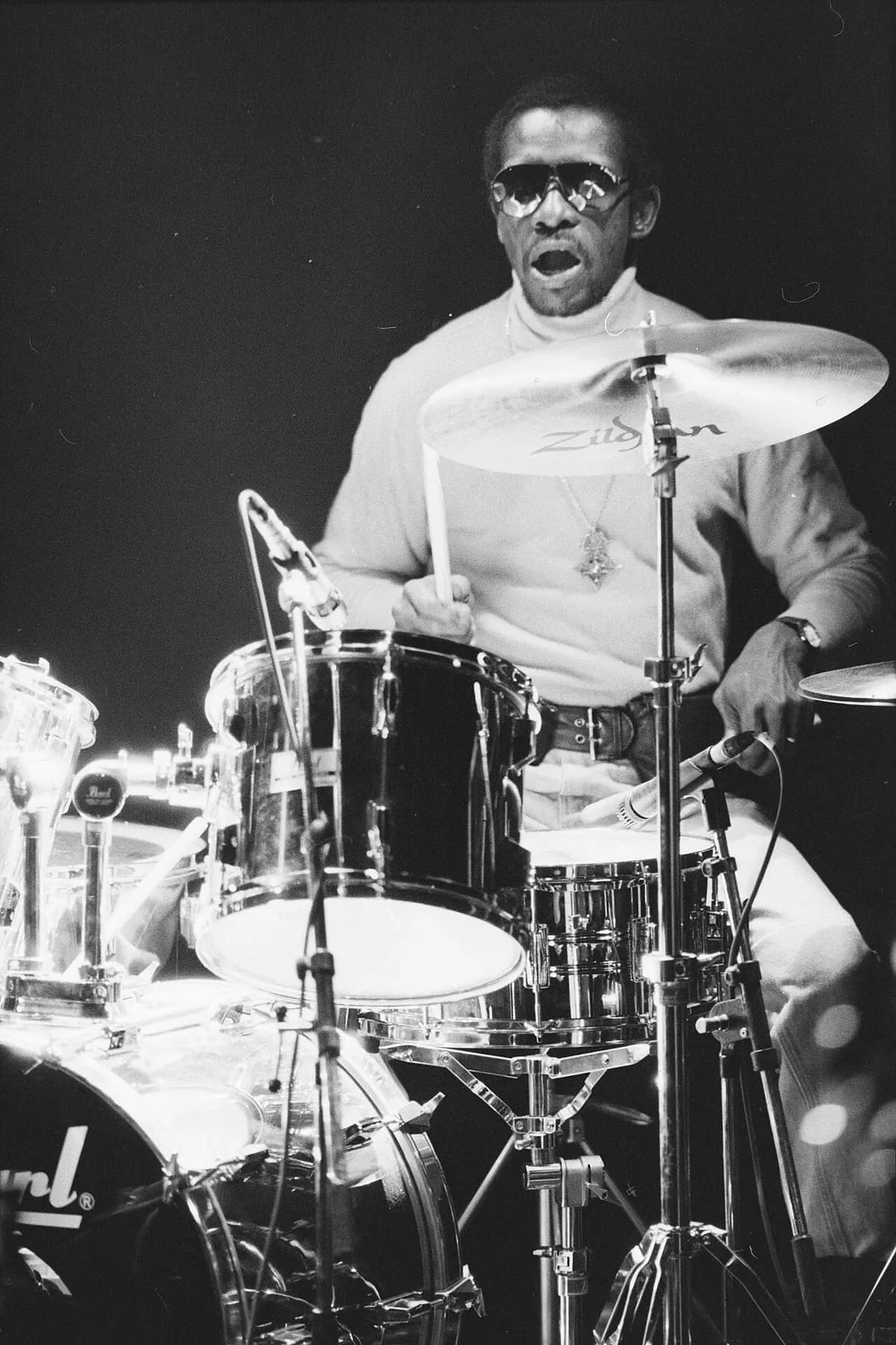
The engine of that sound was drummer Tony Allen. More than a timekeeper, Allen built a rhythmic system that let songs run ten, fifteen, even twenty minutes without losing momentum, fusing jazz phrasing with West African rhythmic logic on a modern kit. Fela later said that "without Tony Allen, there would be no Afrobeat." Through the 1970s, from his Kalakuta Republic commune and the Shrine club, Fela turned Afrobeat into a vehicle for protest. "Zombie" (1976), which mocked the Nigerian military, was followed in February 1977 by an army raid that burned his Kalakuta compound.
Records such as "Water No Get Enemy," "Sorrow Tears and Blood" and "Expensive Shit" defined the template. After Fela's death in 1997 the torch passed to his sons Femi and Seun Kuti, while bands like Brooklyn's Antibalas carried the form internationally. Decades later, that DNA fed indirectly into the wholly separate Afrobeats pop wave, even though the two genres are built very differently.
Key Characteristics & Sound
Classic Afrobeat has a recognisable fingerprint:
- Interlocking polyrhythms: several percussion parts (drum kit, congas, talking drum, shakers, sticks) lock into a single hypnotic groove.
- Horn section: saxophones, trumpets and trombones playing riffs, stabs and extended solos. The horns are as much a lead voice as the singer.
- Tempo & length: a mid-tempo, often relaxed pulse, but tracks run very long (10–20 minutes), building gradually.
- Harmony: minimal, frequently one or two chords held for the entire song, putting all the focus on rhythm and groove.
- Vocals: call-and-response chants, pidgin English, and sharp socio-political lyrics about corruption, oppression and justice.
- Structure: a long instrumental groove that establishes itself before vocals enter, closer to a jazz jam than a pop song.
Modern Afrobeats sounds quite different: it is short and radio-friendly, programmed around drum machines and shakers, melodic and Auto-Tuned, and lyrically about love, partying and everyday life. The table below makes the contrast concrete:
| Trait | Afrobeat (Fela, 1970s) | Afrobeats (2010s pop) |
|---|---|---|
| Era / place | Late 1960s–70s Nigeria | 2010s–2020s Nigeria & Ghana |
| Tempo | ~100–130 BPM, often relaxed | ~95–115 BPM, danceable |
| Track length | 10–20 minutes | 2.5–4 minutes |
| Made by | Live band + horn section | Producers, drum machines, samples |
| Lyrics | Political, socially conscious | Love, partying, everyday life |
| Feel | Dense, jazzy, hypnotic | Light, melodic, hook-led |
Instruments & Production
Classic Afrobeat is a large-ensemble genre, and its sound comes from real players, not a DAW. The core toolkit:
- Horn section: tenor and baritone saxophones, trumpets and trombones, the riffing and soloing front line of the band.
- Polyrhythmic percussion: a drum kit (Tony Allen's loose, jazz-funk feel), congas, the Yoruba talking drum, shekere, claves and sticks, all interlocking.
- Electric guitar: tight, clipped, repetitive funk and highlife figures that lock to the groove.
- Electric bass: deep, looping, syncopated lines anchoring the harmony.
- Keyboards / organ: a Hammond-style or Farfisa organ vamping chords and stabs, a hallmark of Africa '70.
- Vocals: a lead singer plus a chorus of backing vocalists trading call-and-response.
Modern Afrobeats inverts this. The centrepiece is a programmed beat of drums, syncopated shakers, talking-drum accents and 808s, topped by melodic Auto-Tuned vocals; since the early 2020s many producers have also borrowed the deep, pitched log drum of South African amapiano. Classic Afrobeat is a sweating horn band and Afrobeats is a producer's beat, which is why a detector keeps them as separate profiles.
Subgenres & Related Styles
The Afro- family has branched widely, and the names are easy to muddle:
- Afrobeats: the umbrella pop genre of 2010s+ Nigeria and Ghana (Wizkid, Davido, Burna Boy, Tems). Short, melodic, beat-driven club pop. Spelled with an "s," distinct from Fela's Afrobeat.
- Afropop: the most commercial, melody-first wing of Afrobeats, built on catchy hooks and universal themes.
- Afro-fusion: blends Afrobeats with hip-hop, dancehall, R&B and reggae; Burna Boy popularised the term for his self-described style.
- Afroswing: a UK fusion (also called Afrobashment) of the mid-2010s, mixing Afrobeats and dancehall bounce with trap, grime and UK rap, with J Hus among its pioneers.
- Afro house: a distinct electronic dance genre with a four-on-the-floor kick and tribal percussion (Black Coffee, the South African scene). It shares "Afro-" naming but belongs to the house family, not to Afrobeat.
The key mental model: Afrobeat is one specific 1970s band genre; Afrobeats / Afropop / Afro-fusion / Afroswing are the modern pop continuum; and Afro house sits over in electronic dance music despite the shared prefix.
Afrobeat vs Funk vs Latin
Because Afrobeat drew on funk and shares Latin music's percussion-led, polyrhythmic spirit, it helps to line all three up side by side. They overlap in groove but differ in roots, harmony and structure:
| Trait | Afrobeat | Funk | Latin |
|---|---|---|---|
| Origin | Nigeria, late 1960s–70s | USA, mid-1960s | Cuba/Caribbean & Latin America |
| Rhythm | Interlocking African polyrhythms | Tight, syncopated groove 'on the one' | Clave-based, son/salsa patterns |
| Harmony | Often one or two chords | Riff- and groove-based | Rich montuno chord cycles |
| Lead voice | Horn section + chants | Horns, bass, vocals | Piano, brass, vocals, percussion |
| Length / form | Long jams (10–20 min) | Tight 3–5 min songs | Verse + extended montuno |
Notable Artists & Tracks
Classic Afrobeat rests on a small set of artists:
- Fela Kuti: the inventor; start with "Zombie," "Water No Get Enemy" and "Sorrow Tears and Blood."
- Tony Allen: the drummer who built the rhythm; his solo work and "No Accommodation for Lagos" are essential.
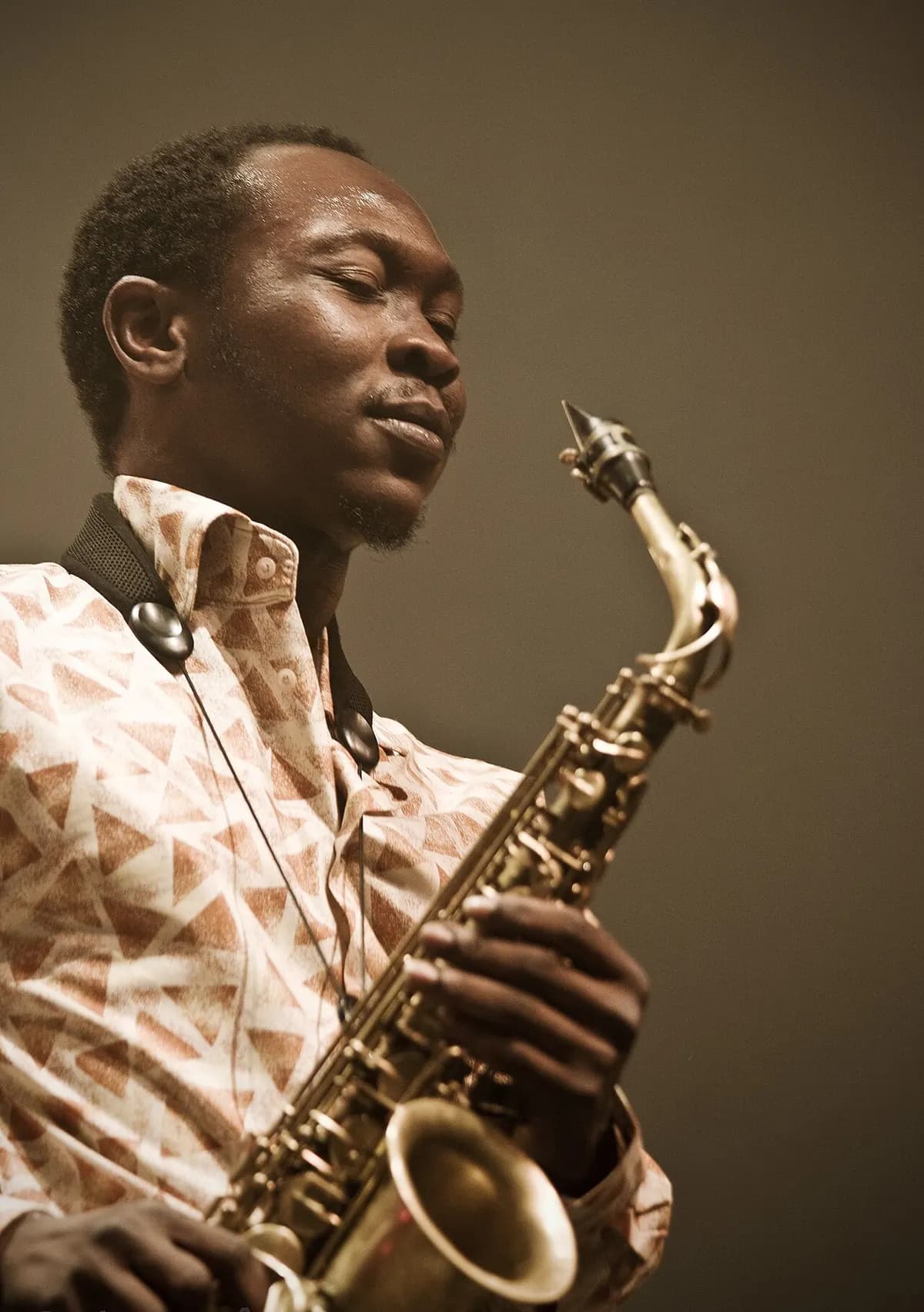
- Femi Kuti & Seun Kuti: Fela's sons, who carried Afrobeat into the 21st century.
- Antibalas: the Brooklyn band that has toured the live Afrobeat format worldwide since the late 1990s.
For the modern Afrobeats pop wave, the headline names are Wizkid ("Essence"), Burna Boy ("Ye," "Last Last"), Davido ("Fall"), Tems and Rema ("Calm Down"). To hear the genres' arc, play Fela's "Zombie" back-to-back with Wizkid's "Essence." They share a continent and a lineage but are built in completely different ways.
Afrobeat & Afrobeats Today
Classic Afrobeat lives on as a live-band tradition through Seun and Femi Kuti, Antibalas, the annual Felabration festival at the New Afrika Shrine in Lagos, and the Broadway musical Fela! (2009). Its audience today is far smaller than that of the Afrobeats pop wave it helped inspire.
Since the mid-2010s, Afrobeats has gone from a regional West African scene to a global one. Wizkid's "Essence" (with Tems) reached the Billboard Hot 100 top 10 after Justin Bieber joined the remix; Burna Boy won a Grammy and sold out stadiums; Rema's "Calm Down" became one of the most-streamed songs in the world; and the Recording Academy added a Best African Music Performance Grammy in 2024. Collaborations with Drake, Beyoncé and Ed Sheeran took the sound further. Fela built Afrobeat partly to resist Western pop, and four decades later its descendants sit inside that mainstream.

How AI Detects Afrobeat
An AI genre detector recognises classic Afrobeat by listening for its rhythmic and timbral signature: dense interlocking polyrhythms across congas, talking drum and a loose jazz-funk kit, a riffing horn section, an organ vamp, and a long, harmonically static groove that rides one or two chords. Most of the energy sits in the percussion layers and brass, with little in the way of a melodic hook, so the model leans on rhythmic density and instrument timbre more than on chord progressions.
Modern Afrobeats presents a different profile: a programmed drum-and-shaker groove (often with amapiano log drums), 808 bass and melodic Auto-Tuned vocals over short, hook-led songs, so a good detector keeps the two as separate labels and scores each one on its own. See where a song lands for yourself: open the Genre AI music genre detector, give it a few seconds of audio, and it will tell you whether it hears Afrobeat or Afrobeats. For the inner workings behind that distinction, read how AI music genre detection works.
In our own testing, the strongest Afrobeat reading comes from interlocking percussion (congas, talking drum, shakers) under a riffing horn section and an organ vamp, riding a long, one-or-two-chord groove. Once that percussion turns programmed, with a deep log-drum pulse, syncopated shakers and Auto-Tuned melodic vocals packed into a short song, the verdict swings to modern Afrobeats. Because the two are genuinely separate genres that happen to share a continent and a prefix, the model holds them apart and reports each on its own line.