Big room house, often just called "big room", is the festival main-stage style of house music that dominated EDM in the early-to-mid 2010s. It runs at about 126–132 BPM, uses long, dramatic build-ups with snare rolls and risers, and resolves them into a deliberately minimal drop: a huge, reverb-drenched kick, a short lead riff (sometimes a single repeated note) and little else. It grew out of Dutch house and the arena-sized progressive house of the period, and its defining record is Martin Garrix's "Animals" (2013).
This guide covers where big room came from, how its build-and-drop formula works, the artists and anthems that defined it, the criticism it attracted, and how it differs from progressive house, electro house, trance and the broader EDM label. For the wider context, see our article on EDM vs electronic music. To check where a festival anthem lands with a classifier, drop a clip into our free AI music genre detector.
What Is Big Room House?
Big room house is designed for one setting: a festival main stage or an arena, tens of thousands of people, pyrotechnics and confetti. Everything in the music serves the moment of the drop. Tracks open with a short intro, move into a breakdown with big supersaw chords or a vocal line, then spend a long time building tension with rising white noise, accelerating snare rolls, a pitched-up synth and often an MC-style vocal shouting a countdown or "jump". The drop then removes almost everything: a pounding, layered kick on every beat, a bass that follows it, and a short, percussive, often atonal lead.
The emptiness has a practical reason. In a huge space with long natural reverb, dense chords and busy melodies smear together, while a simple riff and a giant kick stay audible. Producers also add "large-hall" reverb in the mix itself, so the track sounds like an arena even on headphones.
"Big room" began appearing in news articles around 2007 as a loose description of music for large clubs. The specific sound now meant by it took shape around 2010–2012 and was the dominant festival style from 2013 to about 2016.
History & Origins
The first ingredient is Dutch house, a style of electro house from the Netherlands that emerged around 2006, built on complex, percussive drum patterns, dramatic build-ups and short riffs of high-pitched synths. Sidney Samson's "Riverside" (2009), whose remix "Riverside (Let's Go)" reached number two in the UK in January 2010, and Afrojack's "Take Over Control" (2010, with Eva Simons) took the Dutch sound abroad. The second ingredient is the arena-scale progressive house of Swedish House Mafia and their peers, which proved that house music could fill stadiums with euphoric breakdowns and huge drops.
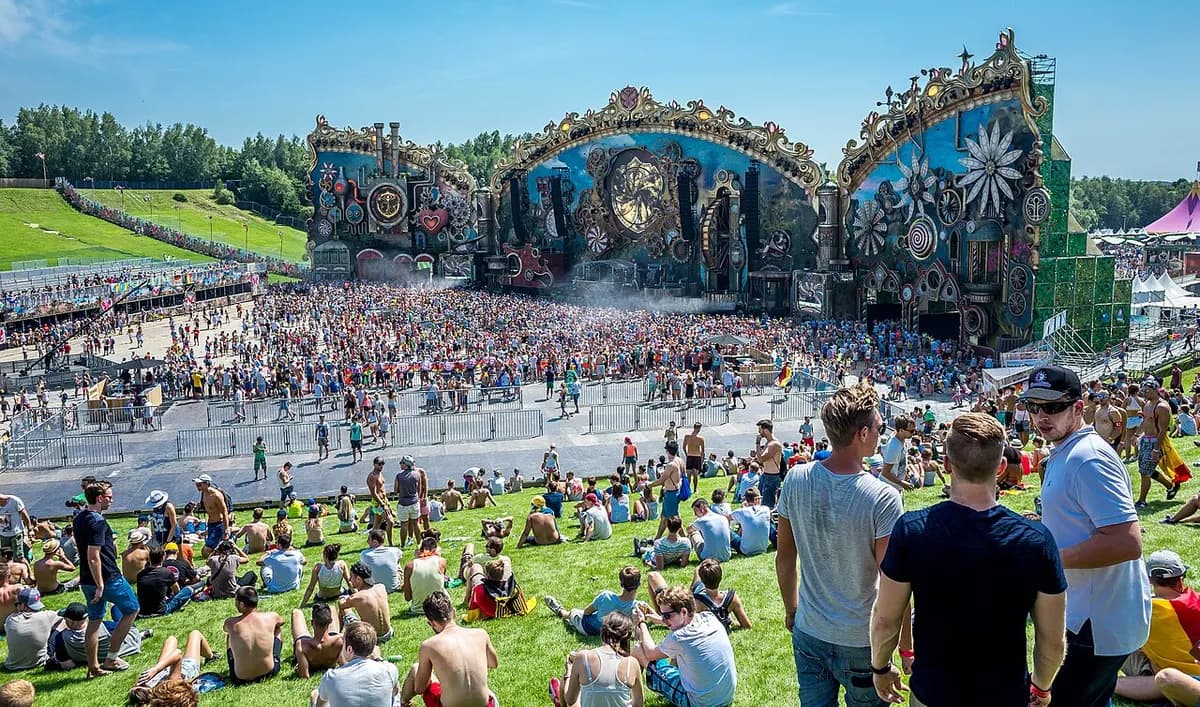
In 2011–2012, Sandro Silva and Quintino's "Epic" (October 2011, on Tiësto's Musical Freedom label) and Showtek and Justin Prime's "Cannonball" (2012) stripped the Dutch house drop down to a punchy kick and a short, piercing lead, and became festival staples. At the same time EDM was booming in the United States: multi-genre festivals such as Ultra Music Festival, Electric Zoo and HARD Summer were growing fast, and DJs began to write music specifically for those spaces. In Europe, Tomorrowland in Belgium was the best-known main-stage festival.
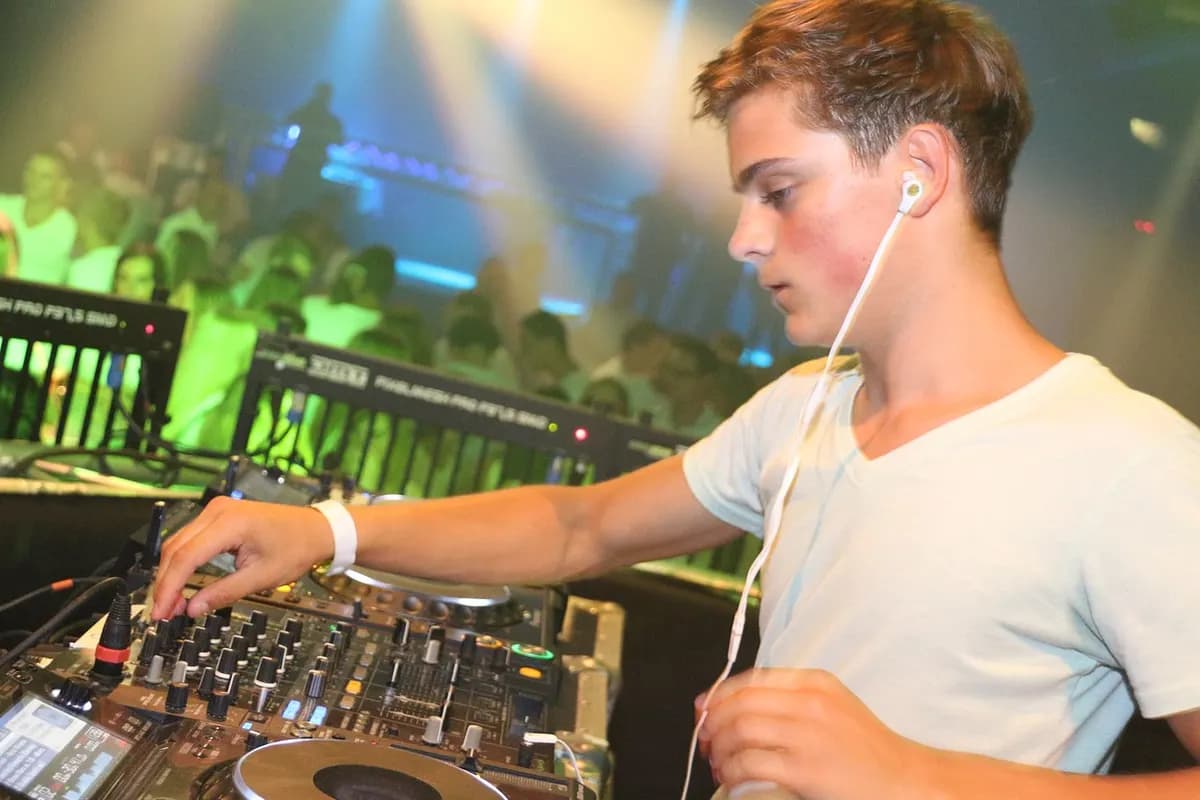
The record most associated with the style is Martin Garrix's instrumental "Animals", released in June 2013 when Garrix was seventeen. Reaching number one on Beatport made him the youngest producer to do so; it entered the UK singles chart at number one in November 2013 and peaked at number 21 on the Billboard Hot 100. Its drop, a growling, single-note riff over a massive kick, became the reference point for the genre and for the debate about it.
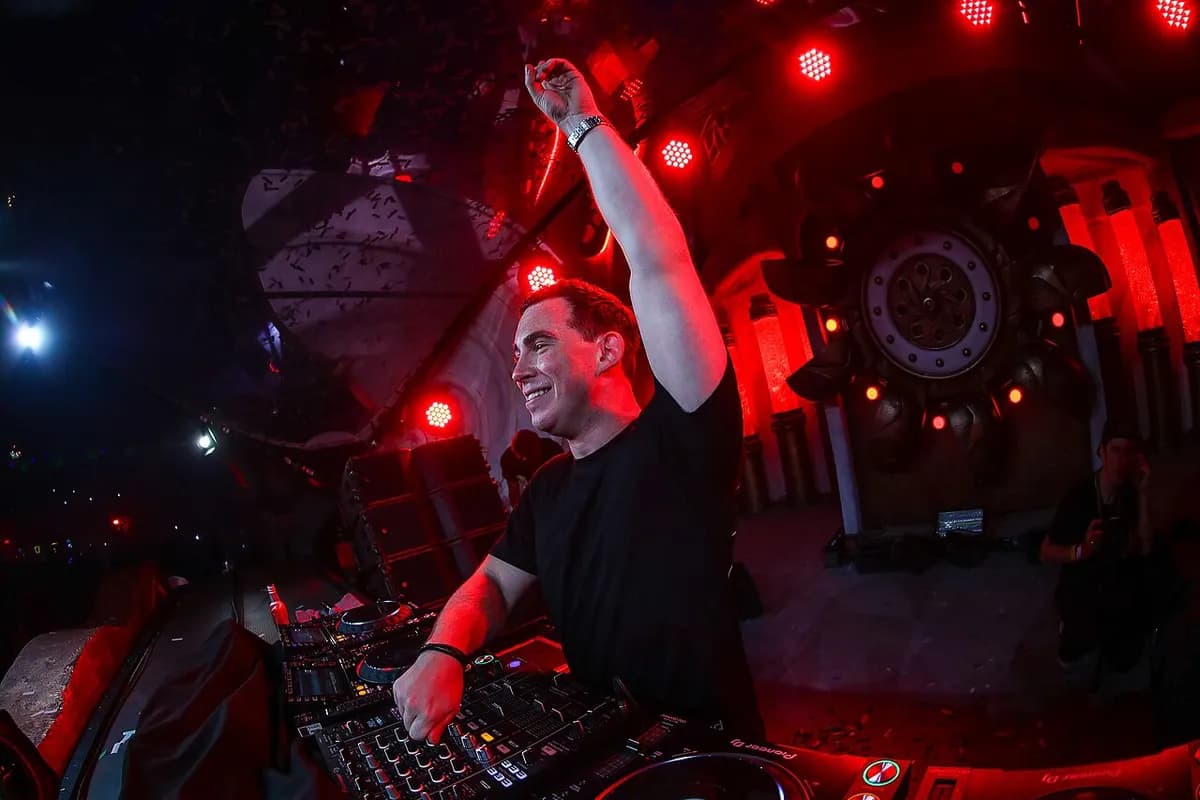
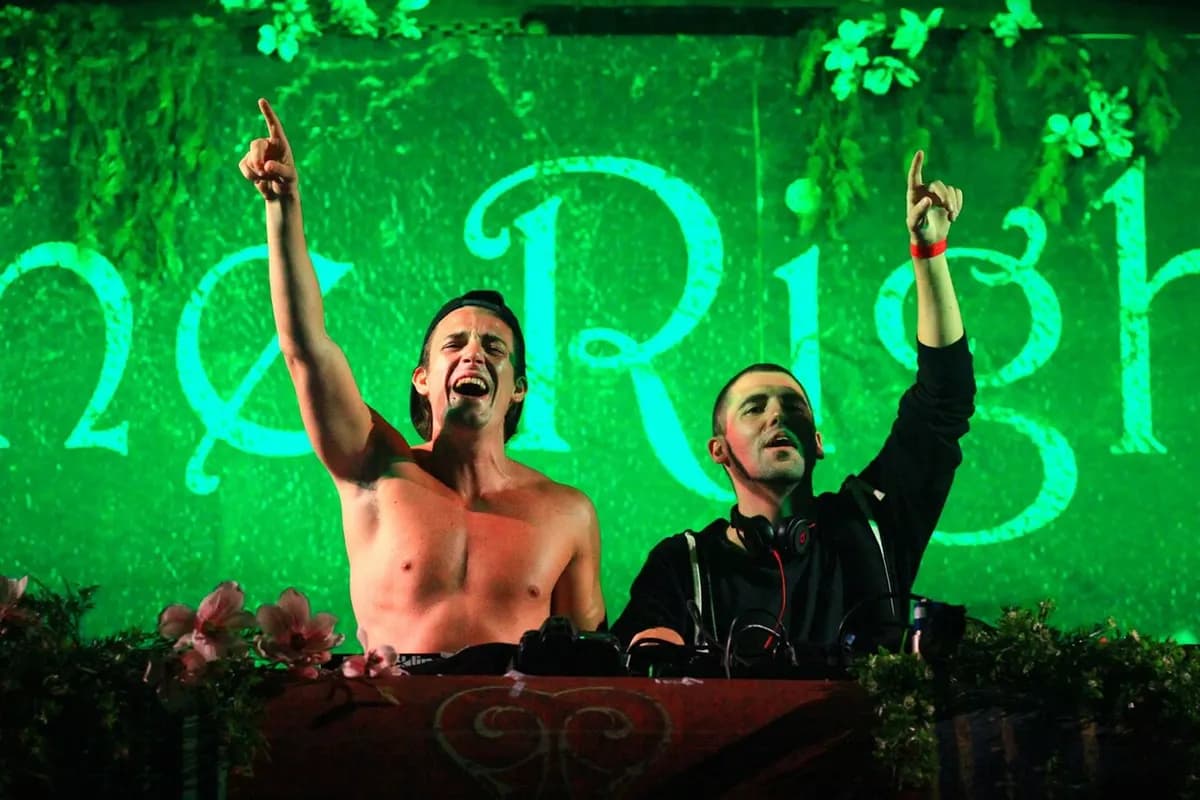
The style's leading DJs topped DJ Mag's Top 100 DJs poll every year from 2013 to 2019. Hardwell, who founded the label Revealed Recordings in 2010, was voted number one in 2013 and 2014. The Belgian duo Dimitri Vegas & Like Mike, regulars at Tomorrowland who founded the Smash the House label in 2010, took the top spot in 2015 and again in 2019. Garrix won in 2016, 2017 and 2018. Alongside them, W&W, Blasterjaxx, KSHMR, R3HAB and many others released big room on labels such as Revealed, Spinnin' Records and Smash the House.
By 2015–2016 the formula had been repeated so often that the backlash grew, and the main-stage sound began to shift: toward future house and bass house, toward the pop-oriented future bass and tropical house, and, within big room itself, toward harder variants that borrowed rolling basslines from psytrance. Beatport added a Big Room category only in 2016, as the commercial peak was passing, and placed deadmau5 and Wolfgang Gartner in it, although Gartner had called the genre a joke. Big room drops are still played on festival main stages, often mixed with psytrance, hardstyle and techno elements.
Key Characteristics & Sound
What identifies a big room house track:
- Tempo: about 126–132 BPM, most often 128.
- The kick: a huge, layered kick with a long, tonal low end, sometimes with a tom-like pitch drop; often the loudest element in the mix.
- Minimal drop: kick, bass and one short, percussive lead riff, often one or two notes, sometimes detuned or "squealing".
- Long build-ups: accelerating snare rolls, risers, white noise and pitch climbs, frequently a minute or more, sometimes with a short false drop.
- Supersaw breakdowns: big, detuned supersaw chords or a trance-like melody in the breakdown, the opposite of the bare drop that follows.
- Vocal shouts: MC-style calls ("put your hands up", countdowns, "jump"), chants or a short sung hook.
- Large-hall reverb: heavy reverb on leads and percussion that makes the track sound like it is already in an arena.
- Structure: two builds and two drops in a radio-length arrangement, with one build often much longer than the other.
How big room compares with the main-stage styles around it:
| Trait | Big Room House | Progressive House (EDM era) | Electro House | Trance |
|---|---|---|---|---|
| Peak period | 2012–2016 | 2009–2013 | 2006–2013 | 1990s–2000s, ongoing |
| Typical tempo | 126–132 BPM | 126–128 BPM | 125–135 BPM | 128–140 BPM |
| Drop | Minimal: kick and short lead | Melodic, chord-led | Distorted, busy bass riffs | Melodic lead over rolling bass |
| Breakdown | Supersaw chords, long build | Euphoric piano or vocal | Shorter, riff-based | Long, emotional, melodic |
| Kick | Huge, tonal, dominant | Punchy, clean | Hard, distorted | Tight, driving |
| Reference track | Animals (Martin Garrix) | Don't You Worry Child (Swedish House Mafia) | Take Over Control (Afrojack) | Adagio for Strings (Tiësto) |
The Big Room Formula: Build, Drop, Repeat
Big room's arrangement is closely tied to how it was played. Festival DJs of the period often mixed quickly, playing one or two drops from each track before moving on, so producers put most of the effort into those moments:
- The breakdown introduces the track's chord progression, vocal or melody, usually with the kick removed.
- The build raises tension with an accelerating snare roll (quarter notes, then eighths, sixteenths and thirty-seconds), a rising noise sweep, a filter opening and often a pitch-rising lead.
- The pre-drop is a moment of near silence or a vocal shout, sometimes with a "fake" drop that cuts out after a beat.
- The drop brings in the kick and the lead together at full volume, with a simple call-and-response between kick and riff.
The same structure made it easy to produce, and that is the root of the main criticism: by 2014 many tracks used near-identical kicks, builds and drops, and listeners could predict every section. Wolfgang Gartner called the genre a "joke" and coined the phrase "the EDM Apocalypse"; Mixmag described "titanic breakdowns and spotless, monotone production aesthetics"; Jake Lang, writing for Complex, criticised its "copycatism". Russell Smith of The Globe and Mail wrote of a "fiery friction" between underground fans and the newer main-stage crowd.
Variants & Related Styles
- Dutch house: the percussive, high-pitched-riff ancestor from the Netherlands, late 2000s.
- Melbourne bounce: an Australian festival style of the early 2010s with a bouncy, offbeat bass, often programmed alongside big room.
- Big room psy / psy-big room: a later blend that adds the rolling, sixteenth-note basslines and acid leads of psytrance to big room builds and drops.
- Big room techno: a festival-sized take on techno with big room arrangement, sometimes marketed as "mainstage techno".
- Hardstyle crossovers: big room tracks with hardstyle-inspired distorted kicks and euphoric melodies.
- The wider EDM umbrella: in everyday use "EDM" often means the big room sound of 2012–2016.
Key Artists & Anthems
A starting list of artists and records that shaped the style:
| Track | Artist | Year | Why it matters |
|---|---|---|---|
| Riverside | Sidney Samson | 2009 | Dutch house anthem that prefigured big room |
| Take Over Control | Afrojack | 2010 | Brought the Dutch sound to an international audience |
| Epic | Sandro Silva & Quintino | 2011 | Often cited as the first big room house track |
| Cannonball | Showtek & Justin Prime | 2012 | Festival staple of the emerging style |
| Animals | Martin Garrix | 2013 | The genre's defining record and biggest crossover hit |
| Tremor | Dimitri Vegas & Like Mike, Martin Garrix | 2014 | Main-stage anthem of the genre's peak years |
Big Room House vs Progressive House, Electro House and EDM
Against progressive house, the difference is the drop. EDM-era progressive house (Swedish House Mafia, Avicii, Axwell) puts melody and chords into the drop itself; big room takes them out and leaves the kick and a short riff. Big room also tends to run a few BPM faster and to use longer, more aggressive builds.
Against electro house, the difference is the bass. Electro house drops are busy, with distorted, constantly modulated bass riffs; big room drops are sparse and rely on the kick and the lead. Big room grew out of the Dutch branch of electro house, so the two overlap heavily in practice.
Against trance, big room borrows the supersaw breakdowns and euphoric chords but not the long, flowing melodic leads or the rolling basslines that define trance; our trance guide covers that family. And against EDM in general, big room is one specific sound inside a much broader commercial umbrella that also covers dubstep, future bass and trap-influenced dance music.
How AI Detects Big Room House
Placing big room in electronic dance music is the easy part: a dominant four-on-the-floor kick around 128 BPM, heavy side-chain pumping, wide supersaw chords and very loud masters all point there. Telling it apart from other main-stage styles is harder, because what makes a track "big room" is mostly arrangement, the length of the build and the emptiness of the drop. No instrument belongs to big room alone.
Try both a drop and a breakdown in the Genre AI music genre detector: the two sections of the same track may land on different neighbours. For background on tempo, see what BPM means in music.
In Genre AI, big room house is likely to land in the coarse Electronic Dance label. There is no big room label, so the fine answer will be a neighbour. Supersaw-heavy breakdowns and trance-like melodies may read as Trance. Minimal drops with a hard kick and a distorted lead may read as Electro, whose prompts include "electro house", or as House; later big room with rolling psytrance-style basslines can pull a runner-up toward Techno or Trance. Two quirks of the label set: the phrase "big room" is one of the text prompts of Big Band / Swing under Jazz, and "progressive house" is a prompt of Progressive / Psychedelic Rock under Rock, so a track may occasionally be pulled into Jazz or Rock as the main answer without any musical reason. Read the result as "main-stage electronic dance" and use the arrangement, a long build and a sparse drop, to decide whether it is big room.