
A film score is music composed specifically to accompany a film, timed to picture and written to shape how an audience feels about what it sees. Most people hear a lot of it without ever choosing to listen, and it can be anything from a full symphony orchestra to a solo synthesizer or processed noise.
This guide covers what a score is, how it differs from a soundtrack, the working process from spotting session to final mix, the major traditions from Golden Age Hollywood to the Zimmer era, and the composers worth knowing. Curious how a classifier handles cinematic music? Play a few seconds into our free AI music genre detector.
What Is a Film Score?
A score is original music written for a specific film and synchronised to it, usually placed under dialogue and action to guide emotional response. It is non-diegetic (the characters cannot hear it), which distinguishes it from source music, like a song playing on a radio inside the scene. The composer normally starts once picture is nearly locked, works to timings measured in seconds and frames, and delivers cues that must land precisely against cuts.
A soundtrack album is not the same thing. Soundtracks often collect licensed songs used in a film; a score album contains the composed music. Some films release both. The practical difference is that songs are usually licensed after the fact, while a score is written to fit the cut.
Because it serves the picture, film music has no fixed instrumentation, tempo, or form. What unites it is function: it tells the audience how to feel about a scene, and it has to work while their attention is on the picture.
History & Origins
Film music predates recorded sound: silent films were accompanied live by pianists, organists, or full orchestras, often working from published cue sheets. The transition to synchronised sound made the composed score standard, and Max Steiner's King Kong (1933) is usually cited as the film that established the symphonic model: leitmotifs, music under most of the running time, and cues that comment on the drama.
Hollywood's Golden Age brought Erich Wolfgang Korngold, Alfred Newman, and Miklós Rózsa, all working in a late-Romantic European idiom. Bernard Herrmann took a different approach in his scores for Hitchcock, such as the strings-only Psycho (1960), with its stabbing shower-scene cue, and the circling, obsessive themes of Vertigo (1958). His music described what characters were feeling more than what was happening on screen.
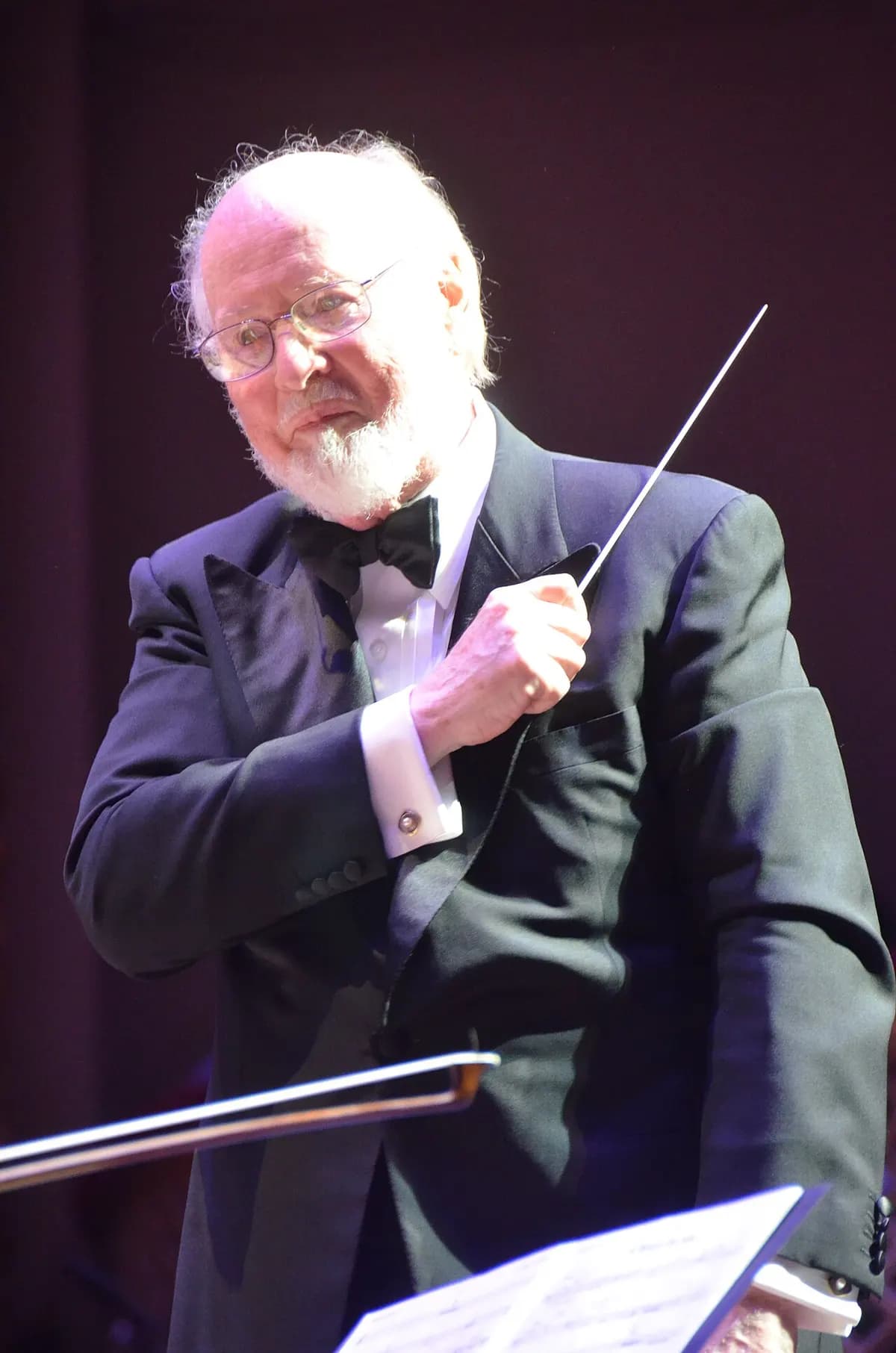
The 1960s and 70s widened the vocabulary. Ennio Morricone brought whistles, electric guitar, and voice into the Western; jazz and pop idioms entered mainstream scoring. Then John Williams's Jaws (1975) and Star Wars (1977), both Oscar winners, brought back the full symphony orchestra and the leitmotif system, and that sound became the norm for Hollywood blockbusters for decades.
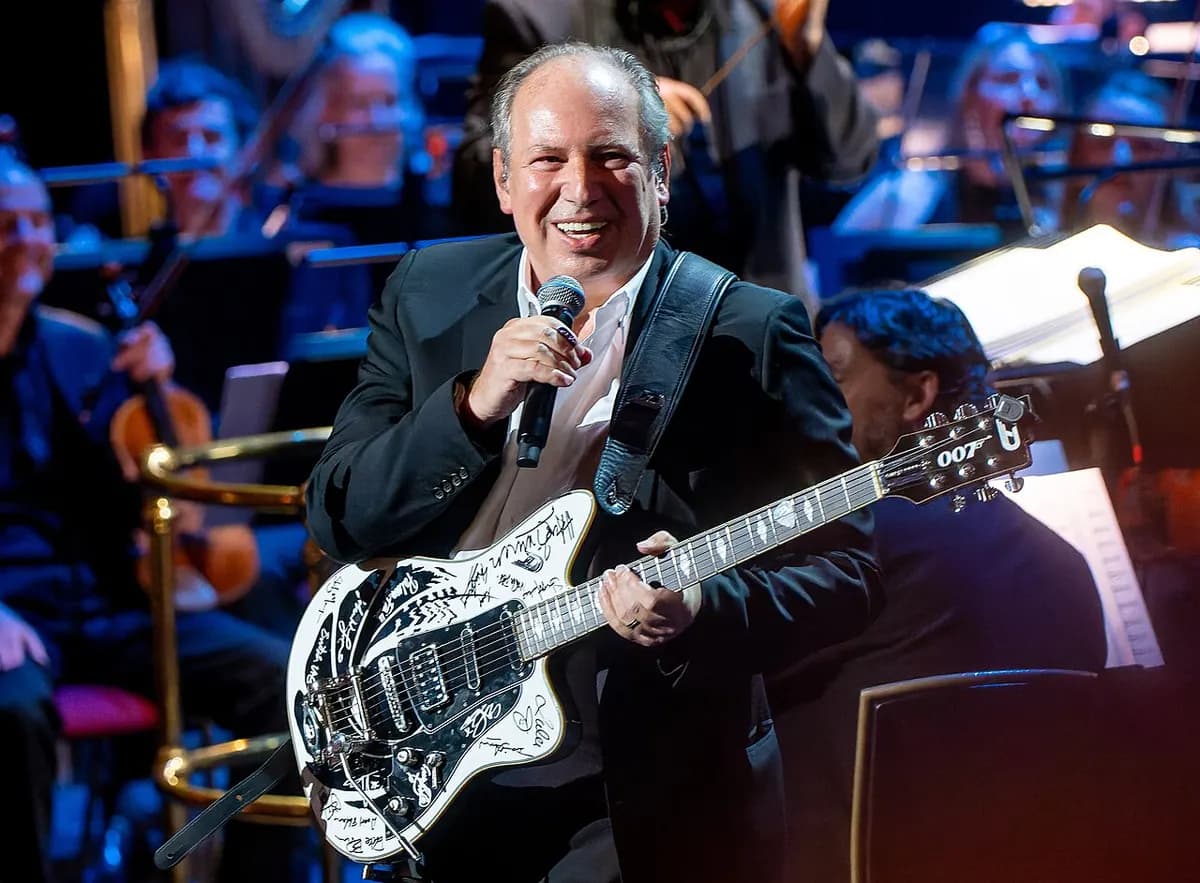
Electronic scoring ran in parallel. Bebe and Louis Barron's Forbidden Planet (1956) is credited as the first fully electronic score for a feature film; later Giorgio Moroder (Midnight Express, Oscar 1979), Vangelis (Chariots of Fire, Blade Runner), and Tangerine Dream scored whole films on synthesizers. From the 1990s Hans Zimmer's hybrid approach, orchestra plus synthesizers built on repeated ostinato patterns and sound design more than long melodies, became the most imitated modern style, with Gladiator, Inception, and Interstellar as reference points. Oscar-winning scores by Hildur Guðnadóttir (Joker, 2019) and Ludwig Göransson (Oppenheimer, 2023) lean even more on texture and processed sound.
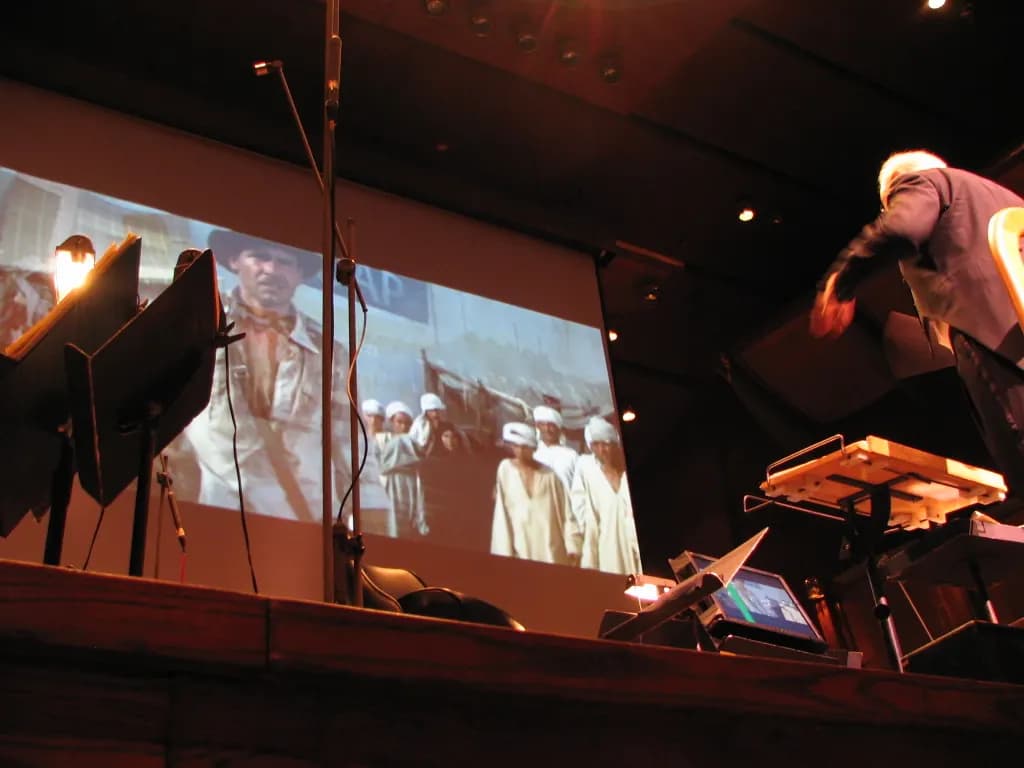
How Scores Are Made
The craft has a specific vocabulary and workflow:
- Spotting session: the director and composer watch the cut together and decide where music starts and stops, and what each cue must do.
- Temp track: existing music the editor lays under the picture while cutting. It shapes expectations, and composers often have to work against a director's attachment to it.
- Leitmotif: a short recurring theme tied to a character, place, or idea, taken from Wagner's operas and used in film by Steiner and, most extensively, Williams.
- Mickey-mousing: music that mimics on-screen action beat for beat; standard in animation, generally avoided in live action.
- Click track: a metronome in the players' headphones so the performance locks to picture timings.
- Mock-ups: sampled demos produced for approval before an orchestra is booked.
- Orchestration: often done by specialists working from the composer's sketches, especially under tight schedules.
The dominant traditions can be summarised by what carries the emotion:
| Tradition | Era | Carried by | Reference |
|---|---|---|---|
| Golden Age symphonic | 1933–1955 | Late-Romantic orchestra, leitmotif | Steiner, Korngold |
| Psychological modernism | 1955–1975 | Unusual instrumentation, dissonance | Herrmann |
| Jazz and pop idiom | 1960s–70s | Small groups, songs, source-style cues | Mancini, Schifrin |
| Neo-symphonic blockbuster | 1975–present | Full orchestra, strong themes | Williams, Shore |
| Electronic | 1956–present | Electronic circuits, then synthesizers and sequencers | Vangelis, Tangerine Dream |
| Hybrid / textural | 1995–present | Ostinato, sound design, orchestra+synth | Zimmer, Guðnadóttir |
Related Forms
Score sits inside a wider family of music written to picture:
- Television scoring: shorter cues, faster turnaround, recurring themes across seasons.
- Video game music: non-linear and adaptive, changing with the player's actions instead of fixed timings.
- Trailer music: a separate commercial industry built on braams, risers, and loud ostinatos.
- Library / production music: pre-composed cues licensed for any production.
- Musical theatre and film musicals: songs that characters perform on screen, alongside background music.
- Ambient and modern classical: often hard to tell apart from textural scoring, and composers such as Jóhann Jóhannsson and Max Richter work in both.
Notable Composers & Scores
Where to start listening:
- Bernard Herrmann: Psycho, Vertigo, Taxi Driver.
- Ennio Morricone: The Good, the Bad and the Ugly, Once Upon a Time in the West, The Mission.
- John Williams: Star Wars, Jaws, Schindler's List, E.T.
- Jerry Goldsmith: Chinatown, Planet of the Apes, Alien.
- Vangelis: Blade Runner, Chariots of Fire.
- Hans Zimmer: Gladiator, Inception, Interstellar, Dune.
- Howard Shore: The Lord of the Rings.
- Danny Elfman: Batman, Edward Scissorhands.
- Alexandre Desplat: The Grand Budapest Hotel, The Shape of Water.
- Hildur Guðnadóttir: Joker, Chernobyl.
- Ludwig Göransson: Black Panther, Oppenheimer.
Start with Vertigo, Star Wars, and Interstellar to hear psychological modernism, the symphonic blockbuster, and the hybrid textural era.
How AI Detects Film Score
Film score is a hard category for audio classification, for a simple reason. A score is defined by its function (music written to accompany picture), not by its sound. A score can be a symphony orchestra, a synthesizer arpeggio, a solo cello, a rock band, or processed field recordings, and there is no acoustic property common to all of them.
What a model can detect is the cluster of conventions that dominate the tradition: orchestral instrumentation without a lead vocal, long sustained string and brass writing, slow harmonic movement, wide dynamic range with large builds, and, in the modern hybrid style, driving ostinato patterns layered with synthetic textures. Expect readings to spread across classical, ambient, and electronic. Test your own examples in the Genre AI music genre detector and read why songs have multiple genres.
Testing this category in Genre AI ourselves, Film Score behaves less like a genre than like a purpose, and the model's output shows it. Orchestral cues return Classical, textural cues return Ambient, synth-driven cues return Electronic or Synthwave, and a Morricone western cue can return Folk or Country. None of those are errors, because nothing in the audio says "this was written for picture." The clearest score-specific signals are about structure, not instrument sound: long sustained low strings, slow harmonic movement, and dramatic dynamic builds without a vocal or a repeating song form.