
Progressive rock is rock music that treats the album, not the single, as the unit of composition. It grew out of late-1960s psychedelia in Britain and the United States, and its best-known bands were British. They imported techniques from classical music, jazz and the recording studio: long multi-part suites, odd time signatures, keyboard orchestration, and lyrics built around a single idea across a whole record.
This guide covers where prog came from, what it does musically, how it differs from rock and psychedelia, and which albums are worth the forty minutes. To hear how one of these tracks reads to a machine, try a section in our free AI music genre detector.
What Is Progressive Rock?
Progressive rock, "prog" for short, is defined more by ambition of form than by a fixed sound. A prog track is likely to change time signature and key mid-piece, run past ten minutes, include a composed instrumental section, and be part of a larger album-length structure. The band is usually a rock quartet or quintet with a keyboard player of equal weight to the guitarist.
Its distinguishing move is borrowing formal language from classical music: themes that are developed and come back transformed, counterpoint between instruments, and dynamics that stretch from a single flute line to the full ensemble. Where hard rock repeats a riff until it hits, prog develops the riff and rarely repeats it identically.
The label arrived around 1967 as "progressive pop", a loose name for music that broke with the standard pop formula, and it became "progressive rock" as the style hardened. It was made in the studio, for listening more than dancing. "Prog" has also long been used as an insult meaning pretentious, and much older criticism of the genre is an argument about class and taste, with the music itself a side issue.
History & Origins
Prog's preconditions arrived in 1966–1967: multitrack studios that made composition possible after the performance, the Beatles' Sgt. Pepper establishing the album as a statement, the Moody Blues' Days of Future Passed pairing a band with an orchestra, and the spread of the Mellotron, which put recorded strings and choirs under a keyboard player's hands.
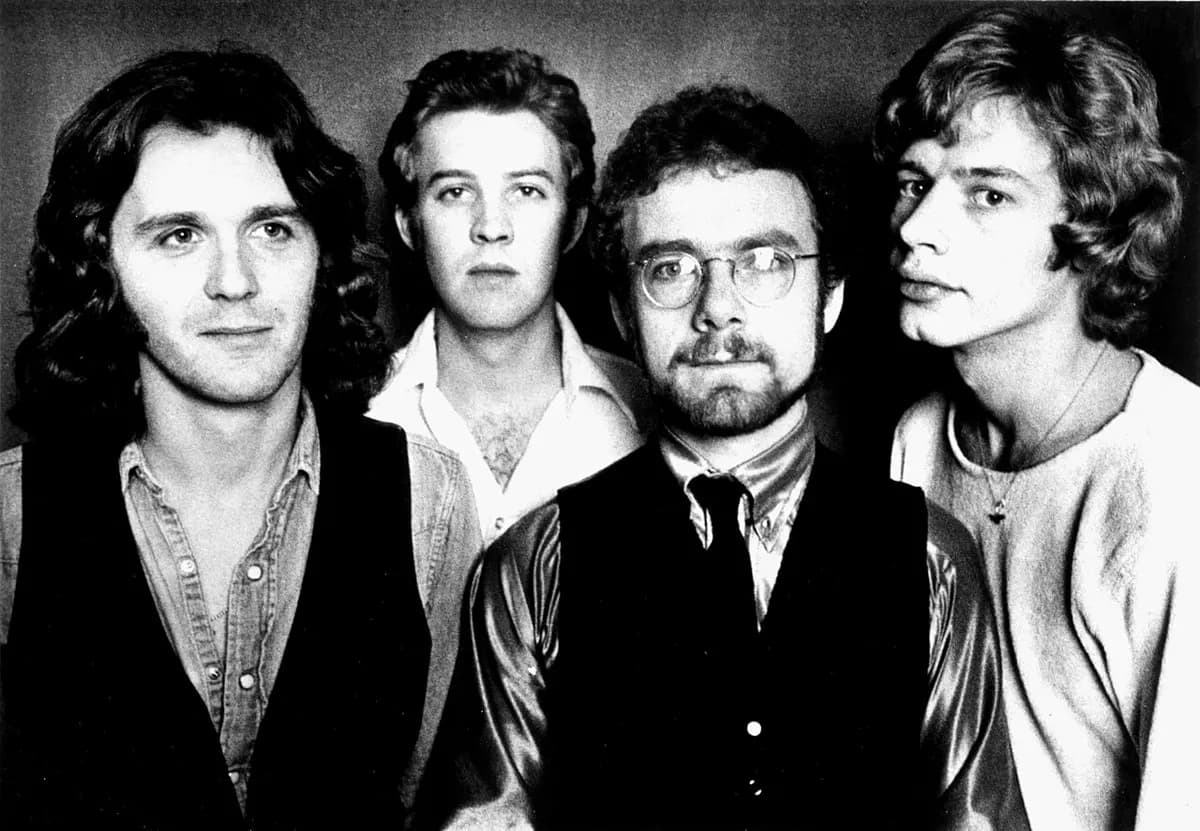
The founding record is usually given as King Crimson's In the Court of the Crimson King (1969), dissonant, orchestral and structurally unlike most rock of the time. The four years that followed produced most of the canon: Yes (Close to the Edge, 1972), Genesis (Selling England by the Pound, 1973), Emerson, Lake & Palmer (Brain Salad Surgery, 1973), Jethro Tull (Thick as a Brick, 1972), Pink Floyd (The Dark Side of the Moon, 1973), plus Gentle Giant, Van der Graaf Generator and Camel.
It was never only British. Italy produced a dense scene (Premiata Forneria Marconi, Banco del Mutuo Soccorso, Le Orme), and Germany's Krautrock bands, Can, Faust and Neu!, reached similar ambitions from a different direction, through repetition instead of development. France's Magma invented its own language, Kobaïan, and the subgenre that grew around the band took its name, Zeuhl, from a word in it.
The standard story says punk killed prog in 1977. The sales figures are kinder: Pink Floyd's The Wall (1979) became one of the best-selling albums ever made, and Genesis and Yes had their biggest singles in the 1980s. Punk did ruin prog's critical standing. Around the same time record companies were merging into large media groups that were less willing to fund twenty-minute suites, and the established bands moved toward shorter songs and simpler metres.
What followed went three ways. Neo-prog (Marillion, IQ) revived the 1970s template in the 1980s; progressive metal (Dream Theater, later Opeth and Tool) took the complexity into heavier territory; and post-punk's art wing pursued similar ideas without the virtuosity. The modern lineage runs through Porcupine Tree and Steven Wilson, whose stereo and surround remixes of King Crimson, Yes and Jethro Tull albums brought the classic catalogue to a younger audience.
Key Characteristics & Sound
What marks a track as prog:
- Length and form: pieces of 7–25 minutes in named movements; whole album sides as one composition.
- Odd and shifting metres: 7/8, 5/4, 9/8 and mid-piece changes. Pink Floyd's "Money" is mostly in 7/4, as is Peter Gabriel's "Solsbury Hill"; Yes and Gentle Giant move metre bar to bar.
- Tempo: deliberately unstable, so a single piece may run from 60 to 180 BPM. A single BPM figure says little about a prog piece.
- Keyboards as lead: Hammond organ, Mellotron, Moog and grand piano carrying melody and harmony, not just filling in behind the guitar.
- Extended harmony: modal writing, borrowed chords and unresolved cadences; classical and jazz voicings inside a rock band.
- Dynamic range: full-band passages against solo acoustic ones, often within the same piece.
- Concept lyrics: mythology, science fiction, philosophy and satire, usually told as a story instead of as autobiography.
- Virtuosity as expectation: the players are audibly trained, and solos are composed as often as improvised.
How prog sits against its neighbours:
| Trait | Progressive Rock | Psychedelic Rock | Art Rock | Progressive Metal |
|---|---|---|---|---|
| Core idea | Composed complexity | Altered perception | Avant-garde gesture | Complexity plus weight |
| Track length | 7–25 min | 3–10 min | 3–8 min | 6–15 min |
| Time signatures | Shifting, odd | Mostly 4/4 | Mostly 4/4 | Shifting, odd |
| Lead instrument | Keyboards and guitar | Guitar | Varies | Guitar |
| Distortion | Moderate | Fuzz | Low | High, downtuned |
| Reference album | Close to the Edge | Piper at the Gates of Dawn | Low | Images and Words |
Instruments & Production
Prog is where the rock band met the keyboard laboratory:
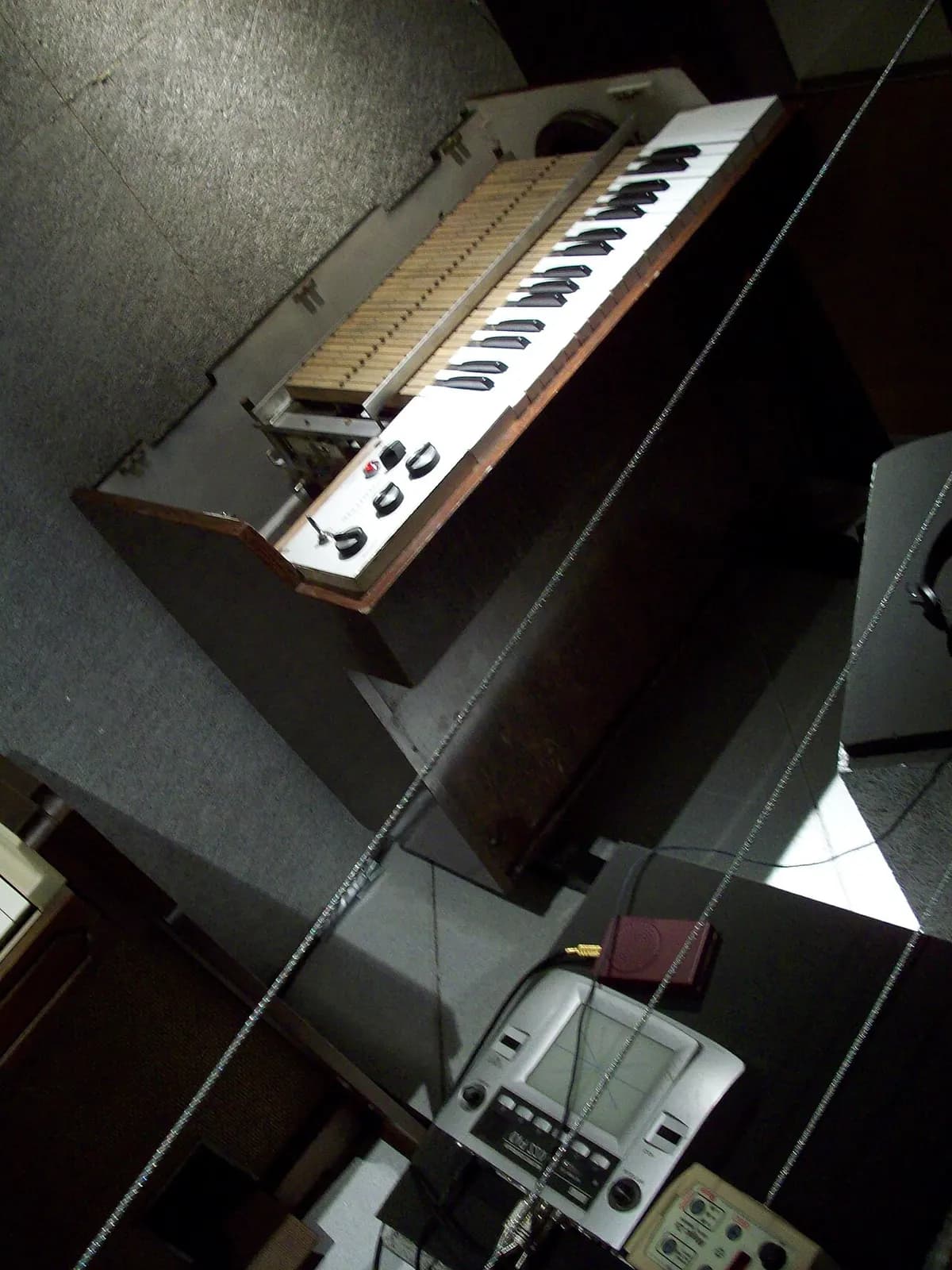
- Mellotron: tape-replay strings, flutes and choirs, the sound of the title track of In the Court of the Crimson King and of much of early Genesis.
- Hammond organ through a Leslie: Keith Emerson and Tony Banks made it a lead instrument, often overdriven.
- Moog and ARP synthesisers: monophonic leads and portamento glides, the sound of many of rock's first synth solos.
- Rickenbacker bass with distortion: Chris Squire's tone, treble-forward, playing counter-melodies instead of root notes.
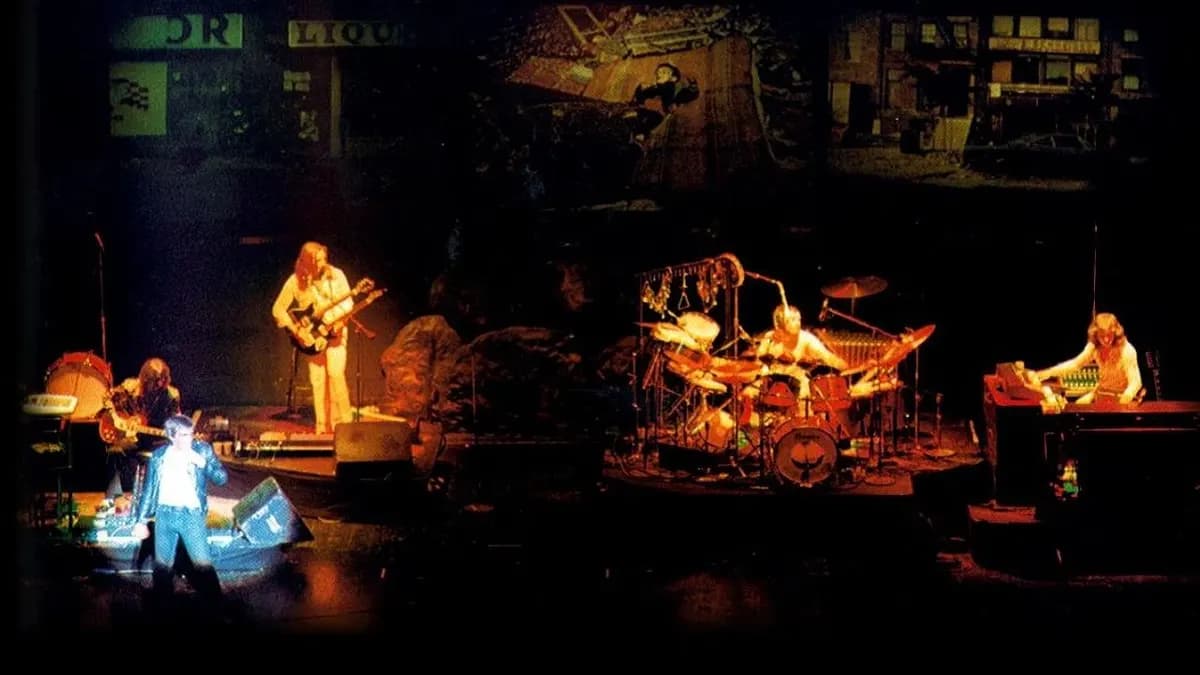
- Extended drum kits: Bill Bruford and Carl Palmer adding tuned percussion, gongs and timpani, and playing across the barline.
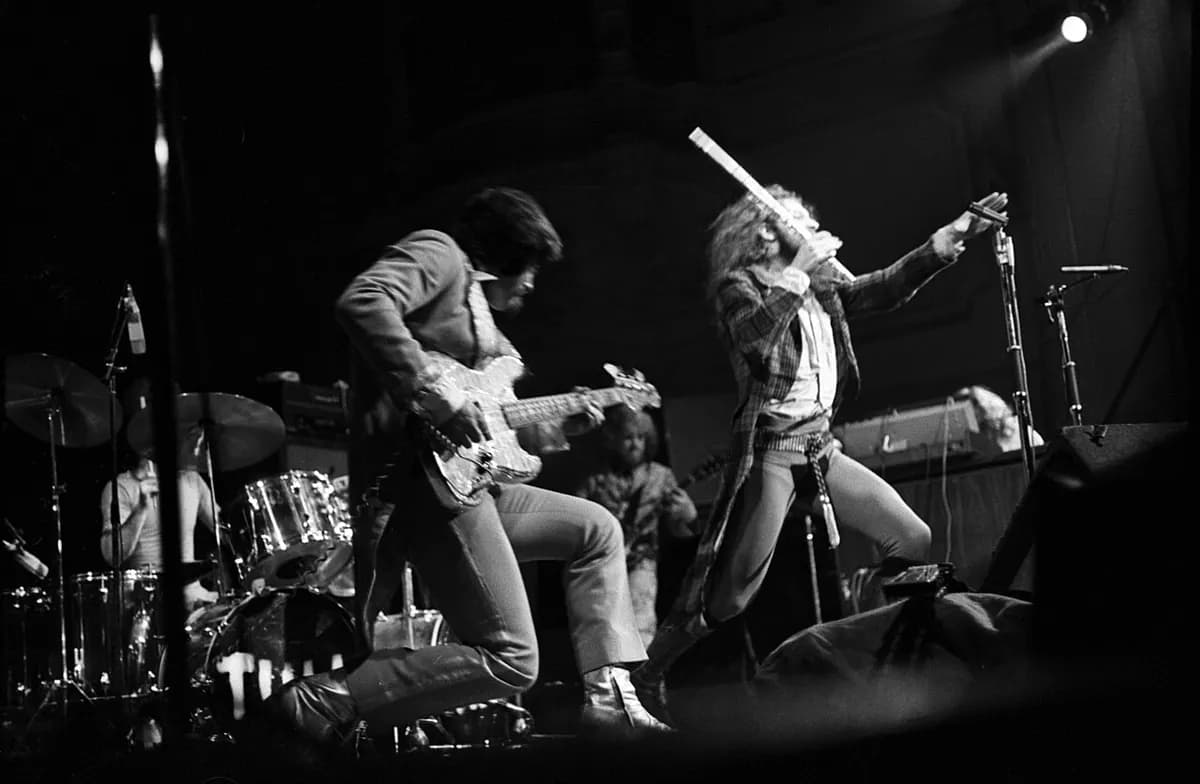
- Acoustic instruments in a rock frame: flute (Jethro Tull), twelve-string guitar, harpsichord, recorder, violin.
- Studio as instrument: long crossfades, tape effects, quadraphonic experiments, and album sequencing designed to be heard end to end.
Prog mixes are built so that every part can be followed. Metal mixes usually go the other way and fuse the instruments into a single mass.
Subgenres & Related Styles
The prog family:
- Symphonic prog: the mainline, with Yes, Genesis, Camel and PFM.
- Canterbury scene: jazzier and wryer; Soft Machine, Caravan, National Health.
- Krautrock: German repetition-based experiment; Can, Neu!, Faust.
- Zeuhl: Magma's ritual, bass-driven style, sung in an invented language.
- Rock in Opposition: the politically and formally radical wing; Henry Cow, Univers Zero.
- Neo-prog: the 1980s revival; Marillion, IQ, Pendragon.
- Progressive metal: Dream Theater, Opeth, Tool, Haken; the largest living branch.
- Post-rock: instrumental and dynamics-led, arriving at long forms without prog's virtuoso display.
- Math Rock: the indie descendant that kept the odd metres and dropped the grandeur.
Notable Artists & Albums
Where to start:
- King Crimson: In the Court of the Crimson King (1969), Red (1974).
- Yes: Close to the Edge (1972), Fragile (1971).
- Genesis: Selling England by the Pound (1973), The Lamb Lies Down on Broadway (1974).
- Pink Floyd: The Dark Side of the Moon (1973), Wish You Were Here (1975).
- Emerson, Lake & Palmer: Brain Salad Surgery (1973).
- Jethro Tull: Thick as a Brick (1972), a single 43-minute piece split across two sides.
- Gentle Giant: Octopus (1972), with the band's interlocking vocal counterpoint.
- Rush: Moving Pictures (1981), prog ideas at radio length.
- Premiata Forneria Marconi: Per un Amico (1972).
- Porcupine Tree: In Absentia (2002), a link between classic prog and progressive metal.
Three albums for the arc: In the Court of the Crimson King for the invention, Close to the Edge for the peak of the form, The Dark Side of the Moon for how far it reached commercially.
How AI Detects Progressive Rock
Prog is hard for a classifier for a structural reason: models judge short windows of audio, while prog's defining features live at the scale of whole pieces. Ten seconds of Close to the Edge may contain a flute, a distorted organ, a cappella harmony or a rock riff, and each window can be labelled differently. Genre AI listens to several windows from the middle of a track and averages them, which smooths some of this out but cannot capture a twenty-minute structure.
Within a window, the usable cues are timbral and rhythmic: Hammond and Mellotron spectra, a bass playing independent melodic lines, irregular bar lengths, and unusually wide dynamics. Genre AI's production taxonomy does have a matching label, Progressive / Psychedelic Rock under the coarse Rock label, so prog and psychedelia share one answer. When the sampled passage does not sound like rock, expect alternatives such as rock, hard rock, classical or jazz fusion (the taxonomy's Fusion label, under Jazz). Try it in the Genre AI music genre detector: uploading two different minutes of the same prog piece is a quick way to see how much the answer depends on the excerpt.
In Genre AI, a full-band prog passage with organ, Mellotron and an odd-metre riff is most likely to come back as Rock with the fine label Progressive / Psychedelic Rock, the one label in the taxonomy built for this music. Prog readings may be less stable than for most guitar-based styles, because a single piece changes character so often. A quiet 12-string introduction in the Genesis manner may read as Folk; an overdriven Hammond section may read as Hard Rock; a Mellotron passage may push Classical and Soundtrack, the label nearest to Film Score, up the alternatives list. A useful cue for a human listener is the bass: when it plays a melody of its own and the metre will not settle into four, the piece is probably prog even if the label that comes back is plain rock.