
Musical theatre is a form more than a sound. A show score can be jazz, rock, hip-hop, operetta or all four in one evening, because each song is written for a scene in a story. What makes a song recognisably "theatre" is how it is built: it moves the plot, changes a character, and ends somewhere different from where it started.
This guide covers how the modern musical came together, the standard song types writers use, what the pit orchestra is, and why a classifier finds this material so hard. To hear how a show tune reads to a machine, try a few seconds in our free AI music genre detector.
What Is Musical Theatre Music?
Show music is written to do dramatic work. A pop song can repeat a feeling for three minutes; a theatre song has to change something by the final bar, when a character decides, confesses, refuses or realises. That produces habits pop rarely uses: tempo shifts inside a number, key changes tied to emotional turns, extended sung dialogue, and endings written to stop dead for applause.
The idiom is chosen per show, and usually per period. A musical set in the 1950s will be written in 1950s style; a show about the 1970s will pastiche disco; Hamilton uses hip-hop and R&B because rap can carry far more words per minute than a conventional melody. So "showtunes" barely exists as a sonic category. What stays constant from show to show is the dramatic job each song does.
The nearest relatives are opera, which is sung throughout by trained classical voices, and film score, which serves a narrative without words. Musical theatre sits between them: spoken scenes alternate with sung numbers, and the singing is amplified and close to speech, far from operatic projection.
History & Origins
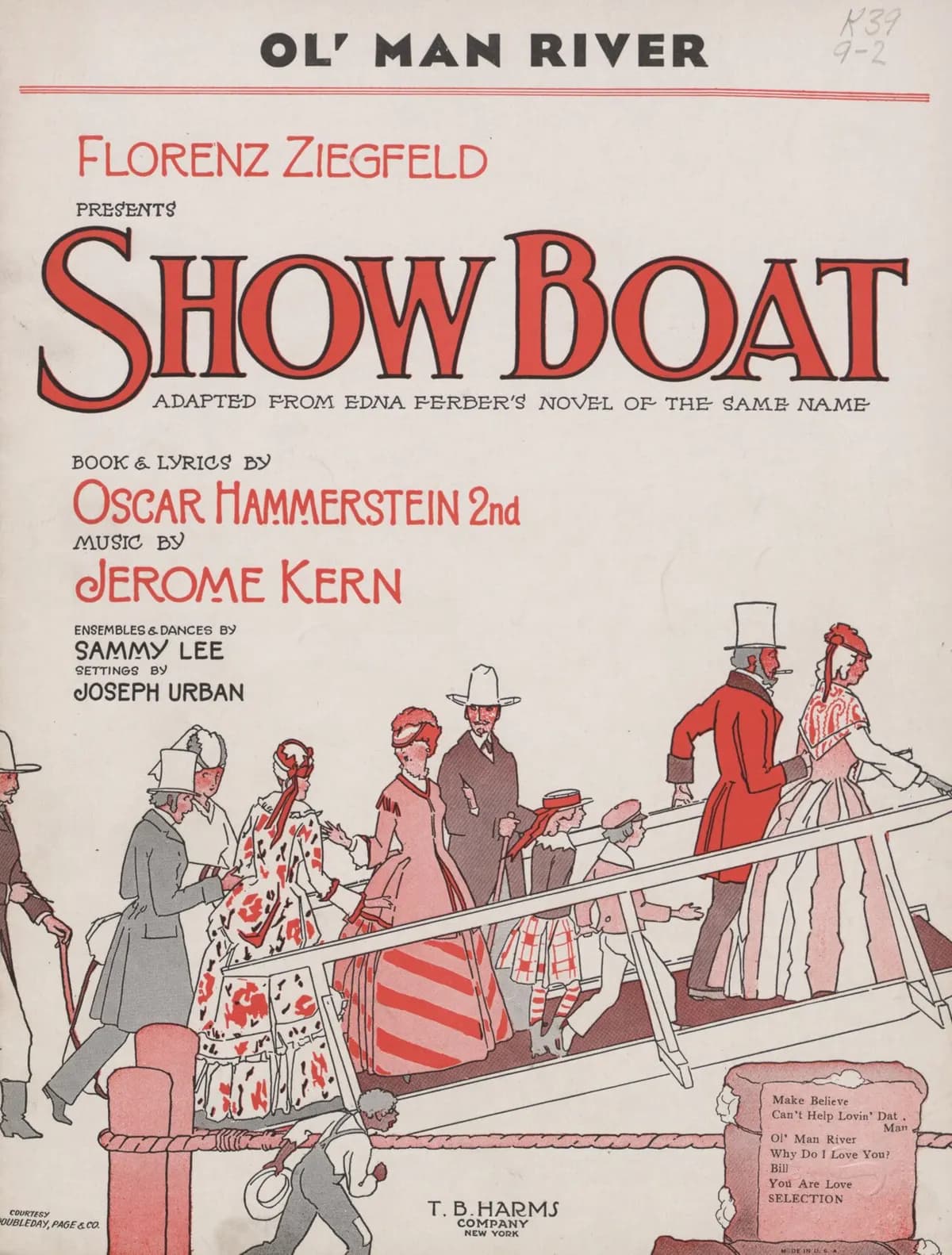
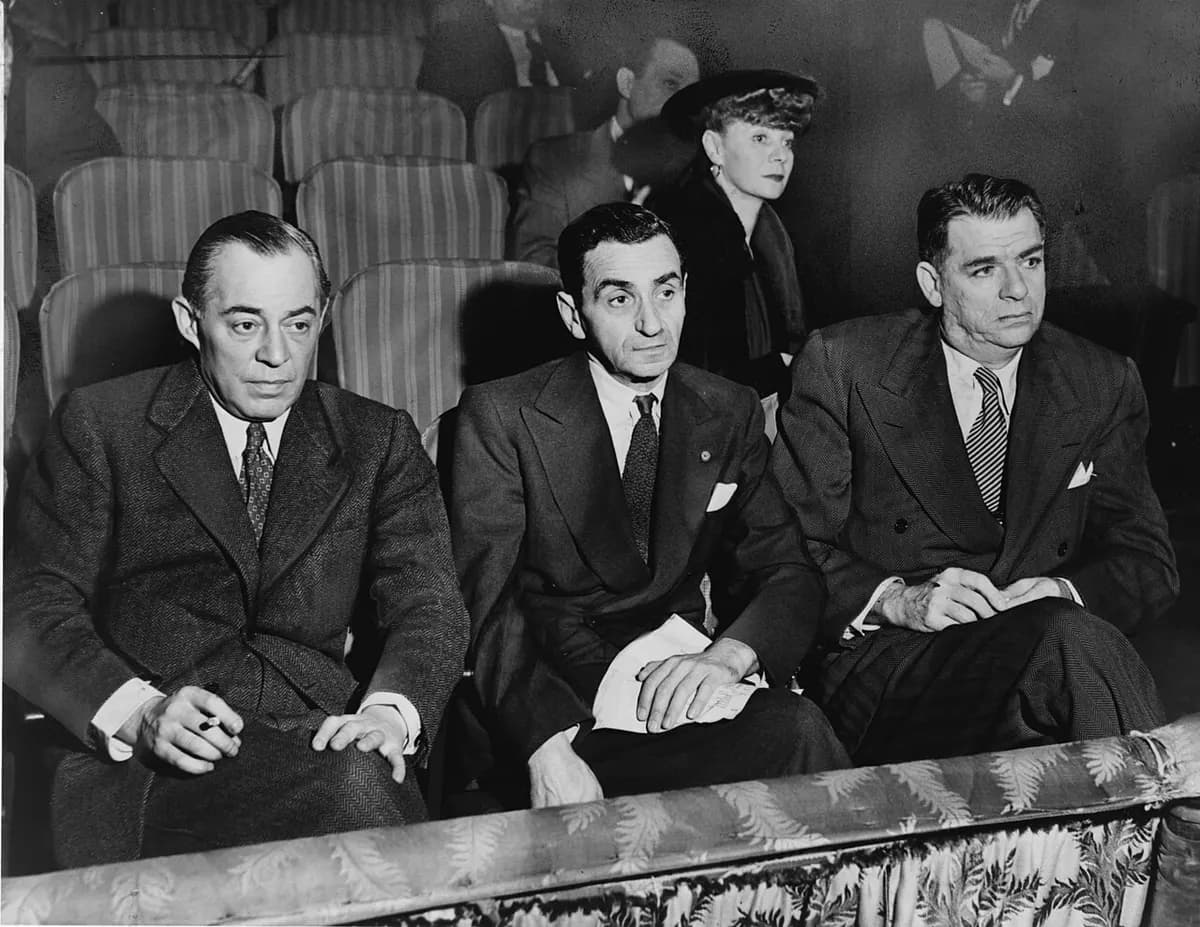
The form grew out of operetta, vaudeville, minstrelsy and revue over the nineteenth and early twentieth centuries. The usual first landmark is Show Boat (1927, music by Jerome Kern, book and lyrics by Oscar Hammerstein II), which took on race and marriage on the Mississippi and used its songs to tell that story instead of pausing it for a number.
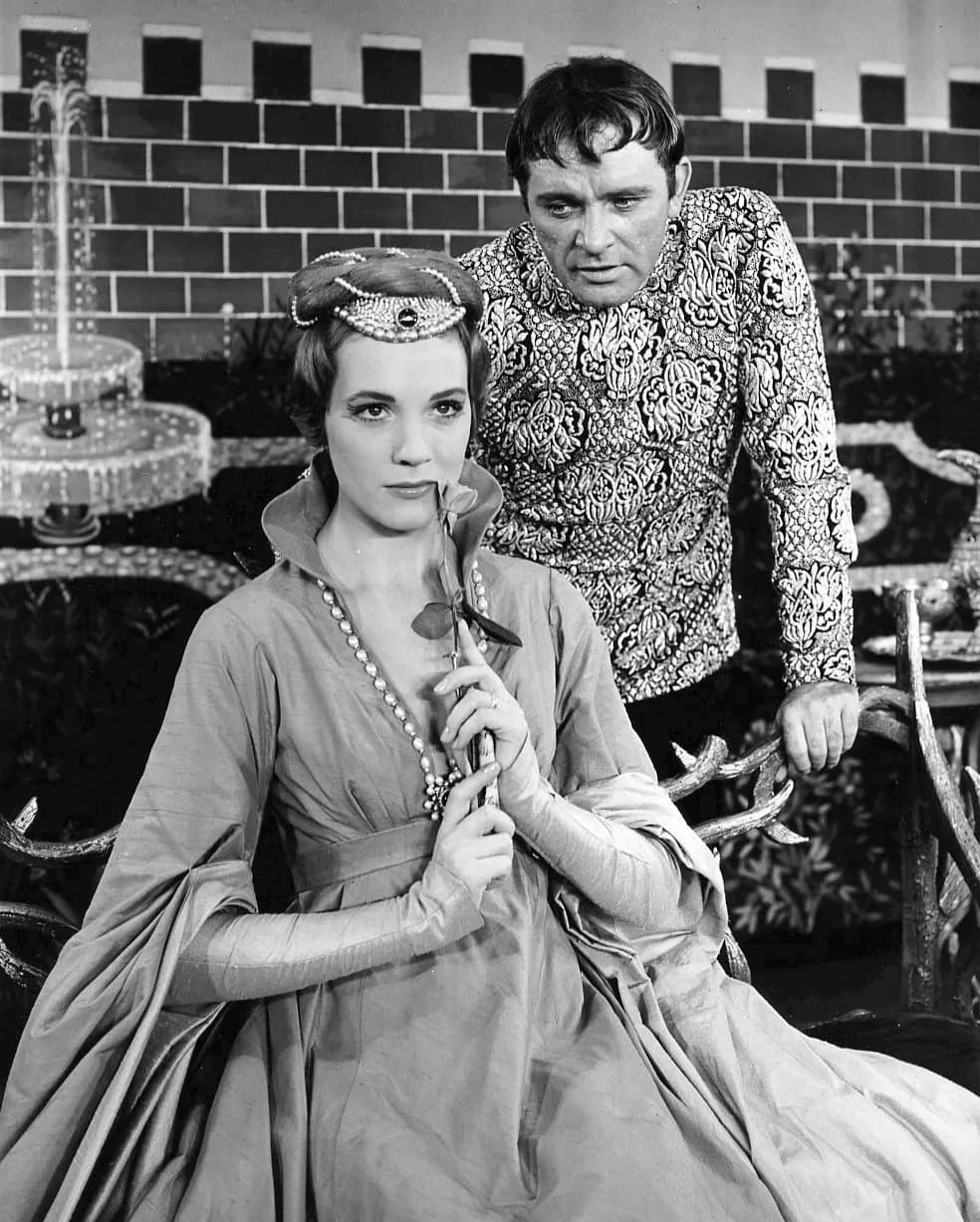
Oklahoma! (1943) made that method standard. Rodgers and Hammerstein integrated song, story and dance so that cutting a number broke the plot, and the "integrated musical" governed Broadway for the next two decades: Carousel, South Pacific, The King and I, My Fair Lady, and West Side Story (1957), whose Bernstein score brought Latin rhythm and modernist dissonance into a commercial show.
The late 1960s and 1970s broke the mould twice. Stephen Sondheim's concept musicals, Company (1970), Follies (1971) and later Sweeney Todd (1979), organised shows around a theme in place of a linear plot and packed in lyrics of unusual density. Rock arrived at the same time with Hair (Broadway 1968), Jesus Christ Superstar (Broadway 1971) and Grease.
The 1980s belonged to the mega-musical: Cats, Les Misérables and The Phantom of the Opera, sung through from start to finish, heavy on synthesizers and stage machinery, and exported worldwide in identical productions. Phantom opened on Broadway in 1988 and closed on 16 April 2023 after 13,981 performances, the longest run in Broadway history.
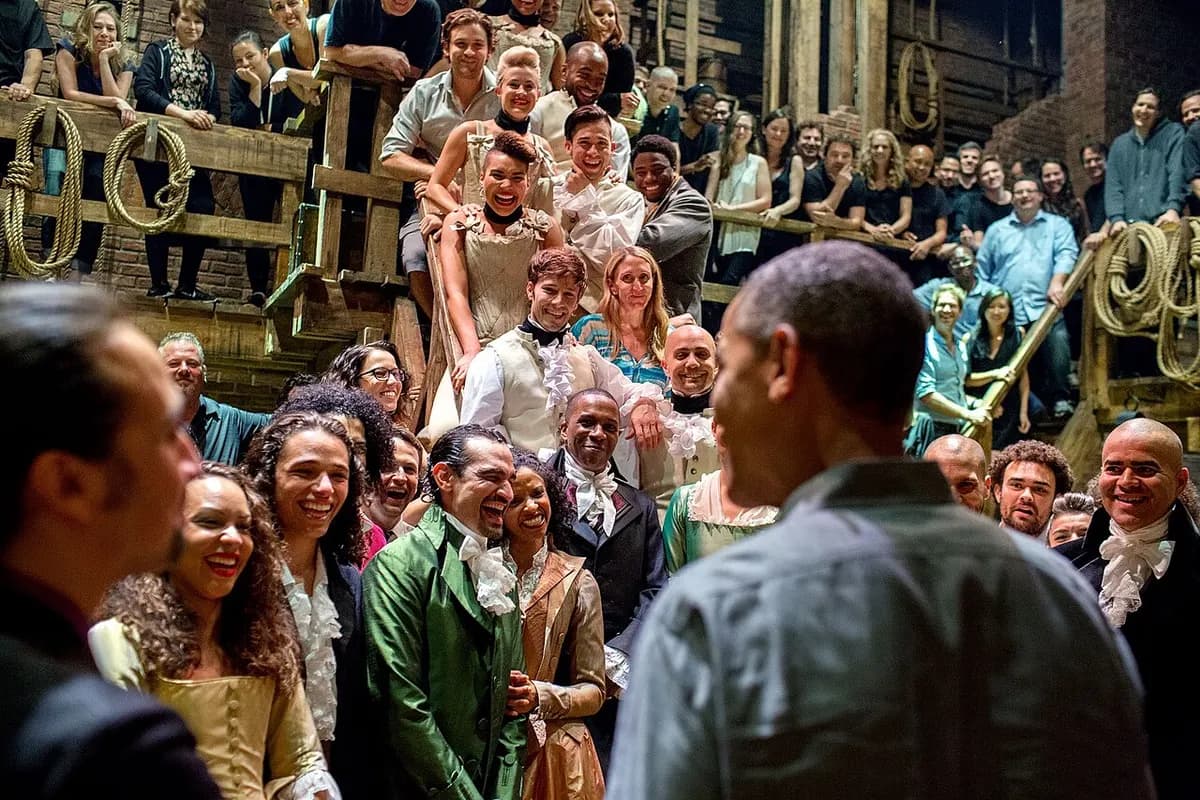
Since then the form has kept importing whatever is current: rock again in Rent (1996), satire in The Book of Mormon (2011), hip-hop in Hamilton (2015), which cast actors of colour as the American founders, and pop and folk-blues in Six and Hadestown. Cast albums have found a new audience on streaming: the Hamilton recording reached No. 2 on the Billboard 200 in July 2020, after the filmed production appeared on Disney+, the highest a cast album had charted since Hair in 1969.
Song Types & Musical Characteristics
Theatre writers share a vocabulary of song functions, and knowing it explains most of what you hear:
- Opening number: sets up the world, the tone and the rules ("Tradition", "Belle").
- "I Want" song: the protagonist states the desire that drives the plot, usually early in the first act ("Wouldn't It Be Loverly", "Part of Your World").
- Charm song: light and character-building, with lower stakes.
- Eleven o'clock number: the big emotional reckoning late in the second act, named for the hour it reached when Broadway curtains rose around 8:30 ("Rose's Turn" from Gypsy).
- Act finale: a cliffhanger built from material heard earlier.
- Reprise: an earlier melody returning with a changed meaning, the device that most marks a score as theatre.
Musically, the recurring traits are a wide vocal range with amplified belting, tempo and metre changes inside a number, underscore (music played beneath spoken dialogue), key changes at emotional turns, and orchestration that comments on what the singer says. Tempo tells you very little: a single number can move from a rubato verse to a driving chorus near 150 BPM.
| Trait | Musical Theatre | Opera | Film Score | Pop |
|---|---|---|---|---|
| Text delivery | Spoken scenes plus songs | Sung throughout | Usually wordless | Sung throughout |
| Vocal technique | Amplified, belt and mix | Unamplified, classical | n/a | Amplified, conversational |
| Song function | Advances plot | Advances plot | Supports image | Repeats a feeling |
| Style | Borrowed per show | Classical tradition | Orchestral or hybrid | Genre-specific |
| Ensemble | Pit orchestra 5–30 | Full orchestra | Orchestra or synths | Band |
| Reference work | Oklahoma! (1943) | La Bohème (1896) | Star Wars (1977) | n/a |
The Pit Orchestra & Production
The sound of a show is largely the sound of its pit:
- Reed doubling: one player covers flute, clarinet, saxophone and oboe across an evening, so "Reed 1" and "Reed 2" are job titles, not instruments.
- Rhythm section plus strings and brass: the standard Broadway core, scaled to the theatre's budget and the size of the pit.
- Keyboard programming: since the 1990s, two or three keyboard players carry sampled strings and orchestral patches, the main reason modern pits are smaller than those of the 1950s.
- Orchestrators as co-authors: composers often deliver piano-vocal scores, and orchestrators such as Robert Russell Bennett, Jonathan Tunick and Alex Lacamoire (Hamilton) decide what the audience actually hears.
- Radio microphones and heavy mixing: every performer is amplified, which lets theatre singing stay close to speech instead of projecting to the back of the house as opera does.
- Cast recordings: often made in a day or two of studio time after opening, and for most listeners the only version of the score they will ever hear.
Styles Within Musical Theatre
The form divides by approach more than by sound:
- Golden Age: the integrated book musical from Oklahoma! (1943) into the 1960s; writers disagree on the end point, with Hammerstein's death in 1960 and Fiddler on the Roof (1964) both proposed. Rodgers and Hammerstein, Lerner and Loewe.
- Concept musical: a theme in place of a linear plot; Sondheim, Cabaret, Chicago.
- Rock musical: Hair, Jesus Christ Superstar, Rent, Spring Awakening.
- Mega-musical: the sung-through spectacle of the 1980s; Lloyd Webber, Boublil and Schönberg.
- Jukebox musical: an existing song catalogue restaged as a story; Mamma Mia!, Jersey Boys.
- Hip-hop musical: In the Heights, Hamilton.
- Operetta and opera: the ancestors, and the border that shows such as Sweeney Todd keep crossing.
Key Writers & Shows
Where to start:
- Rodgers & Hammerstein: Oklahoma! (1943), Carousel (1945).
- Leonard Bernstein & Stephen Sondheim: West Side Story (1957).
- Stephen Sondheim: Company (1970), Sweeney Todd (1979), Into the Woods (1987).
- Kander & Ebb: Cabaret (1966), Chicago (1975).
- Andrew Lloyd Webber: Jesus Christ Superstar (1971), The Phantom of the Opera (1986).
- Boublil & Schönberg: Les Misérables (1985 in London).
- Jonathan Larson: Rent (1996).
- Lin-Manuel Miranda: In the Heights (2008), Hamilton (2015).
- Anaïs Mitchell: Hadestown (2019).
- Pasek & Paul: Dear Evan Hansen (2016).
Three cast recordings for the arc: Oklahoma! for the method, Sweeney Todd for how far the writing can go, Hamilton for the form absorbing a whole genre.
How AI Detects Musical Theatre
This is one of the hardest categories to classify, because the label describes where the music is used, not how it sounds. A show tune tends to be read as whatever idiom it is written in: a Rodgers ballad as jazz or classical, a Hamilton track as hip-hop, a Rent number as rock.
Genre AI's production taxonomy has no musical theatre label. Some cues do repeat across shows: a mixed ensemble of orchestral instruments with a rhythm section, several voices trading phrases in one take, tempo and metre changing inside a track, and a final chord held for applause. Those features belong to film score and opera as much as to Broadway, and in the model they most likely land under the coarse Classical label, whose Modern Era subgenre is the one described with words like "opera" and "rock opera". Try a cast recording in the Genre AI music genre detector.
Show music shows the limit of genre classification more clearly than almost anything else. The model answers the question it can answer, what a clip sounds like, so the result will usually follow the number's idiom. A Golden Age ballad with a pit orchestra may come back as Jazz (Big Band / Swing or Easy Listening) or as Classical; a sung-through operatic number most likely as Classical, Modern Era; a Hamilton track as Rap Hip-Hop, with Pop Rap the likeliest subgenre and a link to our hip-hop guide for the background; a rock musical under Rock. The coarse Pop and Soundtrack labels have no subgenres, and the model prefers coarse labels that do, so either of them rarely comes up at all. The alternatives shown under the answer are sibling subgenres of the winning family only, so a Classical result will not offer film score or opera as a second guess; reading "this is theatre" from a clip is still a job for a human listener.