
Dance-pop is chart pop written on a club rhythm. It appeared in the early 1980s, when the record industry needed something to do with the dancefloor after disco had become commercially toxic, and it solved the problem by keeping the four-on-the-floor kick and attaching it to a conventional verse-chorus song with a named singer on the sleeve. Forty years later the formula is still in everyday use on pop radio.
This guide covers where the style came from, which producers built it, what separates it from EDM and eurodance, and which records define each of its waves. To hear how a dance-pop single reads to a classifier, run a few seconds through our free AI music genre detector.
What Is Dance-Pop?
Dance-pop is a hybrid with a clear hierarchy: the arrangement belongs to club music, the song belongs to pop. Underneath there is a steady four-on-the-floor kick, usually between 110 and 130 BPM, programmed drums and synthesised bass. On top there is a lead vocal that carries a lyric, a chorus that returns three times, and a running time built for a radio playlist, not a DJ set.
That hierarchy is the whole distinction from EDM. An EDM record is an instrumental produced by a DJ, arranged in eight- and sixteen-bar blocks so it can be mixed in and out of other records, and it sells the producer as the artist. A dance-pop record is a song credited to a singer, arranged so that it works when it starts from silence on the radio, and the producer is a name in the small print. Calvin Harris has made both kinds of record.
It is also narrower than "dance music" as a chart category. Eurodance runs faster, harder and more anonymously; house keeps the loop and drops the chorus; synth pop shares the instrumentation but not the obligation to fill a dancefloor. Dance-pop is the point where a producer's rhythm track and a professional songwriter's topline are engineered to serve each other.
History & Origins
The starting condition was a collapse. After Disco Demolition Night at Comiskey Park in Chicago on 12 July 1979, American radio dropped the word "disco" almost overnight, but the rhythm section survived under other names: post-disco, boogie, Hi-NRG. What changed was the packaging. Instead of studio projects and session vocalists, labels began building dancefloor records around individual stars.
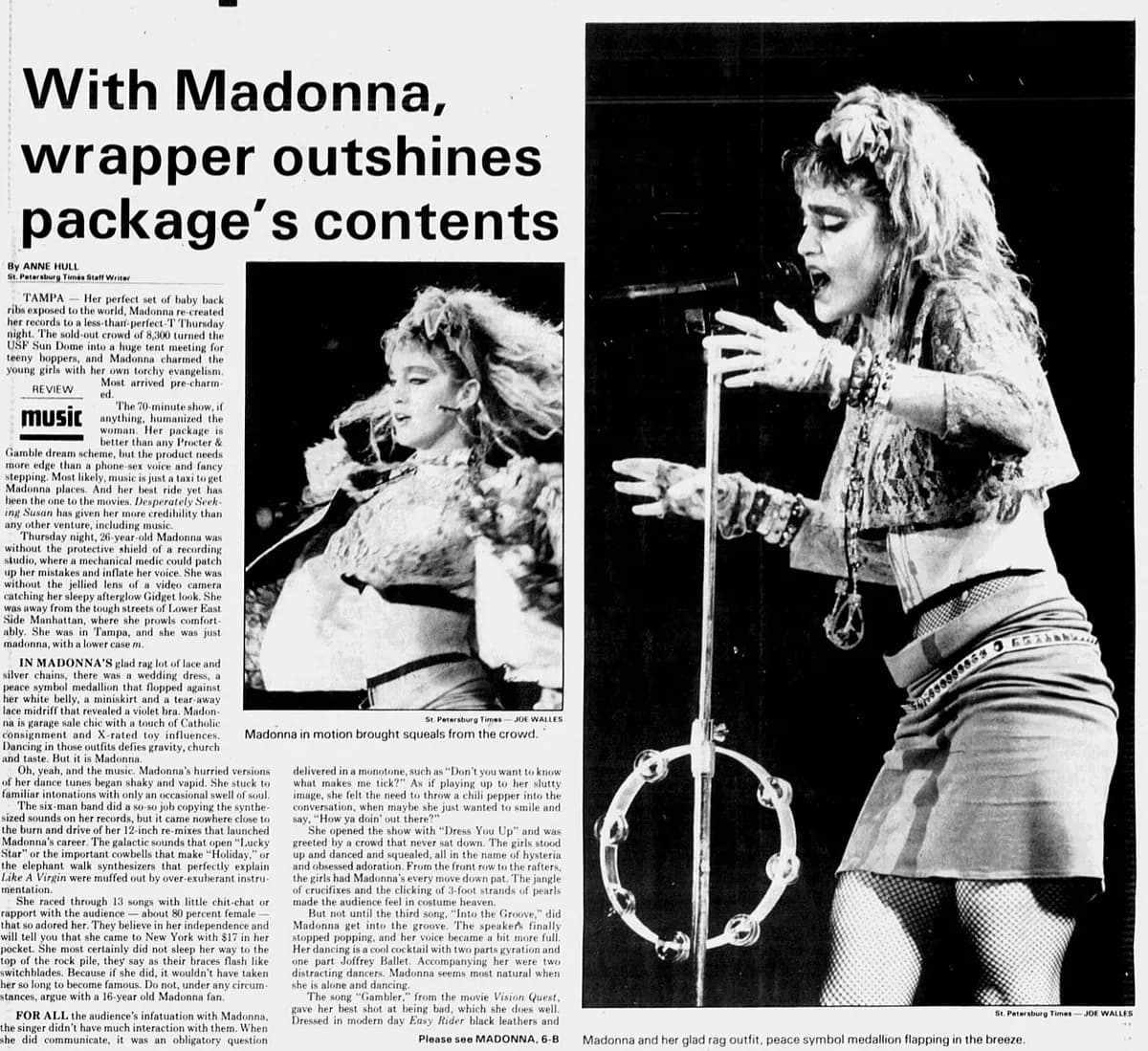
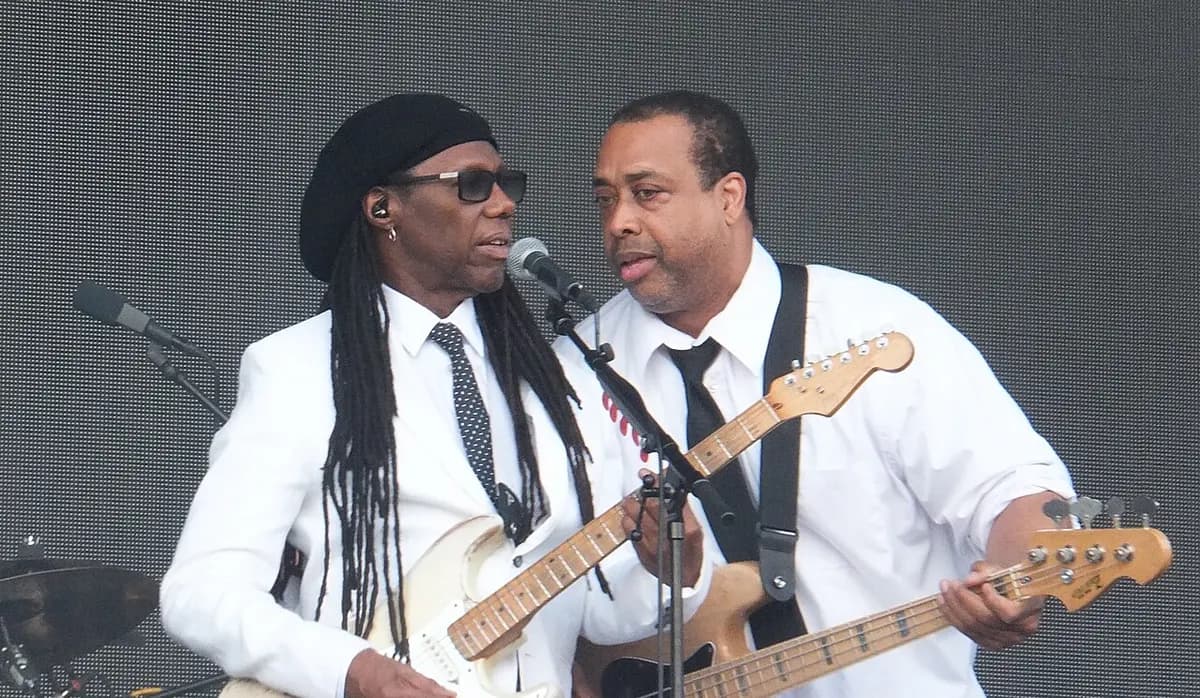
Madonna is the pivot. Her 1983 debut was produced by Reggie Lucas, with three songs remixed by the New York club DJ John "Jellybean" Benitez; the follow-up, Like a Virgin (1984), was produced by Nile Rodgers of Chic, the guitarist and producer behind Chic's "Le Freak", who brought his Chic bandmates Bernard Edwards and Tony Thompson in on bass and drums. That record established the template: club rhythm, pop song, one recognisable face.
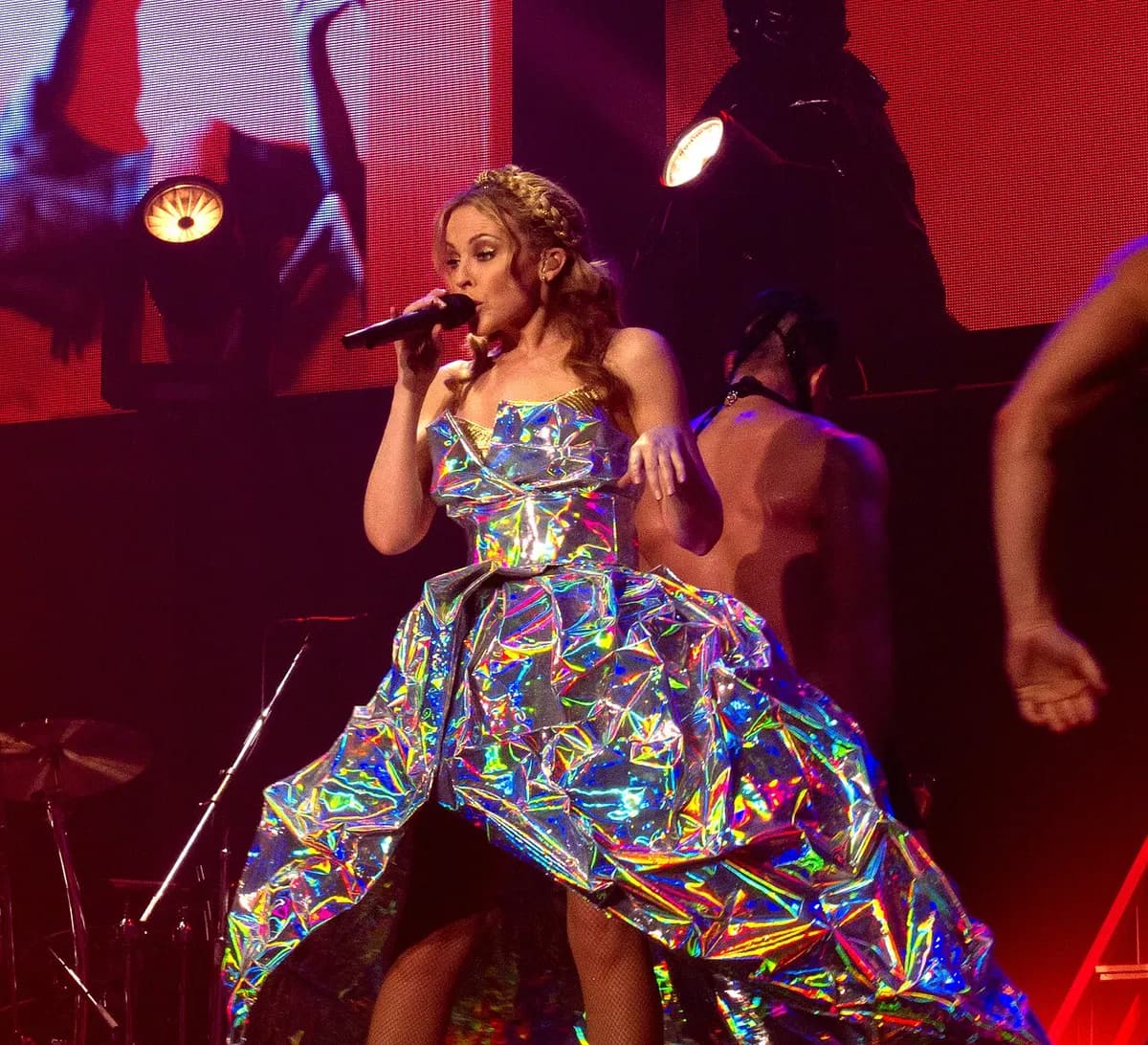
Britain industrialised it. From 1984 the production team Stock Aitken Waterman ran PWL Studios in London on an explicitly factory model, writing, recording and mixing singles in days. Their Hi-NRG-derived sound carried Rick Astley's "Never Gonna Give You Up" (1987) and Kylie Minogue's "I Should Be So Lucky" (1988) to number one, along with dozens of other UK Top 40 hits. Matt Aitken left in 1991 and Mike Stock in 1993.
In parallel, American R&B producers pulled the style toward tighter rhythm programming. Jimmy Jam and Terry Lewis built Janet Jackson's Control (1986) at Flyte Tyme in Minneapolis out of hard, stiff, sampled drum patterns that made the older Hi-NRG records sound polite; Whitney Houston's "How Will I Know" (1985) and "I Wanna Dance with Somebody (Who Loves Me)" (1987), both produced by Narada Michael Walden, showed how much voice the format could carry.
The 1990s moved the centre of gravity to Sweden. Ace of Base broke internationally with "All That She Wants" (1992) and "The Sign" (1993); more consequentially, Denniz PoP and Max Martin at Cheiron Studios in Stockholm developed a method of melodic hooks in every section, syllables chosen for their sound and choruses arriving early. It produced Britney Spears' "...Baby One More Time" (1998) and the Backstreet Boys and NSYNC catalogue. Britain answered with the Spice Girls, whose "Wannabe" (1996) the group wrote with Matt Rowe and Richard Stannard, who also produced it. Cheiron closed in 2000, but Max Martin has had a number-one single in every decade since.
The next reset came from the club again. Between 2008 and 2012, European house producers were hired wholesale by American pop labels. Lady Gaga's The Fame (2008), largely produced by RedOne, put "Just Dance" and "Poker Face" on radio; David Guetta made "When Love Takes Over" with Kelly Rowland and produced the Black Eyed Peas' "I Gotta Feeling" in 2009; Dr. Luke and Benny Blanco cut Ke$ha's "Tik Tok" the same year; Calvin Harris and Rihanna's "We Found Love" followed in 2011. For roughly four years the American Hot 100 and the European club charts ran the same rhythm tracks.
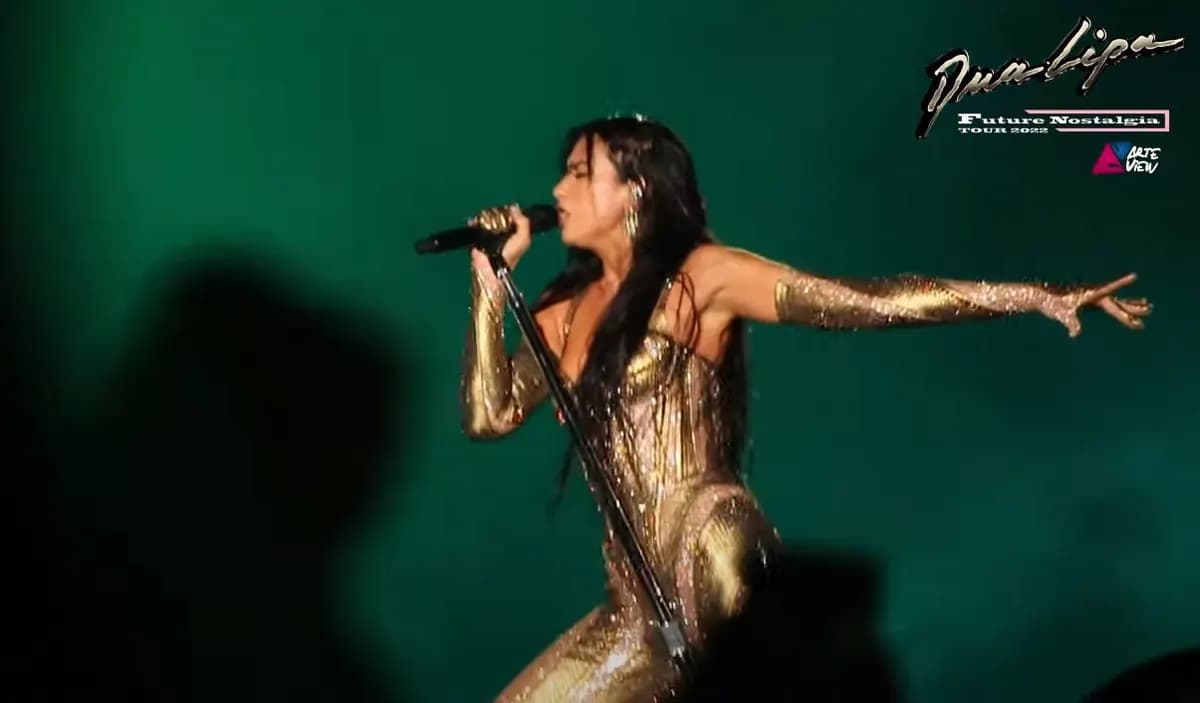
After the festival boom receded, the style did not disappear; it turned retrospective. Dua Lipa's Future Nostalgia (2020) rebuilt it on disco and late-1970s bass playing; The Weeknd's After Hours (2020) reached further back to 1980s synth production; Lady Gaga's Chromatica (2020) and Beyoncé's Renaissance (2022) returned to house explicitly. The rhythm has not changed much since 1984; what changes is which decade it is quoting.
Key Characteristics & Sound
What identifies a dance-pop record:
- Tempo: 110–130 BPM, with 118–128 the most crowded band; slower than eurodance, faster than mid-tempo pop.
- Four-on-the-floor kick with an offbeat hi-hat or open hat, so the pulse is legible on a phone speaker.
- Song form, not loop form: intro, verse, pre-chorus, chorus, verse, chorus, bridge or drop, final chorus, typically 3 to 4 minutes long.
- An early hook. Something memorable arrives within the first fifteen seconds, a habit that predates streaming but became a rule after it.
- The pre-chorus does the work. Drums thin out, harmony rises, and the chorus lands as a release: the pop equivalent of a build and drop.
- Stacked vocals: doubled leads, wide harmony beds, ad-libs panned outward, and pitch correction used both as a repair and, since Cher's "Believe" (1998), as a deliberate effect.
- Simple, bright harmony: four-chord loops, often in a minor key, with little modulation.
- An instrumental hook where a guitar solo used to be: a synth drop, a bass riff or a chopped vocal, usually eight bars long.
Where it sits among its neighbours:
| Trait | Dance-Pop | Disco | Eurodance | EDM |
|---|---|---|---|---|
| Peak period | 1984–present | 1974–1980 | 1992–1998 | 2009–2016 |
| Typical BPM | 110–130 | 110–130 | 130–145 | 126–150 |
| Rhythm | Programmed kick | Live drums | Hard kick, fast hats | Kick plus build |
| Lead voice | Named pop singer | Session or group | Diva plus rapper | Guest or none |
| Sold as | The singer | The single | The track | The producer |
| Reference track | Like a Virgin | Le Freak | Rhythm Is a Dancer | Levels |
Instruments & Production
Dance-pop has always been made on whatever rhythm hardware was current, which is why its eras date so precisely by ear:
- Drum machines: the LinnDrum and Oberheim DMX in the early 1980s, the Roland TR-808 and TR-909 throughout, then sampled and layered kits inside a DAW from the late 1990s.
- Synthesisers: the Yamaha DX7 for the brittle bells and basses of 1984–1988, the Roland Juno and Jupiter for pads, and software instruments such as Sylenth1 and Nexus for the 2008–2012 wave.
- Samplers: the Fairlight CMI and E-mu Emulator for orchestral stabs and vocal chops; Jam and Lewis built much of Control on sampled percussion.
- Bass: played by a session musician on the disco-facing records (on Like a Virgin Nile Rodgers used his Chic bandmate Bernard Edwards) and programmed everywhere else.
- Vocal production: comped from many takes, doubled at the octave, tuned in Melodyne or Auto-Tune, and compressed hard so the voice stays above a dense mix.
- Sidechain compression: the pumping duck of the pads and bass under each kick, borrowed from house and now standard.
- The 12-inch remix as a parallel product: from the 1980s onward the club edit was commissioned separately, which is how the same song reached radio and the dancefloor without compromise.
Subgenres & Related Styles
The family around it:
- Hi-NRG: the fast, mechanical post-disco style of the early 1980s that Stock Aitken Waterman turned into chart product.
- Electropop: the harder-edged, synth-forward end of the 2008–2012 wave, from The Fame through Ke$ha and early Robyn.
- Eurodance: the continental European variant at 130–145 BPM, with a sung chorus alternating with a rapped verse.
- Dance: the broader chart umbrella that dance-pop sits inside, alongside big-room and commercial house.
- Dance-pop crossover in Asia: K-Pop and J-Pop both absorbed the format wholesale, adding rap sections and faster structural turnover.
- Hyperpop: the 2010s exaggeration of dance-pop's own devices, with pitched vocals, compressed mixes and hooks stacked past the point of comfort.
- Nu Disco: the retro-facing side that Future Nostalgia and Renaissance drew on.
Key Artists & Tracks
Where to start, by era:
- Madonna: Like a Virgin (1984, produced by Nile Rodgers) and "Vogue" (1990, produced by Shep Pettibone); Confessions on a Dance Floor (2005) with Stuart Price is the late return.
- Janet Jackson: Control (1986), the record that stiffened the rhythm programming.
- Whitney Houston: "I Wanna Dance with Somebody (Who Loves Me)" (1987).
- Kylie Minogue: "I Should Be So Lucky" (1988) for the PWL years, "Can't Get You Out of My Head" (2001, written by Cathy Dennis and Rob Davis) for the second career.
- Ace of Base: "The Sign" (1993).
- Spice Girls: "Wannabe" (1996).
- Britney Spears: "...Baby One More Time" (1998), the Cheiron method at full strength.
- Kelly Clarkson: "Since U Been Gone" (2004), Max Martin and Dr. Luke rebuilding the chorus around guitars.
- Lady Gaga: The Fame (2008); Chromatica (2020).
- Robyn: "Dancing On My Own" (2010), the argument that the style can carry a sad lyric.
- Calvin Harris and Rihanna: "We Found Love" (2011).
- Dua Lipa: Future Nostalgia (2020), with "Don't Start Now" (2019, produced by Ian Kirkpatrick).
How AI Detects Dance-Pop
A classifier has to read a combination of features: a four-on-the-floor kick in the 110–130 BPM band, a loud and heavily processed lead vocal sitting well above the instruments, a compressed and bright spectrum with a strong low end, and a repeating section structure short enough to complete inside three and a half minutes. Sidechain pumping and a synthetic instrumental hook narrow it further.
The hard part is that dance-pop is defined partly by intent, which audio does not carry. Remove the vocal and the same rhythm track is house; raise the tempo fifteen BPM and add a rap verse and it is eurodance; slow the kick to a backbeat and the same voice and chords read as ordinary pop. In Genre AI's taxonomy those neighbours sit in different places: House is a fine label inside Electronic Dance, eurodance has no label, and Pop is a coarse label without subgenres, so the result depends mostly on which coarse family the model ranks highest. Try a track in the Genre AI music genre detector.
Dance-pop has no label of its own in Genre AI's production taxonomy. Pop exists only as a coarse label with no subgenres, and the model returns a label like that only when none of the coarse labels that do have subgenres makes its top five. Electronic Dance has subgenres and is likely to rank high for a track built on a four-on-the-floor kick, so most dance-pop will probably come back under Electronic Dance, with the fine answer picked from its ten subgenres: Synth Pop for synth-led records, House for house-based productions, Electro for the electropop end of the 2008–2012 wave (the Electro label lists "electropop" among its text prompts). Disco-facing records such as Future Nostalgia may go to Funk / Soul instead, where Disco is a fine label. A plain Pop answer is the likely outcome only for a vocal-led track that resembles none of these. Club remixes, with the vocal pushed back and the intro stretched, should read as electronic more consistently than the radio edits.