
Christmas music is defined by a date, not by a sound. A festive record can be a fifteenth-century carol, a Bing Crosby ballad, a Phil Spector wall of sound, a soul single or a metal cover. What makes it Christmas music is that it is played for six weeks a year and then disappears. Commercially it is a catalogue business: the same few dozen songs return to the charts every December, and Mariah Carey's 1994 single has topped the US Hot 100 in each of the seven Decembers from 2019 to 2025.
This guide covers where carols came from, how the American Christmas songbook was written in a thirty-year window, which musical devices signal "festive" to a listener, and why the streaming era made the season show up in the charts. To see how a Christmas record reads to a classifier, run a few seconds through our free AI music genre detector.
What Is Christmas Music?
Christmas music is a functional category, not a style. It cuts across every genre on this site: pop, soul, jazz, rock and roll, classical, country and metal all have their own Christmas repertoire, played through the same speakers in the same six weeks.
It splits into three broad bodies of material. Sacred: hymns and carols with religious texts, from "O Come, All Ye Faithful" to "Silent Night", plus the concert repertoire of Handel's Messiah and Bach's Christmas Oratorio. Traditional secular: folk-derived songs about winter and celebration, such as "Jingle Bells" and "Deck the Halls", most of them published in the nineteenth century. The modern songbook: original copyrighted songs written for the American record industry, largely between 1934 and 1963. These are the songs that still earn royalties.
There is a sound associated with the third category, and it is specific: sleigh bells, tuned percussion, warm brass or strings, major keys, and the lush jazz-influenced harmony of the 1940s Tin Pan Alley era. That combination now stands for the season, which is why a modern Christmas single often imitates an arrangement style seventy years old.
History & Origins
The word carol originally meant a dance song, not a religious one. Latin hymns for the Nativity go back to the fourth century, but the vernacular carol tradition of medieval Europe was popular music, danced in a ring, and it was periodically suppressed. In the seventeenth century Puritan authorities in England and in colonial Massachusetts banned Christmas celebrations outright.
Two nineteenth-century waves created the repertoire people actually know. In Austria in 1818, Franz Xaver Gruber and Joseph Mohr wrote "Stille Nacht" ("Silent Night") for a village church in Oberndorf. In Britain, the Victorian revival rebuilt Christmas as a domestic family holiday with singing at the centre of it. Its landmarks include William Sandys's collection Christmas Carols Ancient and Modern (1833), Charles Dickens's A Christmas Carol (1843) and the German court customs that Prince Albert brought with him. "Jingle Bells", published by James Lord Pierpont in 1857 as "One Horse Open Sleigh", never mentions Christmas; a popular story says it was written for Thanksgiving, and where Pierpont wrote it is still disputed between Medford, Massachusetts, and Savannah, Georgia.
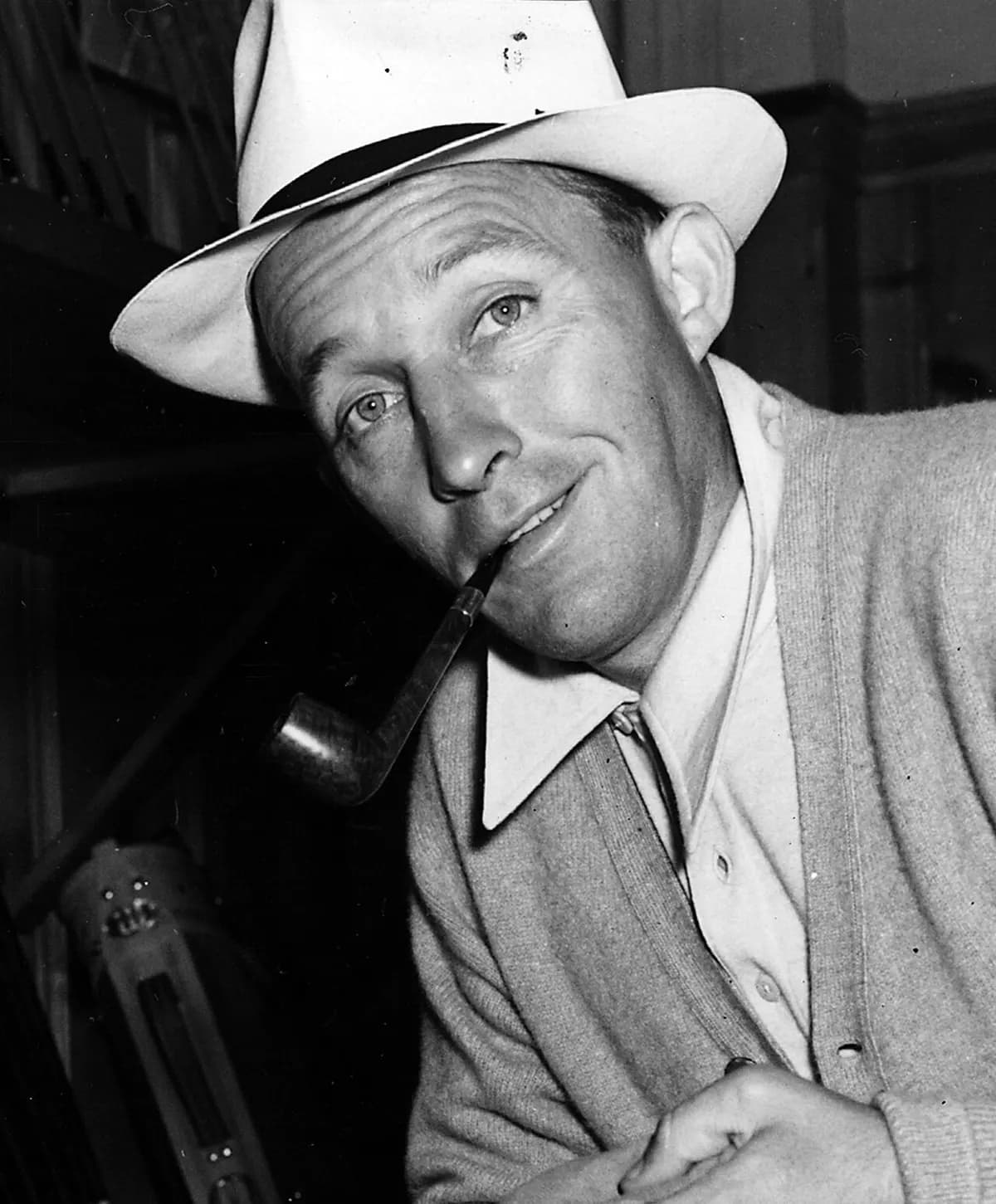
The commercial songbook is an American product of the Depression and the war years. "Santa Claus Is Comin' to Town" (1934) and "Rudolph the Red-Nosed Reindeer" (Gene Autry, 1949) came from the retail and radio industries; Irving Berlin's "White Christmas", recorded by Bing Crosby in 1942, became a song about being far from home during a war; Guinness World Records lists it as the best-selling physical single, with an estimated 50 million copies. "Have Yourself a Merry Little Christmas" arrived with Judy Garland in Meet Me in St. Louis (1944), "The Christmas Song" with Nat King Cole in 1946.
Rock and soul took their turn between 1957 and 1970: Elvis' Christmas Album (1957), Bobby Helms's "Jingle Bell Rock" (1957), Brenda Lee's "Rockin' Around the Christmas Tree" (1958), Phil Spector's A Christmas Gift for You (1963), released on 22 November, the day President Kennedy was assassinated, and a commercial disappointment until much later; Darlene Love's "Christmas (Baby Please Come Home)", The Temptations, and Donny Hathaway's "This Christmas" (1970).
Then the songbook mostly stopped growing. The important later additions are countable on one hand: Wham!'s "Last Christmas" (1984), Band Aid's "Do They Know It's Christmas?" (1984), The Pogues and Kirsty MacColl's "Fairytale of New York" (1987) and Mariah Carey's "All I Want for Christmas Is You" (1994), which in December 2025 set the record for most weeks at No. 1 on the Hot 100, with 20.
Streaming changed the charts, not the repertoire. Once catalogue plays counted toward the charts, the seasonal spike became visible every year: "All I Want for Christmas Is You" first reached number one on the US Billboard Hot 100 in December 2019, twenty-five years after release, and returned to the top every December through 2025; "Last Christmas" finally reached number one in the UK in January 2021, thirty-six years after Band Aid kept it from the 1984 Christmas number one, and was the UK Christmas number one in 2023 and 2024.

Key Characteristics & Sound
There is no single Christmas rhythm or tempo, but the modern songbook shares a recognisable palette:
- Sleigh bells: a continuous high-frequency jingle, the most reliable signal in the genre, heard on everything from "Jingle Bell Rock" to modern pop singles.
- Tuned bell timbres: glockenspiel, celesta, tubular bells and orchestral chimes, adding a bright metallic layer above the arrangement.
- Major keys and warm harmony: extended sixth and ninth chords, chromatic passing motion and the lush voicings of 1940s popular song.
- Tempo: anything from a slow ballad to a fast rock and roll shuffle; there is no typical Christmas tempo.
- Feel: much of the 1940s–60s songbook is swung or shuffled, inherited from the swing era and early rock and roll.
- Choral backing: massed voices or a children's choir.
- Orchestral instruments in pop contexts: strings, French horn and sleigh bells layered over a modern pop production.
- Lyric markers: snow, home, family, absence, bells and the second person; many of the best-known are about longing ("White Christmas", "Have Yourself a Merry Little Christmas").
How the main bodies of repertoire compare:
| Trait | Sacred carols | Traditional secular | Modern songbook |
|---|---|---|---|
| Era | 4th–19th century | 18th–19th century | 1934–1994 |
| Typical setting | Choir, organ | Voices, folk band | Studio orchestra, band |
| Copyright | Public domain | Public domain | In copyright |
| Harmony | Modal or hymnal | Simple diatonic | Extended jazz voicings |
| Example | Silent Night | Jingle Bells | White Christmas |
| Where it earns | Concert, church | Broadcast, retail | Radio and streaming royalties |

Instruments & Production
Christmas production is usually built to sound like the past:
- Sleigh bells and hand percussion, usually recorded close and mixed high enough to be audible under everything else.
- Studio orchestra (strings, French horns, harp), an expensive arrangement style that pop otherwise rarely uses now.
- Vintage vocal treatment: a crooner's close-microphone technique, plate reverb, and stacked backing harmonies.
- Wall of Sound techniques from the Spector template: massed overdubs of the same parts, heavy echo chamber, mono-leaning mixes.
- Church acoustics in the sacred repertoire: pipe organ, boys' choir and long natural reverb, which have little in common with how the pop songbook is recorded.
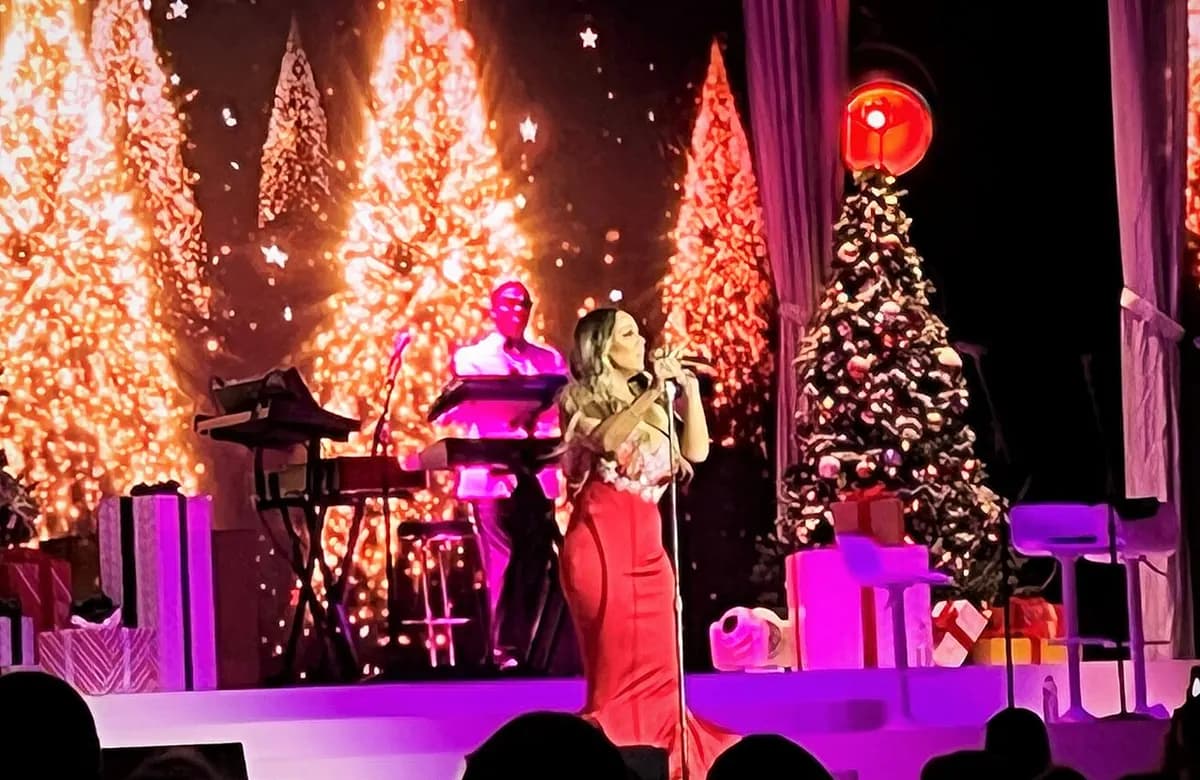
- Retro arrangements in modern releases: Michael Bublé's and Mariah Carey's Christmas records borrow the big-band and Spector-era sound of the late 1950s and early 1960s.
Styles Within Christmas Music
Every genre has a December branch:
- Carols and sacred choral: the Nine Lessons and Carols tradition, Handel's Messiah, cathedral choirs.
- Crooner Christmas: Crosby, Sinatra, Nat King Cole, Dean Martin; the core of the songbook.
- Rock and roll Christmas: Elvis, Chuck Berry's "Run Rudolph Run", Brenda Lee.
- Soul and R&B Christmas: The Temptations, Donny Hathaway, Otis Redding, and the whole Motown Christmas catalogue.
- Jazz Christmas: Vince Guaraldi's A Charlie Brown Christmas (1965), the soundtrack to the animated television special of the same name.
- Country Christmas: Dolly Parton, Kenny Rogers, Alan Jackson.
- Novelty: "Grandma Got Run Over by a Reindeer", "I Want a Hippopotamus for Christmas".
- Punk and metal Christmas: Trans-Siberian Orchestra's arena-rock Christmas Eve and Other Stories (1996), plus a long tradition of joke covers.
- Anti-Christmas songs: The Pogues' "Fairytale of New York", Tom Waits's "Christmas Card from a Hooker in Minneapolis".
Key Records & Tracks
Where to start:
- Bing Crosby: "White Christmas" (1942), listed by Guinness as the best-selling physical single.
- Nat King Cole: "The Christmas Song" (1946).
- Elvis Presley: Elvis' Christmas Album (1957), one of the best-selling Christmas albums in the US.
- Phil Spector: A Christmas Gift for You (1963), including Darlene Love's "Christmas (Baby Please Come Home)".
- Vince Guaraldi Trio: A Charlie Brown Christmas (1965).
- Donny Hathaway: "This Christmas" (1970).
- Wham!: "Last Christmas" (1984), UK number one in 2021.
- The Pogues feat. Kirsty MacColl: "Fairytale of New York" (1987).
- Mariah Carey: "All I Want for Christmas Is You" (1994), US number one every December from 2019 to 2025.
- Michael Bublé: Christmas (2011), the crooner songbook recorded for a new generation.
Three records for the arc: "White Christmas" for the war-era ballad, A Christmas Gift for You for the pop production template, "All I Want for Christmas Is You" for how a modern hit rebuilds both.
How AI Detects Christmas Music
Christmas music is a category a genre classifier cannot return, for a precise reason. Genre AI's model answers "what kind of music is this?", and a Christmas record is a pop, soul, jazz or rock recording with a seasonal lyric. Feed it "All I Want for Christmas Is You" and the correct answer is pop; feed it A Charlie Brown Christmas and the correct answer is jazz. Neither is a mistake.
What is detectable is the seasonal palette: sleigh bells produce a distinctive dense high-frequency band, and bell-family instruments give strong inharmonic partials that stand out from voices and guitars. A model can in principle learn "this recording contains sleigh bells and chimes over a swung major-key arrangement", which is a good proxy, though it would also flag non-Christmas records that use those instruments. Lyrics, which actually decide the question, are outside audio analysis. Test one in the Genre AI music genre detector and compare the answer with the calendar.
Genre AI's production taxonomy has no Christmas label, so the answer describes the style of the recording. The model gives priority to broad labels that have subgenres, which shapes the likely results. Crosby and Cole recordings will probably come back as Jazz, with Easy Listening or Big Band / Swing underneath; Spector-era singles as Rock with RocknRoll (see Rock and Roll) or as Funk / Soul with Soul; country Christmas records as Folk / Country with Country. Cathedral choirs singing carols, or Handel's Messiah, are most likely to land on Classical, probably under a period label such as Baroque Period. Modern singles like Mariah Carey's have the profile of Pop, but Pop has no subgenres in the taxonomy and rarely comes up, so the answer is more likely to go to Funk / Soul with Soul or Neo Soul, or to Rock with Soft / Pop Rock. The Children / Jingle label, despite the sleigh bells, rarely comes up for the same reason: it has no subgenres. None of these is a mistake: they name the music under the seasonal lyric.