
Hardcore punk is punk stripped of most of what still connected it to rock and roll: faster, shorter, louder, and organised almost entirely outside the music industry. It appeared in American and Canadian cities between 1978 and 1981, ran at 180–250 BPM in songs often under ninety seconds, and built a self-run network of labels, venues and fanzines that later independent scenes from indie rock to emo used as a model.
This guide covers the scenes it grew from, what the sound is made of, how it differs from punk, and what it turned into. To hear how a track reads to a classifier, run a few seconds through our free AI music genre detector.
Not to be confused with hardcore as the electronic dance genre (gabber, happy hardcore and their relatives). Same word, unrelated music.
What Is Hardcore Punk?
Hardcore punk takes every element of punk to an extreme and removes the decoration. Tempos double, songs shrink to one or two minutes, guitar solos disappear, and the singer shouts instead of sneering. What is left is rhythm, volume and words.
Two structural traits separate it from the punk that came before. First, the swing is gone: 1977 punk still carried the rock-and-roll feel that runs from Chuck Berry to the Ramones, while hardcore is played straight and hard, closer to a machine than to a shuffle. Second, the breakdown: a sudden drop to half tempo that tells the room when to start moving in the pit. Metalcore, beatdown and much of modern metal took the breakdown from here.
Hardcore is also where punk built its own infrastructure. Bands released their own records, booked their own tours through networks of phone numbers, played all-ages halls instead of licensed clubs, and documented themselves in fanzines. That network, more than the tempo, explains why the genre has kept producing new bands for more than forty years.
History & Origins
Where the name came from is disputed. The author Steven Blush credits Vancouver: D.O.A.'s 1981 album Hardcore '81, in his account, "was where the genre got its name". Other writers tie the word to the Los Angeles scene, and by late 1981 it was in use in New York as well. The music itself arrived at roughly the same moment in several cities that had little contact with each other.
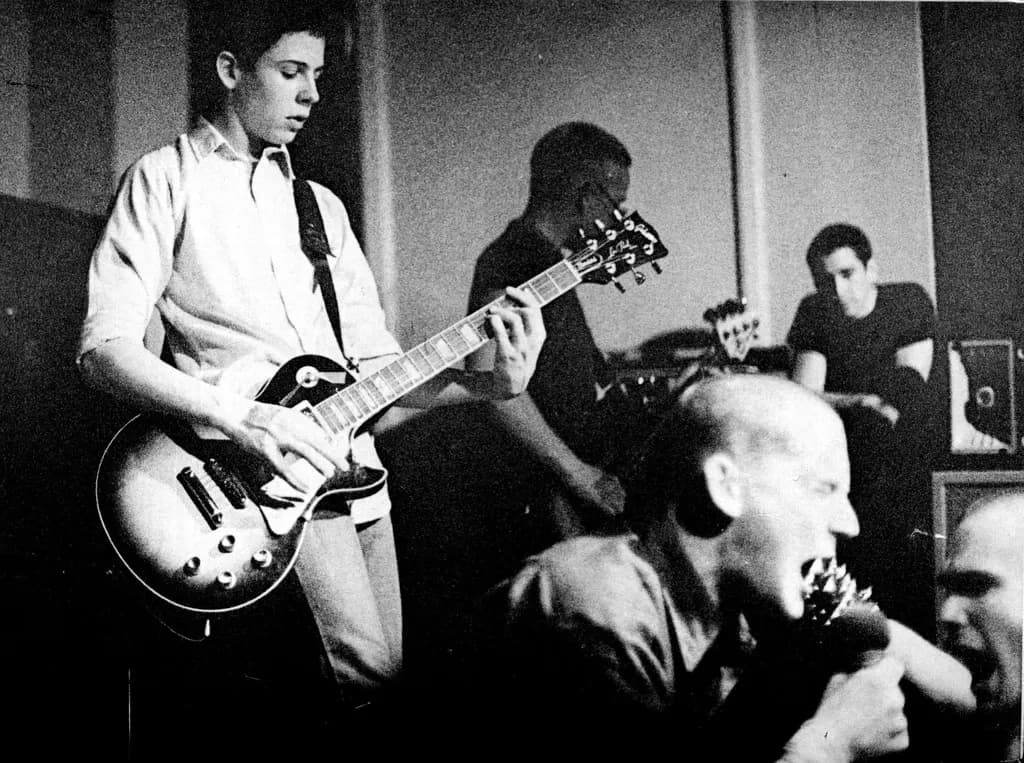
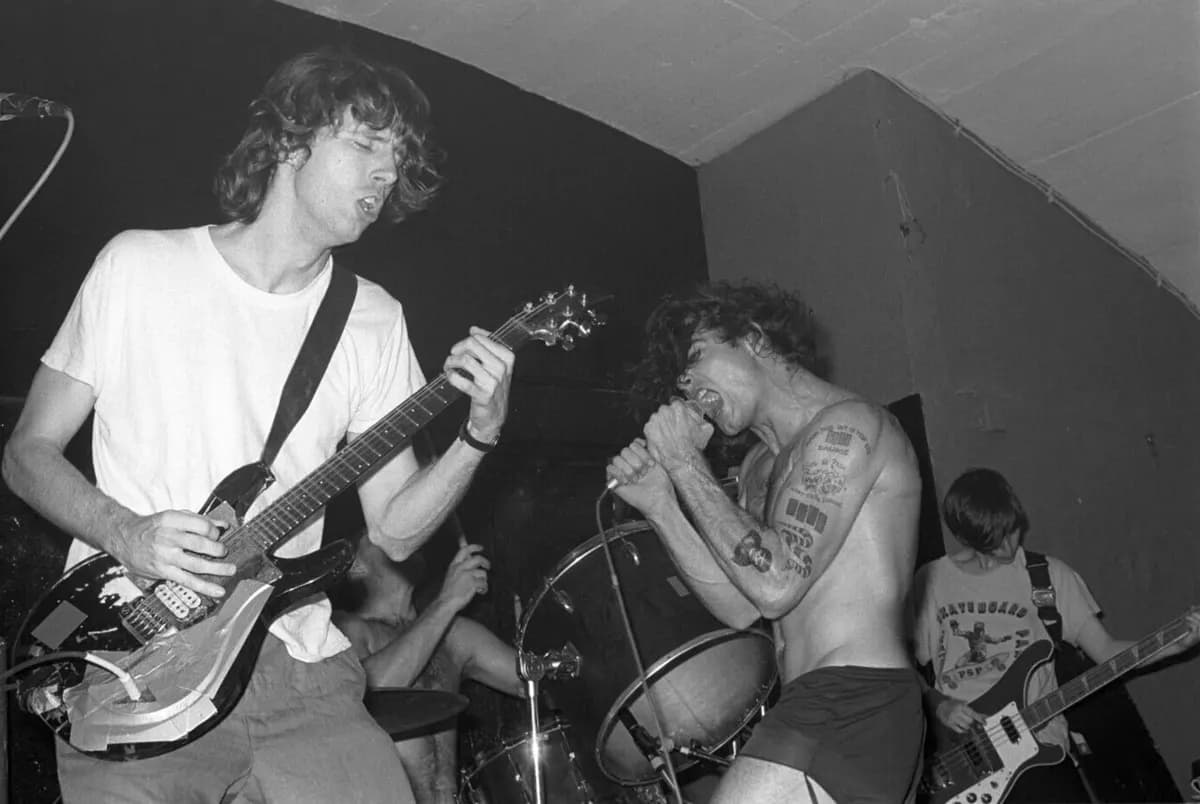
Southern California produced the first fully formed version. Black Flag, formed in Hermosa Beach in 1976, released the Nervous Breakdown EP in 1979 on Greg Ginn's SST Records, toured relentlessly through halls and basements across the country, and built the template for a self-managed band. Around them were the Circle Jerks, whose drummer Lucky Lehrer is often credited with developing hardcore drumming, the Germs, the Adolescents and the Orange County suburban scene.
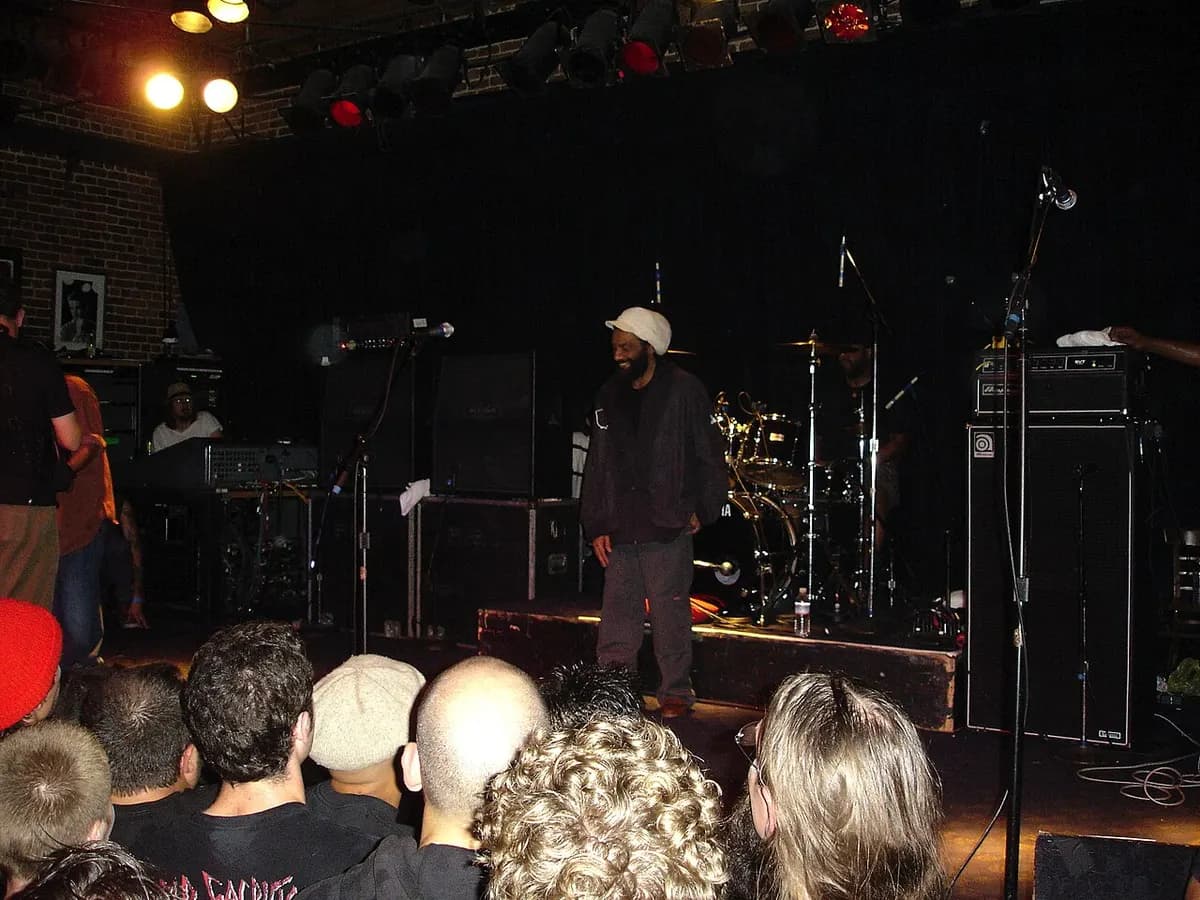
Washington DC supplied the ideology. Bad Brains, Black musicians who had started out playing jazz fusion and who mixed reggae into their sets, set the technical bar with their speed and precision. Minor Threat's 46-second song "Straight Edge" gave its name to a movement of abstinence from alcohol and drugs, a meaning the band had not set out to create. Ian MacKaye's Dischord Records kept its prices low as a matter of principle, and still does.
New York arrived slightly later and harder, with the Sunday matinees at CBGB and bands such as Agnostic Front, Cro-Mags and Warzone, who brought metal riffing and street-level aggression into the form. Boston (SS Decontrol, Negative FX) added the crew mentality; Minneapolis produced Hüsker Dü, who moved from the blur of Land Speed Record (1982) to the melodic double album Zen Arcade in two years.
By 1985 the first wave had run out of steam: violence at shows had become a problem the bands themselves wrote about, and several founders moved on. In DC that summer, later called Revolution Summer, bands such as Rites of Spring and Embrace turned hardcore inward and spoke out against violence and sexism at shows; emo and post-hardcore begin there.
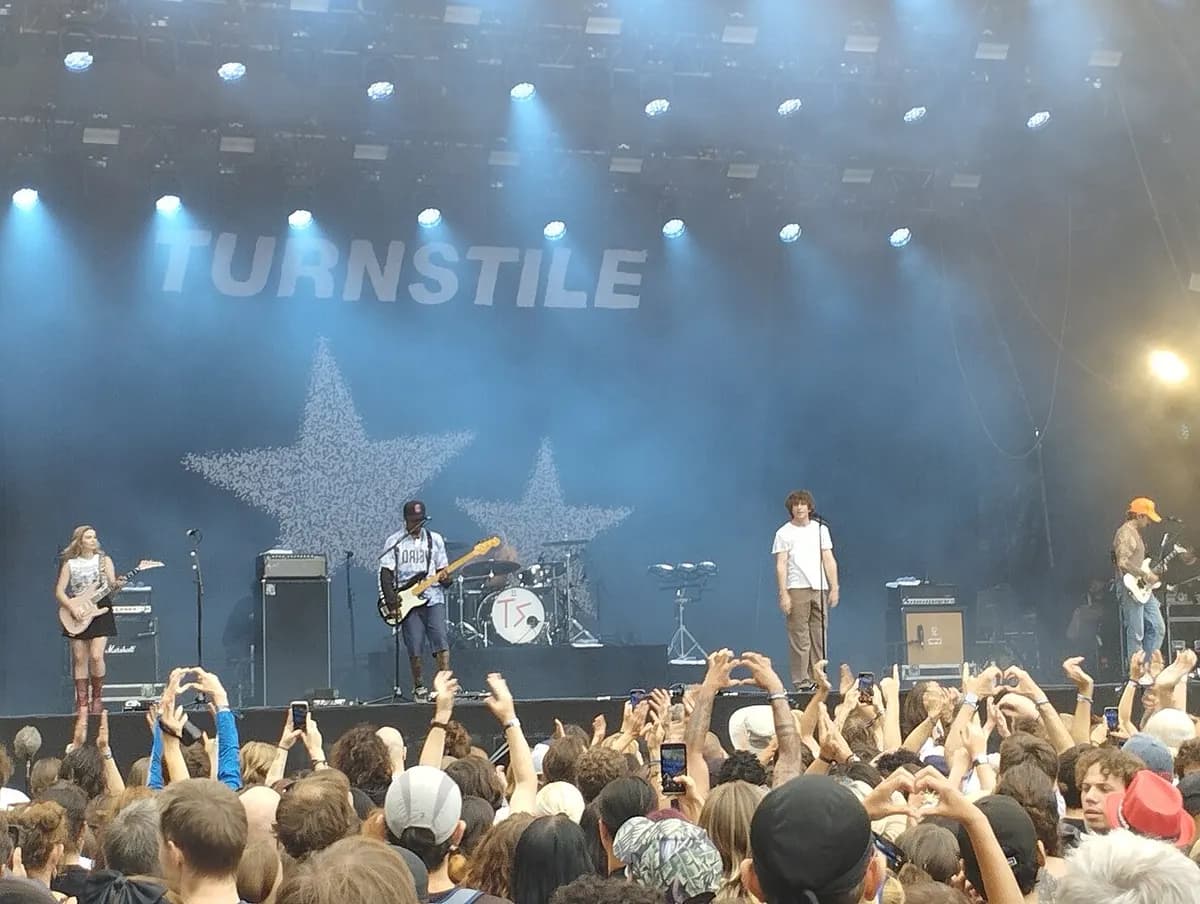
The genre has cycled through revivals ever since: youth crew in the late 1980s (Youth of Today, Gorilla Biscuits), metallic hardcore in the 1990s (Earth Crisis, Integrity), and a real mainstream moment in the 2020s. Turnstile's Glow On (2021) earned the band three Grammy nominations and high festival billings while remaining recognisably a hardcore record; its follow-up Never Enough (2025) won Grammys for Best Rock Album and Best Metal Performance. Knocked Loose, Scowl, Militarie Gun and Drug Church took the style onto large stages.
Key Characteristics & Sound
What identifies a hardcore punk track:
- Tempo: 180–250 BPM in the fast sections, dropping to 80–120 for breakdowns.
- Length: most classics run 45 seconds to two minutes; a full album can be under twenty.
- Guitar: downstroked barre chords, mid-heavy distortion, almost no solos and very little melody.
- Drums: the skank beat and the D-beat (named after Discharge), fast and driving, with no swing.
- Vocals: shouted, close to the mic, delivered in short declarative lines; gang vocals on the chorus.
- Breakdown: the half-time section built for the pit, the genre's structural signature.
- Lyrics: politics, police, conformity, personal discipline and the scene itself, usually stated outright.
- Production: raw, mid-forward and dry; hearing the shout clearly matters more than the size of the guitar.
Where it sits among its relatives:
| Trait | Hardcore Punk | Punk (1977) | Thrash Metal | Metalcore |
|---|---|---|---|---|
| Typical tempo | 180–250 BPM | 150–200 BPM | 180–220 BPM | 120–200 BPM |
| Song length | 0:45–2:00 | 2:00–3:30 | 4:00–8:00 | 3:00–4:30 |
| Guitar | Barre chords, no solos | Power chords, hooks | Downpicked riffs, solos | Riffs plus breakdowns |
| Vocals | Shouted | Sung, sneering | Rasped, rhythmic | Screamed and sung |
| Feel | Straight, no swing | Rock-and-roll swing | Precise, muted | Heavy, syncopated |
| Reference record | Damaged (1981) | Ramones (1976) | Reign in Blood (1986) | Jane Doe (2001) |
Instruments, Production & Infrastructure
Musically the equipment list is short, and that is the point:
- Cheap, loud guitars through solid-state or small tube amps, with the tone set to cut through, not to sound heavy.
- Bass playing roots at full speed, usually with a pick and enough distortion to be heard.
- Small kits played hard: the D-beat and the skank beat need no toms and few cymbals.
- Short sessions: many canonical records were tracked largely live in a day or two.
- Dry, mid-range mixes with the vocal on top; reverb sounds soft and is mostly avoided.
The infrastructure is as much a part of the genre as the sound. SST, Dischord, Touch and Go and Alternative Tentacles showed that a band could distribute nationally without a major label. Fanzines, Maximum Rocknroll above all, carried reviews, scene reports and the touring contacts that made a national circuit possible. All-ages venues (VFW halls, community centres, basements) kept the audience young, so each generation of teenagers could start bands of its own.
Subgenres & Descendants
The hardcore family tree is unusually wide:
- Straight edge: a stance (no alcohol, no drugs) more than a sound, named after the Minor Threat song and carried by Youth of Today and Earth Crisis.
- D-beat and crust: the Discharge lineage, distorted, apocalyptic and closer to metal; Amebix, Doom.
- Powerviolence: extreme tempo whiplash and songs under thirty seconds; Infest, Man Is the Bastard.
- Youth crew: the late-1980s positive, melodic wave with gang vocals.
- Beatdown and metallic hardcore: breakdown-centred and heavy; Hatebreed, Integrity.
- Grindcore: hardcore plus death metal at maximum speed; Napalm Death.
- Crossover thrash: the meeting point with thrash metal; D.R.I., Suicidal Tendencies.
- Post-Hardcore and emo: the introspective branches that grew out of DC in 1985.
- Metalcore: the largest commercial descendant, hardcore structure with metal riffing.
Notable Artists & Albums
Where to start:
- Black Flag: Damaged (1981).
- Minor Threat: Complete Discography (1989 compilation of the 1981–83 recordings).
- Bad Brains: Bad Brains (1982), the "ROIR cassette".
- Circle Jerks: Group Sex (1980), fourteen songs in under sixteen minutes.
- Dead Kennedys: Fresh Fruit for Rotting Vegetables (1980).
- Descendents: Milo Goes to College (1982), the melodic branch that fed into pop punk.
- Agnostic Front: Victim in Pain (1984).
- Hüsker Dü: Zen Arcade (1984).
- Gorilla Biscuits: Start Today (1989).
- Turnstile: Glow On (2021), the modern reference point.
Three records for the arc: Damaged for the sound and the self-run model, Bad Brains for the technique, Glow On for what hardcore became once it stopped being underground.
How AI Detects Hardcore Punk
Hardcore gives an audio model a fairly clear profile: very dense, even transients, a shouted vocal, mid-heavy distorted guitar in a dry room, and little harmonic movement. Song length is invisible to a classifier that listens to short windows, but the lack of melodic development inside a window is not.
Genre AI's production taxonomy has no separate hardcore punk label. The phrase "hardcore punk" is one of the text descriptions attached to the Hard Rock label, and Punk is a separate fine label under Rock, so both are plausible answers for the same track. Fast sections are likely to read as punk, or as Metal when the riffing leans toward thrash metal; breakdowns may move the reading to metalcore or another metal label, because half-time chugging is what those genres are built on. To see how much the excerpt matters, upload both parts of the same song to the Genre AI music genre detector.
In Genre AI, hardcore punk will be filed under a broader label: most likely Rock with the fine label Punk, or Hard Rock, whose text prompts include the phrase "hardcore punk". A fast verse is likely to stay on the Punk side; a breakdown may move the reading toward Metalcore or Metal, the same boundary that crossover and metallic hardcore bands spent the 1980s and 1990s blurring. Recording era may matter too. The dry, mid-forward recordings of 1981 have far less low end than a modern hardcore production, so a 2021 record and a 1981 one could land on different labels even when the riff is much the same.