
Bachata is the guitar-led popular music of the Dominican Republic: a requinto lead picking arpeggios over a syncopated four-beat rhythm at 120–140 BPM, with lyrics that are overwhelmingly about heartbreak. Dismissed for decades as the music of the rural poor, it is now danced in social-dance scenes far beyond the Caribbean as a Latin partner dance, and in 2019 UNESCO added it to its list of the Intangible Cultural Heritage of Humanity.
This guide covers what bachata is, how it went from being kept off the radio to being exported worldwide, the instruments and rhythm that define it, the urban bachata wave that took it to the pop charts, and the artists to know. Curious how a model hears requinto arpeggios? Play a few seconds into our free AI music genre detector.
What Is Bachata?
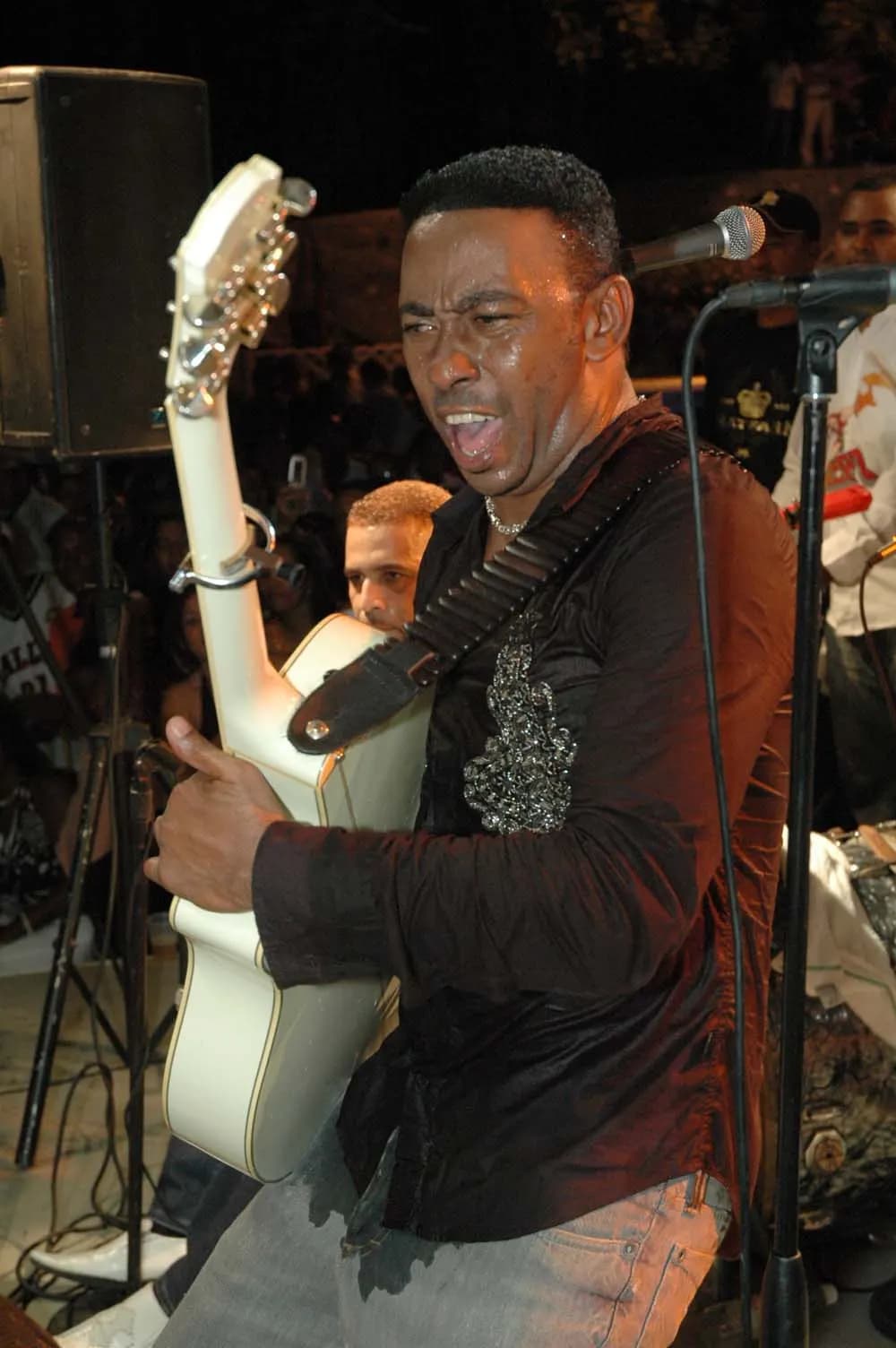
Bachata is built from a small, consistent ensemble: a requinto (lead guitar) playing constant arpeggiated figures, a segunda (rhythm guitar) marking the groove, electric bass, bongó, and güira, a metal scraper that supplies a continuous texture at the top of the mix. The line-up has stayed close to this since the late 1980s, when the electric guitar replaced the acoustic one, even as the production around it has changed.
Rhythmically it is in 4/4 at 120–140 BPM, but dancers count it in groups of four with a hip tap on the fourth beat, which is why the music feels like it moves in short repeated phrases. Lyrically the tradition is one of amargue (bitterness): songs of betrayal, longing and romantic suffering, sung very directly.
History & Origins
Bachata developed in the Dominican Republic in the early 1960s, after the assassination of dictator Rafael Trujillo in 1961 removed decades of cultural control. It grew from bolero and from Cuban and Puerto Rican guitar traditions, played in rural areas and in the bars and brothels of poor urban neighbourhoods. José Manuel Calderón's 1962 recording of "Borracho de amor" is generally treated as the first bachata record.
For two decades the genre was looked down on. Into the 1980s it was considered too vulgar and crude for Dominican radio and television, the word "bachata" itself carried connotations of a rowdy backyard party, and the elite label for it, música de amargue, was not a compliment. It circulated through cheap pressings, jukeboxes and word of mouth until Luis Segura's "Pena por ti" (1982) became a national hit and one of the first bachatas played on FM radio.
Two changes made it mainstream. In 1987 Blas Durán recorded "Mujeres hembras" with an electric guitar in place of the nylon-string lead, giving the music the brighter, sharper sound it still has. Then in 1990 Juan Luis Guerra, a Berklee-trained artist already successful abroad, released Bachata Rosa, which won the Grammy for Best Tropical Latin Album in 1992 and made the genre acceptable to listeners who had previously rejected it. Antony Santos, Raulín Rodríguez, and Joe Veras then defined the 1990s.
The final step was diasporic. In New York, the Dominican-American group Aventura, led by Romeo Santos, merged bachata with R&B and hip-hop production and English-language phrasing. "Obsesión" (2002) spent 16 weeks at No. 1 in Italy in 2003–04, and the urban bachata that followed (Aventura, Prince Royce, Toby Love and Romeo Santos's solo career) became a fixture of US Latin charts.
Key Characteristics & Sound
What identifies bachata:
- Tempo: 120–140 BPM, most commonly around 125–132.
- Requinto: a lead guitar playing continuous arpeggios and melodic fills; it carries most of the melody besides the voice.
- Güira: a metal scraper providing constant sixteenth-note texture.
- Bongó: the main drum, with a characteristic accent on the fourth beat.
- Bass: syncopated, often anticipating the beat.
- Harmony: simple progressions in major and minor keys, following bolero conventions.
- Vocals: emotive, high in the mix, frequently in close harmony.
The genre's main phases, including the split between traditional and urban forms:
| Era | Years | Typical BPM | Sound |
|---|---|---|---|
| Early / bolero-derived | 1962–1980 | 115–130 | Nylon-string guitar, raw recording, rural circulation |
| Amargue peak | 1980–1987 | 120–135 | Luis Segura era, first commercial breakthroughs |
| Electric / modern | 1987–1999 | 125–140 | Electric requinto, faster, radio-ready |
| Urban bachata | 2002–present | 120–135 | R&B and hip-hop production, bilingual lyrics |
| Bachata fusion | 2010–present | 120–140 | Pop and reggaeton crossovers, global dance scene |
The Dance & Its Global Spread
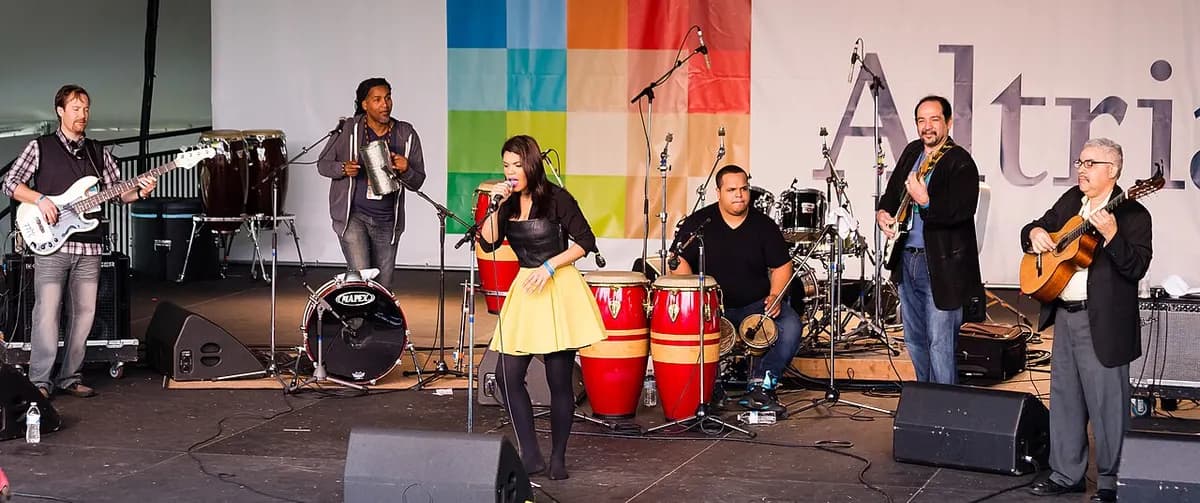
Bachata's international reach owes as much to dance schools as to radio. The basic step is a three-step movement with a tap or hip motion on the fourth beat, danced in a close partner hold. It is quick to learn and leaves room to develop, which suited the social-dance circuit that had already built itself around salsa.
From the 2000s onward, European and Latin American dance scenes developed their own styles, such as bachata sensual (associated with Spain, with body waves and complex partner work) and bachata moderna. These created demand for music that suits them, including bachata remixes of English-language pop songs. Here the dance community is shaping what gets produced.
Styles & Related Genres
Bachata's variants and neighbours:
- Bachata tradicional: the classic requinto-led Dominican form.
- Urban bachata / bachata urbana: the New York hybrid with R&B and hip-hop (Aventura, Prince Royce).
- Bachata sensual: dance-scene-driven, smoother, often built on remixes.
- Bolero: the direct ancestor, slower and more orchestral.
- Merengue: the other Dominican national genre, much faster and accordion-driven.
- Salsa and reggaeton: the styles it shares audiences, artists, and dance floors with.
Notable Artists & Tracks
Across the genre's history:
- José Manuel Calderón: "Borracho de amor" (1962), the first bachata recording.
- Luis Segura: "Pena por ti," the 1982 breakthrough.
- Blas Durán: "Mujeres hembras" (1987), the first bachata recorded with electric guitar.
- Juan Luis Guerra: Bachata Rosa (1990), "Burbujas de amor."
- Antony Santos: "Voy pa'llá."
- Raulín Rodríguez: "Medicina de amor" (1994).
- Aventura: "Obsesión," "Un Beso."
- Romeo Santos: "Propuesta Indecente," "Eres Mía."
- Prince Royce: "Corazón Sin Cara," "Darte un Beso."
- Monchy & Alexandra: "Hoja en Blanco."
Start with "Burbujas de amor," "Obsesión," and "Propuesta Indecente" to hear the record that made bachata respectable, the New York crossover and today's solo stars.
How AI Detects Bachata
Bachata is one of the easier Latin genres for a classifier, because two of its elements are timbrally unmistakable. The güira produces a continuous high-frequency scraping texture that few other genres use, and the requinto's constant arpeggiation gives a dense, evenly spaced pattern of plucked-string onsets in the upper midrange. Together with a 120–140 BPM tempo and a syncopated bass, that combination is quite specific.
Urban bachata is harder: once R&B drums and synth pads are layered on, the reading can drift toward Latin pop or R&B. Test your own tracks in the Genre AI music genre detector, and read how AI music genre detection works for what the model is listening to.
Testing this genre in Genre AI ourselves, Bachata is one of the Latin styles the model identifies most reliably, mainly because of the güira: few other genres put a continuous metallic scrape across the top of the mix. Readings are strongest on traditional arrangements at 125–135 BPM with an arpeggiating requinto. Add R&B drums and pads for urban bachata and the model starts splitting toward Latin and R&B; replace the guitar with horns and speed it up and it moves to Salsa; drop the dembow in and Reggaeton takes over.