Baroque pop is pop songwriting dressed in the instruments and devices of classical chamber music: harpsichord instead of rhythm guitar, a string quartet instead of a second guitarist, French horn, oboe and flute where a rock band would put a solo, and counter-melodies that move against the vocal the way voices do in a Bach chorale. It appeared in the mid-1960s; the term itself (first as "baroque rock") was coined in promotional material for the Left Banke in 1966. Since the 1990s the sound has come back under the names chamber pop and orchestral pop.
This guide covers where the style came from, what actually makes a record sound "baroque", how it differs from art rock and indie pop, and which records to start with. To hear how a string-and-harpsichord pop song reads to a classifier, run a few seconds through our free AI music genre detector.
What Is Baroque Pop?
Baroque pop is first of all an arranging style. The song underneath is ordinary pop: verse, chorus, a hook, a running time of two to four minutes. What changes is the clothing. The rhythm section is pulled back, sometimes to almost nothing, and the harmonic and melodic interest moves into instruments borrowed from the seventeenth- and eighteenth-century ensemble (harpsichord, strings, woodwinds, brass), played with the figures that period is known for: running bass lines, ornamented melodies, suspensions that resolve, and lines that answer each other in counterpoint.
The word "baroque" is used loosely. Very few of these records imitate Bach or Handel in any strict sense. Wikipedia sums up what they do borrow as contrapuntal melodies, functional harmony and "dramatic or melancholic gestures", and the lyrics are often wistful about lost love or lost youth. A harpsichord in a 1966 pop single was a signal that the song was meant to be taken seriously, the way a string section on a soul record signalled ambition.
Two related terms overlap with it. Chamber pop is the usual name for the 1990s and 2000s revival, generally associated with indie labels and smaller ensembles. Orchestral pop is broader and covers lush, film-style string writing without the specifically baroque devices. In practice critics use all three for the same records; the historian Andrew Grant Jackson treats baroque pop and chamber pop as one and the same.
History & Origins
The groundwork was laid by producers and arrangers. Harpsichords had turned up on pop records since the 1940s, and the Jamies' "Summertime, Summertime" (1958) was one of the first pop hits to use one. Through the early 1960s Phil Spector and Brian Wilson pushed the instrument forward in their mixes, and Burt Bacharach, like Spector, was blending pop with orchestral writing before rock bands took it up. The specifically classical, small-ensemble sound arrived through The Beatles and their producer George Martin.
"Yesterday" (1965) put Paul McCartney's voice and acoustic guitar against a string quartet, an arrangement Martin wrote with McCartney. Later the same year Martin wrote a Bach-influenced piano solo for "In My Life" that he could not play at the song's tempo, so on 22 October he recorded it with the tape at half speed. Played back at normal speed, it came out an octave higher and sounded like a harpsichord. Producer Tommy LiPuma later recalled that once the Beatles used that sound, pop producers began working it in. "Eleanor Rigby" (1966) dispensed with the band entirely and used a double string quartet; "Penny Lane" (1967) featured a piccolo trumpet solo by David Mason, whom McCartney had seen play Bach's Brandenburg Concerto No. 2 on BBC television in January 1967.
In California, Brian Wilson's work on the Beach Boys' Pet Sounds (1966) used the Los Angeles session players later known as the Wrecking Crew, with arrangements for harpsichord, French horn, flutes, strings, bass harmonica and unusual percussion behind the group's harmonies. The album is often called baroque pop today, but no press of the time used the word; reviewers called it "progressive", and Wikipedia's article on the genre limits its baroque side to one track. That track, "God Only Knows", opens on an A major chord played by accordions, harpsichord and French horn, and Wilson used eighteen session musicians to record it.
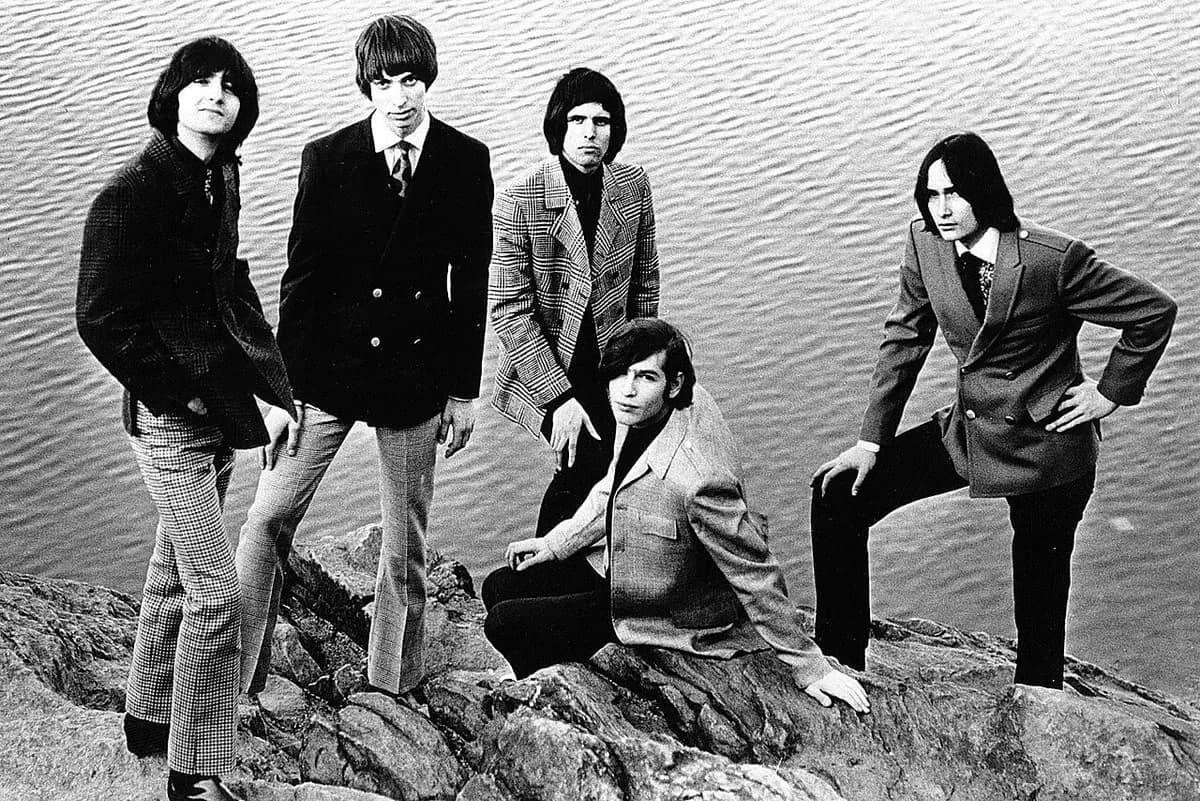
The writer Bob Stanley calls the Left Banke's "Walk Away Renée" (1966) the first recognisable baroque pop single. Michael Brown wrote it at 16; his father, the jazz violinist Harry Lookofsky, produced the record and played its string parts. Built on harpsichord, strings and a descending chord pattern, it reached number 5 on the Billboard Hot 100, and the follow-up "Pretty Ballerina", released that December, added an oboe to the string quartet. In the UK, Procol Harum's "A Whiter Shade of Pale" (1967) set Matthew Fisher's Bach-derived organ line under Gary Brooker's vocal, and the Rolling Stones' "Lady Jane" (1966) used dulcimer and harpsichord.
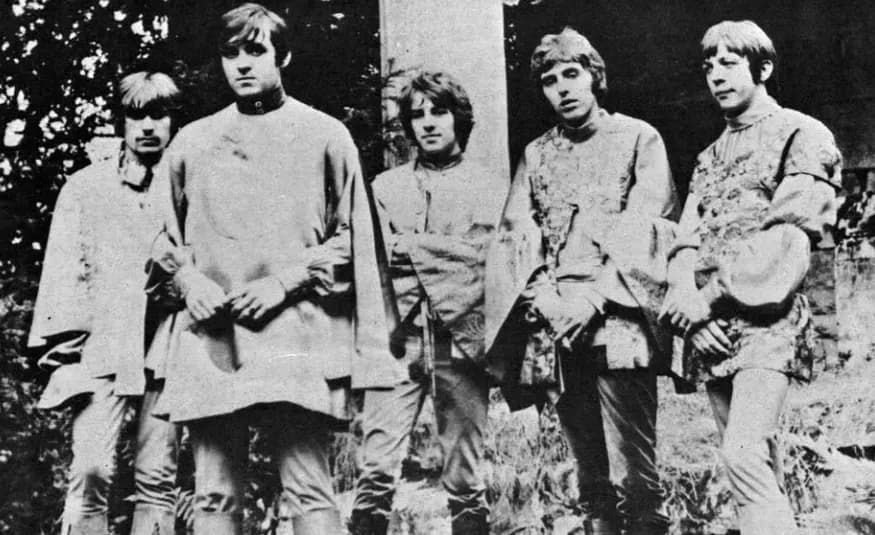
From 1967 the style fed into the more expansive records of the psychedelic era. For Love's Forever Changes (1967), Arthur Lee spent three weeks singing and playing the orchestral parts to the arranger David Angel. The Zombies, whose 1964 single "She's Not There" Stanley names as a starting point for the style, used a Mellotron to fake the orchestra on Odessey and Oracle (1968). Scott Walker's run of solo albums, Scott through Scott 4 (1967–1969), brought orchestral arrangements and Jacques Brel songs to a teen idol's audience. Nick Drake's Bryter Layter (1971), with string arrangements by Robert Kirby, belongs to the tail of the first wave; Kirby said Drake wanted the arrangements to evoke Pet Sounds.
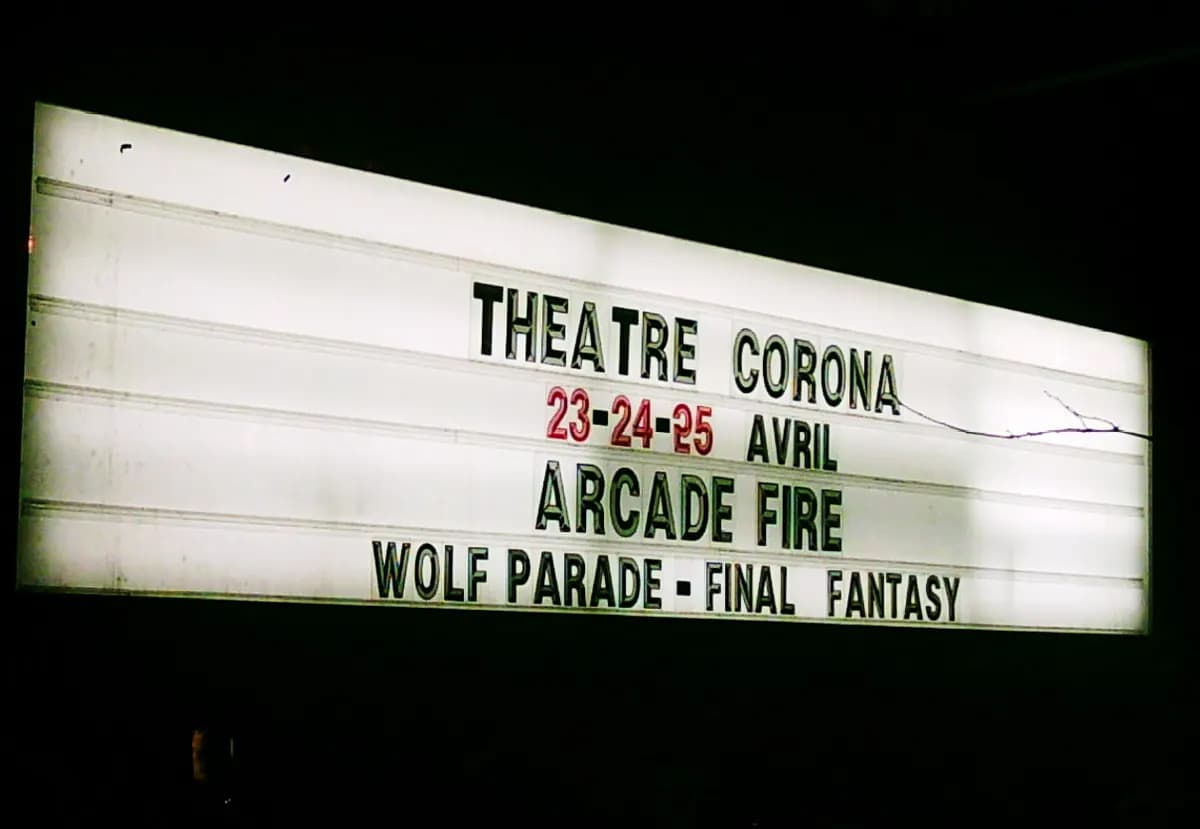
The revival began in the 1990s, when indie musicians looked back to Pet Sounds and Scott Walker instead of to punk. The High Llamas, The Divine Comedy, Belle and Sebastian and Rufus Wainwright made orchestrated pop for small labels, and the term chamber pop came into use. The 2000s gave the style its widest modern audience: Arcade Fire's Funeral (2004), with string arrangements credited to Owen Pallett, Sarah Neufeld and the band; Sufjan Stevens's Illinois (2005); Beirut's brass-led Gulag Orkestar (2006); and Joanna Newsom's Ys (2006), with orchestral arrangements by Van Dyke Parks, Brian Wilson's lyricist on the Smile sessions forty years earlier. Panic! at the Disco turned to the sound on Pretty. Odd. (2008), Arctic Monkeys on Tranquility Base Hotel & Casino (2018), and Lana Del Rey's Born to Die (2012) and Weyes Blood's Titanic Rising (2019) are often filed under it.
Key Characteristics & Sound
What identifies a baroque pop record:
- Tempo: mostly 70–125 BPM, with a clear preference for walking mid-tempo and slow ballads; the style almost never runs at dance tempo.
- Featured classical instruments: harpsichord, string quartet or small string section, French horn, oboe, flute, piccolo trumpet, used as the arrangement's main colour.
- Counterpoint: independent lines moving against the vocal, where most pop would put block chords.
- Descending bass lines: stepwise falling basses and chromatic walk-downs, the device behind "Walk Away Renée" and countless chamber pop songs.
- Harmony: richer than standard pop, with suspensions, secondary dominants, unexpected key changes and minor-to-major shifts.
- Restrained drums: the kit is lighter and further back, sometimes absent for whole sections.
- Vocals: clear and melodic, frequently with stacked harmonies; the melancholy, slightly formal delivery is part of the style.
- Lyrics: often about lost love and memory, or character sketches.
Where it sits among its neighbours:
| Trait | Baroque Pop | Art Rock | Indie Pop | Psychedelic Pop/Rock |
|---|---|---|---|---|
| Peak periods | 1965–1971; 1995–present | 1967–1980 | 1980s–present | 1966–1969 |
| Typical BPM | 70–125 | Varies widely | 100–140 | 80–130 |
| Lead colour | Strings, harpsichord, horns | Guitars, synths, concept | Jangly guitars | Effects, sitar, tape tricks |
| Song length | 2–4 min | Often long, suites | 2–4 min | 3–6 min |
| Ambition lies in | Arrangement | Concept and form | Directness | Sound and texture |
| Reference record | Walk Away Renée | Roxy Music | Tigermilk | Sgt. Pepper's |
Instruments & Production
Most of the genre's character comes from what an arranger writes on paper:
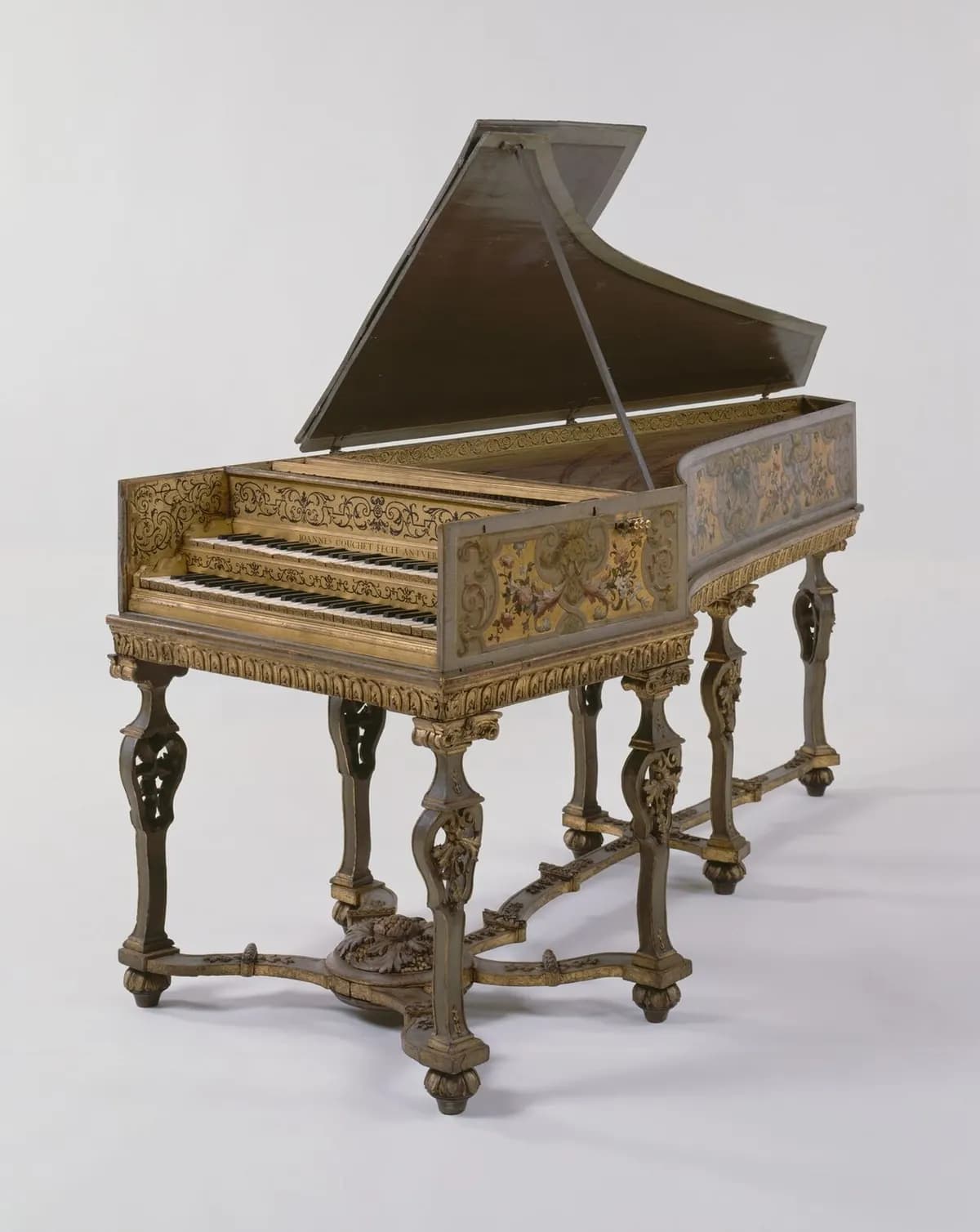
- Harpsichord: the signature instrument. Its plucked, bright attack and lack of sustain cut through a mix even at low volume, which is why it works as a rhythm instrument in place of guitar.
- Strings: anything from a solo cello to a full section, usually in close harmony and often playing short, detached figures.
- Brass and woodwinds: French horn for warmth, piccolo trumpet for a ceremonial, Brandenburg-style brightness, oboe and flute for melancholy colour.
- Substitutes on a budget: the Mellotron's tape-replayed strings and flutes on Odessey and Oracle, and later sampled or synthesised orchestras on home-recorded chamber pop.
- Session musicians and arrangers: the 1960s records relied on George Martin, Brian Wilson with the Wrecking Crew, Harry Lookofsky and Robert Kirby; the revival on Owen Pallett and Van Dyke Parks.
- Room sound: orchestral instruments are usually recorded with some space around them, and modern chamber pop often keeps that ambience.
Because the arrangement carries so much weight, a baroque pop song stripped to voice and piano usually still works as a song but loses much of its identity. That gives a rough test: if removing the strings and harpsichord leaves an ordinary pop song, the record was baroque pop.
Related Styles & Scenes
The family around it:
- Chamber pop: the 1990s-onward indie revival: Belle and Sebastian, The Divine Comedy, The High Llamas, Rufus Wainwright, Andrew Bird.
- Orchestral pop: lush strings in the Bacharach and Scott Walker tradition, without the specifically baroque devices.
- Sunshine pop: the bright, harmony-heavy Californian cousin of the late 1960s.
- Psychedelic pop: 1967-era records that used the same instruments alongside tape effects and Eastern colour.
- Art rock and progressive rock: where the classical borrowing grew into long forms and concept albums.
- Indie pop: the guitar-led small-label world from which most chamber pop bands emerged.
- Baroque folk: orchestrated singer-songwriter records such as Nick Drake's, adjacent to folk.
- Dream pop: shares the wistful mood and reverb, but builds its atmosphere from guitars and effects instead of orchestral instruments.
Key Artists & Records
Where to start:
- The Left Banke: "Walk Away Renée" (1966), "Pretty Ballerina" (1966).
- The Beach Boys: Pet Sounds (1966); "God Only Knows", "Wouldn't It Be Nice".
- The Beatles: "Yesterday" (1965), "Eleanor Rigby" (1966), "Penny Lane" (1967).
- Procol Harum: "A Whiter Shade of Pale" (1967).
- Love: Forever Changes (1967).
- The Zombies: Odessey and Oracle (1968).
- Scott Walker: Scott 4 (1969).
- Nick Drake: Bryter Layter (1971).
- The Divine Comedy: Casanova (1996).
- Belle and Sebastian: If You're Feeling Sinister (1996).
- Arcade Fire: Funeral (2004).
- Sufjan Stevens: Illinois (2005).
- Joanna Newsom: Ys (2006).
- Lana Del Rey: Born to Die (2012).
- Weyes Blood: Titanic Rising (2019).
Three records for the arc: "Walk Away Renée" for the template, Pet Sounds for the ambition, Funeral for the way the sound returned forty years later.
Baroque Pop vs Art Rock and Indie Pop
The three styles share players and audiences, so the differences are worth spelling out.
Against art rock: art rock treats the album, the concept and the persona as the artwork, as Roxy Music, Bowie's Berlin records and the Velvet Underground did. Its classical borrowing, when it exists, is a matter of structure and idea. Baroque pop keeps the three-minute song intact and puts its ambition into the arrangement. A baroque pop record is a pop single with an orchestra; an art rock record is often not a single at all.
Against indie pop: indie pop is defined by directness: jangling guitars, plain vocals, small budgets. Chamber pop grew out of that scene, but once a band adds a string quartet and a horn section, the defining trait has changed from immediacy to arrangement. Belle and Sebastian sit right on the line, which is why they are filed under both.
Against classical crossover: crossover puts a classical performer or repertoire into a pop context. Baroque pop works the other way round: pop writers and pop singers borrow classical instruments. The song, the vocal and the structure all remain pop.
How AI Detects Baroque Pop
For an audio classifier, the most distinctive feature of baroque pop is also the most misleading one. The harpsichord, the string quartet and the French horn are exactly the timbres a model associates with classical music and film soundtracks. What keeps a record in pop is everything around them: a lead vocal with pop phrasing, verse–chorus repetition, a steady backbeat when the drums are present, and a short, regular structure.
That means the reading depends heavily on which seconds are sampled. A chorus with drums and vocal is likely to read as soft rock or indie; an instrumental bridge with only strings and harpsichord can tip toward classical. In Genre AI a plain pop answer is unlikely (see the note below), so expect soft rock, indie and classical as the main candidates. Try a track in the Genre AI music genre detector and sample a vocal section, not the intro.
Genre AI's production taxonomy has no separate baroque pop label. The likeliest answers for a vocal section are Rock with the subgenre Soft / Pop Rock, or Rock with Indie / Alternative for the chamber pop revival. Pop has no subgenres, and the classifier prefers a coarse label that has them whenever one is in its top five, so Pop seldom comes out on top; the alternatives shown are sibling subgenres of the winner, so Pop rarely appears there either. There is one quirk worth knowing: the text prompts behind the Classical subgenre Baroque Period include the phrase "baroque pop" itself. A harpsichord-and-strings passage with no vocal is therefore quite likely to come back as Classical / Baroque Period. That answer describes the arrangement, not the period: a 1966 pop single is not seventeenth-century music. When the singer and the drums come back in, the result is more likely to move to Rock.