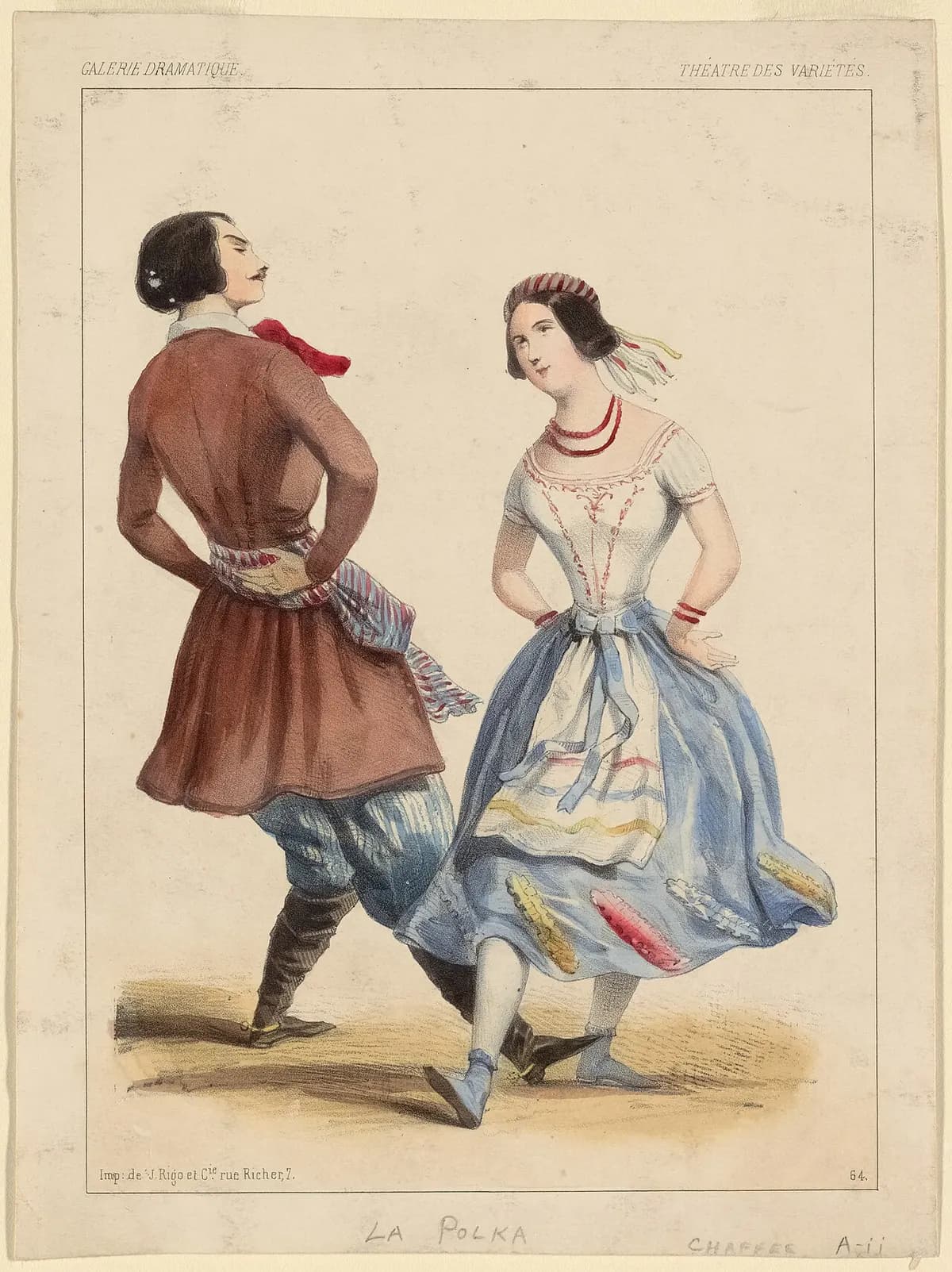
Polka is a lively couple dance in 2/4 time that appeared in Bohemia, in today's Czech Republic, around the 1830s, and within a decade had become the most fashionable dance in Paris and London. Its music is defined by the oom-pah: a bass note on the beat, a chord on the off-beat, and a bright melody on top, usually carried by an accordion, a clarinet or a brass band.
This guide covers where polka came from, how the ballroom craze turned into a folk tradition across Central Europe and the Americas, the rhythm and instruments that make it recognisable, the regional styles from Slovenian to Polish-American to Tex-Mex, and the artists to start with. Want to hear how a classifier treats an oom-pah band? Drop a few seconds into our free AI music genre detector.
What Is Polka?
Polka is first a dance and only then a musical genre. The basic step is a quick hop followed by three small steps (often described as "hop-step-close-step"), danced by couples turning around the floor. The music exists to drive that step, so it barely changes from band to band: two beats to the bar, strong accents, short symmetrical phrases of eight or sixteen bars, and a tempo fast enough to keep dancers bouncing.
The name is usually traced to the Czech word půlka, "half", after the short half-step at the heart of the dance. A competing explanation links it to Polka, "Polish woman", a nod to Czech sympathy for the Polish uprising of 1830–31. Neither is proven, and the two are often quoted side by side.
Polka also travelled unusually far. The same 2/4 skeleton became a salon piece for Viennese orchestras, a village-band staple from Bavaria to Slovenia, an ethnic-identity music for Polish, Czech and Slovenian communities in the United States, and, through German and Czech settlers in Texas and northern Mexico, a backbone of accordion music on both sides of the Rio Grande.
History & Origins
A frequently repeated story credits a young woman in the Bohemian village of Labská Týnice with inventing the steps around 1830, after which a local teacher wrote them down. It is best treated as a legend: what is documented is that the dance was being performed in Prague ballrooms by the mid-1830s and spread from there through the Habsburg lands.
In the early 1840s it reached Paris, where dancing masters taught it to high society, and by 1844 London was in the grip of what newspapers called "polkamania". Polka-themed hats, sweets and fashions were sold alongside the sheet music. For the next half-century it was one of the core ballroom dances of Europe, alongside the waltz, the galop and the mazurka.
Classical composers took it up immediately. Johann Strauss II wrote well over a hundred polkas, including the "Annen-Polka" (1852), the "Tritsch-Tratsch-Polka" (1858) and "Unter Donner und Blitz" (1868), and with his brother Josef the "Pizzicato Polka" (1869). In Bohemia, Bedřich Smetana wrote piano polkas that presented the dance as Czech national music.
By the late nineteenth century polka had dropped out of fashionable ballrooms but remained firmly rooted in folk and village music. Emigrants then carried it across the Atlantic. In the American Midwest and Northeast, Czech, Polish, Slovenian and German communities kept their own polka styles alive in parish halls, taverns and weddings, and record companies recorded them from the 1920s onward as "ethnic" or "foreign" series.
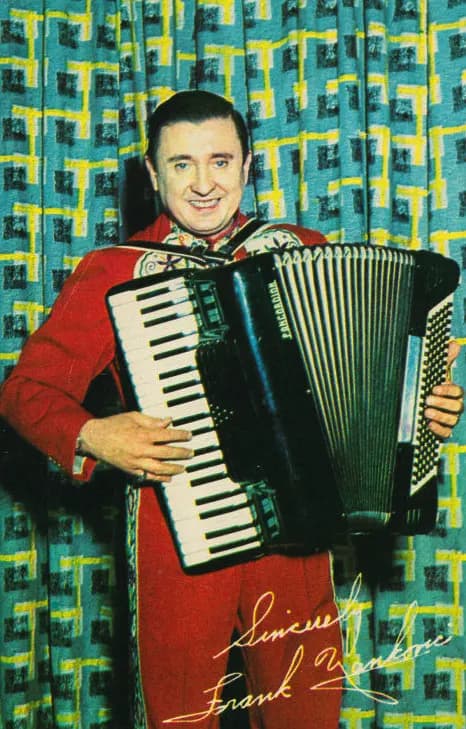
The mid-twentieth century was American polka's commercial peak. "Beer Barrel Polka" began life as the Czech song "Škoda lásky", composed by Jaromír Vejvoda in 1927; with English lyrics it became a major American hit for the Andrews Sisters in 1939. In Cleveland, Frankie Yankovic, billed as "America's Polka King", built a national career in the late 1940s with recordings such as "Just Because" and "Blue Skirt Waltz", and bandleader Lawrence Welk kept polkas on national television for decades.
When the Recording Academy introduced a Grammy for polka in 1986 (renamed Best Polka Album in 1992), the first award went to Yankovic. The category was retired in 2009. New York bandleader Jimmy Sturr won 18 of its awards. Wisconsin, where polka is part of everyday social life, made it the official state dance in 1993.
Rhythm, Tempo & Instruments
What marks a track as polka:
- Metre: 2/4, with a strong downbeat and a lighter second beat.
- Tempo: most dance polkas sit roughly between 110 and 140 BPM counted in quarter notes; competition and show pieces can run faster, and Polish-American "honky" style slower.
- Oom-pah accompaniment: bass on the beat (tuba, string bass, or the accordion's left hand), chord on the off-beat (banjo, guitar, piano or accordion).
- Harmony: major keys and simple progressions, mostly tonic and dominant, with a contrasting trio section in a related key.
- Form: short repeated strains in the march tradition, often AABBA with a trio.
- Lead instruments: piano accordion or button accordion, clarinet, trumpet, violin, saxophone.
- Vocals: optional. Many polkas are instrumental; sung ones are usually in the community's language, often with a group chorus.
The line-up changes from one tradition to the next, and it is the quickest way to tell the styles apart:
| Style | Region | Typical line-up | Feel |
|---|---|---|---|
| Bohemian / Czech | Bohemia, Moravia | Brass band: trumpets, flugelhorn, tuba, clarinets | Stately, marching |
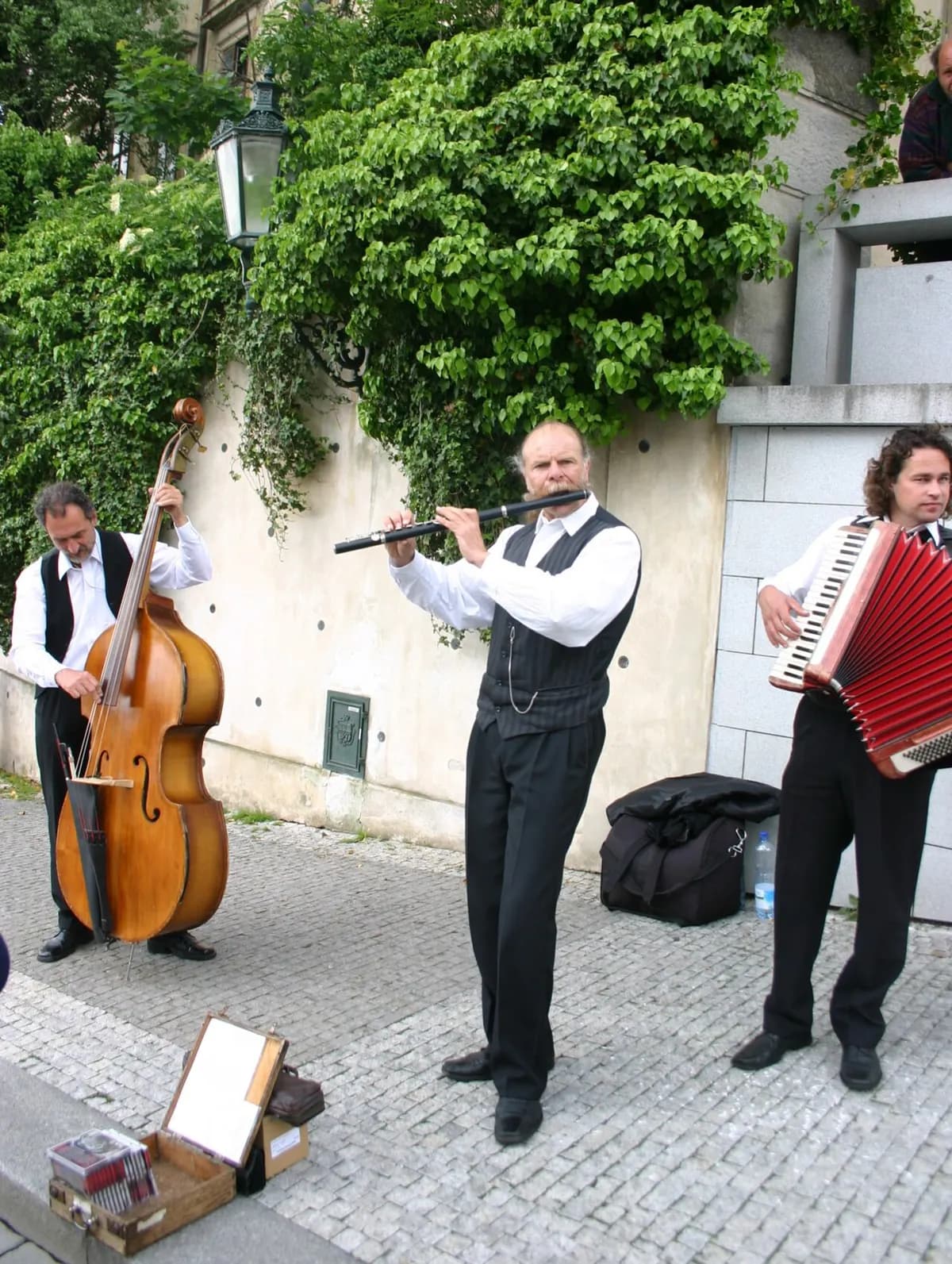
| Oberkrainer | Slovenia, Austria, Bavaria | Accordion, trumpet, clarinet, guitar, bass | Bright, virtuosic |
| Slovenian / Cleveland style | Ohio, US Midwest | Button or piano accordion, banjo, bass, drums | Light, bouncy |
| Polish-American Chicago (honky) | Chicago, Midwest | Concertina, trumpets, clarinet, bass, drums | Slower, heavier, vocal-led |
| Polish-American Eastern | Northeast US | Trumpets, clarinet, accordion, bass, drums | Faster, arranged, brassy |
| Conjunto / norteño | Texas, northern Mexico | Button accordion, bajo sexto, bass, drums | Light shuffle, sung in Spanish |
Regional Styles
Each region plays the same beat in its own dialect:
- Czech and Moravian brass polka: the original home, played by village brass bands. "Škoda lásky" is its most famous export.
- Oberkrainer: the Upper Carniolan sound of Slovenia, codified in the 1950s by Slavko Avsenik and his brother Vilko. Their instrumental "Na Golici" (known in German as "Trompetenecho") became one of the most widely played tunes of the style across the German-speaking world.
- Slovenian or Cleveland style: the American offshoot led by Frankie Yankovic, built around the accordion with banjo and bass.
- Polish-American polka: split into the Chicago or "honky" style associated with Li'l Wally Jagiello, slower and more vocal, and the brassier, more arranged Eastern style of the Northeast.
- German and Dutch-American polka: oom-pah bands of the Midwest, closely tied to Oktoberfest culture.
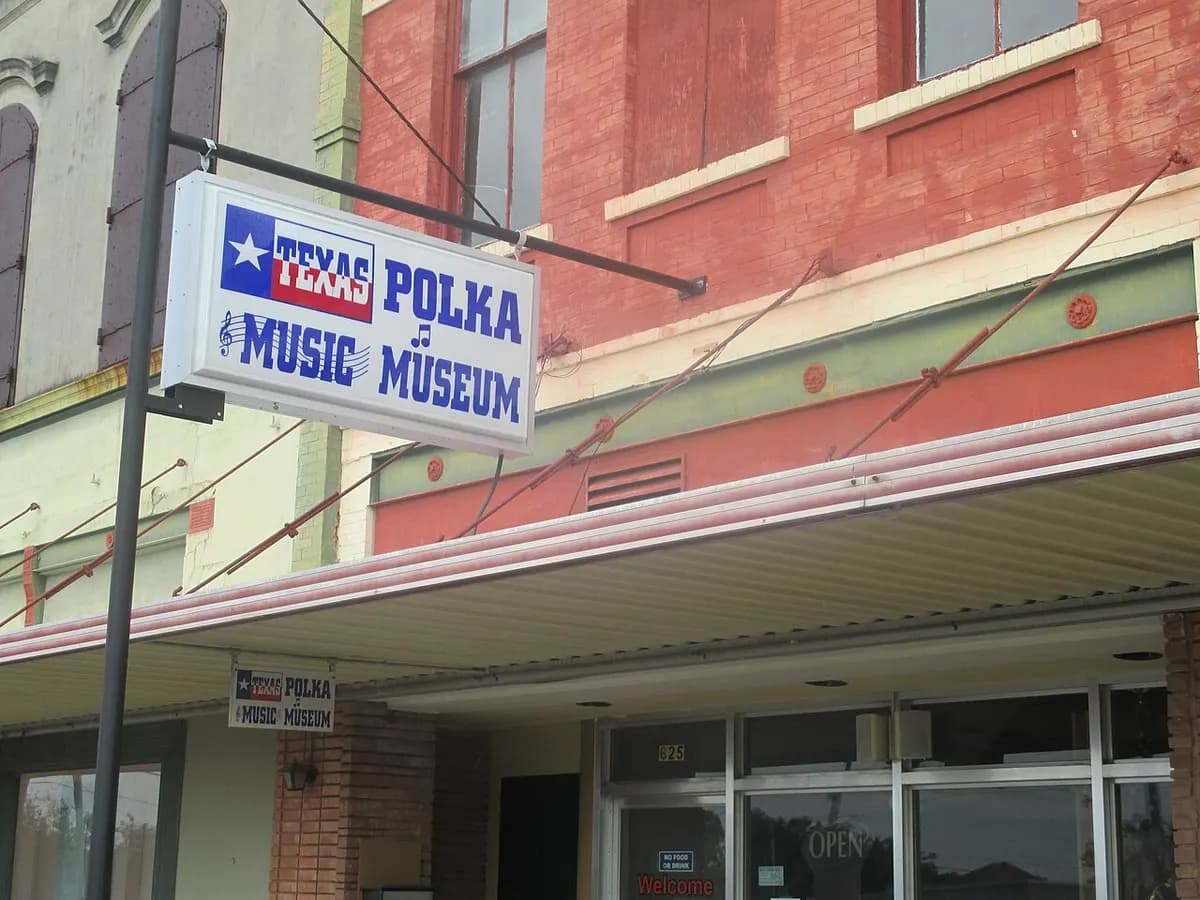
- Conjunto and norteño: German and Czech settlers brought the button accordion and the polka to Texas and northern Mexico in the nineteenth century. Accordionist Narciso Martínez is usually credited as a founder of conjunto in the 1930s, and Flaco Jiménez took it to audiences outside Texas. Conjunto bands still play polkas as a core part of their repertoire.
- Humppa: Finnish dance music that squeezes polka and foxtrot into a fast two-beat.
- Polka fusion: groups such as Brave Combo from Denton, Texas, who won Grammys in the polka category while mixing it with rock and Latin rhythms.
Key Artists & Recordings
A route through the tradition:
- Johann Strauss II: "Tritsch-Tratsch-Polka" and "Unter Donner und Blitz", the concert polka.
- Bedřich Smetana: polkas for solo piano.
- Jaromír Vejvoda: "Škoda lásky" (1927), the original of "Beer Barrel Polka".
- The Andrews Sisters: their 1939 "Beer Barrel Polka" took the song into the American charts.
- Frankie Yankovic: "Just Because" and "Blue Skirt Waltz", Cleveland style from the late 1940s.
- Lawrence Welk: decades of television polkas, often with accordionist Myron Floren.
- Li'l Wally Jagiello: the best-known singer of Chicago honky polka.
- Slavko Avsenik: "Na Golici", the Oberkrainer standard.
- Narciso Martínez and Flaco Jiménez: the polka in Tex-Mex conjunto.
- Jimmy Sturr and His Orchestra: 18 Grammys in the polka category.
- Brave Combo: polka played by a band that mixes it with whatever else it likes.
- "Weird Al" Yankovic: no relation to Frankie. His albums regularly include an accordion polka medley of pop hits.
A short listening path: the "Tritsch-Tratsch-Polka" for the ballroom, "Beer Barrel Polka" for the American crossover, then any Avsenik recording for the modern folk style.
Polka vs Waltz, Swing & Rock and Roll
Polka is easy to confuse with the dance musics it shared a ballroom or a jukebox with. Here is how to tell them apart:
- Polka vs waltz: the waltz is in 3/4 with one strong beat in three; polka is in 2/4. Polka bands play both, so the same accordion line-up can be either within one set.
- Polka vs swing: swing's eighth notes are uneven and lilting, and its rhythm section walks four beats to the bar. Polka plays straight eighths over a two-beat bass. Mid-century American polka bands borrowed horn voicings and showmanship from the swing orchestras, but the groove stayed different.
- Polka vs rock and roll: both are up-tempo dance music, but rock and roll comes out of blues and rhythm and blues, with a backbeat on two and four, a shuffle or straight-eight drive and electric guitar. Polka leans on the downbeat instead. In the 1950s rock and roll became the dance music of young Americans, and polka stayed with their parents.
- Polka vs march: the march is the closest structural relative, with the same metre, strains and trio. It is written for walking, the polka for dancing.
| Trait | Polka | Waltz | Swing | Rock and Roll |
|---|---|---|---|---|
| Metre | 2/4 | 3/4 | 4/4, swung | 4/4 |
| Typical BPM | 110–140 | 80–100 (Viennese faster) | 120–200 | 140–180 |
| Bass pattern | Oom-pah on the beat | One per bar | Walking four beats | Boogie or root-fifth lines |
| Lead | Accordion, clarinet, brass | Strings, accordion | Brass and reed sections | Electric guitar, piano, sax |
| Origin | Bohemia, 1830s | Austria and southern Germany | US, 1930s | US, 1950s |
How AI Detects Polka
Polka gives an audio model a clear rhythmic signature: a regular, emphatic bass note on every beat answered by a short chord on every off-beat, at a tempo well above most folk music. The accordion is a second strong cue, because its reedy, sustained, slightly beating tone is acoustically distinctive and sits right in the middle of the mix.
The harder part is the label. Our production taxonomy does not have a dedicated polka class, so a polka recording has to land on a broader neighbour: most often the Folk / Country family, and for Tex-Mex conjunto with Spanish vocals, the Latin label. Concert polkas by Strauss played by a symphony orchestra are a different case again: to a model they are orchestral music first and dance music second. Try your own recording in the Genre AI music genre detector, and see how AI music genre detection works for why instrumentation can outweigh rhythm.
Genre AI's production taxonomy has no Polka label. A village-band or Slovenian-style polka should be read through its closest broad family, Folk or Country (accordion, banjo and acoustic bass sit there too), while conjunto and norteño, sung in Spanish with button accordion and bajo sexto, belong with Latin. A Strauss polka performed by a symphony orchestra is Classical to any audio model. If you get one of these answers for a polka, the model has not misheard the instruments; it simply has no narrower box to put them in.