
Black metal is the coldest-sounding branch of extreme metal: thin, trebly guitars playing long tremolo-picked lines, fast blast beats, shrieked vocals, and recordings that are often made deliberately raw. Fans and bands tend to define it by mood and by its themes (Satanism, paganism, northern landscapes) as much as by its riffs.
This guide covers what black metal is, the first and second waves that created it, how to recognise the sound, why it is recorded the way it is, its many subgenres, and the albums that matter. Not sure whether a track is black metal, death metal, or something else entirely? Feed a few seconds to our free AI music genre detector and it will read the tone, tempo, and vocal register for you.
What Is Black Metal?
Black metal is an extreme metal genre built on high-pitched, rasping vocals, fast tremolo-picked guitar riffs that work more as a wash of sound than as hooks, blast beat drumming, and dissonant minor-key harmony. Songs are typically long and repetitive, with a few riffs cycling for minutes at a time.
The other defining trait is production. Death metal records aim for power and clarity; classic black metal records sound cold, with thin guitars, distant drums, and tape hiss, often captured on cheap four-track equipment on purpose. That "necro" sound began as a matter of budget in early-1990s Norway and became a convention that bands still follow, or deliberately break, three decades later. Lyrically the genre draws on Satanism, paganism, Norse mythology, nature, and misanthropy.
History & Origins
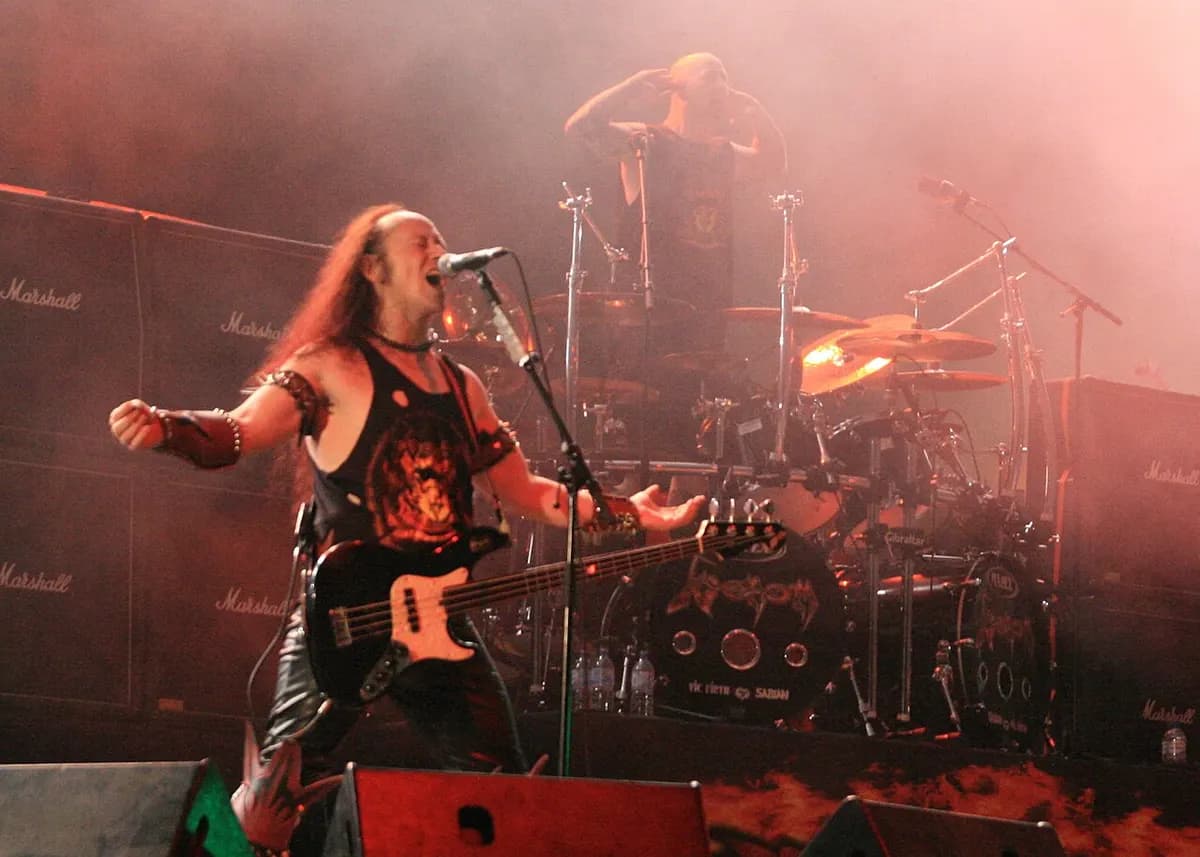
The first wave ran through the 1980s and was less a scene than a set of precursors: Newcastle's Venom, whose 1982 album Black Metal gave the genre its name; Sweden's Bathory, whose mid-1980s records had Quorthon's rasped vocals and a raw, thin sound; Switzerland's Hellhammer and Celtic Frost; and Denmark's Mercyful Fate.
The genre as it is understood today came from the Norwegian second wave of the early 1990s, centred on Oslo and the record shop Helvete, run by Mayhem's Øystein "Euronymous" Aarseth. Mayhem, Darkthrone (whose A Blaze in the Northern Sky, 1992, followed a death metal debut), Burzum, Immortal, Emperor, and Satyricon recorded most of the style's reference albums between 1992 and 1996.
The scene is also known for serious crimes. Between 1992 and 1996 more than fifty Norwegian churches were set on fire or attacked by arson, starting with Fantoft Stave Church in Bergen in June 1992, and several musicians from the scene were convicted for some of these fires. In August 1992 Emperor drummer Bård "Faust" Eithun murdered Magne Andreassen in Lillehammer, and in August 1993 Burzum's Varg Vikernes killed Euronymous in Oslo; both were sent to prison. The press coverage that followed has stayed attached to the genre. Musically the style spread out from the mid-1990s: Emperor and Dimmu Borgir added orchestration, Ulver and Burzum moved into ambient and electronic music, Wolves in the Throne Room mixed it with ambient and folk, and Alcest and Deafheaven combined it with shoegaze, the strand known as blackgaze.
Key Characteristics & Sound
Black metal's markers are unusually consistent:
- Vocals: a high, rasping shriek or scream, thin and piercing, the opposite of the death growl.
- Guitars: thin, treble-heavy distortion with little low end; sustained tremolo picking across full chords, with few palm-muted chugs.
- Tempo: commonly 150–250 BPM with blast beats, but atmospheric and depressive strands often sit far slower.
- Drums: blast beats and fast double-kick, frequently mixed low and dry so they blur into the guitars.
- Harmony: minor keys, dissonant intervals, and long unresolved progressions.
- Structure: long, repetitive songs; six to ten minutes is normal.
- Production: intentionally raw and lo-fi in the traditional strand; clean and huge in the symphonic one.
Those variables move a long way between subgenres:
| Strand | Typical BPM | Production | Hallmark |
|---|---|---|---|
| Second-wave / raw | 180–250 | Deliberately lo-fi | Tape hiss, thin guitars, shrieks |
| Symphonic | 140–210 | Big, layered | Orchestral keyboards, choirs |
| Atmospheric | 90–180 | Spacious, reverberant | Long ambient passages, nature themes |
| Depressive (DSBM) | 60–140 | Murky, distant | Slow, despairing, sparse |
| Blackgaze / post-black | 120–180 | Warm, wide | Shoegaze textures under shrieks |
| War metal / bestial | 200–280 | Chaotic, distorted | Total noise, no clarity |
Instruments & Production
The instrumentation is standard metal, but the treatment is not:
- Guitars: often in standard or only slightly lowered tuning; unlike death metal, black metal does not rely on down-tuning for weight.
- EQ philosophy: mids and highs kept, lows cut, producing the characteristic cold and brittle tone.
- Drums: recorded dry and often mixed behind the guitars; the classic records were tracked quickly and cheaply.
- Bass: frequently near-inaudible in traditional black metal, on purpose.
- Keyboards: central in symphonic and atmospheric strands, where string, choir, and pad sounds carry the melody the guitars only suggest.
- Recording: four-track and rehearsal-room recordings are treated as legitimate final masters, not demos.
This is the genre where "bad" production is an artistic choice. Darkthrone's Transilvanian Hunger (1994) is the standard example: Fenriz recorded the instruments himself on a four-track in his bedroom, which the band called Necrohell Studios, and the murky result became a model for later bands.
Subgenres
Black metal has branched in almost every direction:
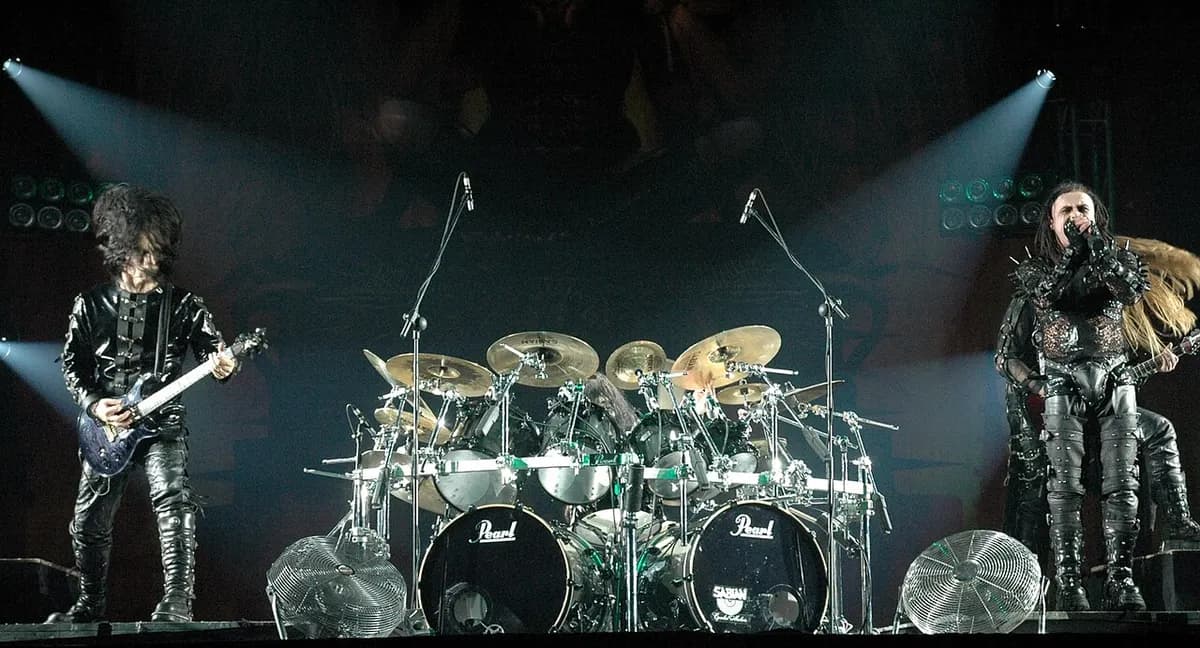
- Symphonic black metal: orchestral keyboards and choirs (Emperor, Dimmu Borgir, Cradle of Filth).
- Atmospheric black metal: long songs, nature themes (Wolves in the Throne Room, Paysage d'Hiver).
- Depressive suicidal black metal (DSBM): slow, sparse, despairing (Xasthur, Shining).
- Blackgaze / post-black metal: shoegaze and post-rock textures (Alcest, Deafheaven).
- Blackened death metal: the density of death metal with black metal riffing and vocals (Behemoth, Belphegor).
- War metal / bestial black metal: chaotic, noisy, and deliberately hard to listen to (Blasphemy, Revenge).
- Pagan / Viking black metal: folk melodies and mythological themes (Bathory's later work, Enslaved).
- Black 'n' roll: rock and punk swagger over black metal tone (Kvelertak, later Darkthrone).
Notable Artists & Albums
The essential records, roughly in order of release:
- Venom: Black Metal (1982), the album that named the genre.
- Bathory: Under the Sign of the Black Mark (1987).
- Darkthrone: A Blaze in the Northern Sky (1992), Transilvanian Hunger (1994).
- Mayhem: De Mysteriis Dom Sathanas (1994).
- Emperor: In the Nightside Eclipse (1994).
- Burzum: Filosofem (1996).
- Dimmu Borgir: Enthrone Darkness Triumphant (1997).
- Immortal: At the Heart of Winter (1999).
- Wolves in the Throne Room: Two Hunters (2007).
- Deafheaven: Sunbather (2013), Metacritic's best-reviewed major album of that year.
Start with Transilvanian Hunger, In the Nightside Eclipse, and Sunbather to hear raw, symphonic, and post-black approaches in sequence.
Black Metal vs Death Metal
Newcomers often confuse the two, but almost every parameter differs:
| Trait | Black Metal | Death Metal |
|---|---|---|
| Vocals | High rasping shriek | Low guttural growl |
| Guitar tone | Thin, trebly, cold | Thick, low, saturated |
| Tuning | Standard or slightly lowered | Heavily down-tuned |
| Riffing | Sustained tremolo chords | Palm-muted chugs + tremolo |
| Production | Deliberately raw | Powerful and defined |
| Song length | Long, hypnotic, repetitive | Compact, riff-driven, shifting |
| Origin | Norway, early 1990s | Florida & Sweden, late 1980s |
How AI Detects Black Metal
Black metal gives a classifier an unusual spectral fingerprint: energy concentrated in the mid and high range, weak or absent low-end from guitars and bass, extremely high onset density from blast beats, and a vocal with high-frequency noise but almost no pitch. The genre's lo-fi mastering (narrow dynamic range, audible hiss) is itself a usable cue.
Ambiguity comes from the modern strands: a blackgaze track with warm, wide production sits between black metal and post-rock, and symphonic black metal shares spectral traits with orchestral classical recordings. Try your own examples in the Genre AI music genre detector and read how AI music genre detection works to see why several labels can score at once.
Testing this genre in Genre AI ourselves, the clearest Black Metal readings come from tracks above 170 BPM that combine sustained tremolo picking, a thin high-mid guitar tone, blast beats, and a rasped vocal. Thicken the guitars and drop the vocal register and the model moves to Death Metal; slow it to a crawl and it reads Doom Metal; add reverb-drenched clean guitars and it starts scoring Ambient alongside metal. Those competing scores are shown next to the top result, and for blackgaze that mixed reading is the expected one.