Modal jazz is jazz in which the soloist improvises on a scale, or mode, held for long stretches, instead of on a fast-moving sequence of chords. Where a bebop or hard bop soloist must navigate a new chord every bar or two, a modal tune may sit on a single Dorian scale for sixteen bars, leaving the player free to build melody, tension and intensity on their own terms. It took shape in the late 1950s, and its defining record is Miles Davis's Kind of Blue (1959).
Below: what "modal" means in practice, how the style grew from George Russell's 1953 theory book into John Coltrane's classic quartet, what the harmony and rhythm sound like, the albums to start with, and where modal jazz ends and its neighbours begin. To see how a long, one-chord vamp reads to a machine, try a clip in our free AI music genre detector.
What Is Modal Jazz?
A mode is a scale defined by its pattern of whole and half steps. Play the white keys of a piano from D to D and you get the Dorian mode; from E to E, Phrygian; from F to F, Lydian; from G to G, Mixolydian. Each has its own colour: Dorian is minor but bright, Phrygian dark and Spanish-sounding, Lydian floating, Mixolydian bluesy and major.
In conventional jazz of the 1940s and 1950s, harmony was functional: chords pulled towards each other in ii–V–I progressions, and the improviser's job was to articulate each passing chord. Modal jazz slows that harmonic rhythm right down. A piece might consist of two or three scales, each held for eight or sixteen bars, or a single mode over a bass pedal for minutes at a time. The soloist is no longer racing the changes. The problem becomes how to keep one scale interesting for minutes: with rhythm, motifs, register, notes that pull against the mode and, in Coltrane's case, sheer intensity.
The term covers a range of practice. Some modal tunes are strict (the scale is the whole harmony); others simply use modal colours over slow-moving chords. In performance, modal players often step outside the mode on purpose ("playing outside" is part of the language). What the pieces share is slow-moving harmony that leaves room for long solos.
History & Origins
The theoretical groundwork came from the composer and theorist George Russell, whose Lydian Chromatic Concept of Tonal Organization (first published in 1953) proposed organising jazz harmony around scales instead of chords. Russell knew Miles Davis, and the pianist Bill Evans played in Russell's groups, so the ideas reached the musicians who would record Kind of Blue.
Miles Davis first put the approach on a major record with the title track of Milestones (1958), whose sections alternate between two modes instead of running through a chord progression. A year later came Kind of Blue, recorded for Columbia in two sessions in March and April 1959 with John Coltrane on tenor, Cannonball Adderley on alto, Bill Evans on piano (Wynton Kelly on "Freddie Freeloader"), Paul Chambers on bass and Jimmy Cobb on drums. According to Evans's liner notes, Davis gave the band only sketches of scales and melody lines, conceived hours before the sessions, and called for almost no rehearsal. "Flamenco Sketches" was the only tune completed on the first try, and the five issued masters were the only other complete takes.
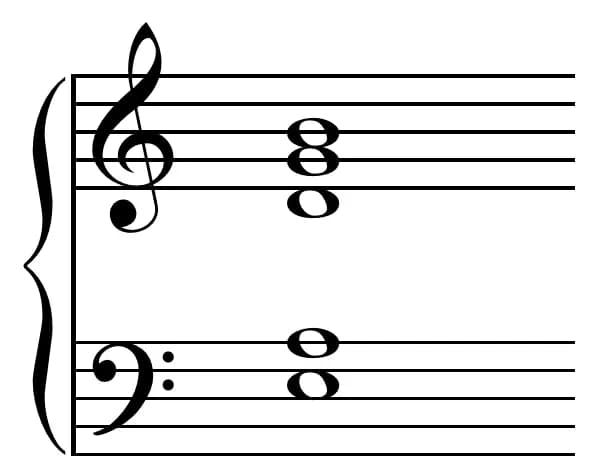
The opening track, "So What", became the textbook example: a 32-bar AABA form in which the A sections sit on D Dorian and the bridge moves up a half step to E♭ Dorian. Its call-and-response theme between bass and piano, and the voicing the piano answers with (three stacked fourths topped by a major third, now called the "So What" chord) became part of the jazz vocabulary. "All Blues" is a modal blues in 6/8; "Flamenco Sketches" moves through five scales, each played as long as the soloist wishes. The RIAA certified Kind of Blue five times platinum in 2019, which puts it among the best-selling jazz albums ever made.
John Coltrane took the idea furthest. After leaving Davis he formed his classic quartet with pianist McCoy Tyner, bassist Jimmy Garrison and drummer Elvin Jones. His long version of "My Favorite Things" on soprano saxophone (recorded 1960) turned a Rodgers and Hammerstein show tune into a modal vamp; "Impressions" borrowed the structure of "So What"; and A Love Supreme (recorded December 1964, released 1965 on Impulse!) made modal jazz the vehicle for a four-part spiritual suite. Tyner's chords built in fourths and Jones's polyrhythmic drumming are what most listeners now picture as the modal sound.
Through the 1960s modal ideas spread across the Blue Note roster and into what is now called post-bop: Herbie Hancock's Maiden Voyage (1965), Wayne Shorter's Speak No Evil (recorded 1964, released 1966) and the work of Miles Davis's second great quintet (1964–1968). Long modal vamps then became the harmonic foundation of jazz fusion, and Coltrane's late work led straight into free jazz and spiritual jazz.
Key Characteristics & Sound
- Slow harmonic rhythm: one scale or chord held for 8, 16 or more bars, often over a pedal point in the bass.
- Modes over chords: Dorian is by far the most common, followed by Mixolydian, Aeolian, Phrygian and Lydian colours.
- Quartal harmony: chords built from stacked fourths instead of thirds. They sound open and do not pull towards a resolution; the "So What" chord and McCoy Tyner's left-hand voicings are the standard examples.
- Vamps: repeated bass and piano figures that set up a groove the soloists can stretch over for many choruses.
- Tempo: wide. The studio "So What" moves at a relaxed medium tempo, transcribed at roughly 136–140 BPM, "Flamenco Sketches" is a slow ballad, and Coltrane's quartet often played fast 3/4 or 4/4 with Elvin Jones's dense triplet feel.
- Long solos: with fewer changes to navigate, solos grow longer and are shaped by motif development, register and intensity.
- Mood: anywhere from Davis's spacious calm to the Coltrane quartet's long, building climaxes.
The modes most often heard in modal jazz:
| Mode | White-key example | Character | Where you hear it |
|---|---|---|---|
| Dorian | D to D | Minor but bright, natural 6th | 'So What', 'Impressions', 'Maiden Voyage' colours |
| Mixolydian | G to G | Major with flat 7th, bluesy | 'All Blues', many vamps and grooves |
| Aeolian | A to A | Natural minor, darker | Minor vamps and ballads |
| Phrygian | E to E | Dark, flat 2nd, Spanish colour | The Spanish section of 'Flamenco Sketches' |
| Lydian | F to F | Major with raised 4th, floating | Lydian colours in post-bop writing |
Instruments & Roles
Modal jazz uses the standard small-group lineup, but each instrument does a different job than in bebop:
- Piano: instead of outlining fast changes, it colours a static harmony with open, fourth-based voicings and rhythmic stabs. Bill Evans's soft, impressionist touch and McCoy Tyner's hammered quartal chords are the two extremes.
- Double bass: often holds a pedal note or a repeated figure, then walks freely over the mode. Paul Chambers, Jimmy Garrison and Ron Carter defined the role.
- Drums: more interactive and polyrhythmic. Elvin Jones layered triplets across the beat; Tony Williams in Davis's 1960s quintet varied tempo and density continuously.
- Tenor and soprano saxophone: Coltrane's "sheets of sound" and later his soprano; Wayne Shorter and Joe Henderson on the Blue Note records of the 1960s.
- Trumpet: Miles Davis's spare lines, with silence left as part of the phrase; Freddie Hubbard's brighter playing on Hancock's records.
Branches & Descendants
- Post-bop: modal harmony combined with hard bop energy and freer forms: Herbie Hancock, Wayne Shorter, Joe Henderson, Freddie Hubbard.
- Spiritual jazz: Coltrane, Pharoah Sanders and Alice Coltrane built devotional music on long modal vamps and drones.
- Free jazz: Coltrane's late work moved from modal frameworks toward collective free improvisation. See free jazz.
- Jazz fusion: Miles Davis's In a Silent Way (1969) and Bitches Brew (1970) used one-chord modal vamps under electric instruments; fusion bands followed.
- Indian and world influences: the drone-and-mode principle linked modal jazz with Indian raga traditions, which Coltrane studied through Ravi Shankar's music, and with flamenco colours on Sketches of Spain.
- Rock: modal improvisation over a single chord reached psychedelic rock through extended jams; see psychedelic rock.
Key Musicians & Essential Albums
Where to start:
| Album | Artist | Year | Why it matters |
|---|---|---|---|
| Milestones | Miles Davis | 1958 | The title track's two-mode form announces the approach |
| Kind of Blue | Miles Davis | 1959 | 'So What', 'All Blues', 'Flamenco Sketches' — the defining record |
| My Favorite Things | John Coltrane | 1961 | A show tune turned into a long soprano saxophone vamp |
| Impressions | John Coltrane | 1963 | 'So What' structure at Coltrane quartet intensity |
| A Love Supreme | John Coltrane | 1965 | The modal suite as spiritual statement |
| Maiden Voyage | Herbie Hancock | 1965 | Suspended-chord modal writing on Blue Note |
| Speak No Evil | Wayne Shorter | 1966 | Modal colours in post-bop composition |
| The Real McCoy | McCoy Tyner | 1967 | Quartal piano at full force; 'Passion Dance' |
Modal Jazz vs Bebop, Hard Bop & Free Jazz
The clearest line is harmonic rhythm. In bebop and hard bop the chords change constantly and resolve through ii–V–I cadences; the soloist's skill is in making the changes audible. In modal jazz the harmony is static or slow and does not depend on resolution; the soloist's skill is in creating direction without it.
Against free jazz, modal jazz still has a framework: a mode, a form, a tempo and a metre that everyone follows. Free jazz drops some or all of those agreements. Many musicians crossed from one to the other, and late Coltrane sits right on the boundary.
Against cool jazz: Kind of Blue shares cool's calm surface and restraint, which is why it is sometimes filed there. Its organising principle, scales instead of changes, is what cool jazz did not have.
How AI Detects Modal Jazz
Audio models hear modal jazz as acoustic jazz first: the double bass, ride cymbal, saxophone and piano are hard to mistake. The modal property itself is subtler. A model that tracks harmony over time could notice that the pitch content stays stable for long spans and that the piano voicings are open fourths, but a genre classifier is not built to analyse harmonic rhythm. It recognises a modal record by everything around the mode: the instruments, the drum style and the sound of a 1960s studio. In Genre AI's production taxonomy, the words "modal jazz" are one of the text prompts of the Latin Jazz subgenre, so a modal track that reaches the Jazz label may well be shown as Latin Jazz, even though nothing about it is Latin.
Try a track in the Genre AI music genre detector, and for the mechanics behind such labels read how AI music genre detection works.
For Genre AI, modal jazz is a harmonic idea more than a sound, and the production taxonomy has no modal class. The answer will come from the coarse Jazz label and one of its subgenres. One quirk is worth knowing: "modal jazz" is listed as a text prompt of the Latin Jazz subgenre, so Latin Jazz is a likely answer for a modal record. Calm, mid-tempo pieces like "So What", with the same band, swing feel and ride cymbal as earlier small-group jazz, may also come back as Bebop. Hancock's suspended, atmospheric writing could drift toward Contemporary Jazz, or toward Smooth Jazz on quiet passages. The Coltrane quartet at full intensity is the hardest case: what a listener would call the edge of free jazz has no label of its own, so the model can only pick the nearest Jazz subgenre, perhaps Fusion or Contemporary Jazz. Use the label to confirm the family; the mode is something only the ear and the lead sheet will tell you.