Forró is the dance music of Northeast Brazil. At its core it is played by a trio of accordion (sanfona), zabumba (a wide, double-headed bass drum) and triangle, and couples dance it in a close embrace. The word covers both the party and the music played at it, and it gathers several related rhythms under one name: baião, xote, xaxado and the fast arrasta-pé. Luiz Gonzaga, the "King of Baião", turned this rural sound into national popular music in the 1940s, and it is still what plays at Brazil's June festivals.
This guide covers where forró came from, how its rhythms differ, what the trio actually plays, the later waves from forró universitário to electronic forró and piseiro, the records to start with, and how forró differs from samba, MPB and other accordion traditions. To hear how a forró track reads to a machine, drop a clip into our free AI music genre detector.
What Is Forró?
Forró is a family of country dance music from the Nordeste, the nine states of Brazil's northeast: Pernambuco, Paraíba, Ceará, Bahia, Alagoas, Sergipe, Rio Grande do Norte, Piauí and Maranhão. The rhythms differ; the instruments, the couple dance and the occasion are shared. A forró was originally the party itself, a night of dancing in a rural hall or a backyard, and the music took its name from the event.
The usual etymology, given by the Brazilian philologist Evanildo Bechara among others, treats the word as a short form of forrobodó, an old term for a rowdy party or commotion. A popular story claims it comes from English "for all", written on dances held by British railway engineers who let everyone in. Brazilian scholars treat that as folk etymology, with no documentary support.
Musically, forró is in 2/4. The zabumba plays a syncopated bass pattern, the triangle keeps up a constant shimmer, and the accordion melodies often use the Mixolydian mode and the raised-fourth "Northeastern" scale, which gives the music its bright, slightly nasal flavour. The vocals are usually plain and direct, telling stories of drought, migration, homesickness and love in the sertão, the dry backlands of the interior.
Forró is not the same as sertanejo, even though both are often described as Brazilian "country music". Sertanejo comes from the centre-south, is built on guitars and the viola caipira, and is sung by duos; forró comes from the northeast and is built on the accordion and percussion.
History & Origins
The ingredients of forró are old. European settlers brought the button accordion, polkas, mazurkas and schottisches to Brazil in the nineteenth century; the northeast absorbed them alongside African-derived percussion and the drone-like melodies of Indigenous and Iberian folk music. The eight-bass button accordion (the sanfona de oito baixos, also called pé de bode) became the instrument of rural dances, and the schottische was localised as the xote.
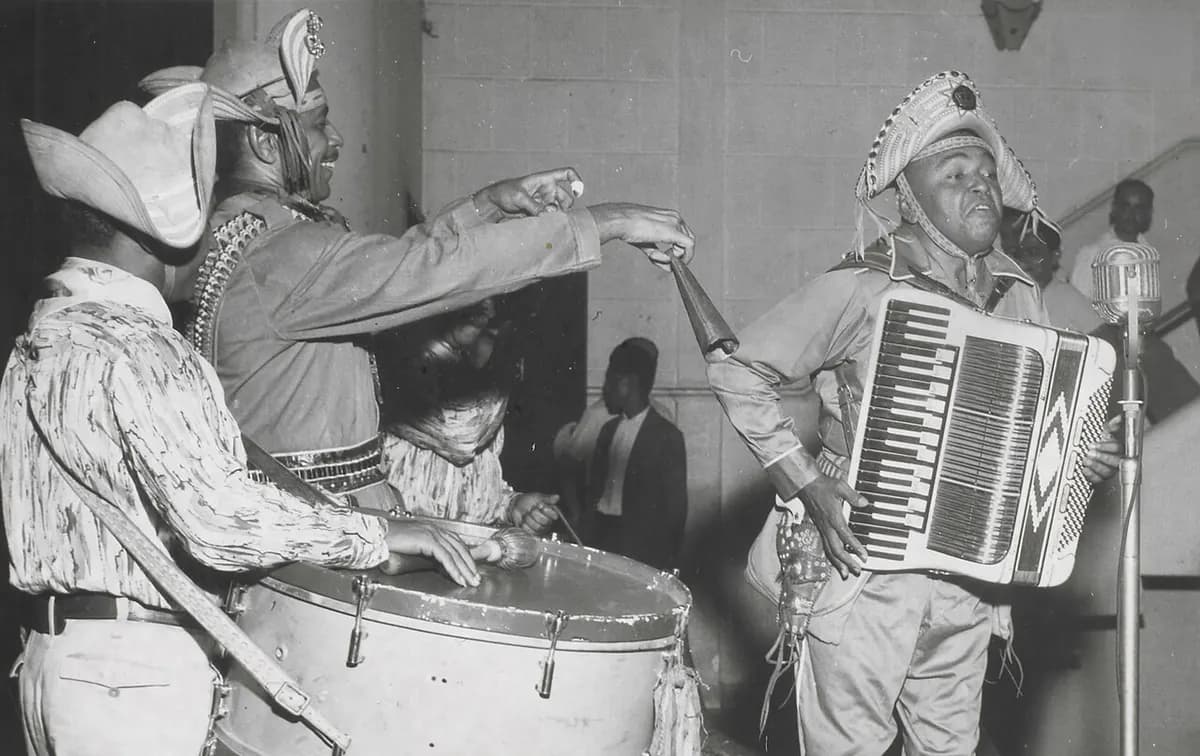
The decisive figure is Luiz Gonzaga (1912–1989), born in Exu, Pernambuco, the son of the farmer and accordion player Januário José dos Santos. He spent most of the 1930s in the army, and after his discharge in 1939 he stayed in Rio de Janeiro, playing waltzes, tangos and foxtrots in the Mangue district for tips until audiences responded to the music of his home region. With the lyricist Humberto Teixeira he defined the baião as a song form for radio and records. "Baião" (1946) was first recorded by the vocal group Quatro Ases e um Coringa, with Gonzaga on accordion, before he cut his own version; "Asa Branca" (1947), a song about a farmer forced off his land by drought, became an unofficial anthem of the northeast. With the lyricist Zé Dantas he added songs such as "Vem Morena" and "Xote das Meninas" (1953). On stage Gonzaga dressed as a vaqueiro (cowboy) of the sertão, in a leather hat modelled on those of the cangaceiros, the backland bandits led by Lampião, and that image still defines the genre.
Gonzaga's groups fixed the trio format of accordion, zabumba and triangle, and the term forró pé-de-serra ("foot of the mountain forró") is used today for this traditional sound. Alongside him, Jackson do Pandeiro (1919–1982) brought a sharper rhythmic wit and swing, mixing coco and samba into hits such as "Sebastiana" and "Chiclete com Banana". The singer Marinês, known as the queen of xaxado, and the Trio Nordestino carried the music through the 1950s and 1960s.
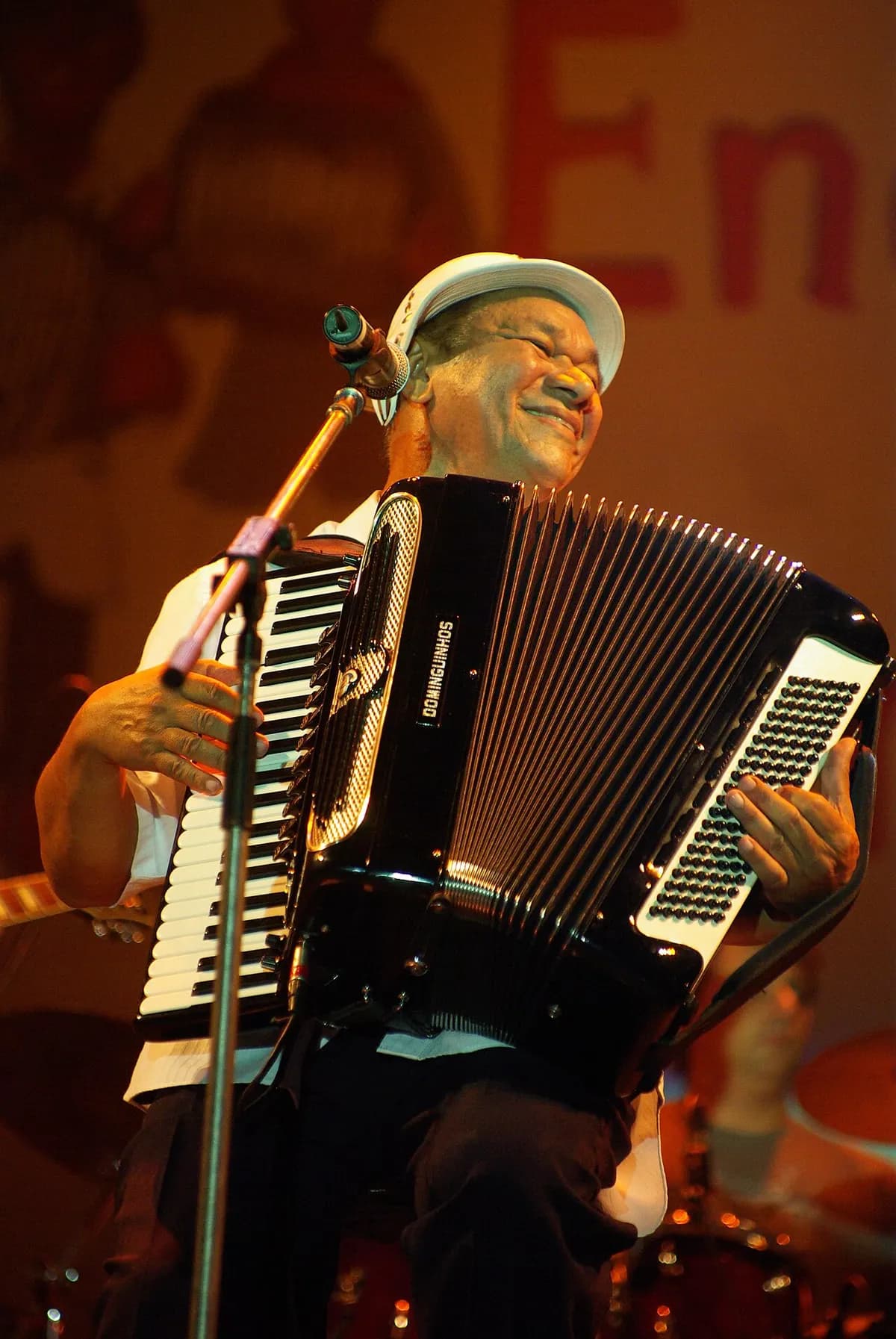
Millions of northeasterners migrated to São Paulo and Rio de Janeiro in the twentieth century, and forró houses (casas de forró) in those cities kept the music alive away from home. In the 1970s a new generation brought forró into MPB and onto national television: Dominguinhos, Gonzaga's accordion protégé, along with Alceu Valença, Elba Ramalho and Gilberto Gil. Dominguinhos and Anastácia's "Eu Só Quero um Xodó" was first recorded by Marinês in 1973 and became a national hit in Gil's version the same year (some sources date his success to 1974).
The 1990s split the genre in two directions. In Ceará, bands led by Mastruz com Leite (formed in 1990) created forró eletrônico, also called forró estilizado: large stage bands with keyboards, electric bass, drum kit, horns and dancers, playing faster, more romantic and more commercial songs. In São Paulo, students rediscovered pé-de-serra at university parties in what became forró universitário, with groups such as Rastapé and Falamansa, whose "Xote dos Milagres" was its biggest hit. In the 2010s electronic forró produced national stars such as Wesley Safadão and Aviões do Forró, and around 2019–2021 the stripped-down, keyboard-driven piseiro (or pisadinha) of Barões da Pisadinha, João Gomes and Zé Vaqueiro became one of the most-streamed sounds in Brazil.
In December 2021 Brazil's heritage institute IPHAN registered the traditional matrices of forró as Intangible Cultural Heritage of Brazil. Luiz Gonzaga's birthday, 13 December, is celebrated as National Forró Day.
Key Characteristics & Sound
What identifies a forró recording:
- Meter: 2/4, felt as a quick two-step. Couples dance with small, close steps that follow the zabumba.
- Tempo: depends on the rhythm. Xote is the slowest and most swaying, baião sits in the middle, and arrasta-pé is fast. The numbers in the table below are rough guides, not rules.
- The zabumba pattern: the player strikes the low head with a mallet on the bass notes and the high head with a thin stick (the bacalhau) for the off-beat accents. The syncopated bass figure of baião, a dotted note followed by a short pickup, is the genre's fingerprint.
- Triangle: a continuous pattern in sixteenths, opened and damped by the hand, that works like a hi-hat and gives forró its shimmering top end.
- Accordion melody: introductions, fills and solos played between vocal lines, with bellows-shake effects and fast runs, mostly in Mixolydian and the raised-fourth "Nordeste scale".
- Vocals: unadorned, often slightly nasal, in Portuguese with northeastern pronunciation and vocabulary.
- Themes: the sertão, drought and rain, migration, longing (saudade), courtship and the June festivals.
| Rhythm | Approx. tempo | Feel | Classic example |
|---|---|---|---|
| Xote | Slow–medium (roughly 80–110 BPM) | Swaying, romantic; derived from the schottische | "Xote das Meninas" (Luiz Gonzaga) |
| Baião | Medium (roughly 100–130 BPM) | Syncopated zabumba figure; the core forró groove | "Asa Branca", "Baião" (Luiz Gonzaga) |
| Xaxado | Medium | Associated with the cangaceiros' dance; heavy accented steps | Marinês's xaxado recordings |
| Arrasta-pé | Fast (roughly 140 BPM and up) | Quick, festive, polka-like; for the end of the night | Played at June festival dances |
| Coco | Medium–fast | Coastal, percussion-led, call-and-response | Jackson do Pandeiro's repertoire |
Instruments: The Forró Trio and Beyond
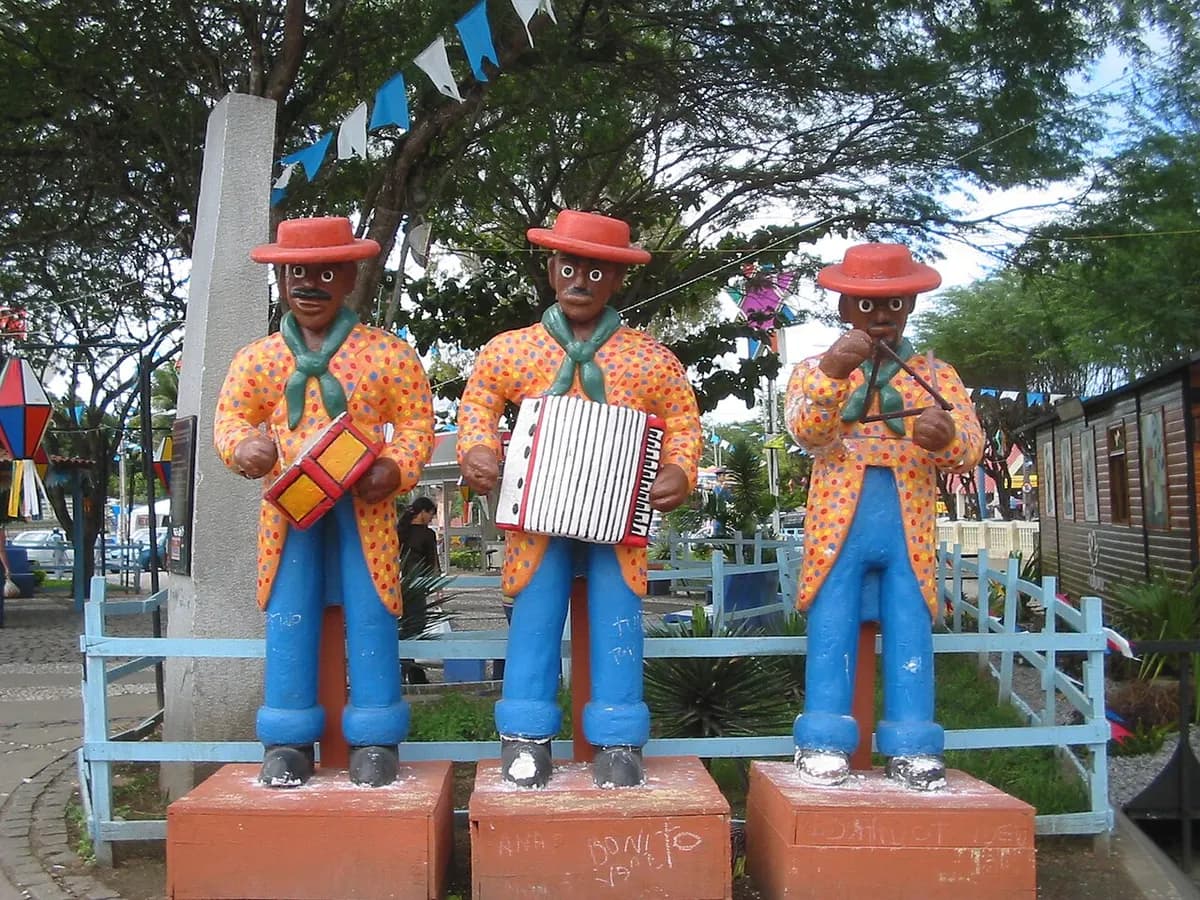
- Sanfona (accordion): the lead voice. Traditional players used the eight-bass button accordion; Luiz Gonzaga made the larger piano accordion standard. Dominguinhos, Sivuca and Oswaldinho do Acordeon are among the instrument's masters.
- Zabumba: a wide, shallow bass drum worn across the body and played on both heads. It does the work of a drum kit's kick and snare in one instrument.
- Triângulo: the steel triangle, played with a beater and damped by the hand to create accents. It is small, and you hear it on every beat.
- Pandeiro: the Brazilian frame drum with jingles, central in Jackson do Pandeiro's style and in coco.
- Rabeca: a rustic northeastern fiddle used in older folk forms and by revivalists.
- Electric band (forró eletrônico): keyboards, electric guitar and bass, drum kit, saxophone and trumpet, often with keyboards imitating the accordion.
- Piseiro setup: a keyboard with programmed accordion and bass sounds over a drum-machine pattern, often just one player and a singer.
Almost every modern forró, whatever the technology, keeps the trio's division of labour: something plays the zabumba's low syncopation, something plays the triangle's high continuous pulse, and an accordion, real or synthesised, plays the melody.
Styles & Scenes
- Forró pé-de-serra: the traditional trio sound of Luiz Gonzaga and his successors, and the reference point for everything else.
- Forró universitário: the late-1990s and 2000s revival among university students in São Paulo and other south-eastern cities, with an acoustic trio, polished songwriting and a light pop touch. Falamansa, Rastapé and Trio Virgulino are typical names.
- Forró eletrônico / estilizado: big stage bands from Ceará and the rest of the northeast with keyboards, drum kit, horns and dancers, faster tempos and romantic lyrics. Mastruz com Leite, Calcinha Preta, Aviões do Forró and Wesley Safadão.
- Piseiro / pisadinha: a minimal, keyboard-and-voice form from the interior of Bahia and neighbouring states that broke nationally around 2020 through streaming. Barões da Pisadinha, Zé Vaqueiro, João Gomes.
- Forró in MPB: songwriters from the northeast and beyond who use forró rhythms inside a broader pop palette, such as Gilberto Gil, Alceu Valença, Elba Ramalho, Geraldo Azevedo and Zé Ramalho.
- International forró: since the 2000s forró dance has spread to Europe, with festivals and dance schools in Portugal, Germany, France and elsewhere, usually favouring the pé-de-serra sound.
Key Artists & Essential Recordings
A short listening path through forró's main eras:
| Artist | Era | Start with | Why it matters |
|---|---|---|---|
| Luiz Gonzaga | 1940s–1980s | "Asa Branca" (1947), "Xote das Meninas" | Defined baião and the trio; the genre's founding figure |
| Jackson do Pandeiro | 1950s–1970s | "Sebastiana", "Chiclete com Banana" | Rhythmic swing and humour; coco and samba in forró |
| Marinês | 1950s–1990s | Her xaxado recordings | The leading female voice of early forró |
| Trio Nordestino | 1950s onward | Their classic trio records | The pé-de-serra trio as a band format |
| Dominguinhos | 1960s–2010s | "Eu Só Quero um Xodó" (with Anastácia) | Gonzaga's heir; sophisticated accordion harmony |
| Elba Ramalho | 1970s onward | Her forró-MPB albums | Brought forró to national pop audiences |
| Falamansa | 2000s | "Xote dos Milagres" | The emblem of forró universitário |
| Mastruz com Leite | 1990s | Their 1990s albums | Pioneered electronic forró from Ceará |
| Wesley Safadão | 2010s | His Garota Safada and solo hits | Electronic forró as national arena pop |
| Barões da Pisadinha | 2020s | Their piseiro hits | The streaming-era piseiro boom |
Forró vs Samba, Sertanejo and Other Accordion Music
Samba is also in 2/4, but its home is Rio de Janeiro and Bahia, its engine is a large percussion section (surdo, tamborim, pandeiro, cuíca), and its harmonic instrument is the cavaquinho or guitar. Forró has far less percussion, and the accordion carries everything. The clearest audible difference is the surdo's heavy second beat in samba against the zabumba's syncopated pickup in baião.
Sertanejo is the music of the rural centre-south (São Paulo, Goiás, Minas Gerais), built on guitars and sung in two-part harmony by duos; its modern form is closer to country pop. Bossa nova and MPB are urban, harmonically complex songwriting traditions that sometimes borrow forró rhythms but are not dance music in the same sense. Brazil's other big dance export of recent years, funk carioca, is electronic and bass-driven; see our explainer on Brazilian funk.
Outside Brazil, forró's closest relatives are other accordion dance traditions that grew from European polkas and schottisches: Colombian vallenato, Mexican norteño, Louisiana zydeco and Cajun music. They share the instrument and the rural dance-hall setting, but each has its own rhythm: vallenato uses caja and guacharaca, norteño the bajo sexto and polka beat, zydeco the rubboard and a funkier backbeat.
How AI Detects Forró
An audio model has a few strong cues for forró: the timbre of the accordion in the midrange, the constant metallic pulse of the triangle in the high frequencies, the low syncopated thump of the zabumba, and Portuguese vocals over a fast two-beat pulse. It has no clean way to separate forró from the other accordion-and-percussion dance musics of the Americas, which share most of those features.
Genre AI's production taxonomy has no forró label. The nearest by name is the coarse Latin label, which has no finer breakdown, and the model picks such a label only when no label with subgenres (Folk / Country, Rock, Electronic Dance and the like) is among its top five guesses. For an accordion trio that is unlikely, so the answer you see will probably be Folk or Country. Electronic forró and piseiro replace the trio with keyboards and drum machines and may land in Electronic Dance instead. Try a pé-de-serra track and an electronic one in the Genre AI music genre detector and compare the results; our guide to why songs have multiple genres explains why the runner-up labels matter.
Genre AI has no dedicated forró label. The closest by name is the coarse Latin label, but it has no subgenres, and the model only returns a label like that when nothing in its top five has subgenres of its own. Traditional pé-de-serra is more likely to come back as Folk / Country, shown as Folk or Country: an acoustic accordion, a simple two-beat pulse and a plain rural vocal are the cues folk and country recordings share, and a model cannot hear that the singer is from Pernambuco and not from Louisiana or northern Mexico. Any alternatives listed under that answer are its own siblings (Folk next to Country), never Latin. Electronic forró and piseiro may move toward Electronic Dance, because keyboards and drum machines replace the zabumba and triangle. Pop and Latin, both labels without subgenres, will rarely come up for either.