Bubblegum pop, often just "bubblegum", is short, upbeat, deliberately simple pop aimed at pre-teen listeners: nursery-rhyme melodies, a chorus that arrives in the first thirty seconds, handclaps, tambourine and a bright organ, and lyrics about candy, games and innocent crushes. It was a producer's genre more than a performer's one. Its classic era ran from about 1967 to 1972 in the United States, when a handful of producers and labels turned out hit singles credited to bands that were often little more than a name on a record sleeve.
This guide covers where the sound came from, the people who built it, what a bubblegum record is made of, how the idea resurfaced in glam, Eurodance and hyperpop, and how it differs from its closest relative, teen pop. To see how a two-minute singalong reads to a classifier, drop a clip into our free AI music genre detector.
What Is Bubblegum Pop?
Bubblegum pop is defined by its audience and its method as much as its sound. The audience was children and young teenagers who bought 45 rpm singles with pocket money; the method was the production line, with songwriters, session musicians and a producer creating a record first and attaching a band name to it afterwards. Some of the best-known bubblegum "groups" did not exist as touring units when their hits charted, and one of them, the Archies, was a cartoon.
Musically, the genre is pop stripped to its most direct elements. Songs run around two to two and a half minutes, sit on three or four major chords, and repeat a single hook until it cannot be forgotten. Lyrics borrow from playground games and sweets ("Simon Says", "1, 2, 3, Red Light", "Yummy Yummy Yummy", "Chewy Chewy") and keep romance at the level of holding hands.
The name describes the market. Kasenetz and Katz, who claimed it, explained that the records were for young kids, "and at the time we used to be chewing bubblegum"; Buddah's Neil Bogart then pushed the word in the label's promotion. Critics used it dismissively for decades. The 2001 essay collection Bubblegum Music Is the Naked Truth, edited by Kim Cooper and David Smay, made the case for it as a craft, and its influence runs through punk (the Ramones covered "Indian Giver"), glam, power pop and modern internet pop.
History & Origins
Bubblegum had obvious ancestors. The Brill Building writers of the early 1960s had already proved that professional songwriters could deliver hits to teenagers on demand, and the girl groups and novelty records of the period supplied the handclaps and the chant-along choruses. The decisive precedent was the Monkees, assembled for television in 1966 with songs supervised by music publisher Don Kirshner: a made-for-market group could outsell bands that wrote their own material.
The sound itself came together in 1967–1968 around two New York producers, Jerry Kasenetz and Jeffry Katz, working with Buddah Records, the label run by Neil Bogart. Kasenetz and Katz claimed credit for naming the style after the young audience they were aiming at. Their production company supplied hit after hit under different group names:
- 1910 Fruitgum Company: "Simon Says" (1968), "1, 2, 3, Red Light" (1968) and "Indian Giver" (1969).
- Ohio Express: "Yummy Yummy Yummy" (1968) and "Chewy Chewy" (1968); the lead vocal on "Yummy Yummy Yummy" is songwriter Joey Levine's demo, released as it was, and the touring band does not play on the record.
- Kasenetz-Katz Singing Orchestral Circus: a studio supergroup assembled from the company's acts.
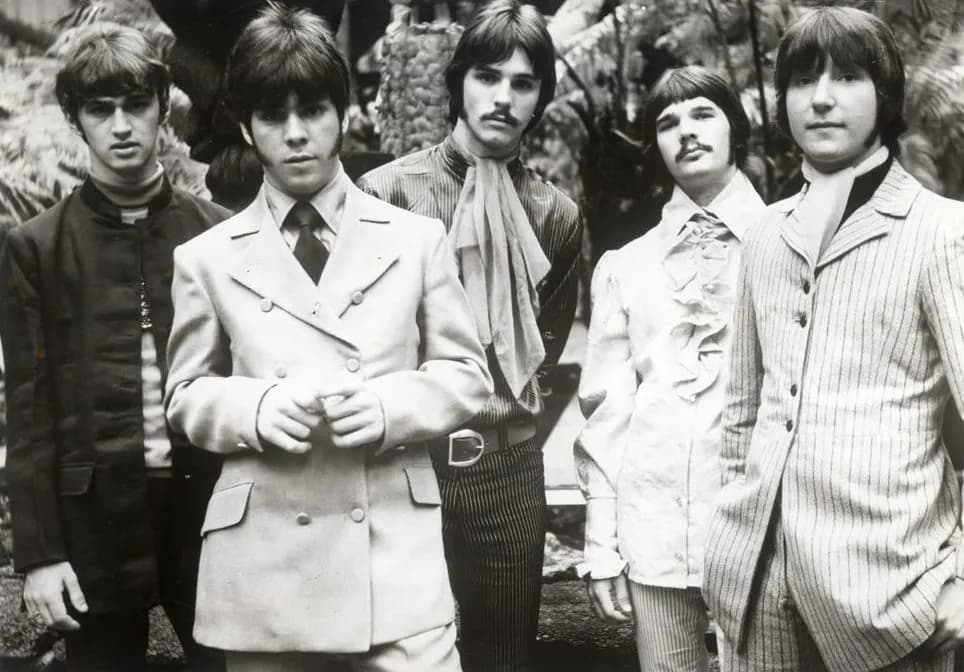
Other producers reached the same place at the same moment. The Lemon Pipers' "Green Tambourine" (1967), a Buddah single, mixed bubblegum's simplicity with psychedelic studio effects. Tommy James and the Shondells worked the boundary between garage rock and bubblegum with "I Think We're Alone Now" and "Mony Mony" (both 1967–1968).
The peak came in 1969 with "Sugar, Sugar" by the Archies, a group that existed only as characters in the animated series The Archie Show. Don Kirshner, fired from the Monkees after a dispute over control of their music, now had a band that could not argue with him. The song was written by Jeff Barry and Andy Kim, the lead vocal was sung by session singer Ron Dante, and it was Billboard's number-one single of 1969 and spent eight weeks at number one in the UK. Dante also sang lead on "Tracy" (1969) by the Cuff Links, another studio-only act.
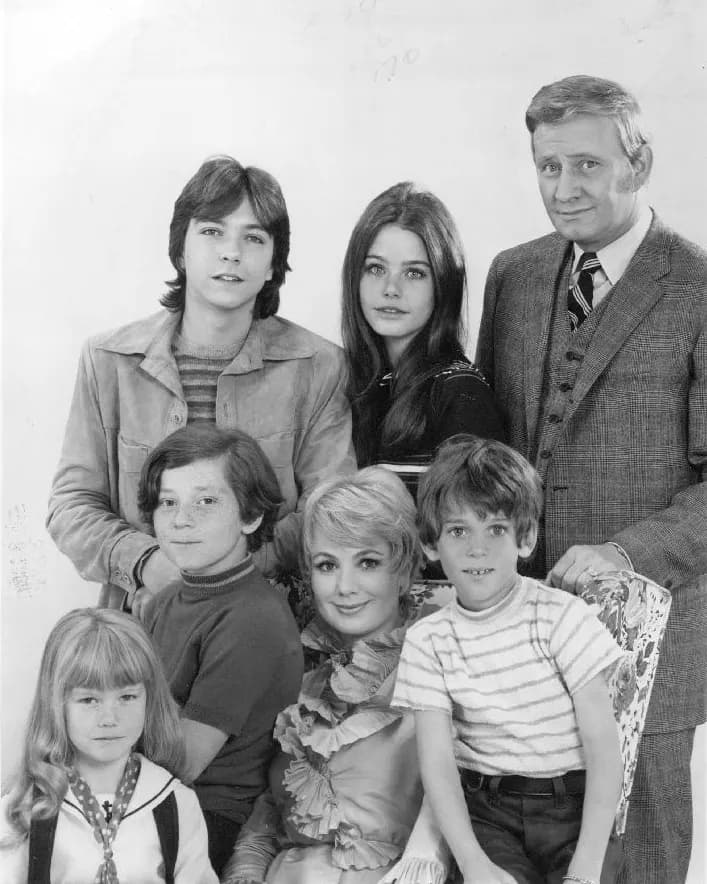
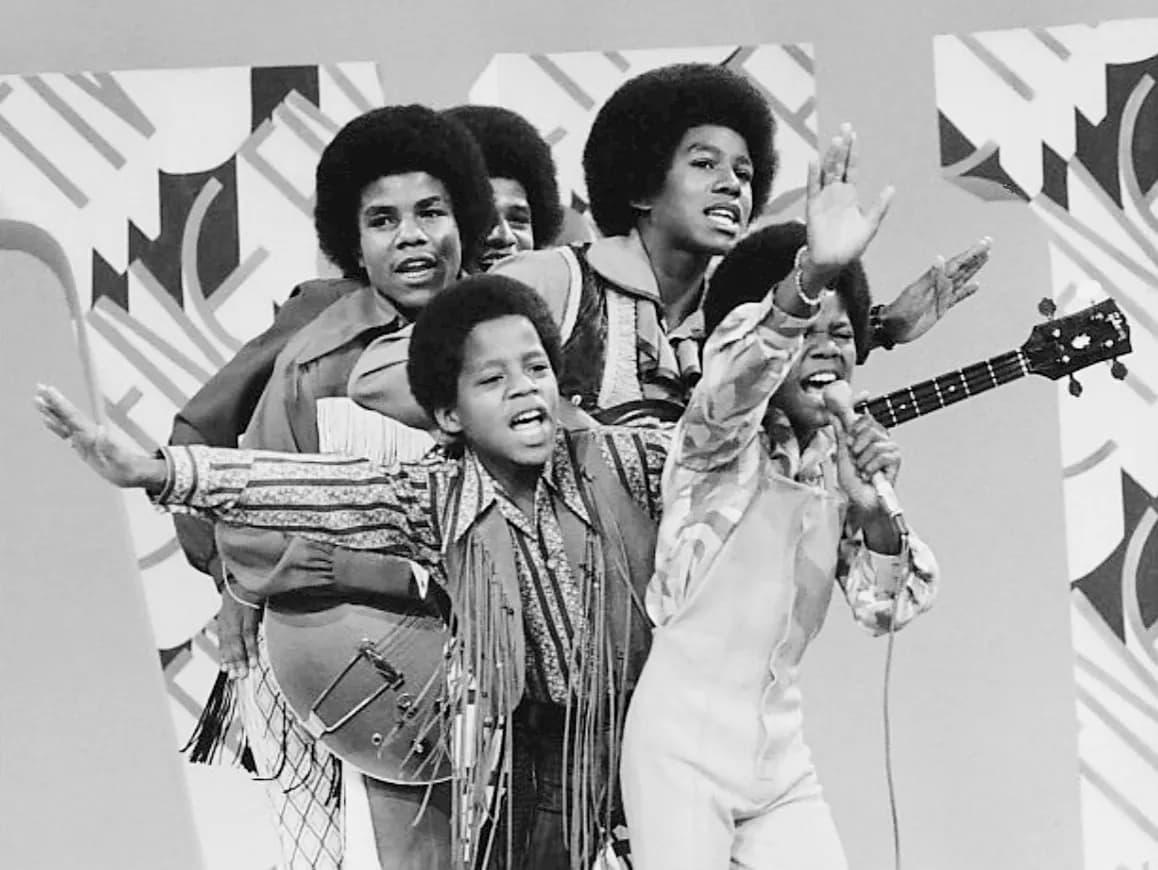
Television fed the trend into the early 1970s. The Partridge Family, a sitcom band, had a hit with "I Think I Love You" (1970). The Osmonds ("One Bad Apple", 1971) and the Jackson 5 ("ABC", 1970) brought the bubblegum brief into family vocal groups; "One Bad Apple" was written in the Jackson 5's style, and the Jackson 5's own records are sometimes filed as "bubblegum soul". The Cowsills were a real family band working similar territory.
By the early-to-mid 1970s the idea had moved to Britain and changed costume. Songwriters Nicky Chinn and Mike Chapman wrote bubblegum-structured singles for the Sweet ("Co-Co", 1971; "The Ballroom Blitz", 1973) and others that crossed into glam rock, and the Bay City Rollers ("Saturday Night", "Bye Bye Baby") turned the formula into teen hysteria. That shift, from faceless studio acts to idols with faces on posters, is effectively the transition from bubblegum to teen pop.
Key Characteristics & Sound
What a classic bubblegum single is built from:
- Tempo: a bouncy 110–140 BPM in straight 4/4, rarely slower.
- Length: roughly two to two and a half minutes, verse–chorus with no bridge or a very short one.
- Harmony: major keys, three or four chords (I, IV, V, sometimes vi), with an occasional key change up a step for the last chorus.
- Melody: narrow range, stepwise, often built on a chant or a playground rhythm, so that young listeners can sing it immediately.
- Hooks: repeated title phrases, nonsense syllables ("yummy yummy", "sha-la-la"), call-and-response with a group chorus.
- Percussion: handclaps, tambourine and a steady backbeat, usually more prominent in the mix than the drums themselves.
- Lyrics: candy, toys, games, first crushes and dancing, always family-friendly.
How it compares with its neighbours:
| Trait | Bubblegum Pop | Teen Pop | Power Pop | Glam Rock |
|---|---|---|---|---|
| Peak period | 1967–1972 | 1987–2010s | 1972–1982 | 1971–1975 |
| Core audience | Pre-teens | Teenagers | Rock fans | Teens and rock fans |
| Who drives it | Producers, session players | Star performers and producers | Self-contained bands | Bands with producers |
| Typical BPM | 110–140 | 90–125 | 120–150 | 100–140 |
| Signature sounds | Handclaps, organ, chant chorus | Polished synths, R&B vocals | Jangling and crunchy guitars | Stomping drums, fuzz guitar |
| Reference track | Sugar, Sugar | ...Baby One More Time | September Gurls | Ballroom Blitz |
Instruments & Production
Bubblegum records were made quickly by professionals, and the arrangements reflect that efficiency:
- Combo organ and piano: bright, cutting keyboard riffs that double the vocal hook.
- Clean electric guitar playing chords on the beat, with little distortion; fuzz appears only in the garage-leaning records.
- Bass and drums from session players, locked to a simple, danceable beat.
- Handclaps and tambourine overdubbed loudly, giving the records their party feel.
- Group vocals: a lead singer in a light, youthful register with a gang chorus answering him.
- Novelty touches: sound effects, spoken intros, whistles and kazoo-like keyboard tones.
The production model matters as much as the instruments. A single team could write and record songs for several "bands" in the same week, and touring line-ups were sometimes assembled only after a record charted. Later boy-band and girl-group producers, Japanese idol agencies and K-pop companies would run a similar producer-first model on a far larger scale.
Revivals & Descendants
Bubblegum never vanished; it kept returning under new names:
- Glam and early punk. The Chinn–Chapman singles took bubblegum structures and played them louder. The Ramones loved the same short, chanted songs, and the stripped-down hook writing of early punk owes a debt to 1968 AM radio.
- Power pop. Power pop bands of the 1970s kept the hooks but put guitars and adult songwriting back in charge.
- Bubblegum dance. In the late 1990s, Scandinavian Eurodance acts made the cartoonish version explicit. Aqua's "Barbie Girl" (1997) is the best-known example, with high, cartoon-like vocals over a dance beat.
- Teen pop. The star-driven youth pop of the late 1980s and 1990s inherited the audience and the production line; see teen pop.
- Hyperpop. In the 2010s, the London label PC Music and producer SOPHIE ("Bipp", 2013; "Lemonade", 2014) pushed bubblegum's sugary, artificial sheen into exaggerated, glossy electronics, the starting point of hyperpop, covered in more depth in our post What Is Hyperpop?
- J-pop and K-pop idols. Cute-concept groups in J-pop and K-pop are frequently described with the word "bubblegum", meaning bright, candy-coloured and youthful; the 1960s sound itself is not implied.
Key Artists & Songs
The classic bubblegum canon, plus the records that carried the idea forward:
- The Archies: "Sugar, Sugar" (1969), "Jingle Jangle" (1969).
- 1910 Fruitgum Company: "Simon Says" (1968), "1, 2, 3, Red Light" (1968), "Indian Giver" (1969).
- Ohio Express: "Yummy Yummy Yummy" (1968), "Chewy Chewy" (1968).
- The Lemon Pipers: "Green Tambourine" (1967).
- Tommy James and the Shondells: "I Think We're Alone Now" (1967), "Mony Mony" (1968).
- The Cuff Links: "Tracy" (1969).
- The Partridge Family: "I Think I Love You" (1970).
- The Jackson 5: "ABC" (1970), the bubblegum soul high point.
- The Osmonds: "One Bad Apple" (1971).
- Bay City Rollers: "Saturday Night", a US number one in early 1976.
- Aqua: "Barbie Girl" (1997), bubblegum dance.
| Year | Record | Why it matters |
|---|---|---|
| 1966 | The Monkees debut | Proves a made-for-TV group can top the charts |
| 1967 | Green Tambourine (The Lemon Pipers) | Early Buddah Records bubblegum hit |
| 1968 | Yummy Yummy Yummy (Ohio Express) | The Kasenetz-Katz formula at full strength |
| 1969 | Sugar, Sugar (The Archies) | A cartoon band's single becomes the genre's peak |
| 1970 | ABC (The Jackson 5) | Bubblegum structure meets Motown soul |
| 1997 | Barbie Girl (Aqua) | Bubblegum dance in the Eurodance era |
| 2014 | Lemonade (SOPHIE) | Bubblegum aesthetics reborn as hyperpop |
Bubblegum Pop vs Teen Pop and Other Neighbours
The two terms are often used interchangeably, but they describe different things. Bubblegum is the late-1960s, producer-led sound aimed at children: anonymous or fictional bands, playground lyrics, two-minute singles. Teen pop is the later, star-centred market aimed at teenagers: identifiable idols such as Tiffany, Britney Spears or the Backstreet Boys, glossy R&B-influenced production, songs about romance and independence, and music videos as a central product. Teen pop inherited bubblegum's production-line method; bubblegum never had teen pop's cult of personality.
Against doo-wop and early rock and roll, bubblegum is more polished and less vocal-group-centred. Against Motown, it shares the hit-factory organisation but trades gospel-rooted vocal power for a lighter, younger tone. Against power pop, it lacks the guitar crunch and the adult melancholy.
Genre AI has no bubblegum label. The obvious parents in its production taxonomy are the coarse Pop category and, for the chant-like, handclap-heavy records, Children / Jingle, close to children's music. Neither has fine labels, and the classifier prefers a coarse category that has them whenever one is in its top five, so both are unlikely to be the final answer. A guitar-and-organ single from 1968 is more likely to come back under Rock, as Soft / Pop Rock or RocknRoll; garage-leaning records such as "Mony Mony" or "Indian Giver" have the most reason to land there. The Jackson 5 and the Osmonds may read as Funk / Soul, with Soul or Disco as the label, and late-1990s bubblegum dance such as "Barbie Girl" as Electronic Dance. The narrow mono or early-stereo sound of the 1960s records is part of what the model hears too, so it may lean on era as much as on style.