
Art rock is rock made by people who had been taught to think about art, many of them in British art colleges. It surfaced at the end of the 1960s in Britain and New York, and its central move is conception: a record built around an idea, a sound treated as a material, and an interest in the avant-garde, gallery art and the recording studio that most of the rock market had no use for.
This guide covers where art rock came from, why so much of it was made by former art students, how it differs from progressive rock and from art pop, and which records define it. To hear how one of these tracks reads to a machine, run a section through our free AI music genre detector.
What Is Art Rock?
Art rock is rock that wants to be read as art as well as heard as entertainment. It borrows from contemporary art, film, modernist literature and the classical avant-garde, and it treats the album, sleeve included, as a single designed object. The critical term appeared in the late 1960s and was applied most heavily to music made between 1966 and the early 1980s.
There is no fixed instrumentation and no characteristic tempo, which makes the label hard to pin to a sound. What recurs is a set of decisions: timbre chosen before riff, arrangements that leave conventional rock parts out entirely, vocals that are declaimed or sung in character, and a willingness to let a piece fail to resolve. A drone, an oboe, a tape loop or four minutes of instrumental atmosphere are all permissible; a guitar solo designed to impress usually is not.
A caveat: "art rock" and "progressive rock" are often used as synonyms for the same British records. Where writers do separate them, it is by emphasis. Prog means composed complexity: long multi-part suites, shifting time signatures, playing that needs serious technique. Art rock means gesture and texture: the sound of the record carries the idea, songs stay closer to normal length, and the reference points are Warhol, Duchamp and Stockhausen more often than Bartók and Bach. Progressive rock asks to be judged as music; art rock asks to be judged as art.
History & Origins
One institution explains a lot: the British art school. Postwar art colleges took students on the strength of a portfolio, students lived on maintenance grants, and the courses led to no particular job. The result was a generation of musicians trained in fine art and with few ways to earn from it. John Lennon went to Liverpool College of Art, Keith Richards to Sidcup, Ray Davies to Hornsey, Pete Townshend to Ealing, where a lecture by the auto-destructive artist Gustav Metzger fed directly into the smashed guitars of The Who. Bryan Ferry studied fine art at Newcastle from 1964 under Richard Hamilton, one of the founders of British pop art. Brian Eno passed through Ipswich Civic College and Winchester School of Art without learning to play an instrument in any conventional sense.
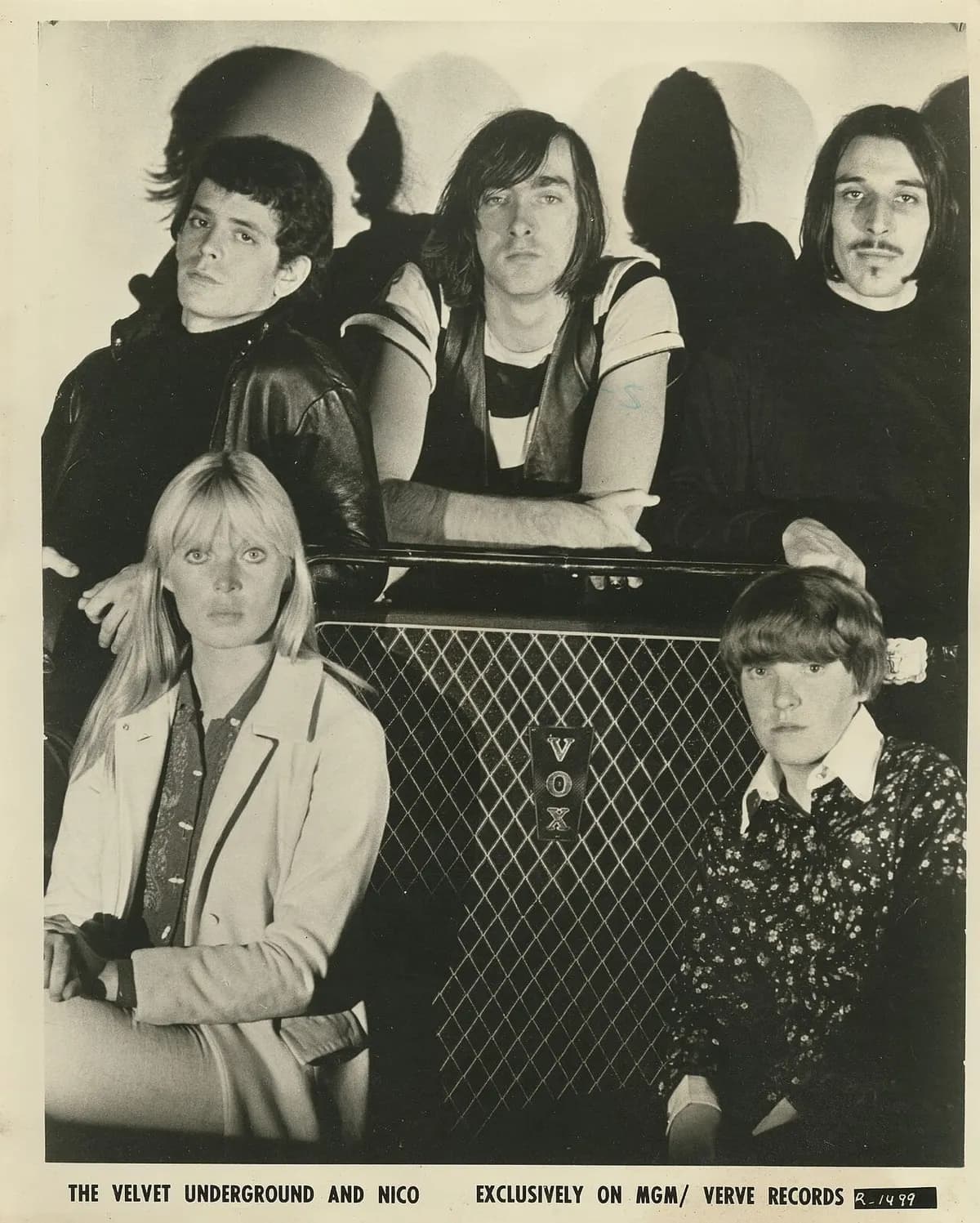
The music arrived on both sides of the Atlantic in 1966–1967. In New York, The Velvet Underground & Nico (recorded 1966, released March 1967) was managed and sponsored by Andy Warhol, who supplied the banana sleeve, the singer Nico and the multimedia show Exploding Plastic Inevitable. John Cale, a former member of La Monte Young's Theatre of Eternal Music, brought its sustained drones to the band on electric viola. The album sold poorly at the time and is now one of the records most often named as the start of art rock. In London, The Beatles' Sgt. Pepper's Lonely Hearts Club Band (1967) made the album-as-statement commercially normal, and the tape loops of "Tomorrow Never Knows" (1966) had already shown what a studio could do to a rock band. Pink Floyd's The Piper at the Gates of Dawn (1967), made by a group whose Roger Waters, Nick Mason and Richard Wright had met as architecture students, did the same for the London underground circuit.
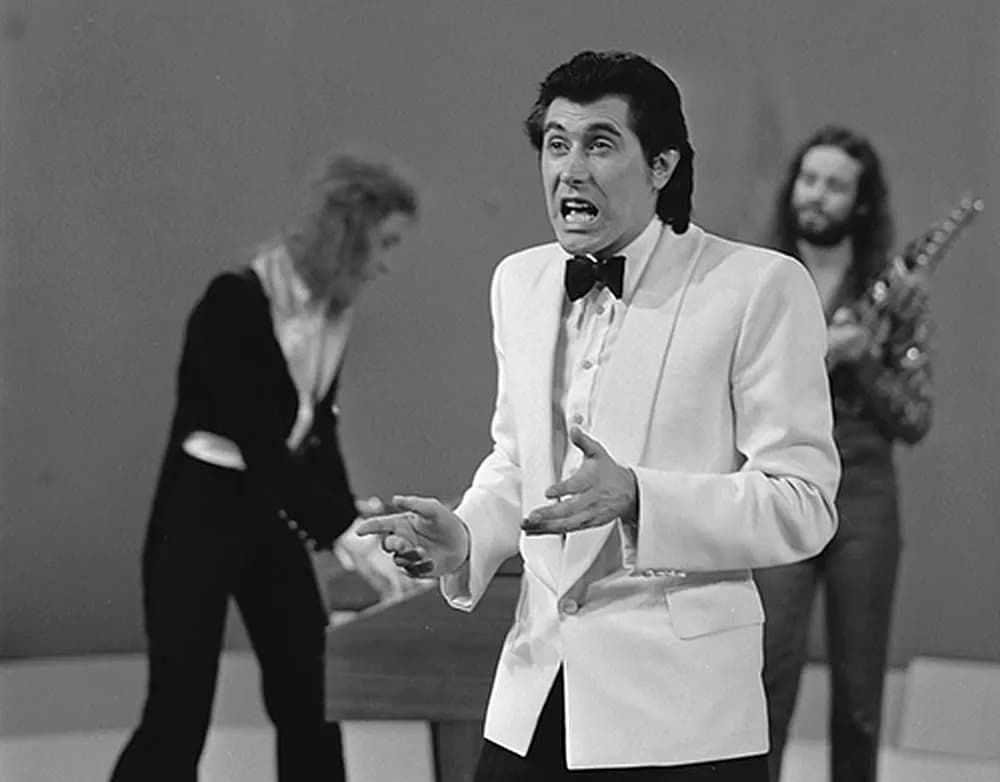
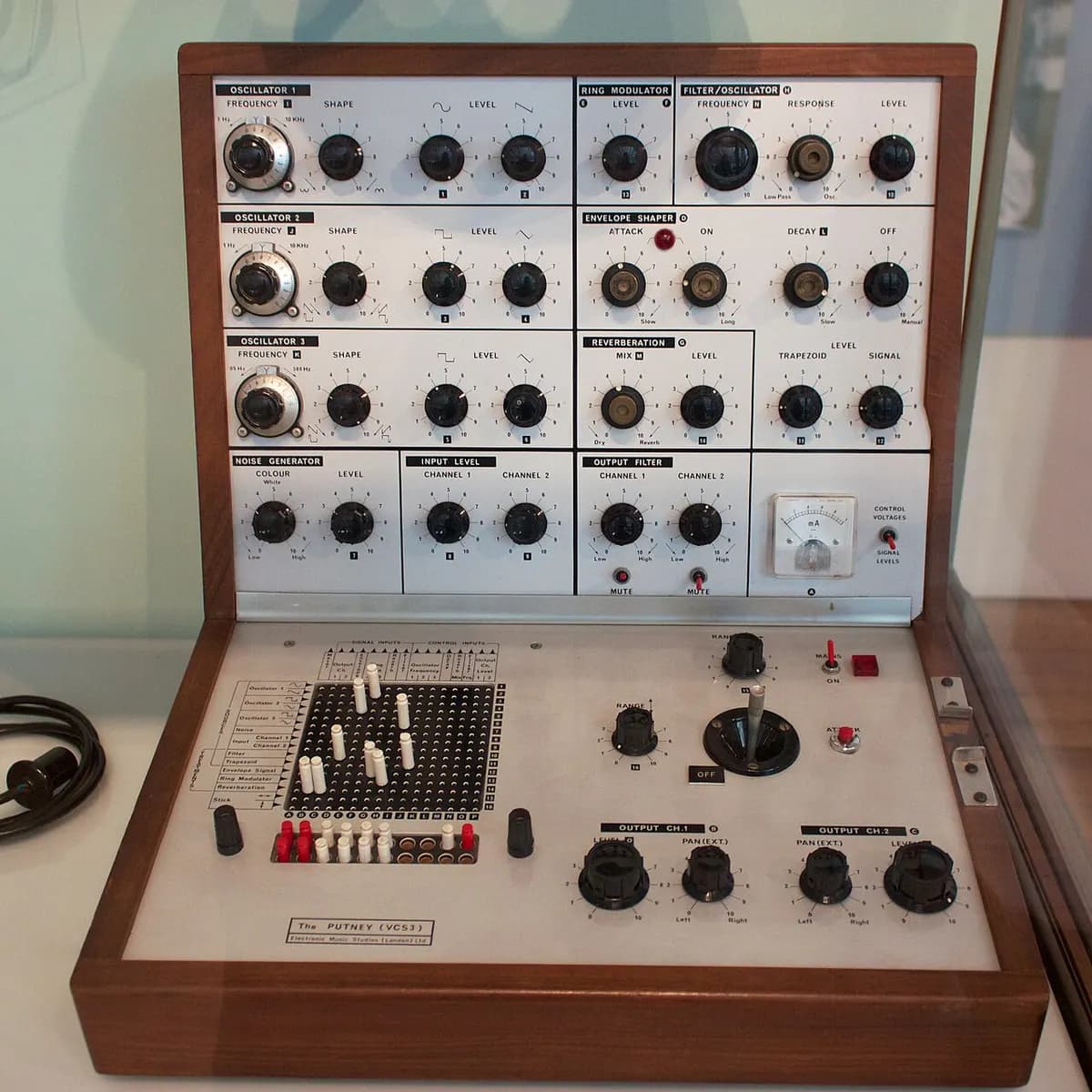
The style's clearest single statement is Roxy Music's debut in 1972: Ferry's mannered crooning, Andy Mackay's oboe and saxophone, Phil Manzanera's guitar and Eno processing all of it through an EMS VCS3 synthesiser and tape machines, with a pin-up sleeve deliberately borrowed from advertising. The single "Virginia Plain" reached the UK top five the same year. Eno left after For Your Pleasure (1973) and spent the rest of the decade turning production into authorship: Another Green World (1975), the Oblique Strategies card deck made with Peter Schmidt (1975), and Ambient 1: Music for Airports (1978), which named ambient as a genre.
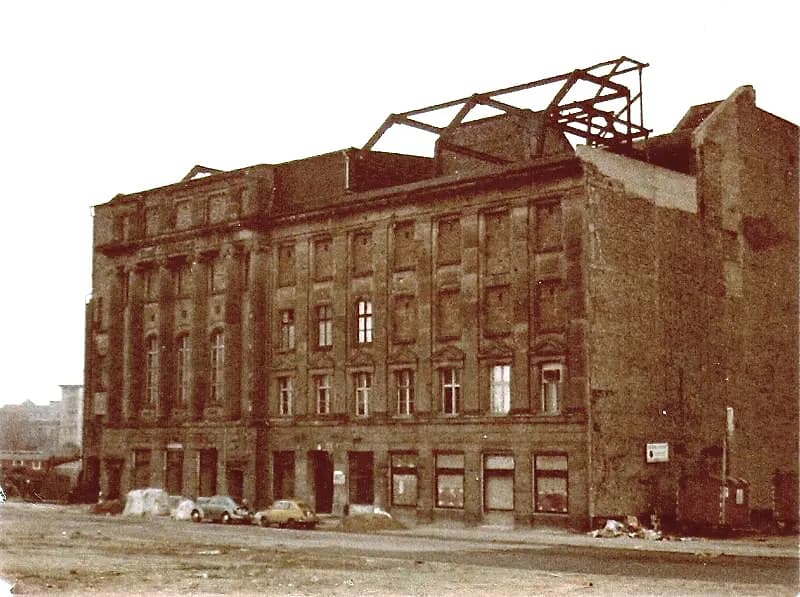
David Bowie, already the most art-directed figure in glam rock, brought Eno in for the records known as the Berlin trilogy: Low and "Heroes" (both 1977) and Lodger (1979), produced with Tony Visconti. Low splits an album down the middle: seven short tracks on side one, four long instrumentals on side two. Only "Heroes" was recorded entirely in Berlin, at Hansa; the name stuck anyway.
New York's second wave came out of an art school too. Talking Heads formed among students from the Rhode Island School of Design, and their fourth album Remain in Light (1980), produced by Eno, replaced rock parts with interlocking loops modelled on West African afrobeat. The post-punk years ran in parallel and overlapped constantly: Wire, This Heat and Public Image Ltd worked from the same assumptions with less money.
Afterwards the label detached from any scene and became a description of method. Kate Bush self-produced The Dreaming (1982) around the Fairlight CMI and gave Hounds of Love (1985) a whole conceptual side, "The Ninth Wave". Peter Gabriel, out of Genesis since 1975, banned cymbals from his third solo album (1980) and got the gated-reverb drum sound in return. Talk Talk edited hours of improvisation into Spirit of Eden (1988) and Laughing Stock (1991), which is where post-rock starts. Radiohead made OK Computer (1997) and then Kid A (2000), which answered a stadium-sized audience with ondes Martenot, IDM textures and no lead single. St. Vincent has carried the approach through Strange Mercy (2011), the self-titled album of 2014 and Masseduction (2017), after a collaborative record with David Byrne, Love This Giant (2012).
Key Characteristics & Sound
What identifies an art rock record:
- Concept before craft: the record is organised around an idea, a persona or a constraint, and the arrangement follows from it.
- Timbre as the subject: a treated guitar, a synthesiser drone or a processed drum sound carries the identity of a track more than its chords do.
- Song length stays near normal: mostly three to eight minutes; the extended forms live at album scale, in suites and paired sides, not in single tracks.
- Tempo is not diagnostic. Most of the canon sits between 70 and 140 BPM, usually in 4/4, with odd metres used sparingly.
- Non-rock instruments in ordinary positions: viola, oboe, saxophone, ondes Martenot, brass, tuned percussion.
- Vocals in character: Ferry's tremulous croon, Byrne's yelp, Bowie's shifting personae; declamation and irony in place of blues-derived emoting.
- Deliberate incompleteness: instrumentals, fragments, songs that stop, sides with no chorus on them.
- Sleeve and presentation count: Warhol's banana, Roxy's cover models, Hipgnosis's photography for Pink Floyd. The visual is part of the work.
Where it sits among its neighbours:
| Trait | Art Rock | Progressive Rock | Post-Punk | Art Pop |
|---|---|---|---|---|
| Peak period | 1966–1982 | 1969–1978 | 1978–1984 | 1966 onward |
| Typical BPM | 70–140 | 60–160 | 120–160 | 80–130 |
| Core idea | Avant-garde gesture | Composed complexity | Punk method, new sources | Art ideas in pop form |
| Track length | 3–8 min | 7–25 min | 3–6 min | 3–5 min |
| Studio role | Compositional tool | Documenting a score | Space and dub effects | Production as hook |
| Reference track | Virginia Plain | Close to the Edge | Public Image | Once in a Lifetime |
Instruments & Production
Art rock is a studio genre, and its history is largely a history of equipment reaching musicians who had no orthodox training on it:
- EMS VCS3 and Synthi AKS: the suitcase synthesisers Eno used to treat other people's playing in Roxy Music, as an effects processor as much as an instrument.
- Mellotron, Chamberlin and ARP: tape-replay and analogue keyboards that put strings, choirs and brass under one player's hands.
- Tape manipulation: loops, varispeed, reversal and cut-up editing, from "Tomorrow Never Knows" to the assembled improvisations of Laughing Stock.
- The studio as a compositional tool, the title of Eno's 1979 lecture on the subject: the record is written during mixing, not transcribed from a rehearsal.
- Fairlight CMI: the 1979 sampling workstation that Kate Bush and Peter Gabriel built entire albums around.
- Gated reverb: the drum sound engineered by Hugh Padgham with Phil Collins for Gabriel's third album (1980), which then colonised the decade.
- Chance procedures: Oblique Strategies cards, deliberately restricted setups, parts recorded by players told nothing about the song.
- Ondes Martenot and orchestral scoring: Jonny Greenwood's route out of guitar rock on Kid A and after.
- Sleeve design as authorship: Warhol, Hipgnosis, Peter Saville: the record's argument continues on its cover.
Related Styles & Descendants
- Art pop: the same instincts aimed at the singles chart: Kate Bush, Björk, and much of Bowie. Shorter, hookier, no less designed.
- Progressive rock: the overlapping British sibling, distinguished by suite-length composition and instrumental virtuosity.
- Glam rock: where art rock's persona-building met the pop chart, in Roxy Music and early Bowie.
- Art punk and no wave: the late-1970s hard edge: Wire, Pere Ubu, James Chance, Lydia Lunch.
- Post-punk: the direct successor, and the point where art-school theory reached bands with no budget.
- Krautrock: Can, Faust and Neu!, reaching comparable ends through repetition.
- Post-rock: the 1990s descendant of Talk Talk's late albums, rock instruments used for texture and duration.
- Alternative and indie rock: the commercial channel through which art rock methods reached mainstream audiences after 1990.
Key Artists & Tracks
Where to start:
- The Velvet Underground: The Velvet Underground & Nico (1967); "Venus in Furs", "European Son".
- Roxy Music: Roxy Music (1972) and For Your Pleasure (1973); "Virginia Plain", "In Every Dream Home a Heartache".
- Brian Eno: Another Green World (1975); "St. Elmo's Fire".
- David Bowie: Low (1977); "Sound and Vision", "Warszawa".
- Talking Heads: Remain in Light (1980); "Once in a Lifetime", "Crosseyed and Painless".
- Peter Gabriel: Peter Gabriel (1980, "Melt"); "Intruder", "Biko".
- Kate Bush: Hounds of Love (1985); "Running Up That Hill", "Cloudbusting".
- Talk Talk: Spirit of Eden (1988); "The Rainbow", "I Believe in You".
- Scott Walker: Scott 4 (1969) and Tilt (1995), a career that ran from orchestral pop to something close to contemporary composition.
- Radiohead: OK Computer (1997) and Kid A (2000); "Paranoid Android", "Everything in Its Right Place".
- St. Vincent: St. Vincent (2014); "Digital Witness".
How AI Detects Art Rock
Art rock is a hard case for a classifier because it is defined by intent, and intent has no acoustic signature. A model hears instrumentation, tempo, timbre and production, and these vary widely across the canon: Remain in Light is built on interlocking funk loops, Spirit of Eden on long, quiet stretches of edited improvisation. Often the only audible marker is that the usual rock features are missing.
What a model can pick up are the by-products. Unusual timbres in lead positions, synthesiser processing over live drums, sections without vocals, wide dynamic range and arrangements that avoid a repeating chorus may push a track away from mainstream pop and towards the experimental end of rock. Expect a neighbouring verdict: the 1970s material is likely to sit near progressive and psychedelic rock, records made after 1978 nearer post-punk and alternative, and the instrumental sides near ambient. Try a track in the Genre AI music genre detector and read the runner-up as carefully as the winner.
Art rock is not a label in Genre AI's production taxonomy, so there is no such class to return. Most of it is likely to land on the coarse Rock class, and the useful information is in the fine label underneath. Roxy Music, Low's song side and much of the 1970s canon are most likely to come back as Progressive / Psychedelic Rock, a defensible reading of records made with Mellotrons and VCS3s. Talking Heads and Radiohead are more likely to resolve to Indie / Alternative, and possibly to Pop when the chorus is strong; the harder edge of art punk may read as Punk. The instrumental halves are a different case: Low's "Warszawa" and Eno's own records may read as Ambient, and the more processed Radiohead material may tip into Electronic Dance, most plausibly Abstract / IDM / Leftfield. A Rock verdict with a Progressive / Psychedelic Rock or Indie / Alternative fine label, on a track with an unusual instrument in the lead, is about as close to an art rock signal as the model can give.