Afropop (or Afro-pop) is the broad name for contemporary popular music from Africa: songs built for radio, dance floors and now streaming, rooted in African rhythms and languages and blended with global pop, R&B, hip-hop and electronic production. The term is used in two overlapping ways: historically, as an umbrella for the whole continent's modern pop styles, from Ghanaian highlife and Nigerian jùjú to Congolese soukous and Senegalese mbalax; and today, often as a near-synonym for Afrobeats, the Nigerian and Ghanaian pop wave of Wizkid, Davido, Burna Boy and Tems.
It is not the same as Afrobeat (no "s"), Fela Kuti's 1970s big-band fusion of funk, jazz and Yoruba rhythm. This guide sorts out the names, follows African pop from the 1950s to the streaming era, describes the sound of the main scenes and lists artists to start with. To see how a track reads to a machine, drop a clip into our free AI music genre detector.
What Is Afropop?
Afropop is a family name more than a single genre. Africa has dozens of distinct popular-music traditions, each with its own rhythms, instruments and languages, and "Afropop" is the label used when they are discussed together, or when a song mixes African musical identity with international pop form: verse, chorus, a hook, a modern production and a running time made for radio.
The term gained currency in the 1980s, when Western record labels, radio programmes and festivals began to market African music to international audiences under the banner of "world music". The US public radio programme Afropop Worldwide, launched in 1988 as Afropop and hosted by the Cameroonian broadcaster Georges Collinet, helped fix the word for English-speaking listeners. In that usage it covered everything from Fela Kuti's Afrobeat to South African mbaqanga.
Since the 2010s the word has narrowed for many listeners. The global breakthrough of Afrobeats, the melodic, mid-tempo, percussion-heavy pop of Lagos and Accra, made it the face of African pop, and "Afropop" is now frequently used as a synonym. Many artists and journalists use the terms interchangeably; others keep "Afropop" for the broader, softer, more pop-oriented end of the spectrum and "Afrobeats" for the Nigerian-Ghanaian dance sound. This page uses Afropop in the broad sense and treats Afrobeats as its largest current branch.
Afropop vs Afrobeats vs Afrobeat
The three names are close in spelling and far apart in meaning:
| Term | What it means | Era | Core sound | Reference artists |
|---|---|---|---|---|
| Afropop | Umbrella term for modern African popular music | 1950s–today (term popular since the 1980s) | Varies by region; African rhythm and language in pop form | Miriam Makeba, Youssou N'Dour, Angélique Kidjo |
| Afrobeats | The 2000s–2020s pop wave from Nigeria and Ghana | 2000s–today | Mid-tempo, syncopated percussion, melodic hooks, R&B and dancehall influence | Wizkid, Davido, Burna Boy, Tiwa Savage, Rema |
| Afrobeat | Fela Kuti's 1970s Nigerian genre | Late 1960s–1980s, revivals since | Long big-band grooves, horns, funk guitar, political lyrics | Fela Kuti, Tony Allen |
History: Six Decades of African Pop
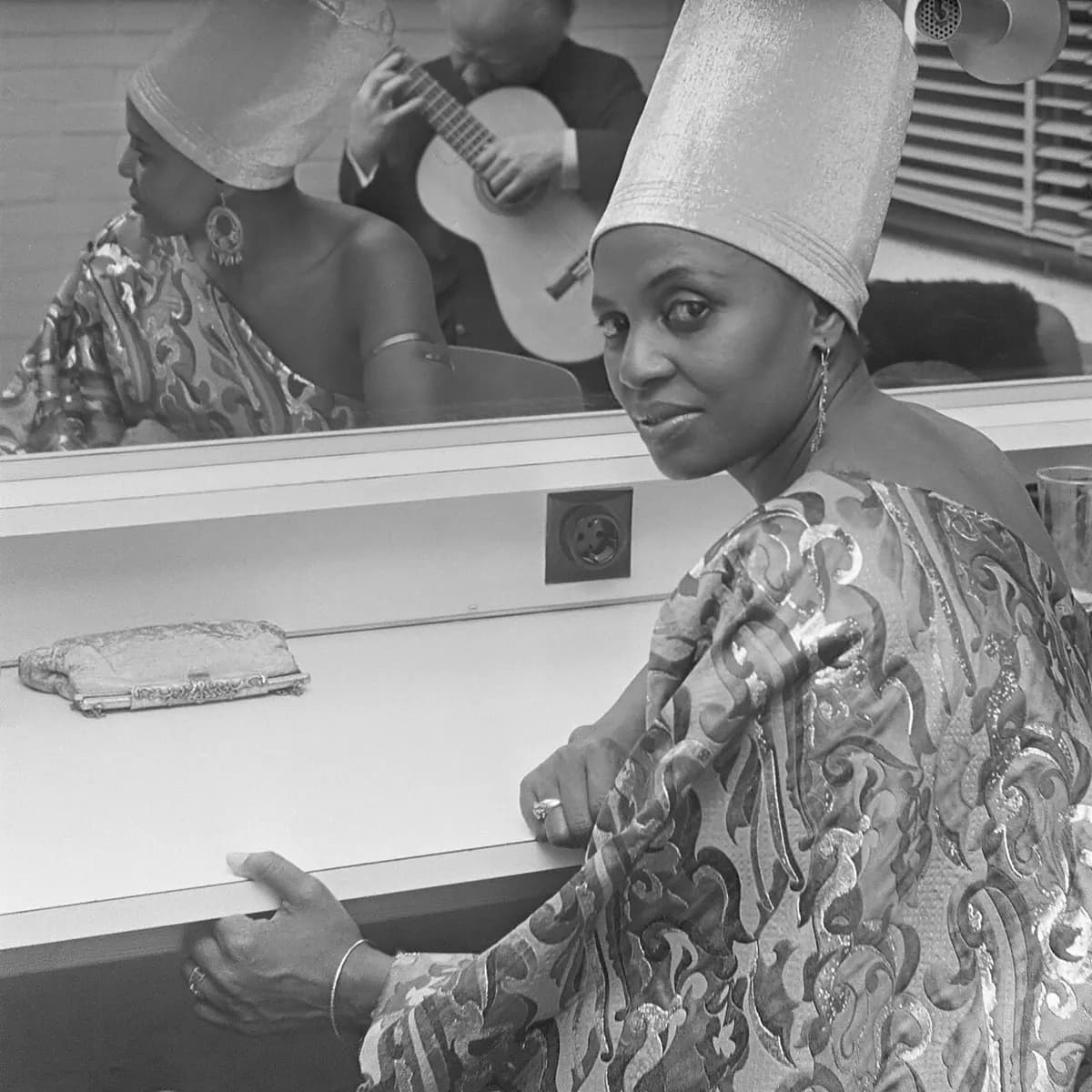
1950s–1960s: the first modern pop. In Ghana, dance-band highlife by E.T. Mensah and others combined local rhythms with brass, guitars and jazz harmony. In the Congo, musicians adapted Cuban son into Congolese rumba, led by Le Grand Kallé and Franco's OK Jazz. In South Africa, township jive and mbaqanga mixed Zulu vocal tradition with American jazz and doo-wop, and Miriam Makeba became an international star; her "Pata Pata", released in the US in 1967, was one of the first African pop hits in America.
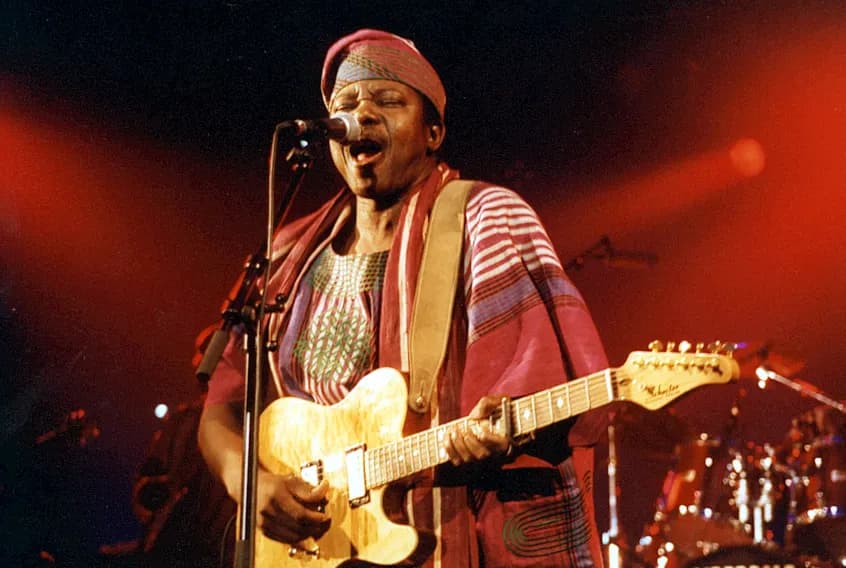
1970s: independence-era sounds. Fela Kuti created Afrobeat in Lagos. Congolese rumba accelerated into soukous; in Nigeria, jùjú, a guitar and talking-drum music, flourished under King Sunny Adé and Ebenezer Obey; in Mali, Senegal and Guinea, dance orchestras modernised griot traditions.
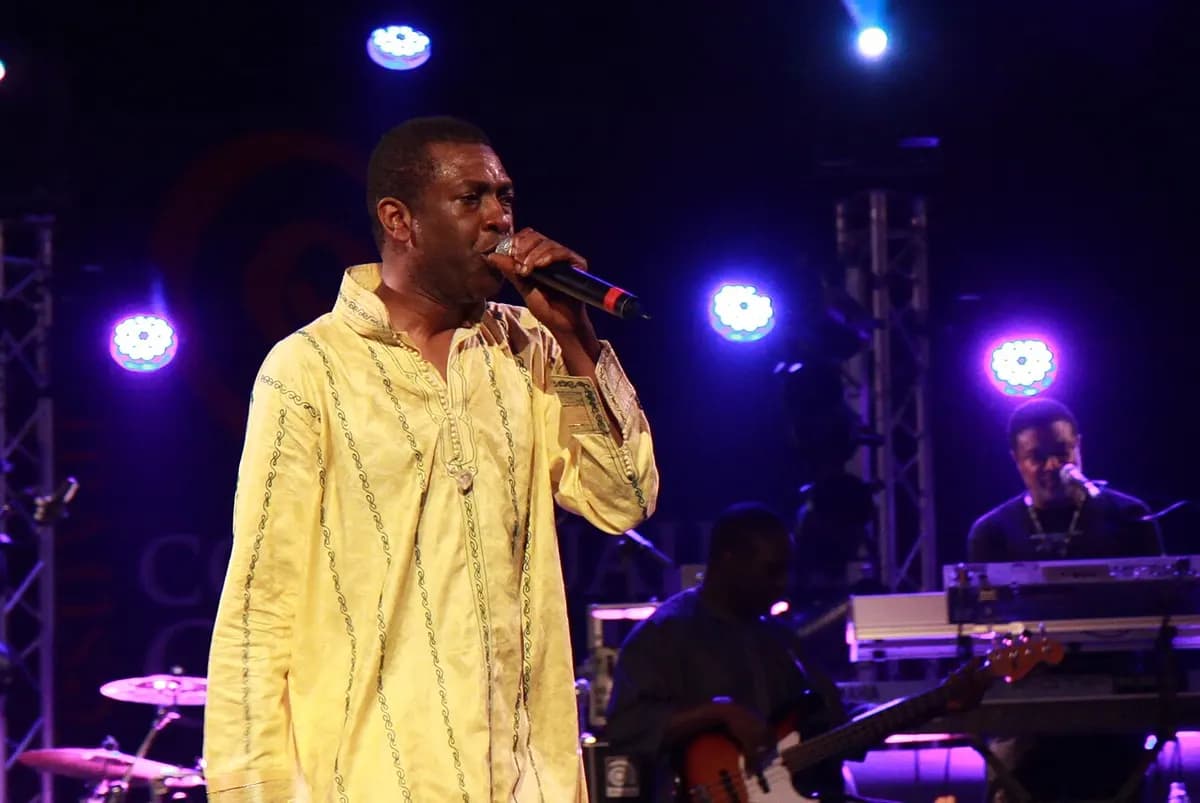
1980s–1990s: the "world music" decades. King Sunny Adé's Juju Music (Island Records, 1982) put a Nigerian jùjú bandleader on a major Western label and in front of rock audiences. Senegal's Youssou N'Dour popularised mbalax, built on sabar drums, and reached a global audience with "7 Seconds" (1994, with Neneh Cherry). Guinea's Mory Kanté had a European club hit with "Yé ké yé ké" (1987); Mali's Salif Keita, Benin's Angélique Kidjo and South Africa's Johnny Clegg and Brenda Fassie built international careers. Paul Simon's Graceland (1986), recorded with South African musicians including Ladysmith Black Mambazo, brought South African sounds to Western audiences and drew criticism for breaking the cultural boycott of apartheid South Africa.
2000s: the digital turn. Cheaper studios, mobile phones, satellite music channels and the internet let African producers make and distribute pop without Western labels. In Nigeria and Ghana a new generation mixed highlife, jùjú and Afrobeat with hip-hop, R&B and dancehall: 2Baba (2Face Idibia), P-Square, D'banj and Don Jazzy's Mo' Hits, and Ghana's hiplife scene. The sound became known as Afrobeats.
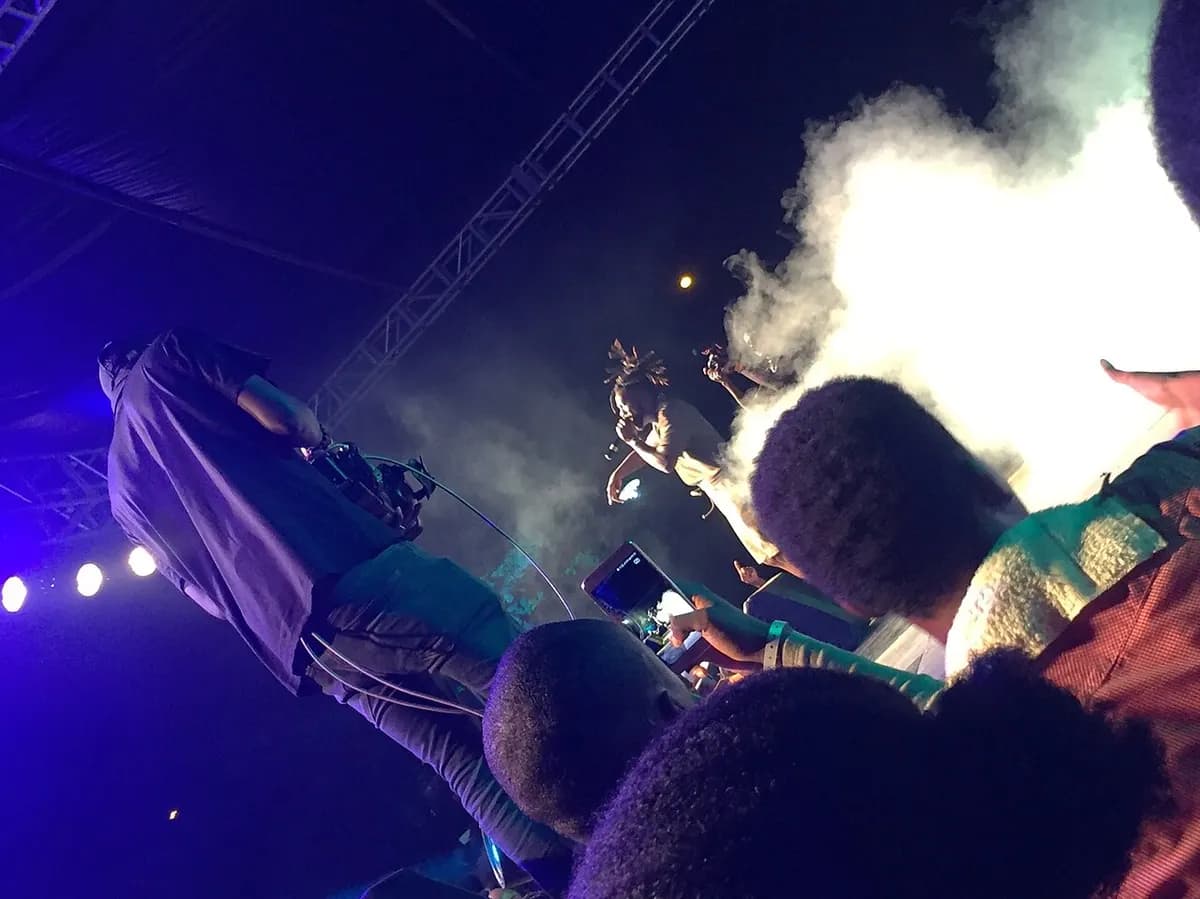
2010s–2020s: global breakthrough. D'banj's "Oliver Twist" entered the UK Singles Chart at number 9 in May 2012, the first Nigerian song to do so. Wizkid appeared on Drake's "One Dance" (2016), and his Made in Lagos (2020), with "Essence" (featuring Tems), crossed over in the US. Burna Boy won the Grammy for Best Global Music Album for Twice as Tall (2021 ceremony). Rema's "Calm Down" (2022), boosted by its remix with Selena Gomez, became the most-streamed Afrobeats song on Spotify and the first African song to spend a full year on the Billboard Hot 100. Davido, Tiwa Savage, Yemi Alade, Ayra Starr, Asake and Tems became international names. In 2024 the Grammys introduced a Best African Music Performance category, first won by South African singer Tyla for "Water". Meanwhile South Africa's amapiano became the continent's second great streaming-era export and began merging with Afrobeats, and in London afroswing answered both in a British voice.
Key Characteristics & Sound
Afropop covers many traditions, so its sound comes down to features that keep recurring across them:
- Rhythm first: interlocking, syncopated percussion (shakers, congas, talking drums, log drums or programmed equivalents), usually more layered and polyrhythmic than Western pop.
- Tempo: varies by style. Modern Afrobeats usually sits in a mid-tempo range, roughly 95–115 BPM, with a laid-back, swung bounce; soukous and mbalax run much faster; amapiano usually around 110–115 BPM.
- Guitars: bright, clean, interlocking electric guitar lines descended from highlife and Congolese rumba, still common in Afrobeats.
- Bass: melodic and syncopated; in Afrobeats often a rounded synth bass, in amapiano the deep "log drum".
- Vocals: melodic, often Auto-Tuned in modern pop, with call-and-response, chants and ad-libs; lyrics switch between English, Nigerian Pidgin, Yoruba, Igbo, Twi, Zulu, Lingala, Wolof, French and other languages.
- Harmony: usually simple, a few repeating chords, with the interest in rhythm and melody.
- Production: since the 2010s, built in DAWs with programmed drums and global pop polish, often with R&B, dancehall and hip-hop influences.
Regional Styles Under the Afropop Umbrella
A map of the main scenes, older and newer:
| Style | Region | Era | Defining traits | Key names |
|---|---|---|---|---|
| Highlife | Ghana, Nigeria | 1920s–today | Guitars, horns, swinging dance rhythms | E.T. Mensah, Osibisa (crossover), Daddy Lumba |
| Congolese rumba / soukous | DR Congo, Republic of the Congo | 1940s–today | Interlocking guitars, fast sebene dance section | Franco, Tabu Ley Rochereau, Papa Wemba, Kanda Bongo Man |
| Mbaqanga / township jive | South Africa | 1960s–1980s | Driving bass, Zulu vocal harmony | Mahlathini and the Mahotella Queens |
| Jùjú | Nigeria (Yoruba) | 1960s–1990s | Talking drums, layered guitars, praise singing | King Sunny Adé, Ebenezer Obey |
| Mbalax | Senegal, Gambia | 1970s–today | Sabar drums, fast rhythms, Wolof vocals | Youssou N'Dour |
| Afrobeats | Nigeria, Ghana | 2000s–today | Mid-tempo bounce, melodic hooks, R&B/dancehall influence | Wizkid, Davido, Burna Boy, Tiwa Savage, Rema |
| Amapiano | South Africa | 2010s–today | Log drum bass, house-derived grooves, ~110–115 BPM | Kabza De Small, DJ Maphorisa, Tyla (pop crossover) |
| Bongo Flava | Tanzania | 1990s–today | Swahili pop with hip-hop, R&B and taarab | Diamond Platnumz |
Key Artists & Essential Records
- Miriam Makeba: "Pata Pata" (US release 1967); among the first African singers with a following on several continents.
- Franco & OK Jazz, Tabu Ley Rochereau: the bandleaders who defined Congolese rumba.
- King Sunny Adé: Juju Music (1982).
- Youssou N'Dour: mbalax, and "7 Seconds" with Neneh Cherry (1994).
- Angélique Kidjo: Beninese singer whose records mix highlife, funk and pop.
- Salif Keita: Malian singer; Soro (1987) was one of the best-known albums of the world-music era.
- Brenda Fassie: South African pop star; "Weekend Special" (1983).
- D'banj: "Oliver Twist" (2012), a UK top-10 entry.
- Wizkid: Made in Lagos (2020), "Essence" with Tems.
- Burna Boy: African Giant (2019), Twice as Tall (2020).
- Davido, Tiwa Savage, Yemi Alade, Rema ("Calm Down"), Ayra Starr, Asake, Tems: the 2010s–2020s generation.
- Tyla: "Water" (2023), amapiano-pop crossover.
Afropop vs Afrobeat, Dancehall and Afro House
The distinction people get wrong most often is with Afrobeat: Fela Kuti's genre is long-form, horn-driven, politically charged band music from the 1970s, with tracks often running ten minutes or more. Afrobeats and most modern Afropop are three-minute pop songs with programmed drums and melodic hooks. Burna Boy and others sample or quote Fela, which adds to the confusion; the formats are still different.
Against dancehall and reggaeton, Afrobeats shares the mid-tempo bounce and the influence of Jamaican vocal styles, but its percussion is more layered and is not tied to one riddim or to the dembow pattern. Against Afro house and amapiano, the difference is structure: those are DJ-oriented, house-derived styles with long builds and four-on-the-floor or log-drum grooves, while Afropop is song-first. Afroswing is the British cousin: Afrobeats rhythms with UK rap slang and London accents. For more on the Afro house side, see Afro house, the sound of 2026.
How AI Detects Afropop
An audio model has usable cues for African pop: layered syncopated percussion, clean interlocking guitars, a mid-tempo swung bounce and melodic, often Auto-Tuned vocals. Modern Afrobeats is harder, because the same producers work with R&B, dancehall and pop artists, and a polished Afrobeats hook can sound very close to a Caribbean or American pop record.
Older styles are easier: jùjú's talking drums, soukous guitars and mbalax's sabar rhythms each have a sound of their own. Try a classic and a current track in the Genre AI music genre detector and compare the alternative labels. Our explainer on why songs have multiple genres covers why blended styles return several plausible answers.
Genre AI's production taxonomy has no Afropop or Afrobeats label. The closest is the coarse African label, which has no finer breakdown. When a label that does have subgenres (Rap Hip-Hop, Funk / Soul, Electronic Dance, Jazz and others) is also among the top five candidates, the system reports that one instead, so a modern Afrobeats track may come back as Rap Hip-Hop, with Contemporary RnB or Pop Rap underneath, or as Funk / Soul even when African scores well. Amapiano-leaning tracks may drift toward Electronic Dance because of their house-derived groove. Older styles with talking drums, soukous guitars or sabar rhythms have the best chance of reading as African. R&B, Pop and Reggae are likely among the alternatives.