Highlife is a West African popular music that began in Ghana in the early 20th century and spread to Nigeria and Sierra Leone: a bright, swinging dance style that sets Akan, Igbo and other local melodies and rhythms on Western instruments (interlocking guitars, jazz-style horns, bass and drums) over a steady, rolling cross-rhythm. Its name comes from the elite dance clubs of 1920s Accra, where it was the music of "high life".
Several later styles grew out of highlife. Afrobeat, Fela Kuti's political, funk-driven sound, began in a highlife-jazz band; Ghanaian hiplife and today's Afrobeats owe it melodies and guitar styles. Below: the history from palm-wine guitar to big dance bands, the Nigerian scene, burger highlife from Germany, the sound, the key artists and how highlife differs from its neighbours. To see how a classifier reads a highlife track, try a clip in our free AI music genre detector.
What Is Highlife?
Highlife is less one style than a family. What unites it is African rhythm and melody played on imported instruments, in a relaxed, danceable groove, with lyrics in local languages or in pidgin English. The guitar plays repeating, interlocking picked patterns, with little strumming; horns, when present, play riffs and harmonised lines in the manner of a swing band; and the rhythm section keeps a light, propulsive pulse that is easy to dance to for hours.
Two main lineages run through it. Dance band highlife came from brass bands and urban orchestras playing for ballroom audiences, and absorbed jazz, swing and Caribbean calypso. Guitar band highlife came from the acoustic palm-wine music played in bars and on the coast, and stayed closer to village song and storytelling, often alongside travelling theatre troupes ("concert parties").
Highlife is gentler and more melodic than Afrobeat. Afrobeat stretches songs into long, hypnotic funk jams with political lyrics; highlife keeps songs shorter, sweeter and more harmonically varied, with recurring themes of love, money, proverbs, death and everyday life.

History & Origins
Highlife grew on the coast of the Gold Coast (colonial Ghana) from the late 19th century, where several influences met: brass band music from colonial regiments and churches, sea shanties and guitar styles carried by Kru sailors from Liberia, hymns, and the rhythms and melodies of Fante and Akan music. The acoustic palm-wine guitar style that resulted spread along the coast of West Africa.
The name appeared in the 1920s. Orchestras such as the Excelsior Orchestra, formed in 1914, played ballroom dances in Accra for an elite audience in formal dress, and those outside who could not afford entry began calling the music of these exclusive clubs "highlife". One of the earliest recordings of guitar band highlife is "Yaa Amponsah", recorded in London in June 1928 for the Zonophone label by Jacob Sam (also known as Kwame Asare) and his Kumasi Trio. Its chord pattern became a foundation of Ghanaian guitar music.
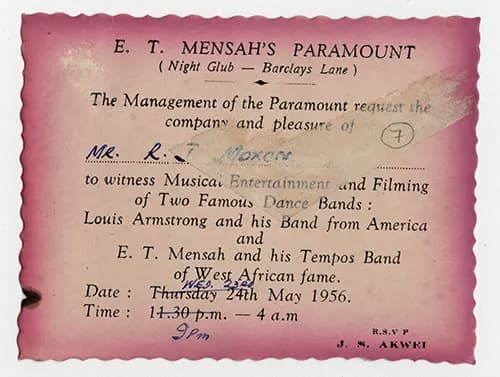
The golden age came in the 1950s. E. T. Mensah and his band the Tempos modernised dance band highlife by slimming the big orchestras into a jazz-sized combo with saxophones and trumpet, absorbing swing and calypso, and touring throughout West Africa. His fame grew further after he played alongside Louis Armstrong in Accra in May 1956, and he became known as the "King of Highlife". When Ghana became independent in 1957, highlife was the sound of the new nation, and the government of Kwame Nkrumah set up state highlife bands and took bands on official trips abroad. In the guitar band tradition, E. K. Nyame formed his Akan Trio concert party in 1952, folding guitar band highlife into theatre sung in Akan, and later groups such as Nana Ampadu's African Brothers made guitar band highlife the most popular music in the country.
In Nigeria the style took root in the 1950s through Lagos bandleaders such as Bobby Benson and Victor Olaiya, and especially in the east, among Igbo musicians. Cardinal Rex Lawson, Victor Uwaifo (whose "Joromi" of 1965 became a hit across West Africa), Stephen Osita Osadebe and Oliver de Coque each developed distinctive styles. Fela Kuti played with Victor Olaiya's Cool Cats after leaving school in 1957 and later led the highlife-jazz band Koola Lobitos, which he renamed Nigeria 70 in 1969 as he moved towards Afrobeat. The single best-known Nigerian highlife song, "Sweet Mother" by the Nigerian-Cameroonian Prince Nico Mbarga and his band Rocafil Jazz (1976), is sung in Pidgin English and became one of the best-selling records in the history of Nigerian music.
In the 1970s, Ghanaian bands such as Ebo Taylor's groups and the bands of Pat Thomas mixed highlife with funk and Afrobeat. Economic crisis and curfews in Ghana in the late 1970s and early 1980s drove many musicians abroad, and in Germany, especially Hamburg, Ghanaian emigrants created burger highlife with synthesizers and drum machines. George Darko's "Akoo Te Brofo" (usually dated 1983) is generally named as its first record. In the 1990s, Ghanaian rappers such as Reggie Rockstone mixed rap with highlife to create hiplife, which in turn fed the rise of modern Afrobeats.
Key Characteristics & Sound
What identifies a highlife recording:
- Tempo: moderate and steady. Commonly cited ranges run from about 95 to 130 BPM, though there is no fixed standard.
- Rhythm: a cyclic pattern of cross-rhythms, often anchored by a bell or clave-like timeline, with the bass and percussion lilting lightly against a regular pulse.
- Guitars: two or more guitars playing interlocking, repeating, finger-picked figures, high on the neck and clean in tone. The two-finger picking technique came from the dagomba guitar style that Kru sailors from Liberia brought to the coast.
- Horns: in dance band highlife, saxophones and trumpets play harmonised riffs and jazz-inflected solos.
- Harmony: bright and mostly major-key, built on cycling progressions of a few chords; harmonised vocals in thirds are common.
- Vocals: relaxed lead singing with group responses, in Twi, Fante, Ga, Igbo, Yoruba, Efik or pidgin English.
- Lyrics: love, proverbs, moral lessons, money, family, death and praise, often sung with gentle humour.
The two main lineages compared:
| Trait | Dance band highlife | Guitar band highlife |
|---|---|---|
| Roots | Colonial brass bands, ballroom orchestras, jazz, calypso | Palm-wine guitar music, village song, concert party theatre |
| Instruments | Saxophones, trumpets, guitar, bass, drum kit, percussion | Guitars (acoustic then electric), bass, percussion, voices |
| Audience | Urban dance halls and clubs | Bars, rural towns, theatre tours |
| Sound | Jazzy, horn-led, polished | Earthy, guitar-led, storytelling |
| Key names | E. T. Mensah, Ramblers Dance Band, Bobby Benson | E. K. Nyame, African Brothers, Koo Nimo (palm-wine) |
Styles & Descendants
Highlife has produced a long line of variants and successors:
| Style | Where / when | What changed |
|---|---|---|
| Palm-wine music | West African coast, early 20th century | Acoustic guitar and percussion; the ancestor of guitar band highlife |
| Dance band highlife | Ghana, 1920s–1960s | Ballroom orchestras, then jazz combos with horns |
| Guitar band highlife | Ghana, 1950s–1980s | Electric guitars and theatre-linked storytelling |
| Igbo / Nigerian highlife | Eastern Nigeria, 1950s–1980s | Long, guitar-rich grooves; Osadebe, Oliver de Coque |
| Burger highlife | Germany (Hamburg) and Ghana, 1980s | Synthesizers, drum machines, disco and funk production |
| Afrobeat | Nigeria, c. 1970 | Highlife plus funk and jazz; long political jams (Fela Kuti) |
| Hiplife | Ghana, 1990s | Rap in local languages over highlife-derived beats |
Key Artists & Recordings
Where to start:
- E. T. Mensah & the Tempos: the "King of Highlife" and the classic sound of 1950s dance band highlife.
- Kwame Asare (Sam): "Yaa Amponsah" (1928), a founding guitar recording.
- E. K. Nyame and Nana Ampadu & the African Brothers: the guitar band tradition.
- Koo Nimo: the master of acoustic palm-wine guitar in the Akan tradition.
- Cardinal Rex Lawson and Victor Uwaifo: giants of Nigerian highlife in the 1960s.
- Stephen Osita Osadebe: long, warm Igbo highlife grooves; "Osondi Owendi" is a classic.
- Prince Nico Mbarga & Rocafil Jazz: "Sweet Mother" (1976).
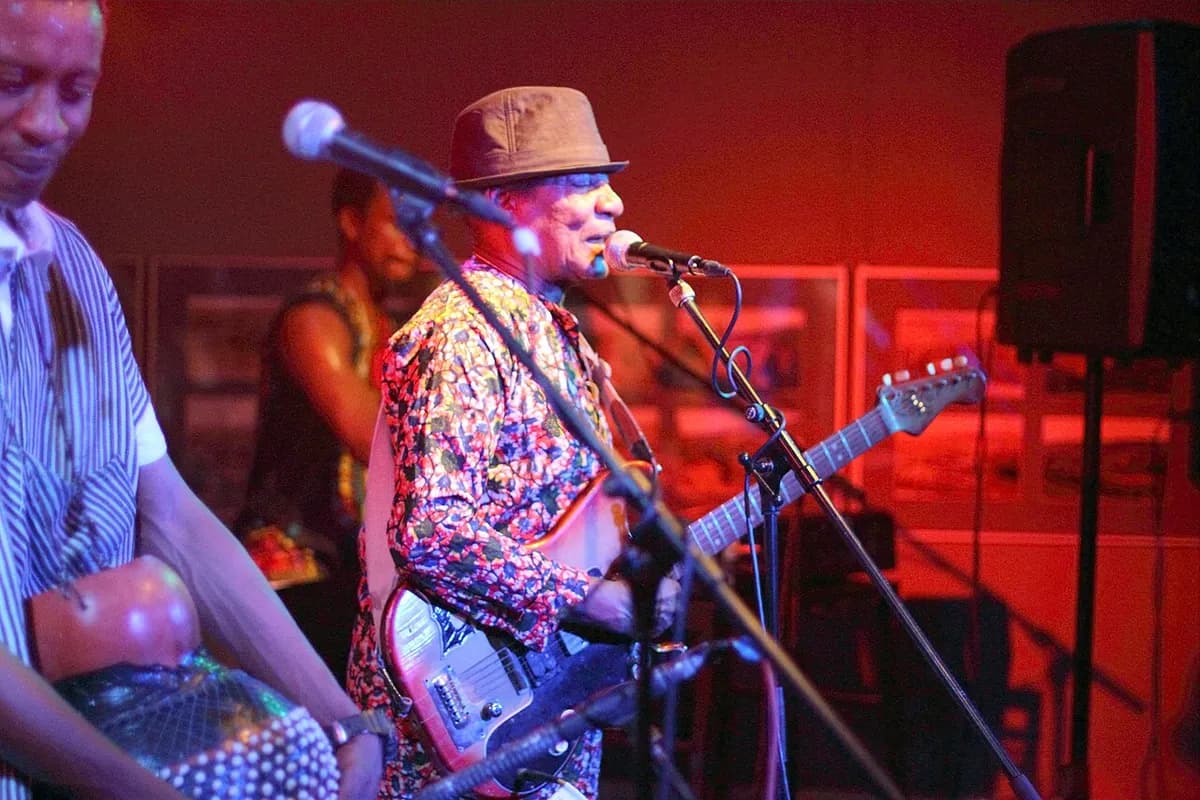
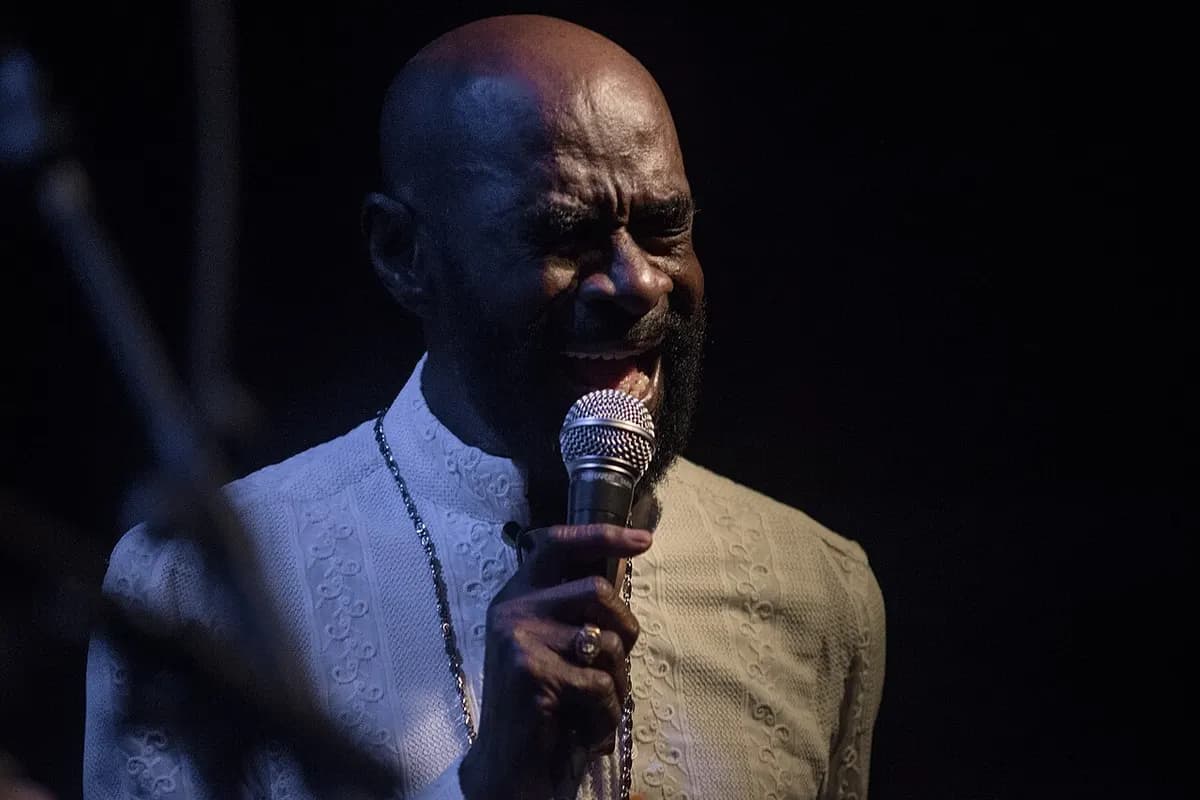
- Ebo Taylor and Pat Thomas: 1970s Ghanaian highlife with funk and Afrobeat influence; around 2010 their old records reached new listeners through reissue labels such as Strut, Analog Africa and Soundway.
- George Darko: the defining name of burger highlife.
- Amakye Dede: one of the most popular Ghanaian highlife singers from the 1980s on.
Highlife vs Afrobeat, Calypso & Jazz
Highlife borrowed from several styles and lent to more. The useful distinctions:
- Highlife vs Afrobeat: Afrobeat grew out of highlife but added James Brown-style funk, Tony Allen's drumming and long instrumental build-ups, with songs often running over ten minutes and lyrics aimed at politics. Highlife songs are shorter, more melodic and more varied in harmony.
- Highlife vs Afrobeats: today's Afrobeats is a different, much later pop style built on programmed drums and R&B and dancehall influences. It inherits highlife melodies and guitar figures but not its band sound.
- Highlife vs calypso: calypso from Trinidad was popular in West Africa in the 1940s and 50s, and E. T. Mensah absorbed its rhythms and horn style. Calypso, however, is built around topical lyrics in Caribbean English and a different rhythmic grid.
- Highlife vs jazz: dance band highlife borrowed jazz instrumentation and solos, but its rhythms and melodies are West African, and it was made for social dancing, with solos kept short.
How AI Detects Highlife
For an audio model, highlife's clearest cue is its guitar texture: clean, high, interlocking picked lines that repeat in cycles, over a light, rolling rhythm with a lot of percussion detail and relatively little low-frequency weight. Dance band records add horn riffs that can sound like swing or Latin music, and vocals in Twi, Igbo or pidgin give further evidence.
Neighbouring styles share those features: soukous, Afrobeat, calypso and Latin dance music all have bright guitars or horns over syncopated percussion. Try a clip in the Genre AI music genre detector, and read how to identify a music genre by ear.
Genre AI's production taxonomy has no highlife label. The closest broad label is the coarse African one, but it has no finer subgenres, and the model answers with it only when none of the families that do have subgenres (Jazz, Funk / Soul, Rock, Folk / Country and others) reaches its top five. Highlife's horns and electric guitars give those families plenty to respond to, so the answer is likely to be a fine label from one of them. Dance band highlife, with saxophones and trumpets playing swing-style riffs, has the ingredients for a Jazz answer such as Big Band / Swing; guitar band records may land on Funk under Funk / Soul or on Folk under Folk / Country; burger highlife, with drum machines and synthesizers, may go to Electronic Dance or to Funk / Soul, where Disco is a plausible label. The alternatives listed under the answer are always other subgenres of the same family, so Latin or Reggae will not appear there, and Pop rarely comes up at all. Treat any of these answers as a description of the instrumentation, and use the language of the vocals and the guitar style to call it highlife.