Nu metal is the groove-driven, hip-hop-influenced strain of heavy music that filled American rock radio and MTV between roughly 1997 and 2003. It swaps the speed and guitar solos of traditional metal for down-tuned seven-string riffs, bouncing mid-tempo grooves, turntable scratches, and vocals that switch between rapping, singing, and screaming.
This guide covers what nu metal actually is, how it grew out of funk metal and groove metal, the production tricks behind its detuned bounce, its subgenres, the bands that defined it, and why it came back in the 2020s. Not sure whether a track is nu metal, straight metal, or metalcore? Play a few seconds into our free AI music genre detector and it will read the tuning, tempo, and vocal style for you.
What Is Nu Metal?
Nu metal is a fusion genre that keeps the heaviness of metal but builds it around groove instead of speed. The riffs are simple, syncopated, and played on down-tuned six- or seven-string guitars; the drums sit in a half-time bounce closer to hip-hop than to thrash; and the songs are built around hooks and choruses, with few long instrumental sections. Guitar solos are so rare that their absence is one of the genre's markers.
The vocal approach is the other giveaway. A single frontman may rap a verse, scream a bridge, and sing a melodic chorus inside three minutes. Those swings suit the genre's confessional, often furious lyrics about bullying, family breakdown, addiction, and alienation. Add DJ scratches, samples, or industrial synths and you have the full picture: metal instruments, hip-hop rhythm, pop song structure, and teenage anger that record labels sold in very large numbers.
History & Origins
Nu metal's groundwork was laid in the late 1980s and early 1990s by bands that had already crossed metal with funk and rap: Faith No More, Rage Against the Machine, Body Count, and the groove metal of Pantera. The genre proper begins in Bakersfield, California, with Korn's self-titled debut in 1994, a record built on Ibanez seven-string guitars, a clanky, percussive bass tone, and lyrics that read like a diary, with Jonathan Davis singing about his own childhood abuse on "Daddy."
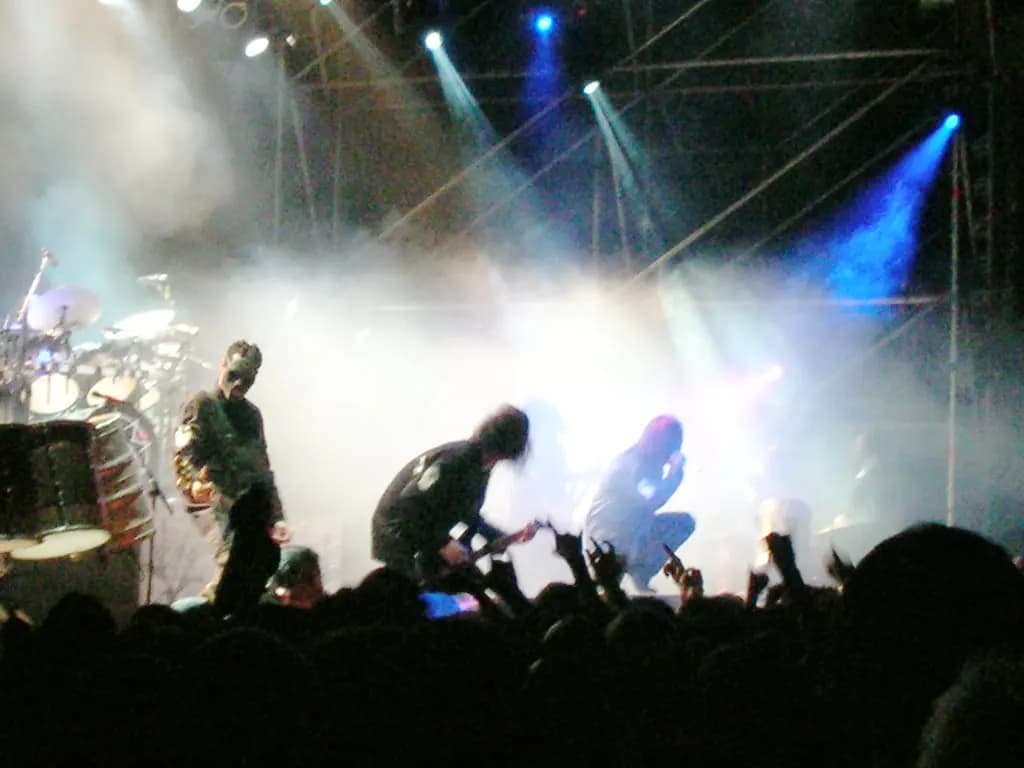
Producer Ross Robinson, who worked on early Korn, Limp Bizkit, and Slipknot records, shaped much of the sound and is often called the "godfather of nu metal." The big sales came in 1998–2001: Korn's Follow the Leader (1998) and Limp Bizkit's Significant Other (1999) both reached number one on the Billboard 200, Slipknot released its masked, nine-piece self-titled debut (1999), System of a Down's Toxicity (2001) also went to number one, and Linkin Park's Hybrid Theory (2000) became the best-selling album of 2001 in the US. It is now certified 12× platinum there.
The backlash was just as fast. Woodstock '99 tied the genre to chaos in the public mind, the market saturated with soundalike bands, and by 2003–2004 attention had shifted to metalcore, emo, and garage-rock revivalism. Nu metal spent about a decade as a punchline, then came back. A revival took hold from the late 2010s, both in heavy music (Tallah, Vended, Loathe) and in rap, where trap metal artists like Ghostemane and Scarlxrd rebuilt the formula from the hip-hop side. Linkin Park returned in 2024 with a new singer, Emily Armstrong, and the album From Zero.
Key Characteristics & Sound
Nu metal is easy to identify once you know the markers:
- Tempo: mid-paced, typically 90–130 BPM, often felt in half-time so the groove drags and bounces.
- Tuning: heavily down-tuned, on seven-string guitars or six-strings in drop C, drop B, or lower.
- Riffs: short, syncopated, and rhythmic more than melodic; palm-muted chugs on one or two notes.
- Solos: almost none, the clearest break from traditional metal.
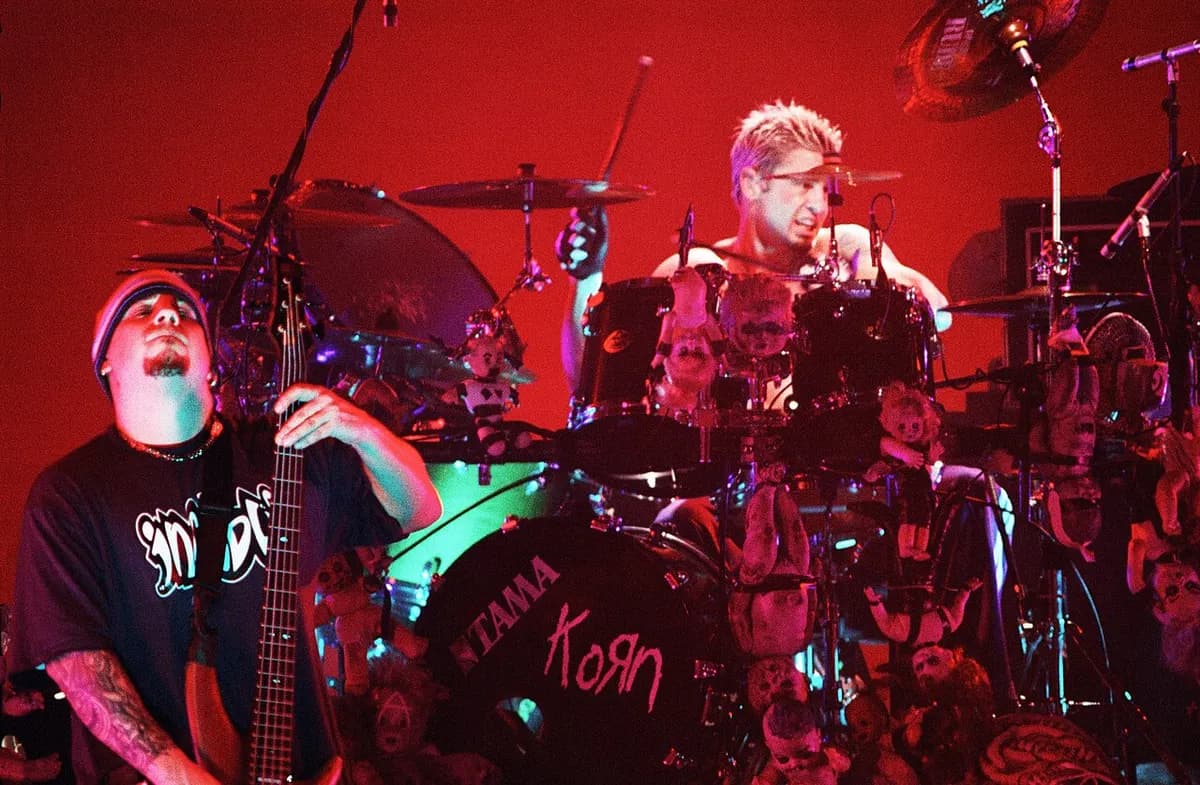
- Bass: unusually audible and expressive, sometimes slapped or run through effects (Korn's Fieldy is the template).
- Vocals: rapping, clean singing, and screaming inside the same song, often with a quiet-verse/big-chorus arc.
- Extras: turntable scratches, samples, and industrial synth layers.
Feel differs sharply across the genre's biggest names, which is why "nu metal" covers everything from party records to very aggressive ones:
| Band / style | Typical BPM | Feel |
|---|---|---|
| Korn (originators) | 85–120 | Detuned, uneasy, bass-forward |
| Limp Bizkit (rap metal) | 90–120 | Bouncy, party-oriented, DJ-led |
| Linkin Park (radio/electronic) | 95–135 | Polished, melodic, sample-driven |
| Slipknot (extreme end) | 100–190 | Percussive, chaotic, near-death metal |
| System of a Down (art/alt) | 100–170 | Erratic, folk-tinged, theatrical |
| Deftones (atmospheric) | 80–130 | Dreamy, heavy, shoegaze-adjacent |
Instruments & Production
The nu metal rig is a rock band plus a hip-hop studio:
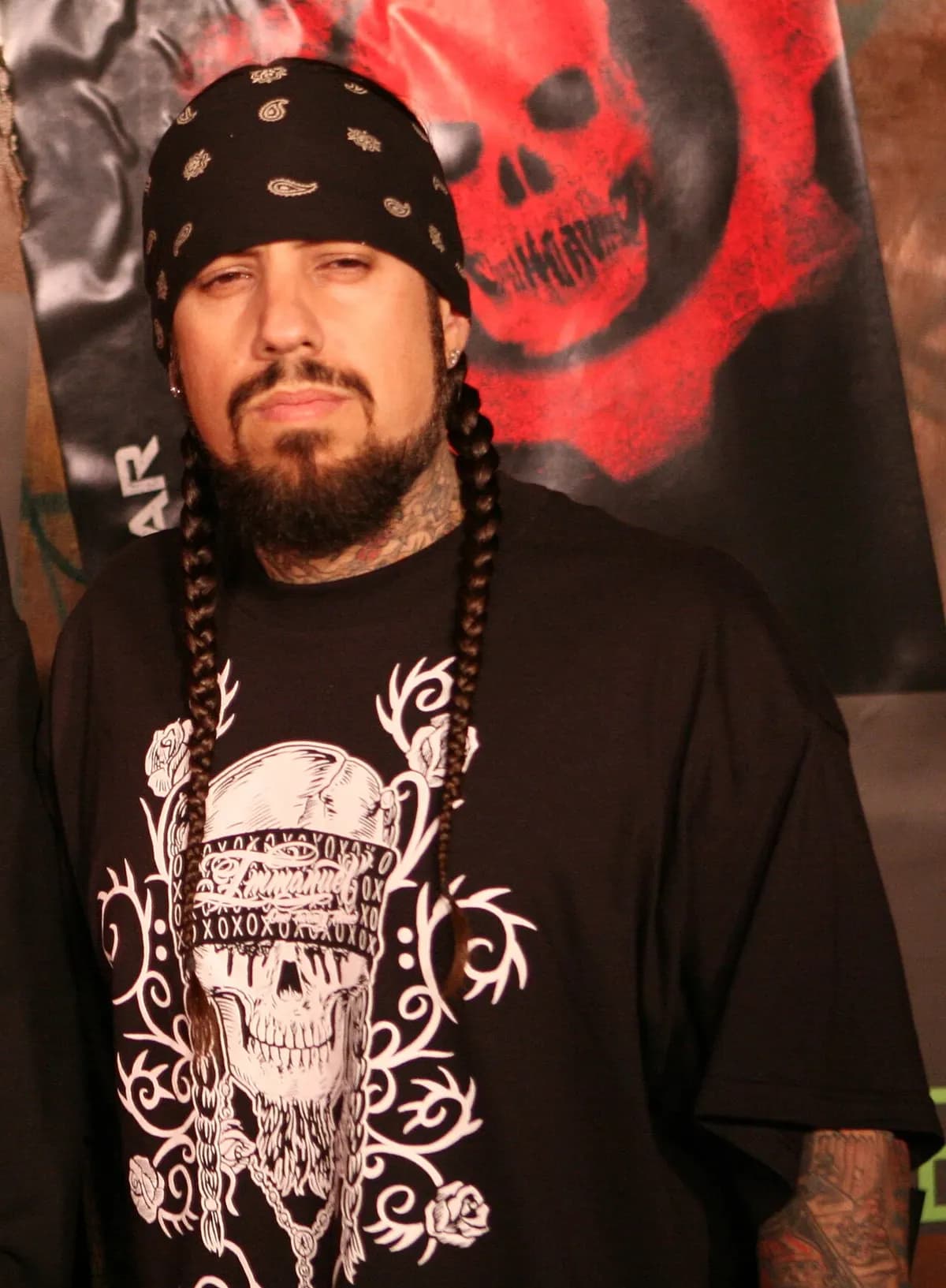
- Seven-string guitars: Ibanez sevens gave Korn a low B string and became the genre's signature instrument.
- Down-tuning: drop tunings for weight and for one-finger power chords that free the hand for rhythm.
- Five-string bass: pushed high in the mix, with clanky, midrange-heavy tones and slap techniques borrowed from funk.
- Turntables and samplers: Joe Hahn (Linkin Park) and DJ Lethal (Limp Bizkit) made the DJ a full band member.
- Extra percussion: Slipknot's two custom percussion rigs, including beer kegs struck with bats, added an industrial layer on top of the drum kit.
- Effects: talk boxes, wahs, pitch-shifted vocals, and heavy compression on drums for that flat, thudding punch.
Production is deliberately dense and modern-sounding: tight, gated drums, scooped guitar tone (heavy lows and highs, hollowed-out mids), and vocals mixed forward like a pop record. That polish is a large part of why nu metal crossed to radio and MTV while its heavier cousins stayed underground.
Subgenres & Adjacent Styles
Nu metal is itself a hybrid, so its strands are best described by what they lean toward:
- Rap metal: the rap-vocal end, where hip-hop delivery leads (Limp Bizkit, early Papa Roach, Rage Against the Machine as a forerunner).
- Alternative / atmospheric nu metal: moodier and more textural (Deftones, Chevelle).
- Industrial nu metal: synth- and sample-heavy, mechanical (Static-X, Orgy, Powerman 5000).
- Extreme nu metal: closest to death metal in aggression (Slipknot, Mudvayne).
- Post-grunge crossover: radio-friendly, melodic and less rhythmically loose (Godsmack, Staind, Disturbed).
- Trap metal / nu metal revival: the 2010s–2020s rebuild from the rap side (Ghostemane, Scarlxrd) and the metal side (Tallah, Vended).
At its borders nu metal blurs into metalcore (which brought back solos and breakdowns), grunge's loud-quiet dynamics, and mainstream hip-hop.
Notable Artists & Tracks
The canon is compact and well defined:
- Korn: "Blind," "Freak on a Leash," "Got the Life."
- Linkin Park: "One Step Closer," "In the End," "Numb."
- Slipknot: "Wait and Bleed," "Duality," "Psychosocial."
- System of a Down: "Chop Suey!," "Toxicity," "B.Y.O.B."
- Deftones: "My Own Summer (Shove It)," "Change (In the House of Flies)."
- Limp Bizkit: "Break Stuff," "Rollin'," "Nookie."
- Papa Roach: "Last Resort."
- Disturbed: "Down with the Sickness."
- Mudvayne: "Dig."
- Static-X: "Push It."
Start with "Freak on a Leash," "In the End," and "Chop Suey!" to hear the full spread from detuned unease to radio polish to art-metal theatre.
Nu Metal vs Metal vs Metalcore
All three are heavy guitar music, but they solve the "heavy" problem in different ways:
| Trait | Nu Metal | Traditional Metal | Metalcore |
|---|---|---|---|
| Era | 1994–2003, revived 2018+ | 1970s onward | Late 1990s onward |
| Tempo | 90–130 BPM, half-time feel | 100–200+ BPM | 120–200 BPM |
| Riffs | Syncopated, rhythmic, simple | Melodic, technical, fast | Melodic-death riffs + breakdowns |
| Solos | Rare or absent | Central | Occasional |
| Vocals | Rap, sing, scream in one song | Clean or powerful, often high | Scream verse, clean chorus |
| Outside influence | Hip-hop, funk, industrial | Blues, classical | Hardcore punk |
How AI Detects Nu Metal
A classifier reads nu metal from a specific combination: very low guitar fundamentals from down-tuning, a mid-tempo groove with strong syncopation and half-time drums, an unusually prominent bass, and a vocal track that changes character mid-song. The absence of sustained lead guitar is itself a signal: it pushes the model away from traditional metal and toward the nu metal cluster.
Because the genre borrows so openly, borderline tracks score across several labels at once: a rap-led verse pulls the reading toward hip-hop, a screamed breakdown toward metalcore. Try it on your own library with the Genre AI music genre detector, and read how AI music genre detection works for the mechanics behind the weighting.
Testing this genre in Genre AI ourselves, the cleanest Nu Metal readings come from tracks in the 90–125 BPM band that pair a detuned, palm-muted chug with an audible, clanky bass and a half-time backbeat. Push the tempo past 150 with blast-style drumming and the model drifts toward Death Metal; put a sung chorus over melodic-death riffing and it edges into Metalcore; drop the guitars out under a rapped verse and Hip-Hop climbs the list. Those near-neighbour scores are shown alongside the top result, so you can see how close the call was.