The ranchera (canción ranchera) is the classic Mexican song of personal feeling: a first-person lament or boast about love, betrayal, pride, drink, the homeland and the countryside, sung full-voice with sobs, held notes and the occasional grito. Its name comes from the rancho, the rural Mexico it idealises, but its classic form was shaped in the 20th century by radio, records and the singing charros of Mexican cinema.
Ranchera is a type of song, and the ensemble varies: it is most often played by a mariachi, but also by banda, norteño groups or a single guitar. And it expresses feeling; the Mexican story ballad is a different form, the corrido. This guide covers the history, the ranchera rhythms, the vocal style, the composers and singers, and how ranchera relates to its neighbours. Curious how a classifier hears it? Try a clip in our free AI music genre detector.
What Is Ranchera?
A ranchera is a strophic popular song, usually with a verse-and-refrain shape, written in the first person and addressed to a lover, a rival, a bottle or Mexico itself. The tone is direct and unguarded, and heartbreak is announced outright. Classic lyrics are full of pride in the face of defeat, as in José Alfredo Jiménez's "El Rey", whose singer has nothing left but still insists he is the king.
The ranchera belongs to the family of Mexican regional music, but it occupies a specific place within it. The son, the older dance form of mariachi, is rhythmic and instrumental at heart; the corrido narrates events; the bolero is a polished urban romance. The ranchera is the rural-sounding song of personal emotion, sung at full vocal power.
Most listeners meet ranchera through mariachi, and the two are often used interchangeably. Strictly, mariachi is the ensemble and ranchera is the song: a mariachi plays sones, huapangos, boleros and corridos as well as rancheras, and rancheras are also played by bandas, norteño groups and solo guitarists.
History & Origins
The ranchera's roots in rural folk song predate the Mexican Revolution (1910–1920), but its classic form took shape in the nationalism that followed it. In the 1920s and 1930s, as Mexico built a national identity around the countryside, urban audiences in Mexico City embraced songs that celebrated the ranch, the charro and the provinces. Radio carried them across the country, above all XEW, which went on the air in Mexico City on 18 September 1930 and by 1935 was broadcasting at 250 kW.
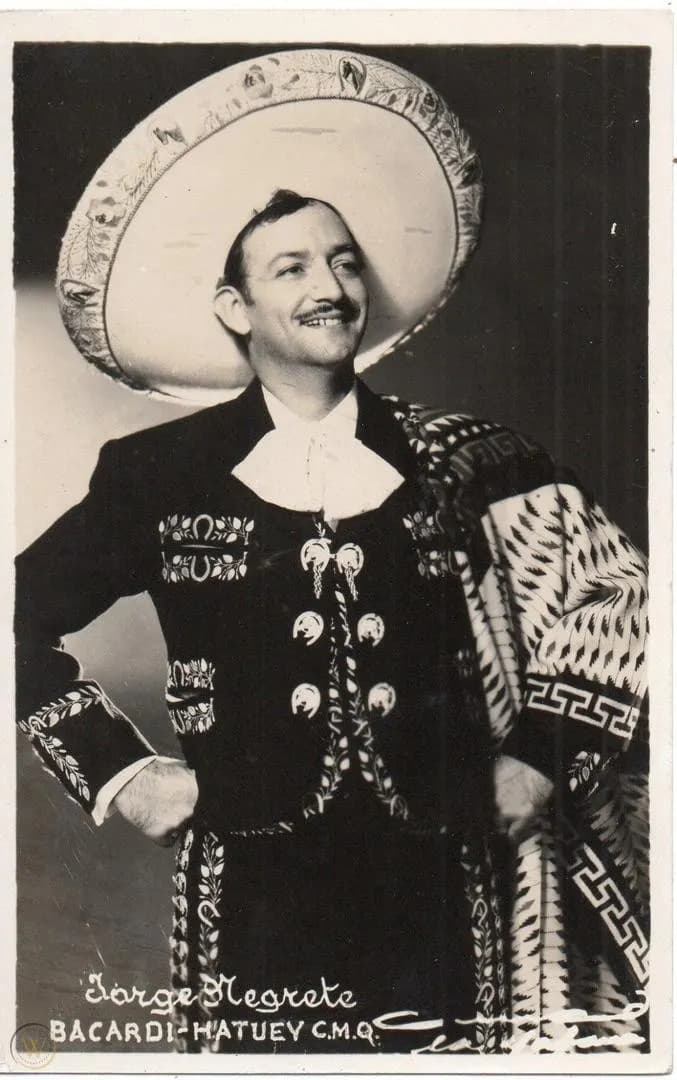
Cinema made it a phenomenon. The 1936 film Allá en el Rancho Grande, directed by Fernando de Fuentes and starring Tito Guízar, launched the comedia ranchera, a film genre of singing charros that dominated the Golden Age of Mexican cinema from the late 1930s to the 1950s. Its biggest stars were singers: Jorge Negrete, a baritone with operatic training whose name is tied to Chucho Monge's "México lindo y querido", and Pedro Infante, the warmer, more popular voice, who died when his plane crashed after take-off from Mérida on 15 April 1957.
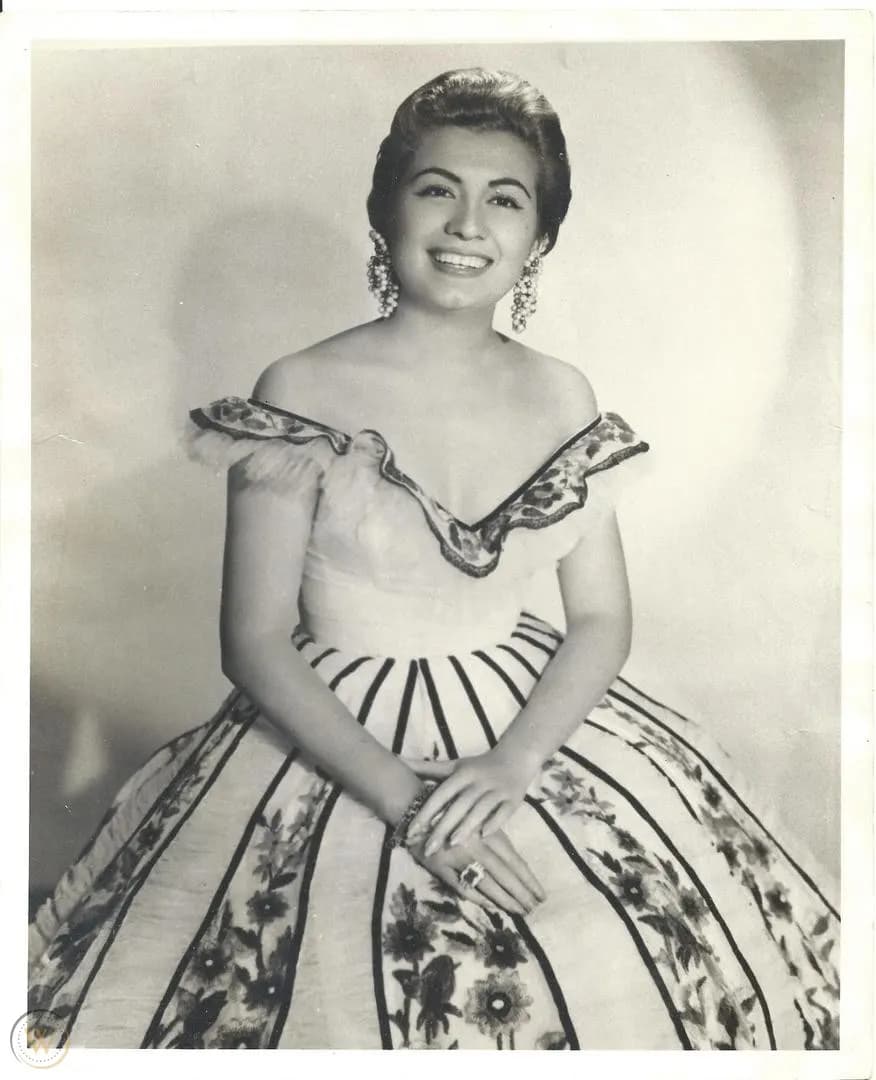
Lucha Reyes (1906–1944), from Guadalajara, is remembered as the pioneer of the bravío style, a forceful, defiant female ranchera voice at a time when women rarely sang with mariachis; many details of her life are disputed. After her came Lola Beltrán, Lucha Villa and Amalia Mendoza, and Chavela Vargas, who stripped rancheras down to voice and guitar and sang them with an intensity that won her a second career late in life.
The genre's most important songwriter was José Alfredo Jiménez (1926–1973), credited with more than a thousand songs, among them "El Rey", "Si nos dejan", "Ella", "Camino de Guanajuato" and "Paloma querida". His lyrics of drunken defiance and doomed love defined the ranchera's emotional vocabulary. Other key composers include Cuco Sánchez and Tomás Méndez, who wrote "Cucurrucucú paloma" in 1954 in the rhythm of a huapango; Lola Beltrán's recording made it a standard.
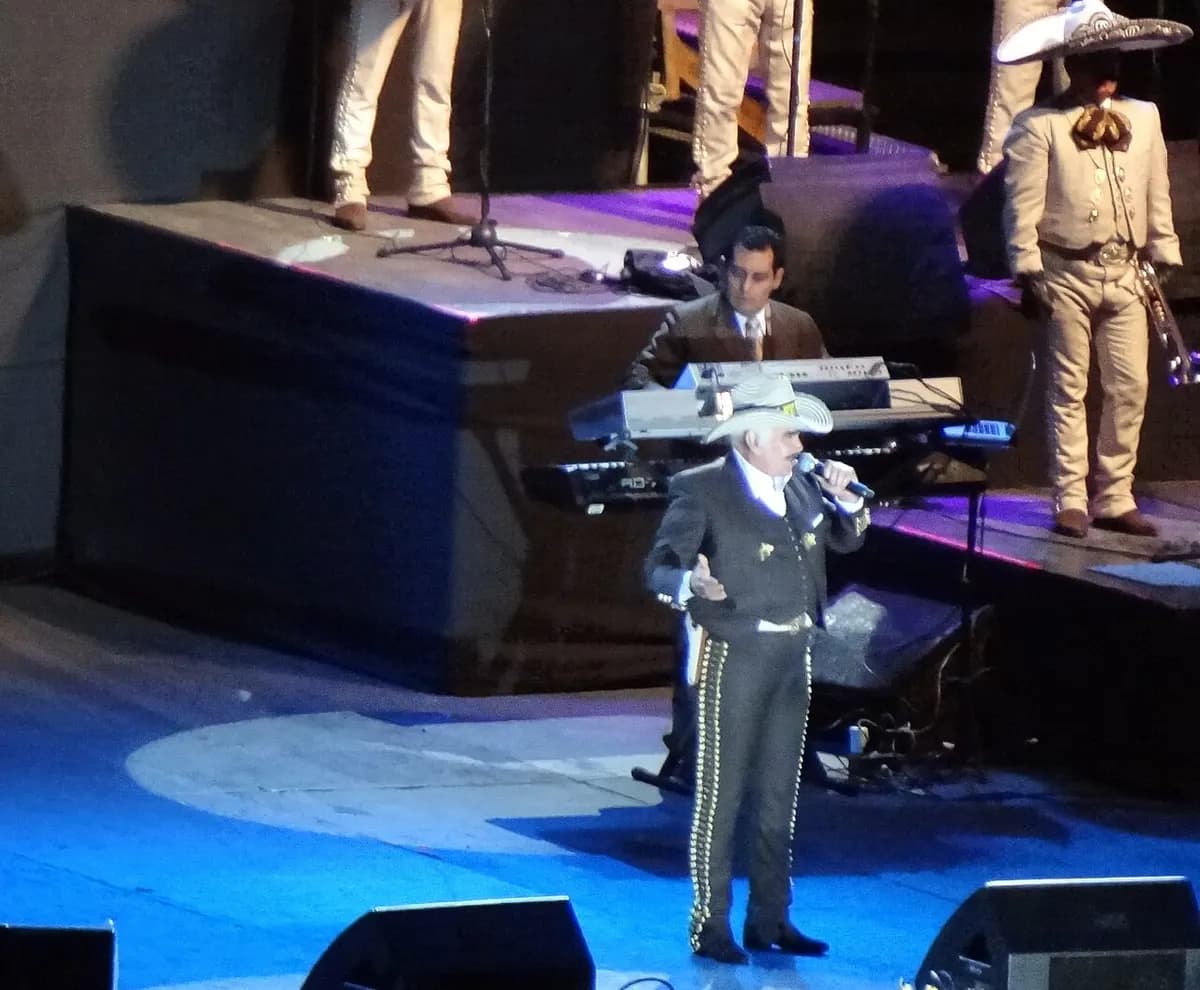
From the 1970s, Vicente Fernández (1940–2021) became the dominant ranchera singer of his era, with "Volver, Volver", written by Fernando Z. Maldonado in 1972, as his signature. The style also crossed borders. The Spanish singer Rocío Dúrcal met Juan Gabriel in 1977 and went on to record a series of albums of his songs with mariachi, and Linda Ronstadt's 1987 album Canciones de Mi Padre, sung entirely in Spanish, has been called the best-selling non-English-language album in American record history. Today singers such as Alejandro Fernández, Pepe Aguilar, Christian Nodal and Ángela Aguilar keep the ranchera alive alongside the newer corrido boom.
The Three Ranchera Rhythms
Rancheras have no fixed BPM; they are written at every speed from very slow to very fast. Musicians classify them instead by metre, and almost every ranchera falls into one of three:
| Type | Metre | Feel | Typical use |
|---|---|---|---|
| Ranchera valseada | 3/4 | Swaying waltz with a strong downbeat from the guitarrón or bass | Many of the best-known rancheras; songs of nostalgia and pride |
| Ranchera in 2/4 (lenta or polkeada / marcha) | 2/4 | Either slow, or a brisk polka bounce with off-beat strums | Livelier songs, boasts and party pieces in the fast version |
| Bolero ranchero | 4/4 | Slow, rubato-friendly, ballad pace | Heartbreak songs; the bolero-influenced style of Javier Solís |
Sound, Voice & Instruments
What makes a ranchera recognisable is above all the voice:
- Full chest voice and big range: rancheras are sung at full power, often in a high register for male singers.
- Long held notes and dramatic cadences: the singer stretches the climactic note of a phrase, slowing the band before the final chord.
- Sobs and breaks in the voice: a deliberately emotional, almost weeping delivery.
- The grito: the falsetto yell ("¡Ay ay ay!") from the singer, the band or the audience, usually during instrumental interludes.
- Simple harmony: mostly tonic, dominant and subdominant in major keys, with occasional minor-key songs for the darkest laments.
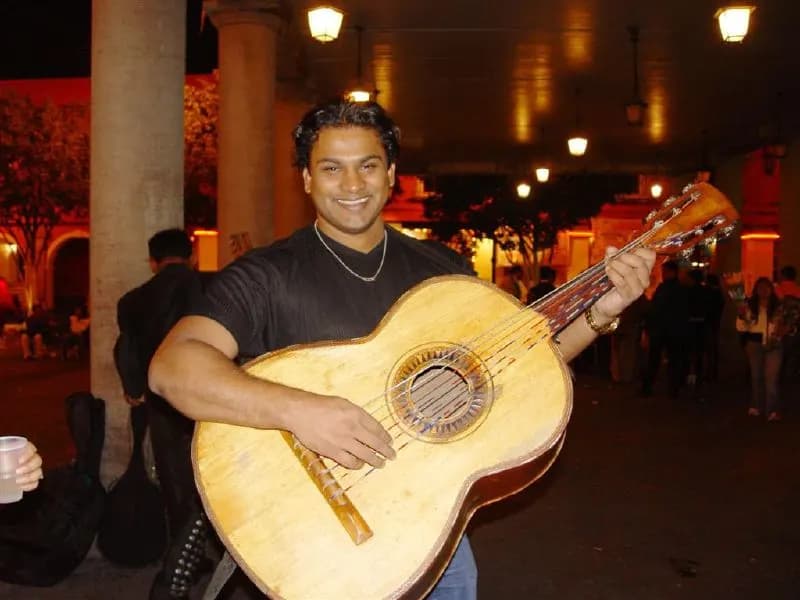
The instrumentation depends on the ensemble. With mariachi, violins and trumpets play the introduction and answer the vocal lines, while the vihuela and guitar strum the rhythm and the guitarrón supplies the bass. With banda, clarinets and brass take over, with tuba on the bass. With norteño, the accordion plays the fills. Solo guitar performances, in the Chavela Vargas manner, leave nothing but the voice and a few chords.
Key Singers, Composers & Songs
Where to start with ranchera:
| Artist | Role | Start with |
|---|---|---|
| José Alfredo Jiménez | Composer and singer | "El Rey", "Si nos dejan", "Paloma querida" |
| Jorge Negrete | Singer, Golden Age film star | "México lindo y querido" |
| Pedro Infante | Singer, Golden Age film star | His film and recording repertoire of the 1940s–50s |
| Lucha Reyes | Singer | The original bravío female ranchera voice |
| Lola Beltrán | Singer | "Cucurrucucú paloma" (a huapango) |
| Chavela Vargas | Singer | Stripped-down voice-and-guitar rancheras |
| Javier Solís | Singer, "El Rey del Bolero Ranchero" | Bolero ranchero recordings of the 1960s |
| Vicente Fernández | Singer | "Volver, Volver", "El Rey" |
| Rocío Dúrcal | Singer | Her albums of Juan Gabriel songs with mariachi |
| Linda Ronstadt | Singer | <em>Canciones de Mi Padre</em> (1987) |
Ranchera vs Mariachi, Corrido, Bolero & Country
- Ranchera vs mariachi: mariachi is the ensemble; ranchera is one of the main song types it plays.
- Ranchera vs corrido: the corrido tells a story in sequence; the ranchera expresses the singer's own emotions.
- Ranchera vs bolero: the bolero is a polished, urban romantic song with sophisticated harmony; the bolero ranchero borrows its slow pace but keeps the ranchera's rural, full-voiced delivery.
- Ranchera vs country: the two are often compared, since both idealise rural life and sing about heartbreak and drinking, and both grew with radio and film. Musically they are distinct: ranchera rests on mariachi or brass and a bel canto-like voice, country on guitars, fiddle and a conversational vocal.
- Ranchera vs banda: banda is a brass ensemble; many banda hits are rancheras arranged for winds.
How AI Detects Ranchera
To an audio model, a mariachi ranchera presents a dense, recognisable sound: violins and trumpets in close harmony, strummed vihuela and guitar, a plucked guitarrón bass, a 3/4 or 2/4 pulse and a powerful Spanish-language voice. A banda ranchera swaps the strings for brass. What an audio model cannot hear is the difference between a ranchera, a son and a corrido played by the same ensemble, because those distinctions rest on form and lyrics. Run a clip through the Genre AI music genre detector to see where it lands.
Genre AI's production taxonomy has no Ranchera class, and the coarse Latin label has no fine subgenres. That matters because the model gives priority to any coarse label that does have fine subgenres whenever one appears among its top five, so Latin is likely to win only when no such family registers. One detail of the prompts pulls in a specific direction: the word "ranchera" is among the text descriptions of the fine label Modern Era under Classical, together with "grupera", "llanera" and "habanera". A slow ranchera or bolero ranchero carried by violins and a sustained, trained voice may therefore come back as Classical, Modern Era. A sparse voice-and-guitar performance may read as Folk / Country, most likely Country. A banda arrangement may lean toward Jazz, Big Band / Swing, whose prompts include "brass band" and "norteño banda". Alternatives are always sibling labels inside the winning family, so a Classical answer will list other Classical periods, not Latin.