Folk metal is heavy metal fused with the traditional music of a particular place. Distorted guitars, bass and drums play alongside fiddles, bagpipes, whistles, hurdy-gurdies, accordions or regional instruments such as the Finnish kantele and the Mongolian morin khuur, and the melodies come from local dance tunes and songs, or imitate them. Lyrics usually draw on that region's mythology, history and language.
Because it is defined by what it borrows, folk metal sounds very different from country to country: Irish reels in one band, Finnish polka-like humppa in another, Gaulish-language Celtic in a third. This guide covers its origins in early-1990s England and Scandinavia, the scenes that followed, the instruments, the subgenres from Viking to pirate metal, and how it differs from plain folk and folk rock. Want to know what a classifier hears in fiddle-over-riffs? Run a clip through our free AI music genre detector.
What Is Folk Metal?
The central idea is simple: a metal band plays a folk melody, or a folk musician joins a metal band. In practice the fusion takes many forms. Some bands use real traditional instruments as permanent members of the line-up; others play folk melodies on guitar or keyboard; some alternate acoustic folk passages with metal sections, while others play both at once. The metal side can be anything from power metal to black or melodic death metal, which is why vocals range from clean choirs to harsh growls.
What unites the style is a sense of place. Folk metal bands sing about their own ancestors' gods, wars, sagas and drinking traditions, often in their own language or a historical one. That also separates it from folk music in the narrow sense, where the songs are passed down orally: folk metal bands mostly write new songs in an old style, and they write them for festival stages.
The mood is broader than in most metal. Folk metal can be solemn and epic, but it is best known for its party wing: songs about beer, vodka and trolls, written for crowds to dance to. At a Korpiklaani or Finntroll show, polka-style dancing and circle pits happen in the same crowd.
History & Origins
The groundwork was laid in rock. In the late 1960s and 1970s British folk rock bands such as Fairport Convention and Steeleye Span, and Jethro Tull with Ian Anderson's flute, showed that traditional tunes could be electrified, and Led Zeppelin brought folk colour into hard rock, while Thin Lizzy's twin guitars borrowed directly from Irish music. In metal, Iron Maiden's harmonised melodies often had a folk shape.
The genre itself is usually traced to Skyclad, formed in England in 1990 by singer Martin Walkyier after he left the thrash band Sabbat. On their debut The Wayward Sons of Mother Earth (1991), session player Mike Evans added violin to several thrash tracks, and on later albums the fiddle became central. In Sweden, Bathory, Quorthon's project and one of the founders of black metal, had already turned towards slow, epic, Norse-themed records with choirs and folk-like melodies on Blood Fire Death (1988) and Hammerheart (1990), which are usually named as the starting point of Viking metal.
The mid-1990s added national variants. In Ireland, Cruachan combined black metal with tin whistle, bodhrán and Irish legends on Tuatha na Gael (1995). Finland's Amorphis built Tales from the Thousand Lakes (1994) on the national epic, the Kalevala, with folk-styled melodies over melodic death metal. Norway's Enslaved, Sweden's Månegarm and the German one-man project Falkenbach developed the Viking and pagan side. In Germany, a distinct medieval rock and metal scene formed around bands such as In Extremo and Subway to Sally, using bagpipes, shawms and hurdy-gurdies.
The late 1990s and 2000s made folk metal a festival genre, with Finland at the centre. Finntroll fused black metal with humppa, a fast Finnish dance music, and sang in Swedish about trolls; "Trollhammaren" (2004) became one of the scene's best-known songs. Ensiferum took an epic, melodic-death direction; Korpiklaani turned the party wing into an international brand with accordion and fiddle and songs such as "Vodka" (2009); Turisas called their style "battle metal", the title of their 2004 debut. Switzerland's Eluveitie brought hurdy-gurdy, bagpipes and lyrics in a reconstruction of the extinct Gaulish language to melodic death metal on Slania (2008). Russia's Arkona, the Faroe Islands' Týr, Israel's Orphaned Land and Scotland's pirate-metal band Alestorm took the formula to other regions and other folk traditions.
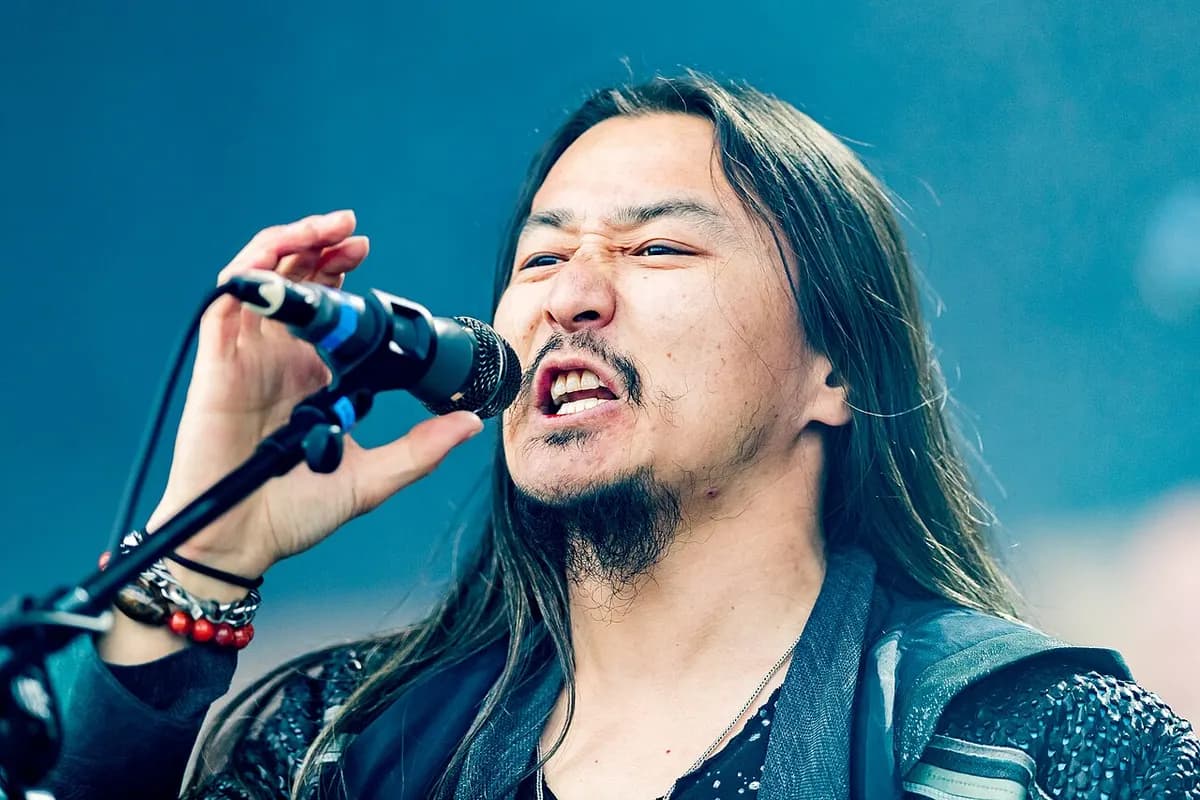
The most visible recent example came from Mongolia. The Hu combined throat singing, the horsehead fiddle (morin khuur) and the tovshuur lute with heavy rock and metal rhythms; their videos for "Yuve Yuve Yu" and "Wolf Totem", posted in autumn 2018, had tens of millions of YouTube views within a year. In April 2019 "Wolf Totem" topped Billboard's Hard Rock Digital Song Sales chart, and their debut album The Gereg followed later that year.
Key Characteristics & Sound
Typical features:
- Tempo: very wide, from slow, epic Viking material to fast humppa and polka-style dance songs.
- Melody: folk modes (Dorian and Mixolydian are common in Celtic-influenced bands), pentatonic melodies in Asian folk metal, and tunes that follow the phrasing of reels, jigs and polkas.
- Rhythm: metal drumming that adopts folk dance meters: 6/8 jig feels, oom-pah polka patterns, galloping triplets.
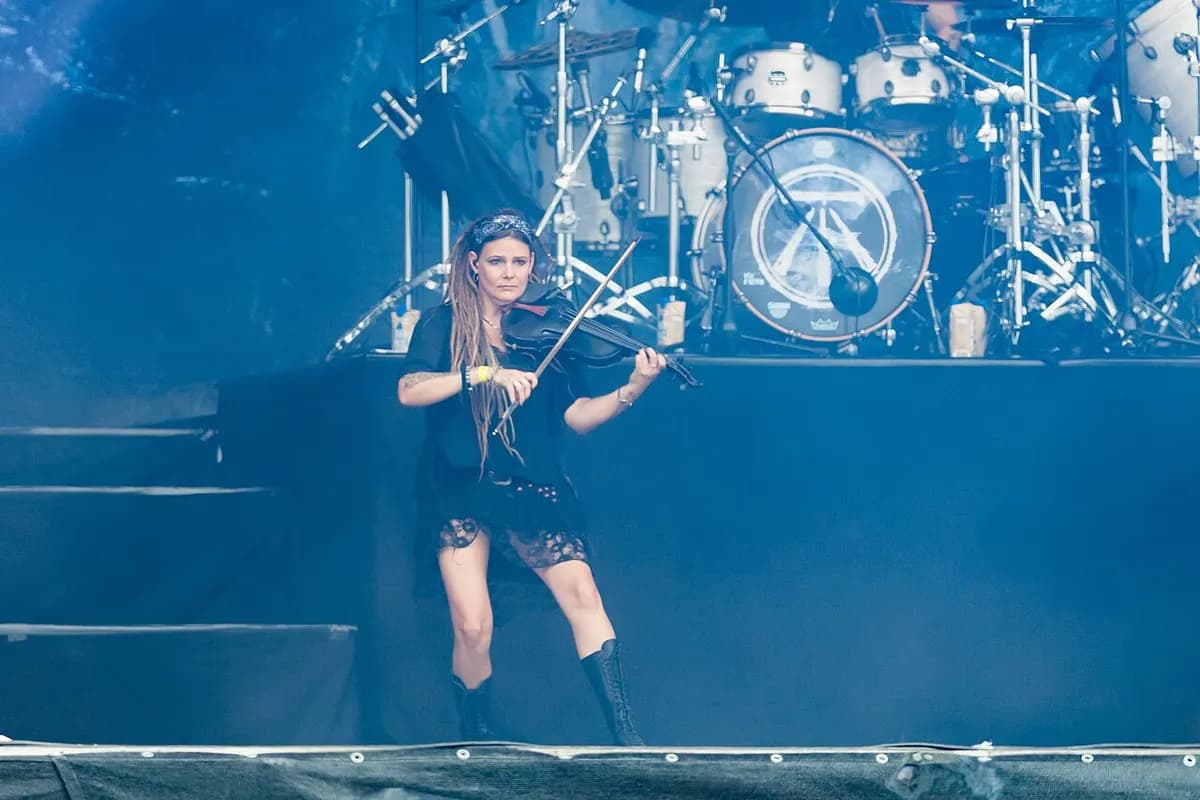
- Lead instruments: fiddle, whistle, flute, bagpipes, accordion or hurdy-gurdy taking the melody that a lead guitar would play in other metal.
- Vocals: anything from harsh growls and shrieks to clean folk singing, choral chants and, in Mongolian and Tuvan-influenced bands, throat singing.
- Language: frequent use of native or historical languages, among them Finnish, Swedish, Irish, Faroese, Gaulish and Mongolian.
- Themes: mythology, pre-Christian religion, sagas, battles, nature and drinking.
| Instrument | Origin | Role in the band | Heard in |
|---|---|---|---|
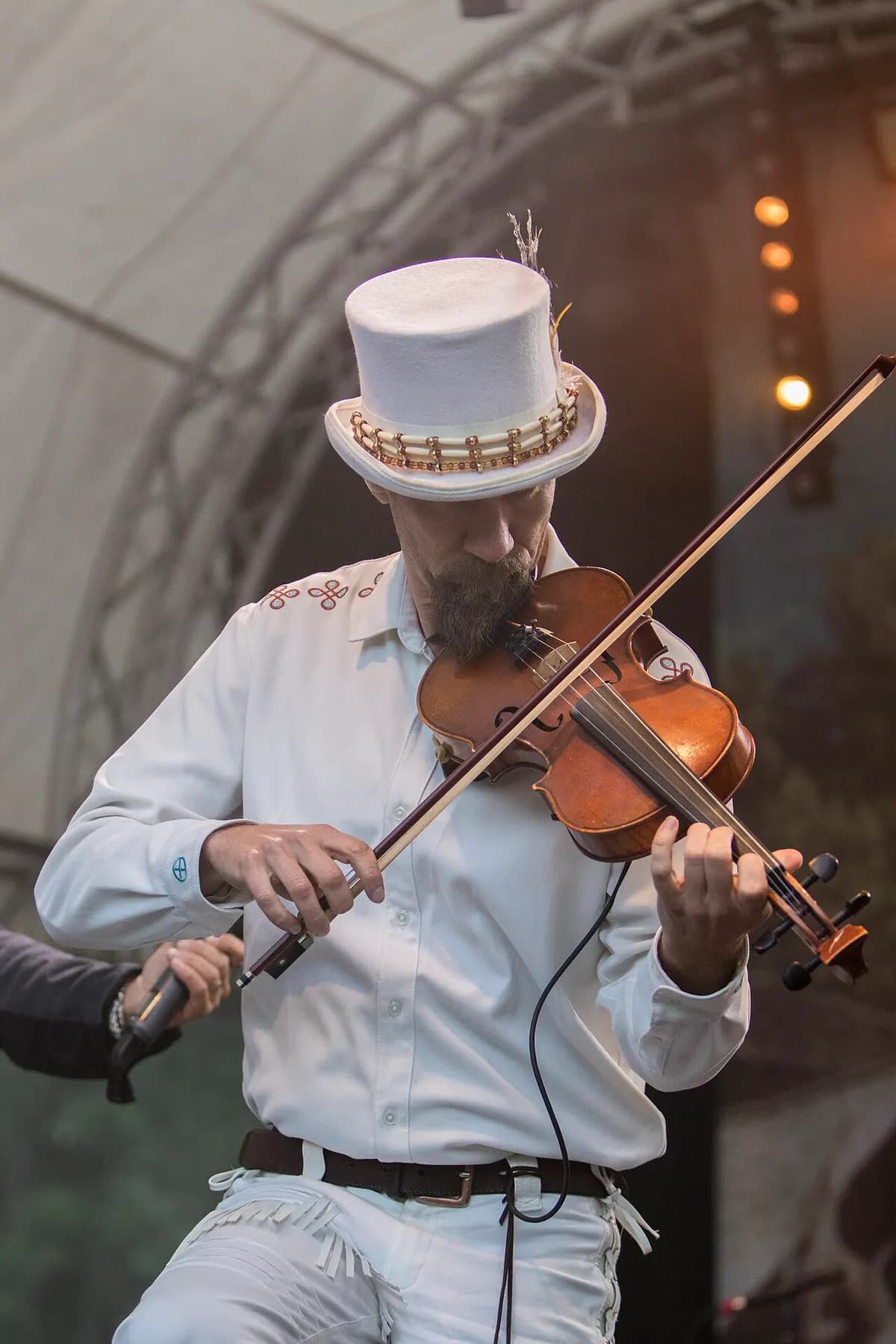
| Fiddle / violin | Europe-wide | Melodic lead, doubling riffs | Skyclad, Korpiklaani, Ensiferum |
| Bagpipes | Scotland, Ireland, Galicia, Central Europe | Lead melody, drones | Eluveitie, In Extremo |
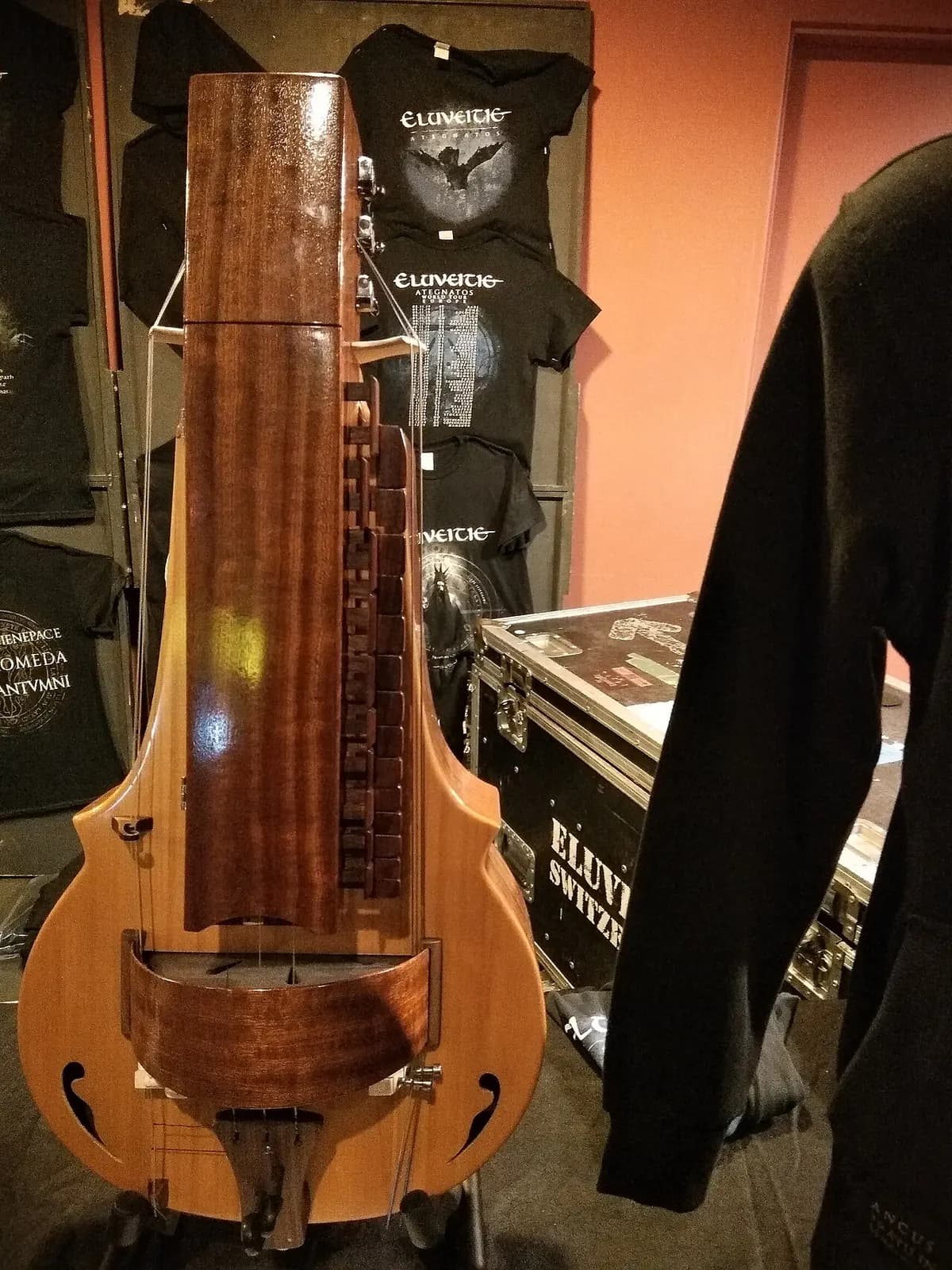
| Hurdy-gurdy | Medieval Europe | Drone and melody | Eluveitie, Subway to Sally |
| Tin whistle / flute | Ireland, Britain | High lead lines | Cruachan, Eluveitie |
| Accordion | Finland, Eastern Europe | Dance rhythm and melody | Korpiklaani, Finntroll |
| Kantele | Finland, Karelia | Plucked colour | Finnish bands, occasional |
| Morin khuur | Mongolia | Bowed lead, drone | The Hu |
Instruments & Production
Folk metal is one of the hardest metal styles to mix, because acoustic instruments are quiet and distorted guitars are loud:
- Close-miked and pickup-equipped acoustic instruments: fiddles, hurdy-gurdies and whistles are amplified with contact pickups or clip-on microphones so they survive on a festival stage.
- Keyboard substitutes: many bands, especially early on, played folk melodies on synthesiser accordion, flute or string patches instead of hiring musicians.
- Guitars that leave room: rhythm guitars often play simpler power-chord patterns so that the folk instrument can carry the melody, sometimes doubling it an octave below.
- Large line-ups: seven or eight members is common, and Eluveitie has usually had eight or more.
- Gang vocals and chants: several voices recorded together so the chorus sounds like a tavern crowd.
Production ranges from raw, black-metal-influenced recordings to polished, modern metal mixes. Finnish bands such as Ensiferum and Finntroll recorded for Spinefarm, while Nuclear Blast released Eluveitie and Korpiklaani, and package tours such as Paganfest took the scene to Europe and North America.
Subgenres & Scenes
- Celtic metal: Irish, Scottish and Gaulish traditions. Examples: Cruachan, Primordial, Eluveitie.
- Viking metal: epic, slow-to-mid tempo, Norse mythology. Examples: Bathory's Hammerheart, Enslaved, Amon Amarth (closer to melodic death metal in sound).
- Pagan metal: pre-Christian religion and nature, often with black metal roots. Examples: Moonsorrow, Arkona, Primordial.
- Humppa and party folk metal: fast, dance-based, beer and vodka. Examples: Finntroll, Korpiklaani.
- Medieval metal: German bands with bagpipes, shawms and Middle High German lyrics. Examples: In Extremo, Subway to Sally, Saltatio Mortis.
- Pirate metal: sea shanties and accordion over power metal. Examples: Alestorm, with Running Wild's pirate-themed heavy metal of the late 1980s as a forerunner.
- Oriental metal: Middle Eastern scales and instruments. Examples: Orphaned Land, Myrath; related in mood to klezmer and other modal traditions.
- Asian folk metal and rock: The Hu (Mongolia), Chthonic (Taiwan), Wagakki Band (Japan).
Key Bands & Albums
A starting list:
- Skyclad: The Wayward Sons of Mother Earth (1991).
- Bathory: Hammerheart (1990).
- Amorphis: Tales from the Thousand Lakes (1994).
- Cruachan: Tuatha na Gael (1995).
- Finntroll: Nattfödd (2004), "Trollhammaren".
- Ensiferum: Ensiferum (2001).
- Korpiklaani: Spirit of the Forest (2003); "Vodka" from Karkelo (2009).
- Eluveitie: Slania (2008).
- Týr: Eric the Red (2003).
- Alestorm: Captain Morgan's Revenge (2008).
- Orphaned Land: Mabool (2004).
- The Hu: The Gereg (2019).
| Region | Tradition borrowed | Key bands | Typical metal base |
|---|---|---|---|
| England | English and Celtic folk | Skyclad | Thrash |
| Ireland | Irish traditional music | Cruachan, Primordial | Black metal |
| Finland | Humppa, polka, Kalevala songs | Finntroll, Korpiklaani, Ensiferum | Black / melodic death / power |
| Switzerland | Celtic, Gaulish reconstruction | Eluveitie | Melodic death metal |
| Germany | Medieval European music | In Extremo, Subway to Sally | Hard rock / metal |
| Faroe Islands | Faroese ballads and chain dance | Týr | Power / heavy metal |
| Mongolia | Throat singing, morin khuur | The Hu | Heavy rock / metal |
Folk Metal vs Folk, Folk Rock and Celtic Music
Folk music in the broad sense is acoustic and tradition-based, from ballad singers to the 1960s revival. Folk rock electrified it with drums and electric guitars but kept rock's moderate volume and clean or lightly driven tones. Celtic music is the living instrumental and song tradition of Ireland, Scotland, Brittany and Galicia, much of which folk metal bands borrow from. Folk metal adds high-gain guitars, double-kick drums and often harsh vocals.
A quick test: if the drums and guitars could be removed and the song would still stand as a traditional tune, and the guitars are heavily distorted, it is folk metal. If the guitars are clean or lightly overdriven, it is folk rock. For more on the folk family, see our country vs folk comparison.
How AI Detects Folk Metal
Folk metal gives a classifier conflicting evidence by design. The rhythm section and distorted guitars produce the dense, wideband energy of metal, while fiddle, whistle, bagpipe and accordion produce bright, tonal, narrow-band lines associated with traditional and acoustic music. The balance shifts from band to band and also within a single song: an acoustic intro with whistle and bodhrán can sound purely traditional, while the full-band chorus sounds plainly metal.
Genre AI has no folk metal label, so the answer comes from neighbouring labels: on a full-band chorus most likely a Metal subgenre (Heavy Metal, Black Metal or Death Metal, depending on the vocals and guitars), on a lighter passage possibly Folk Rock under Rock, or Folk under Folk / Country. Test both an acoustic and a full-band passage in the Genre AI music genre detector to see where the reading switches.
Genre AI has no folk metal label. On full-band sections the likely answer is one of the Metal subgenres: Death Metal for melodic-death bands such as Eluveitie, Black Metal for Finntroll's shrieked vocals, Heavy Metal for clean-sung, power-metal-style songs. The most likely confusion is with Folk Rock under Rock, or Folk under Folk / Country, because acoustic intros, fiddle and accordion leads and lightly distorted dance sections sound more like traditional music than like metal. Party-oriented bands such as Korpiklaani, with accordion-led songs, are the most likely to land outside Metal. Mongolian throat singing is unlikely to produce an Asian result: that label has no subgenres, and the classifier prefers Metal or Rock whenever either is among its top five guesses.