The corrido is the narrative ballad of Mexico: a strophic song that tells a story (a battle, an outlaw, a horse race, a migrant crossing, a drug shipment) in plain rhymed verses over a simple waltz or polka rhythm. It is defined by its form, and for more than a century it has been sung by whatever ensemble was popular at the time, from a lone guitarist in the Revolution to accordion-led norteño groups, Sinaloan brass bands and, since 2019, the acoustic-guitar-and-trap hybrid known as corridos tumbados.
This guide covers what makes a song a corrido, where the form came from, how it sounds in each of its eras, the narcocorrido controversy, the artists who defined it, and how it differs from its neighbours: the sung ranchera, the ensemble tradition of mariachi and the brass sound of banda. To hear how a classifier reads a corrido, drop a clip into our free AI music genre detector.
What Is a Corrido?
A corrido is a story song. Its verses, usually four lines of eight syllables with the second and fourth lines rhyming, move through a narrative in sequence. The melody repeats unchanged from verse to verse, so the listener follows the words. The name comes from the Spanish verb correr, "to run": the song runs straight through its tale.
Traditional corridos reuse a set of formulas that make the form easy to recognise even on paper:
- An opening call that names the date, the place or the hero: "On the eleventh of the month…", "Listen, gentlemen, to what happened…".
- A narrated story, often with quoted dialogue between the characters.
- A moral or reflection near the end.
- A despedida, the farewell verse, classically beginning "Ya con esta me despido" ("With this I take my leave").
Because the corrido is defined by its words and structure, the same song can be played by a mariachi, a norteño group, a banda or a single guitar. That is the key distinction from mariachi and banda, which are ensembles, and from the ranchera, which is a lyrical song of feeling with no story to follow. In streaming and radio terms, corridos sit inside the broad "regional Mexican" category, alongside norteño, banda and mariachi.
History & Origins
Scholars trace the corrido to the Spanish romance, the narrative ballad brought to the Americas in the colonial era, blended with local song traditions. Ballads of this kind circulated in Mexico in the 19th century, and along the Texas–Mexico border the form was already established by the century's end.
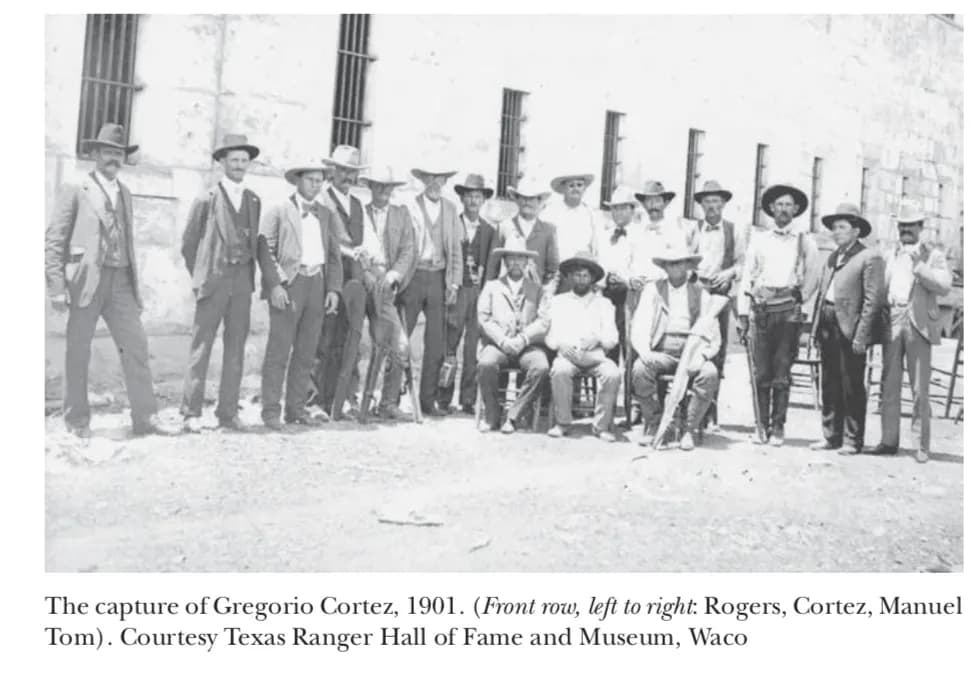
The best-known early border corrido tells of Gregorio Cortez, a Tejano farmer who shot Sheriff W. T. Morris in June 1901 after a mistranslated exchange and then evaded a manhunt for about ten days. A jury later acquitted him of Morris's murder. The folklorist Américo Paredes made that ballad the subject of his classic study With His Pistol in His Hand (1958), which framed the border corrido as a song of resistance and is still the standard reference on the subject.
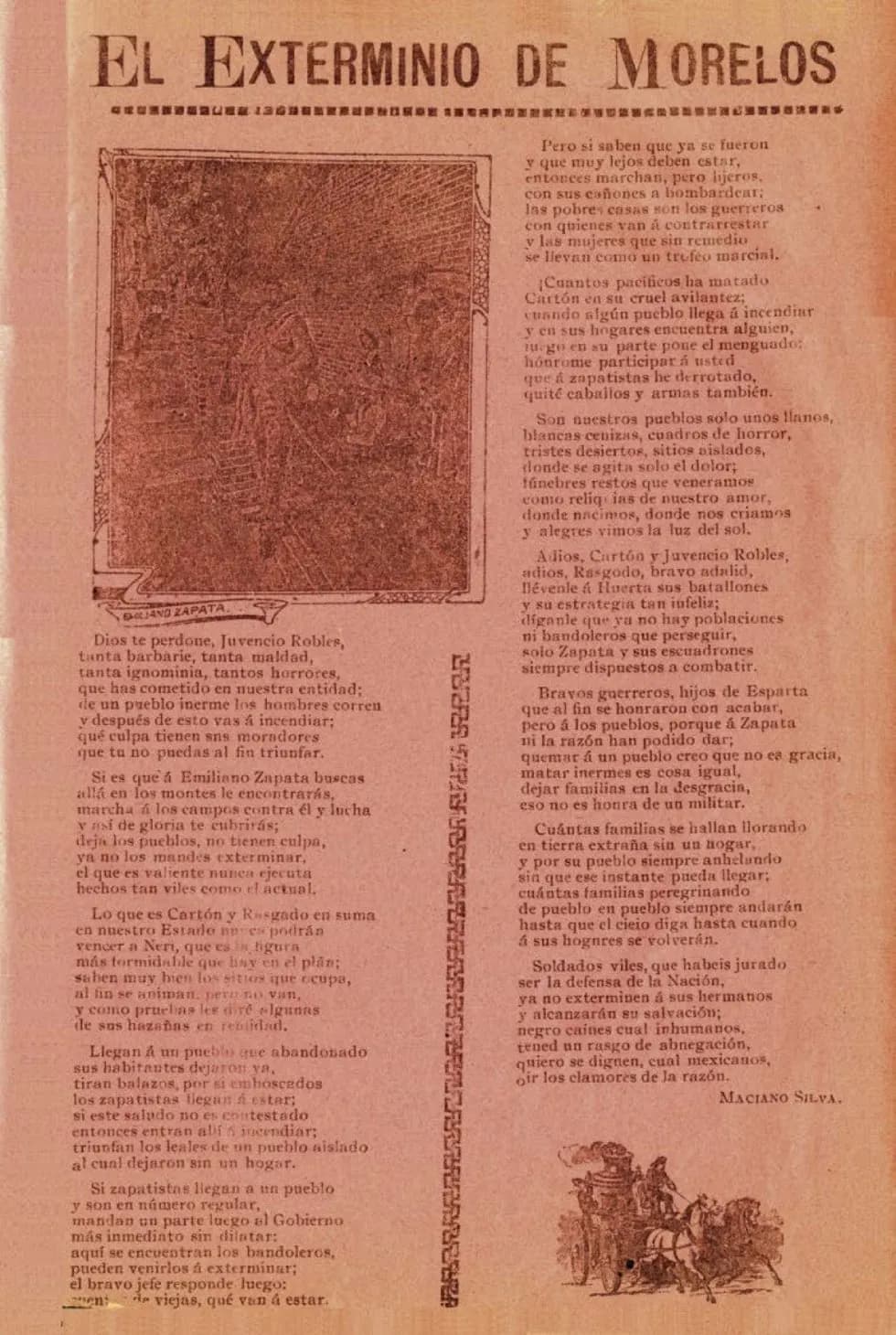
The form's most productive period was the Mexican Revolution (1910–1920). Corridos functioned as news and propaganda, printed on cheap broadsheets and sung in markets and military camps. Songs about Pancho Villa, Emiliano Zapata and the soldaderas — "La Adelita" is the most famous song of the period — remain the best-known songs of the period.
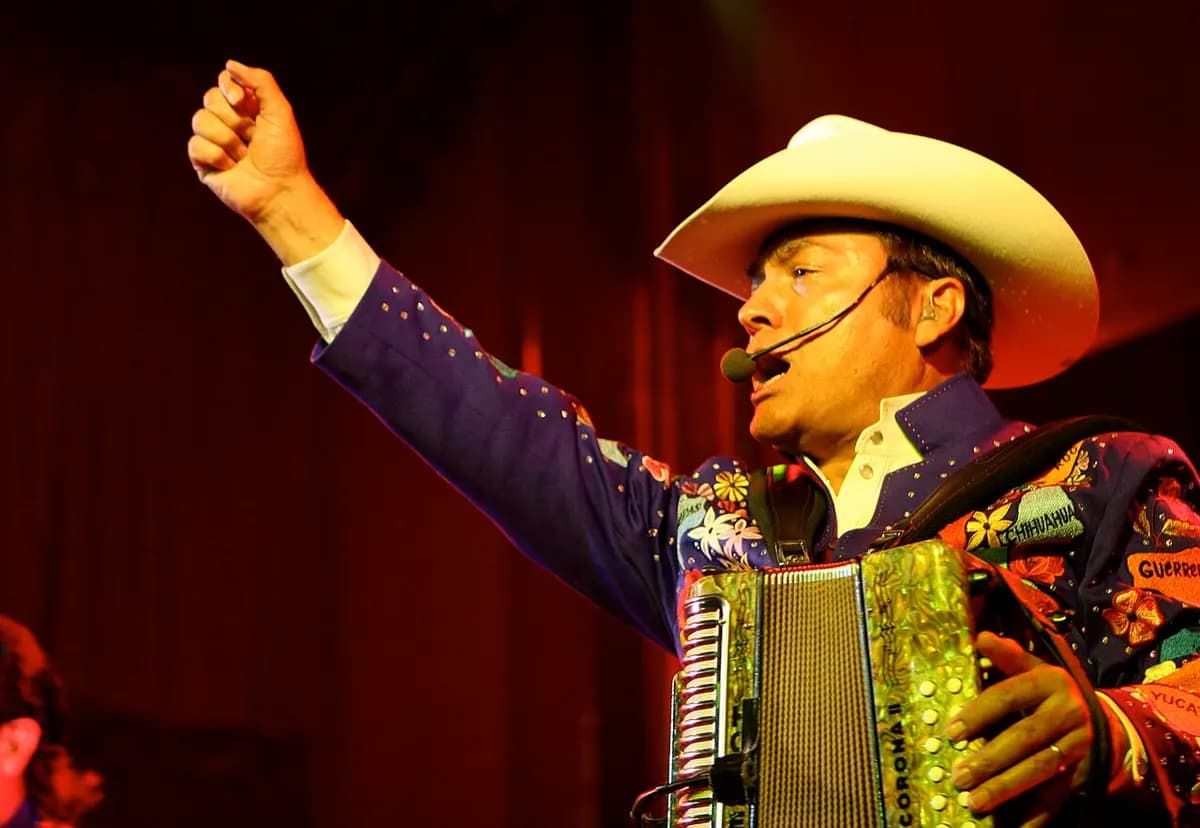
As radio, records and film spread after the 1930s, corridos entered the repertoire of mariachis and of the singing stars of Mexican cinema. In the north, they became the core material of norteño music, the accordion-and-bajo-sexto sound of the border. From the 1970s, Los Tigres del Norte, a family group from Sinaloa based in San Jose, California, recorded corridos about smuggling and migration; "Contrabando y Traición" (written in 1972, on their 1974 album of the same name) is the usual starting point of the narcocorrido. In the late 1980s and early 1990s, Chalino Sánchez, a Sinaloan migrant in Los Angeles who wrote made-to-order corridos for paying clients, gave the style a rawer voice; he was shot dead in Culiacán in 1992, and most of his catalogue has been reissued and repackaged since.
Around 2008–2010 came the violent, brass-heavy corridos alterados of the "Movimiento Alterado", launched by the Los Angeles label Twiins with songs about the cartel war in Culiacán. In October 2019 a teenage singer from Hermosillo, Natanael Cano, released an album called Corridos Tumbados that fused requinto guitar with the slang, attitude and vocal delivery of trap. A remix of his earlier song "Soy el Diablo" with Bad Bunny, released a week before the album, took the sound to Bad Bunny's audience. By 2023, corridos tumbados and their close relatives, led by Peso Pluma, Junior H, Fuerza Regida and Eslabon Armado, were topping streaming charts, and Eslabon Armado and Peso Pluma's "Ella Baila Sola" peaked at number 4 on the US Billboard Hot 100, the first regional Mexican song to reach its top ten.
Sound, Rhythm & Instruments
Musically the corrido is simple: a few chords, usually the tonic, dominant and subdominant in a major key, a melody that repeats for every verse, and a steady rhythm. Instrumental breaks on accordion, requinto guitar or brass separate the verses and give the singer room to breathe. Corridos have no fixed BPM, but they fall into two rhythmic families that set the pulse:
- Waltz time (3/4): the older and more solemn feel, common in Revolution-era and dramatic corridos.
- Polka time (2/4): the brisk, bouncing norteño feel inherited from the Central European dances brought to northern Mexico and Texas in the 19th century.
Corridos tumbados keep the acoustic guitars but loosen the rhythm into a lilting, swung pattern, often heard as a compound or triplet feel, with a laid-back, half-spoken vocal closer to rap than to the ranchera belters.
| Era / style | Typical ensemble | Rhythm & feel | Vocal style |
|---|---|---|---|
| Revolutionary & traditional | Voice and guitar; later mariachi | 3/4 waltz or 2/4, steady | Plain narrative singing, often in duet |
| Norteño corrido | Diatonic accordion, bajo sexto, bass (tololoche or electric), drums | 2/4 polka, brisk | Nasal, high duet harmonies in thirds |
| Banda corrido | Sinaloan brass band: clarinets, trumpets, trombones, tuba, tambora | 2/4 or 3/4, heavy and loud | Strong solo voice over brass |
| Corridos alterados (late 2000s) | Banda or norteño, often both | Fast 2/4, aggressive | Hard, declamatory |
| Corridos tumbados (2019–) | Requinto, 12-string acoustic, bass (tuba or upright), sometimes 808s | Lilting, swung, mid-tempo | Relaxed, rap-inflected, slang-heavy |
Subgenres & Themes
Corridos are usually classified by subject as much as by sound:
- Revolutionary corridos: songs of the 1910s about generals, battles and soldaderas; the historical heart of the form.
- Border and heroic corridos: stories of men who stood up to authority, like "El Corrido de Gregorio Cortez".
- Corridos of migration: crossings, deportations and life in the United States; Los Tigres del Norte's "La Jaula de Oro" is the classic example.
- Horse and rodeo corridos: races, horses and ranch life, a long-standing rural theme.
- Narcocorridos: songs about smugglers and cartel figures, from Los Tigres del Norte's "Contrabando y Traición" in the 1970s to the present.
- Corridos alterados: the explicitly violent, militarised wave of the late 2000s and early 2010s.
- Corridos tumbados / bélicos: the trap-influenced acoustic style of Natanael Cano and Peso Pluma, plus its harder "bélico" branch.
The narcocorrido is the most debated part of the tradition. Defenders call it journalism from below, the role corridos played during the Revolution; critics say it glorifies cartel violence. Several Mexican states and municipalities have restricted narcocorrido performances at public events, and the argument has come back with each new wave, most recently corridos tumbados and bélicos.
Key Artists & Recordings
A listening path through a century of corridos:
| Artist | Era | Why they matter |
|---|---|---|
| Los Alegres de Terán | 1940s–1970s | Pioneering norteño duet that set the accordion-and-harmony template for corridos |
| Antonio Aguilar | 1950s–1990s | Film and ranchera star who recorded and filmed many classic corridos |
| Los Tigres del Norte | 1970s–present | "Contrabando y Traición", "La Jaula de Oro"; the most influential corrido group |
| Chalino Sánchez | Late 1980s–1992 | Raw, made-to-order corridos from Los Angeles; an outsized posthumous influence |
| Los Tucanes de Tijuana | 1990s–present | Norteño hitmakers who brought humour and wordplay to narcocorridos |
| Gerardo Ortiz | 2010s | Leading voice of the late-2000s and 2010s corrido wave |
| Natanael Cano | 2019–present | Named and launched corridos tumbados; "Soy el Diablo" remix with Bad Bunny |
| Peso Pluma | 2020s | Global face of the new corrido; "Ella Baila Sola" with Eslabon Armado |
| Junior H, Fuerza Regida | 2020s | Core figures of the tumbado and bélico scene |

Corrido vs Ranchera, Banda, Mariachi & Latin Trap
Corridos are often confused with the ensembles that play them. A few working distinctions:
- Corrido vs ranchera: both are Mexican song forms, but the ranchera expresses emotion (love, heartbreak, pride, drinking) in the first person, while the corrido narrates events in sequence. A ranchera is sung to be felt; a corrido is sung to be followed.
- Corrido vs mariachi and banda: mariachi and banda are ensembles with their own instruments; both play corridos as part of a wider repertoire.
- Corrido vs polka: norteño corridos borrow the 2/4 polka rhythm and accordion from Central European dance music, but the corrido is a sung narrative, not a dance tune.
- Corridos tumbados vs Latin trap: both share slang, swagger and a rap-like delivery, but tumbados are built on acoustic guitars and Mexican regional rhythm, while Latin trap rides 808 bass and hi-hat rolls from Atlanta trap.
How AI Detects Corridos
An audio classifier does not follow the story, and the story is what makes a corrido a corrido. What it can hear is the ensemble: the accordion and bajo sexto of norteño, the tuba and clarinets of banda, or the requinto and acoustic strumming of corridos tumbados, plus the waltz or polka pulse and Spanish vocals. Even a perfect reading of those cues could not tell a corrido from a ranchera played by the same group. Genre AI also has no Mexican regional label of its own, and the coarse Latin category that would be the natural home has no fine breakdown, which in practice means it rarely wins (see the note below).
Try a clip in the Genre AI music genre detector, and for the limits of short excerpts read whether AI can identify a genre from a short clip.
Genre AI has no corrido label. The nearest category in its production taxonomy is the coarse Latin label, but Latin has no fine labels, and the model prefers any coarse category that has them whenever one appears in its top five. So Latin will rarely be the answer for a corrido. A norteño corrido, with accordion, the twelve-string bajo sexto and a bouncing 2/4 bass line, is most likely to land in Folk / Country, as Country or Folk. A corrido tumbado may go to Rap Hip-Hop, most likely as Trap; one of the text prompts behind the Trap label is literally "trap corridos". A banda corrido with brass and tuba may go to Jazz as Big Band / Swing, whose prompts include "brass band" and "norteño banda". None of these answers is wrong about the sound, and none says anything about the lyric, which is what defines the form.