Pop punk is punk speed with pop songwriting: three chords at 160–200 BPM, choruses written to be shouted back, and nasal vocals about being young, bored and in love with someone who is not interested. It has had three commercial peaks, each tied to specific records: Green Day's Dookie in 1994, blink-182 and Sum 41 on radio around 1999–2003, and Machine Gun Kelly and Olivia Rodrigo at the top of the charts in 2020–2021.
This guide covers where pop punk came from, what defines its sound, how it differs from emo, and which albums to start with. To hear how a track reads to a classifier, run a clip through our free AI music genre detector.
What Is Pop Punk?
Pop punk keeps punk's tempo, distortion and brevity and swaps its confrontation for hooks. The songs are fast but sit in major keys on pop chord progressions, the structure is strict verse–chorus, and the chorus arrives early and keeps coming back.
Two markers make it easy to recognise. The vocal is high, nasal and deliberately untrained, often with an exaggerated Californian accent that bands from other countries copied. The subject matter is adolescence taken seriously: school, suburbs, breakups, friendship, anxiety, with jokes used as cover for whatever hurts.
The difference from emo is mostly tone. Emo's default is sincere and inward, pop punk's is wry and outward. The two have overlapped so heavily since the early 2000s that the boundary is now mostly a matter of what a band calls itself.
History & Origins
The template is there from the start. The Ramones' 1976 debut set bubblegum pop melodies to punk speed, and the Buzzcocks in Manchester wrote fast songs about romantic humiliation ("Ever Fallen in Love (With Someone You Shouldn't've)", 1978). Both are pop punk before the term existed.
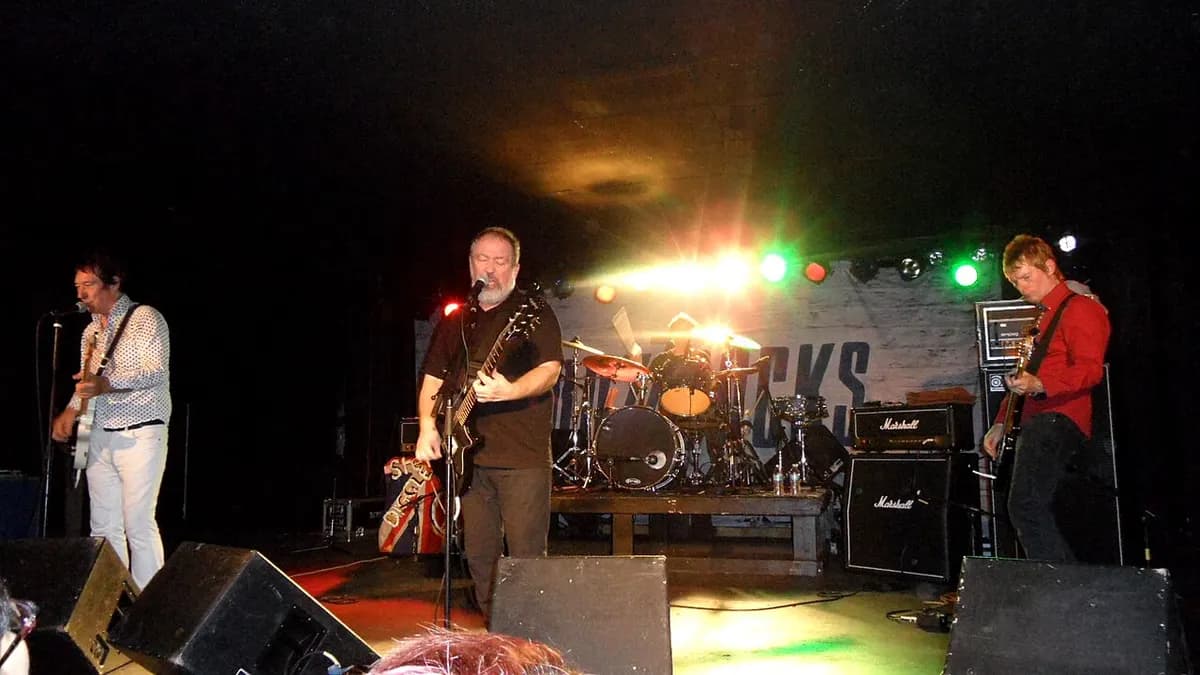
The genre proper took shape in Southern California in the 1980s. The Descendents' Milo Goes to College (1982) brought melody, self-deprecation and songs about coffee and girls to hardcore punk. Bad Religion stacked backing harmonies over the same speed. In Berkeley, Lookout! Records and the 924 Gilman Street club raised the next generation, Green Day among them.
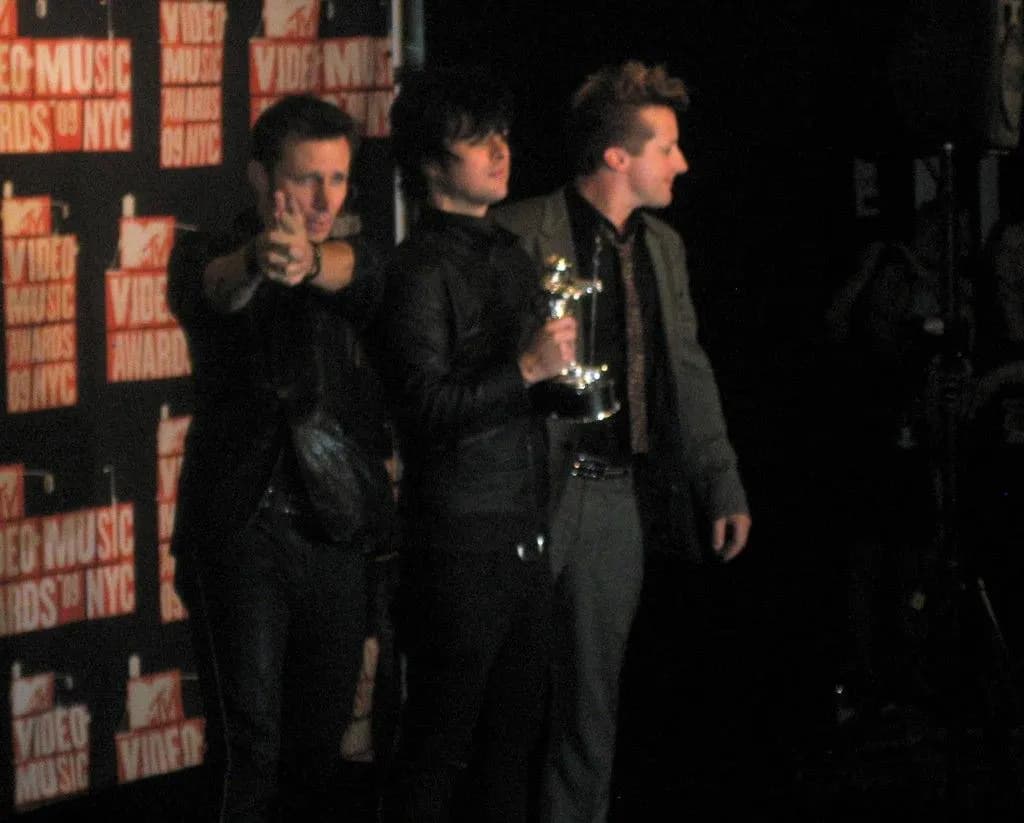
That generation broke through in 1994. Green Day's Dookie (February) and The Offspring's Smash (April) came out two months apart and sold far beyond anything punk had managed before; Dookie was eventually certified Diamond in the United States, for ten million units. Both bands were accused of selling out by the scenes that produced them, and both put fast, distorted guitars on mainstream rock radio.
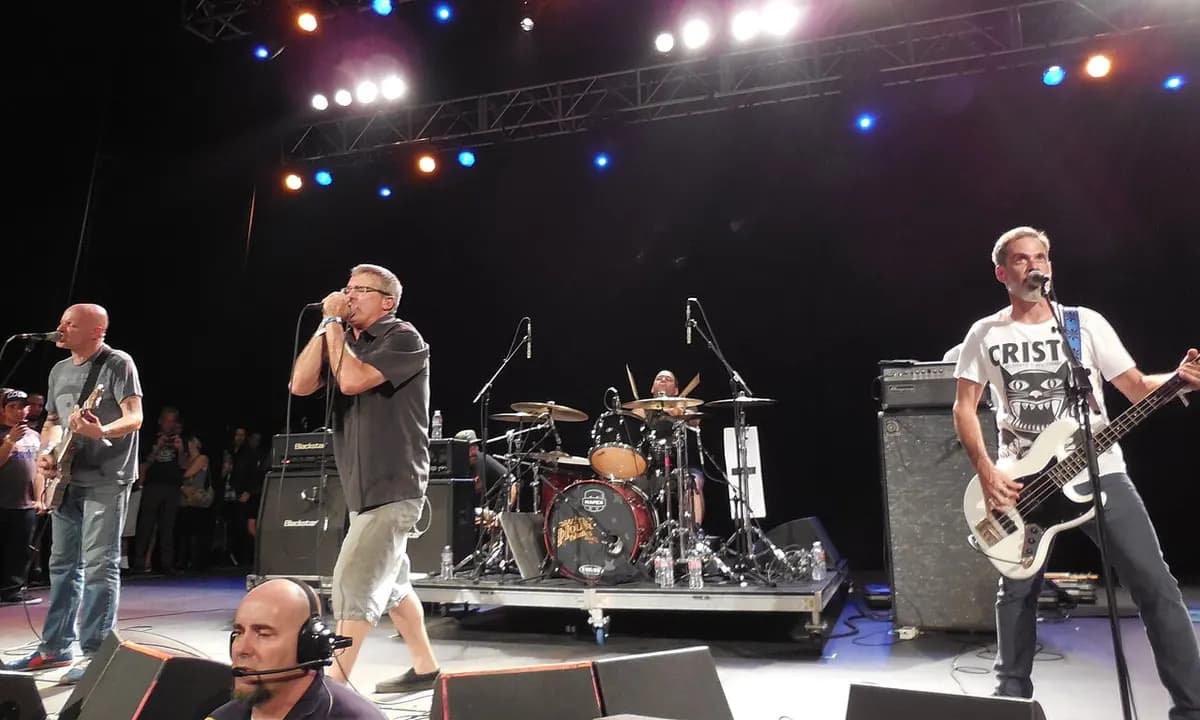
The second wave was bigger and glossier. blink-182's Enema of the State (1999) added studio polish and a comic persona. Sum 41, New Found Glory, Good Charlotte, Simple Plan, Fall Out Boy and Paramore filled the next decade of radio and of the Warped Tour, which crossed North America every summer from 1995 until its last full run in 2018 and served as the genre's touring circuit. It came back in 2025 as a shorter series of city festivals.
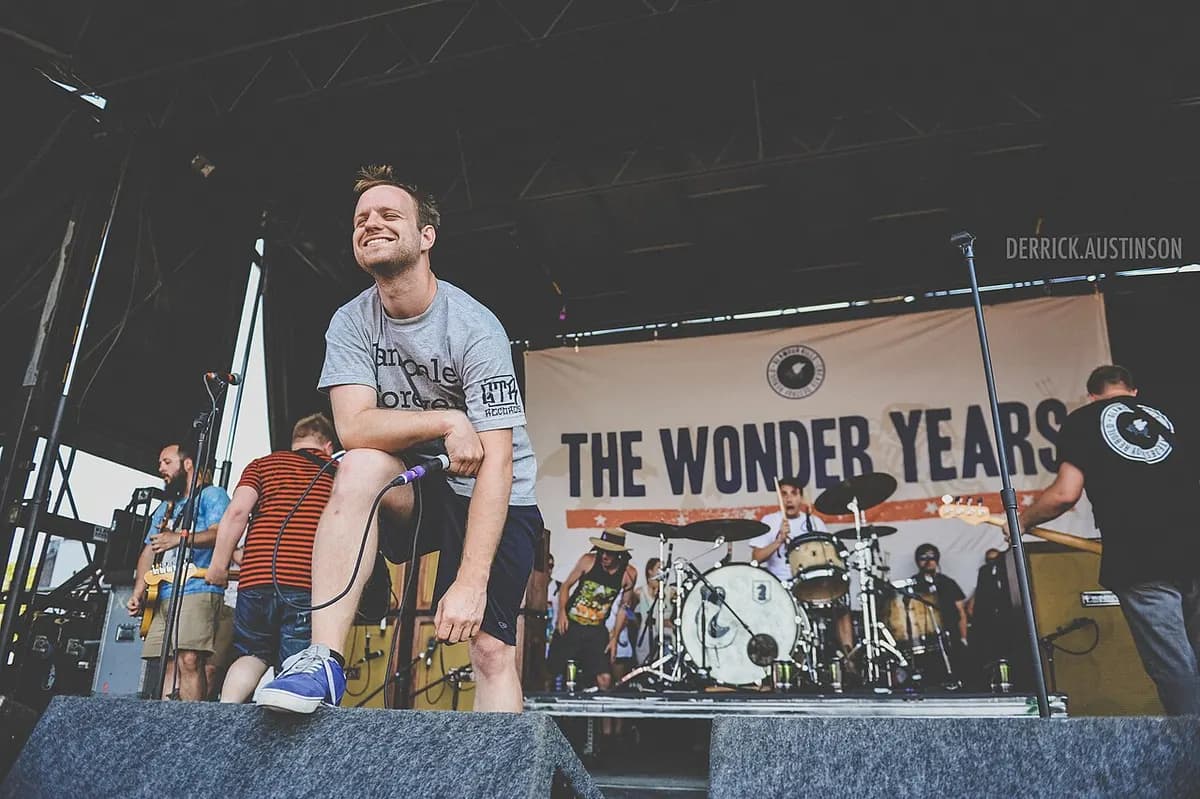
By 2010 the mainstream had moved on and the style went back underground, where a more emotionally direct branch (The Wonder Years, The Story So Far, Neck Deep) kept it going. The third peak came in 2020–2021 by an unexpected route: streaming nostalgia, TikTok, and rappers picking up guitars. Machine Gun Kelly's Tickets to My Downfall (2020), made largely with blink-182's Travis Barker as producer, debuted at number one on the Billboard 200. Olivia Rodrigo, Willow, Meet Me @ the Altar and a wave of younger bands followed.
Key Characteristics & Sound
What identifies a pop punk track:
- Tempo: 160–200 BPM, driven by straight eighth-note downstrokes.
- Major-key harmony: I–V–vi–IV and its relatives, played fast and loud.
- Structure: tight verse–chorus with the hook inside the first minute; songs run 2:30–3:30.
- Guitar: distorted power chords, palm-muted verses opening into full chorus strums; short or absent solos.
- Drums: fast punk beats with heavy use of the crash on the chorus and half-time drops for the bridge.
- Vocals: high, nasal, with gang backing vocals on the chorus.
- Lyrics: adolescence, suburbs, relationships, boredom, self-deprecation.
- Production: bright, heavily compressed and radio-loud, the 1999–2005 records especially.
How it sits among its relatives:
| Trait | Pop Punk | Punk | Hardcore Punk | Emo |
|---|---|---|---|---|
| Tempo | 160–200 BPM | 150–200 BPM | 180–250 BPM | 130–180 BPM |
| Harmony | Major key, pop changes | Major and minor, simple | Minor, chromatic | Minor, arpeggiated |
| Vocals | Nasal, melodic | Sneered | Shouted | Sung, strained |
| Tone | Wry, extroverted | Confrontational | Angry, political | Sincere, inward |
| Chorus | Central, gang-sung | Present | Often absent | Central, dynamic |
| Reference album | Dookie (1994) | Ramones (1976) | Damaged (1981) | Diary (1994) |
Instruments & Production
Pop punk sounds like a garage band but is usually made with careful studio production:
- Standard rock four-piece (two guitars, bass, drums) with no keyboards and few overdubs beyond doubled rhythm tracks.
- Mid-gain distortion: enough saturation for weight, enough definition that the chord changes stay audible at speed.
- Bass played with a pick, bright and mostly following the guitar's root notes.
- Heavy vocal layering: lead doubled, harmonies stacked, gang vocals recorded by whoever is in the room.
- Aggressive compression and limiting, particularly in the 1999–2005 major-label era, when these records were mastered as loud as anything on rock radio.
- Producers as scene figures: Rob Cavallo (Green Day's Dookie), Jerry Finn (engineer and mixer on Dookie, then blink-182's producer from Enema of the State), later Travis Barker and John Feldmann.
Subgenres & Related Styles
The family around it:
- Skate punk: the faster, more technical 1990s branch; NOFX, Pennywise, Lagwagon.
- Easycore: pop punk with metalcore breakdowns; A Day to Remember, Four Year Strong.
- Emo pop: the 2000s mainstream crossover; Fall Out Boy, Paramore, Panic! at the Disco.
- Ramonescore: the purist strand that stayed with the 1977 template; Screeching Weasel, The Queers.
- Emo: the sincere sibling; the two have shared bands and audiences since the early 2000s.
- Hardcore Punk: the parent that supplied the tempo and the DIY infrastructure.
- Pop-punk rap: the 2020s hybrid, in which rappers took over the guitars and the drum sound.
Notable Artists & Albums
Where to start:
- Ramones: Ramones (1976).
- Descendents: Milo Goes to College (1982).
- Green Day: Dookie (1994), American Idiot (2004).
- The Offspring: Smash (1994).
- blink-182: Enema of the State (1999).
- Sum 41: All Killer No Filler (2001).
- Fall Out Boy: From Under the Cork Tree (2005).
- Paramore: Riot! (2007).
- The Wonder Years: The Greatest Generation (2013).
- Olivia Rodrigo: Sour (2021), the third wave arriving from outside the scene.
Three records for the arc: Milo Goes to College for the invention, Dookie for the breakthrough, Enema of the State for the polished version most later bands copied.
How AI Detects Pop Punk
Pop punk combines traits that rarely occur together: a very fast tempo, mostly major-key harmony, a high vocal register, and heavily compressed dynamics with few quiet passages. Most fast, distorted guitar music is dark and minor-key. Pop punk is fast and bright, and that contrast is audible even in a short clip.
Genre AI's live model has no separate pop punk label: "pop punk" is one of the text prompts attached to its Punk label in the Rock family, so Punk is the expected answer. There is no emo class either, and we would expect glossy major-label records to pull some weight toward the softer rock labels or toward Indie / Alternative. That is our reading of the label set, not a measured result. Test a track in the Genre AI music genre detector.
For a model, the useful clue in Pop Punk is the pairing of punk tempo with major-key brightness. Fast, distorted guitar music is usually dark, so a track at 180 BPM on a I–V–vi–IV progression with a high, clean vocal stands out. Genre AI files this sound under its Punk label, because the live taxonomy folds pop punk into it. Era may matter too: the 1999–2005 records are mastered so loud that their dynamics resemble modern Pop production more than 1977 punk, which could pull some of them toward pop-leaning labels. We have not measured that effect, so treat it as a hypothesis.