Raï is a popular music from western Algeria, centred on the port city of Oran. It began as rough, outspoken folk song performed by singers called cheikhs and cheikhas to reed flute and drums, and in the 1970s and 1980s turned into an electric pop music of synthesizers, drum machines and young singers called chebs. The word raï is usually glossed as "opinion" or "advice" in Algerian Arabic, and the lyrics have long dealt with subjects polite society avoided: love, desire, alcohol, poverty and exile.
Through stars such as Khaled and Cheb Mami, raï became the best-known Maghrebi music outside North Africa, and in France, where North African communities carried it from the 1980s onward, it is part of mainstream pop. This guide covers raï's folk roots, the pop era, the violence of the 1990s, its sound and instruments, the key artists and how it differs from neighbouring styles such as French chanson and Spanish flamenco. To see how a classifier reads a raï track, try it in our free AI music genre detector.
What Is Raï?
Raï is a song form before it is a sound. Its singers traditionally build a performance from short, loosely connected verses, often borrowed, reworked or improvised, and fill the gaps with interjections such as "ya rayi" ("my opinion"), the filler cry from which the genre takes its name. The lyrics speak frankly about things conservative society kept quiet: love outside marriage, drinking, nightlife, hardship and the pain of emigration.
The language is the Arabic of western Algeria, often mixed with French and Spanish words, which tied the music to everyday street speech and set it apart from the classical and religious repertoires. Melodically, raï is based on Arabic modal scales with ornamented, melismatic singing; rhythmically, it leans on lilting dance patterns played on hand drums and, in the modern era, programmed beats.
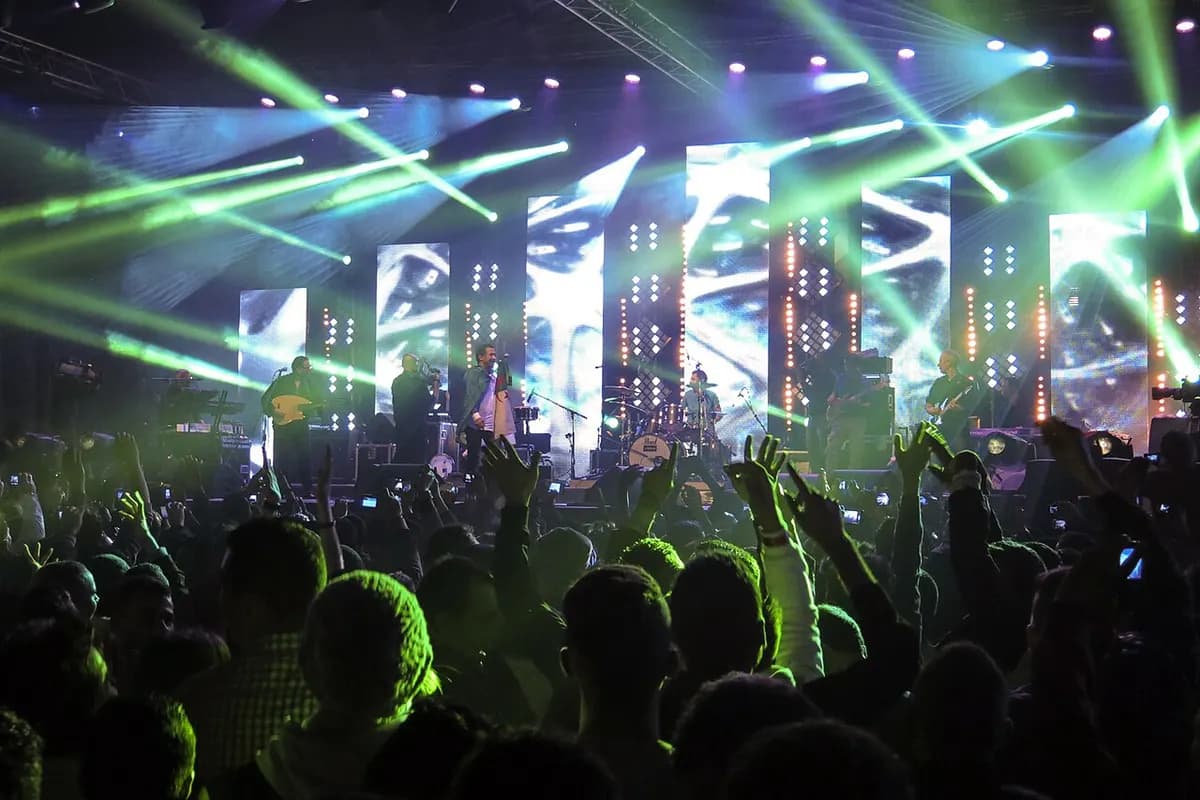
Modern raï, the style most listeners know, is a pop music. From the late 1970s it used electric guitars, accordions, trumpets and above all synthesizers and drum machines, and the songs became shorter and catchier. Its modes, vocal ornaments and rhythms set it apart from Western pop; its volume, informality and dance function set it apart from classical Arabic music. It is played at weddings and in clubs.
History & Origins
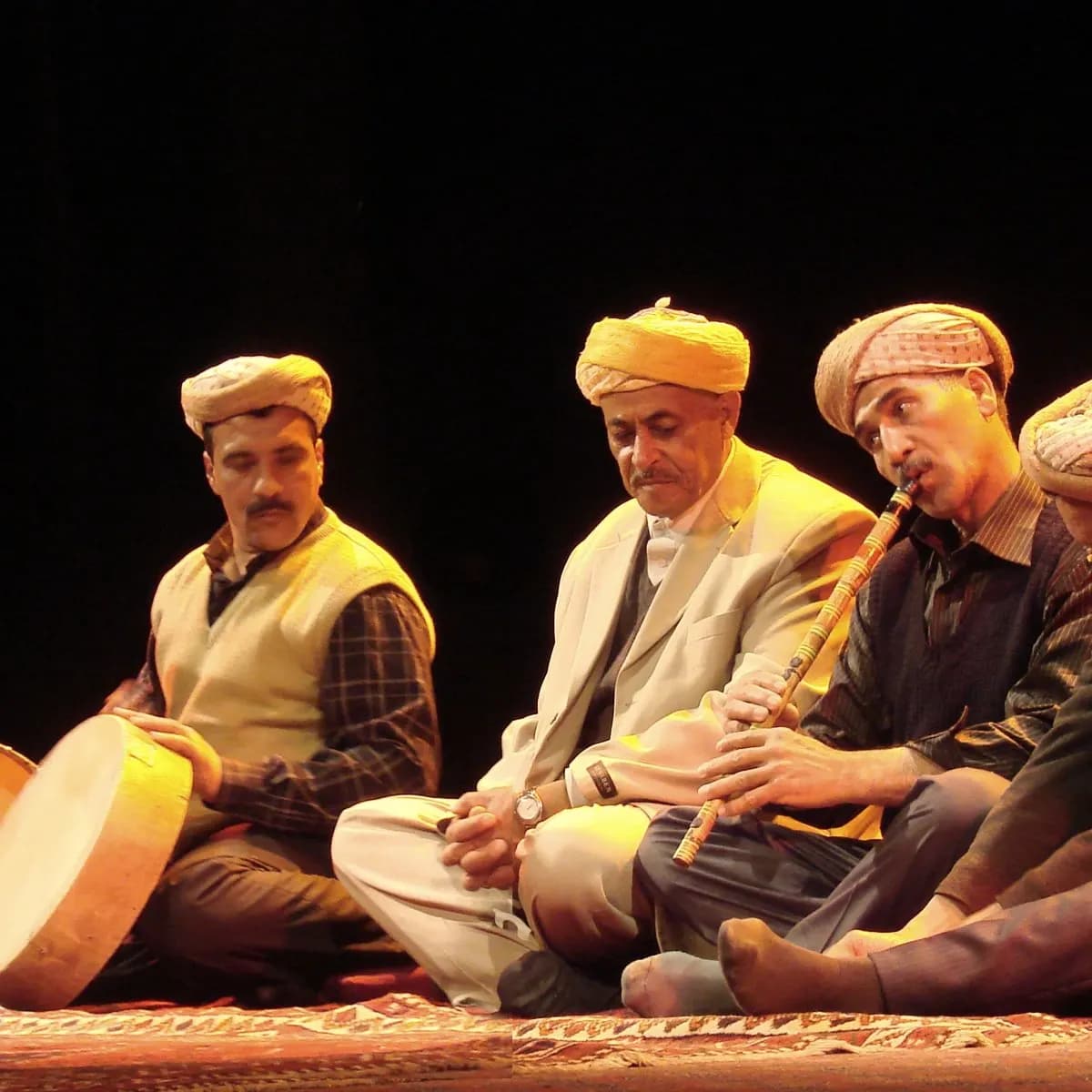
Raï grew in the early 20th century in the towns and countryside of western Algeria (Oran, Sidi Bel Abbès, Relizane, Aïn Témouchent) from older Bedouin poetic song; Oran in the 1920s is the usual starting point. Male singers known as cheikhs, often accompanied by the gasba (reed flute) and the guellal (a long single-headed drum), performed at weddings and celebrations, while female singers known as cheikhas sang in more disreputable settings, from bars to brothels, with bolder and more sensual lyrics.
The most important of them was Cheikha Rimitti (1923–2006), often called the mother or grandmother of raï. She was already a well-known local figure by the early 1940s, and her frank songs about desire and alcohol caused repeated scandal; she later moved to France and kept recording into the 2000s.
After Algerian independence in 1962, raï modernised. From the mid-1960s the trumpeter Bellemou Messaoud led an ensemble that put trumpet and drum kit alongside the old gasba sound, and through the 1970s he worked with singers such as Boutaïba Sghir and Bouteldja Belkacem. He is often called a father of modern raï, though Boutaïba Sghir himself pointed out that raï existed before Bellemou arrived. Cassettes, cheap to copy and sell, became the medium that carried the new sound across Algeria.
The pop revolution came in the late 1970s and 1980s. Young singers took the title cheb (male, "young") or chaba (female) to distinguish themselves from the old cheikhs. Producers, most famously the brothers Rachid and Fethi Baba Ahmed of Tlemcen, who also performed as the duo Rachid et Fethi, put synthesizers and drum machines at the centre of the arrangement and recorded hit after hit cheaply for cassette. Chaba Fadela and Cheb Sahraoui's "N'sel Fik" (1983) became one of the first international raï hits. The authorities, at first hostile, came round, and in 1985 Oran hosted the first officially sanctioned raï festival, where Khaled was crowned "king of raï".
Khaled, who dropped the "Cheb" from his name in 1992, became the genre's first international star. After settling in France, he released the album Khaled (1992), whose single "Didi" reached the French top ten and travelled across Europe and the Arab world, and in 1996 "Aïcha", written and produced by Jean-Jacques Goldman, went to No. 1 in France. Cheb Mami reached a global audience by singing on Sting's "Desert Rose", from the 1999 album Brand New Day and released as a single in January 2000. On 26 September 1998 Khaled, Rachid Taha and Faudel played together at the Palais Omnisports de Paris-Bercy before about 15,000 people; the concert came out as the live album 1, 2, 3 Soleils.
The 1990s were also tragic. During Algeria's civil war, raï was targeted by armed Islamist groups who considered it immoral. Cheb Hasni, the most popular singer of romantic raï, was shot dead outside his parents' home in Oran on 29 September 1994, and the producer Rachid Baba Ahmed was killed in Oran on 15 February 1995. Many artists left for France, which became raï's second home. From the 2000s, young French and Algerian producers mixed raï with R&B, dancehall and hip-hop under the name raï'n'b, and raï vocals and melodies still turn up in French urban pop.
Key Characteristics & Sound
How to recognise raï:
- Tempo: mostly mid-tempo dance music with a swaying, lilting groove; there is no standard BPM range, and slower love songs are common too.
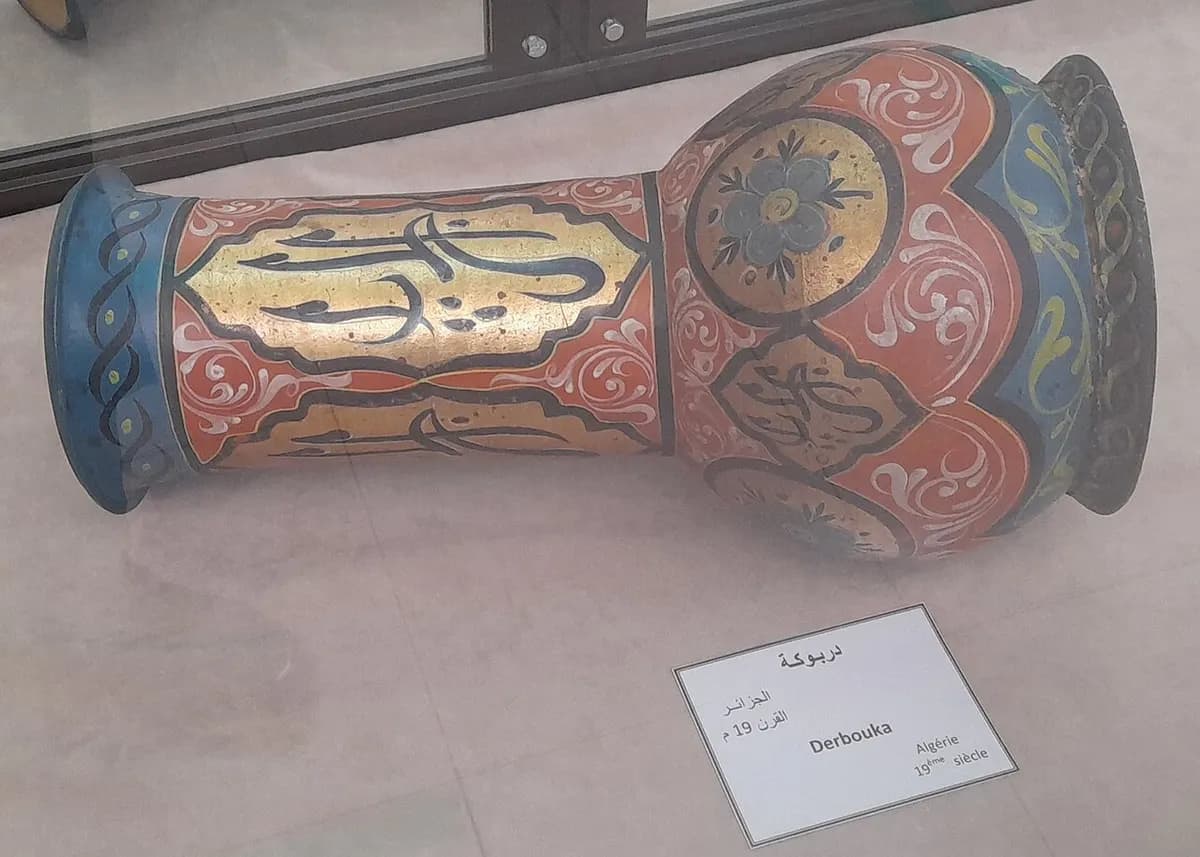
- Rhythm: hand-drum patterns on the derbouka and bendir, often with a rolling triple or compound feel against the main pulse; in modern raï, drum machines copy and extend these patterns.
- Melody: Arabic modal scales, frequently with an augmented second, sung with heavy ornamentation, long melismas and expressive cries.
- Synthesizers: the signature sound of 1980s pop-raï, with bright synth leads imitating the gasba or accordion, using pitch bend to reproduce ornamented Arabic phrasing.
- Vocals: raw, nasal, emotional singing, with interjections such as "ya rayi" and "ah ya" built into the line.
- Lyrics: in Algerian Arabic mixed with French; love, longing, desire, drinking, exile and social frustration.
- Structure: verses that can be loosely connected, alternating with instrumental refrains; recordings may be long and repetitive in the folk tradition and tight and radio-length in pop-raï.
The instruments, from the cheikhs to the chebs:
| Instrument | Era | Role |
|---|---|---|
| Gasba | Traditional | End-blown reed flute; the breathy melodic voice of folk raï |
| Guellal | Traditional | Long single-headed drum keeping the basic rhythm |
| Derbouka and bendir | Traditional and modern | Goblet drum and frame drum for the dance patterns |
| Violin, oud, accordion | Mid-20th century | Melodic accompaniment in urban ensembles |
| Trumpet, saxophone | 1970s | Bellemou Messaoud's brass-band modernisation |
| Synthesizer, drum machine | 1980s onward | The sound of pop-raï; pitch-bent synth leads and programmed beats |
| Electric guitar, bass | 1980s onward | Band arrangements for international releases |
Eras & Styles of Raï
Raï has gone through several clear stages:
| Era | Period | Sound | Names |
|---|---|---|---|
| Folk raï (the cheikhs) | Early–mid 20th century | Voice, gasba, guellal; long improvised songs | Cheikha Rimitti, Cheikh Hamada |
| Modernised raï | 1960s–1970s | Trumpets, saxophones, accordion, violin | Bellemou Messaoud, Boutaïba Sghir |
| Pop-raï (the chebs) | Late 1970s–1990s | Synthesizers, drum machines, cassette production | Khaled, Cheb Mami, Cheb Hasni, Chaba Fadela & Cheb Sahraoui |
| International raï | 1990s–2000s | Polished studio production for European markets | Khaled (Didi, Aïcha), Cheb Mami, Faudel |
| Raï'n'b and urban raï | 2000s–today | Raï vocals over R&B, dancehall and hip-hop beats | French and Algerian producers and singers |
Key Artists & Recordings
A listening path through the genre:
- Cheikha Rimitti: the matriarch of raï, whose blunt, defiant songs set its tone.
- Bellemou Messaoud: the trumpeter who brought brass and band arrangement into raï.
- Chaba Fadela & Cheb Sahraoui: "N'sel Fik" (1983), the best-known duet of the pop-raï era.
- Khaled: "Didi" (1992), "Aïcha" (1996) and "C'est la vie" (2012).
- Cheb Mami: a high, agile voice, known worldwide for "Desert Rose" with Sting.
- Cheb Hasni: the voice of romantic raï (raï love), the most popular singer in Algeria at the time of his murder in 1994.
- Rachid Taha: the Franco-Algerian singer who mixed raï and Algerian chaâbi with rock and electronics, including his version of "Ya Rayah".
- Faudel: a younger star of the 1990s French raï scene.
Raï vs Chanson, Flamenco & Arabic Pop
Raï shares ground with several traditions around the Mediterranean:
- Raï vs chanson: both are central to French popular music, and Khaled's "Aïcha" was written by a French chanson songwriter. But chanson is lyric-led, sung in French and built on Western harmony, while raï uses Arabic modes, ornamented singing and North African rhythms.
- Raï vs flamenco: both have raw, melismatic vocals and a shared Andalusian-Moorish musical background, and the Phrygian colour can sound similar. Flamenco, however, is guitar-and-handclap music from southern Spain with its own rhythmic cycles (compás), while raï is drum- and synth-driven dance music.
- Raï vs Arabic pop: Egyptian and Lebanese pop is usually lusher and string-heavy, sung in Egyptian or Levantine Arabic; raï is rougher, rooted in Algerian dialect and western Algerian rhythms.
- Raï vs Algerian chaâbi: chaâbi, from Algiers, descends from Andalusian classical music and is played on mandole and strings in a more refined style; raï comes from the countryside and the Oran nightlife.
How AI Detects Raï
Raï carries several cues an audio model can pick up: Arabic modal melodies with frequent augmented seconds, heavily ornamented vocals, derbouka and bendir patterns, and the pitch-bent synthesizer leads of 1980s and 1990s production. Older recordings with gasba and guellal sound plainly traditional and North African.
Modern raï is harder. Many productions use R&B, dancehall or trap drum programming, Auto-Tuned vocals and dense pop mixes, and there the beat can drown out the Arabic melodic cues. Genre AI has no raï label of its own; the note below explains what it is likely to return. Try a clip in the Genre AI music genre detector, and read why songs can belong to several genres.
Genre AI's production taxonomy has no Raï class. The closest coarse label is Arab / Middle Eastern, but it has no fine subgenres, and the model gives priority to any coarse label that does have them (Electronic Dance, Rap Hip-Hop, Folk / Country, Jazz, Rock and a few others) whenever one appears among its top five. So Arab / Middle Eastern is likely to be the answer only for tracks where none of those families registers at all; Pop has no fine labels either and is in the same position. More often the answer will probably follow the production. Synth-and-drum-machine raï of the 1980s may land in Electronic Dance, for example as Synth Pop; raï'n'b with programmed R&B beats may land in Rap Hip-Hop as Contemporary RnB; sparse gasba-and-percussion recordings may read as Folk / Country, Folk. One prompt is worth knowing: "arabic fusion" is among the text descriptions of Jazz, Fusion, so a raï track with a live band may drift there. Alternatives are always sibling labels inside the winning family, so read the top answer as a description of the production, not of the tradition.