Electroclash is a late-1990s and early-2000s dance music movement that fused the cold drum machines and analogue synths of early-1980s electro and synth-pop with the club mechanics of techno, the attitude of punk and the staging of performance art. The vocals are deadpan, spoken or half-sung; the lyrics are ironic, sexual and obsessed with fame and fashion; the beats sit around 120–130 BPM. It started in Munich around DJ Hell's International DeeJay Gigolo Records, got its American launch at a New York festival in October 2001, and was at its height for about four years.
This guide covers where electroclash came from, why it reacted against faceless 1990s techno, how the records are built, the artists and tracks to start with, and how it differs from the synth-pop, Italo disco and EBM it borrowed from. To hear where a buzzing, 808-driven electroclash track lands on a classifier, drop a clip into our free AI music genre detector.
What Is Electroclash?
Electroclash is less a new sound than a deliberate collision of old ones. Its producers took the 1980s (Kraftwerk's robotic minimalism, the Human League's cheap synths, Gary Numan's alienation, the German body music of DAF, the camp of Italo disco) and ran it through the drum machines and DJ culture of late-1990s techno. The "clash" is literal: retro electronics against club functionality, pop hooks against underground attitude, art-school irony against the dancefloor.
The movement was also a reaction. By the late 1990s much of techno and trance had become anonymous: long, vocal-free tracks made by producers nobody could pick out of a crowd. Electroclash put the song, the singer and the show back in the middle. Tracks had verses, choruses and a persona. Performers wore costumes and make-up, staged choreography and courted controversy, and dry, knowing, often filthy humour was part of the format.
Several things separate it from the music it quotes. The vocals are rarely pretty: they are spoken, monotone, sneered or shouted, often in accented English. The production is deliberately raw, with a few analogue lines, an 808 or 909 pattern and little polish. And the frame is club music, not pop radio: the tracks are built to be mixed by DJs, even when they are three-minute songs. That is what distinguishes it from straight synth-pop revivalism and from the glossier electropop that followed it.
History & Origins
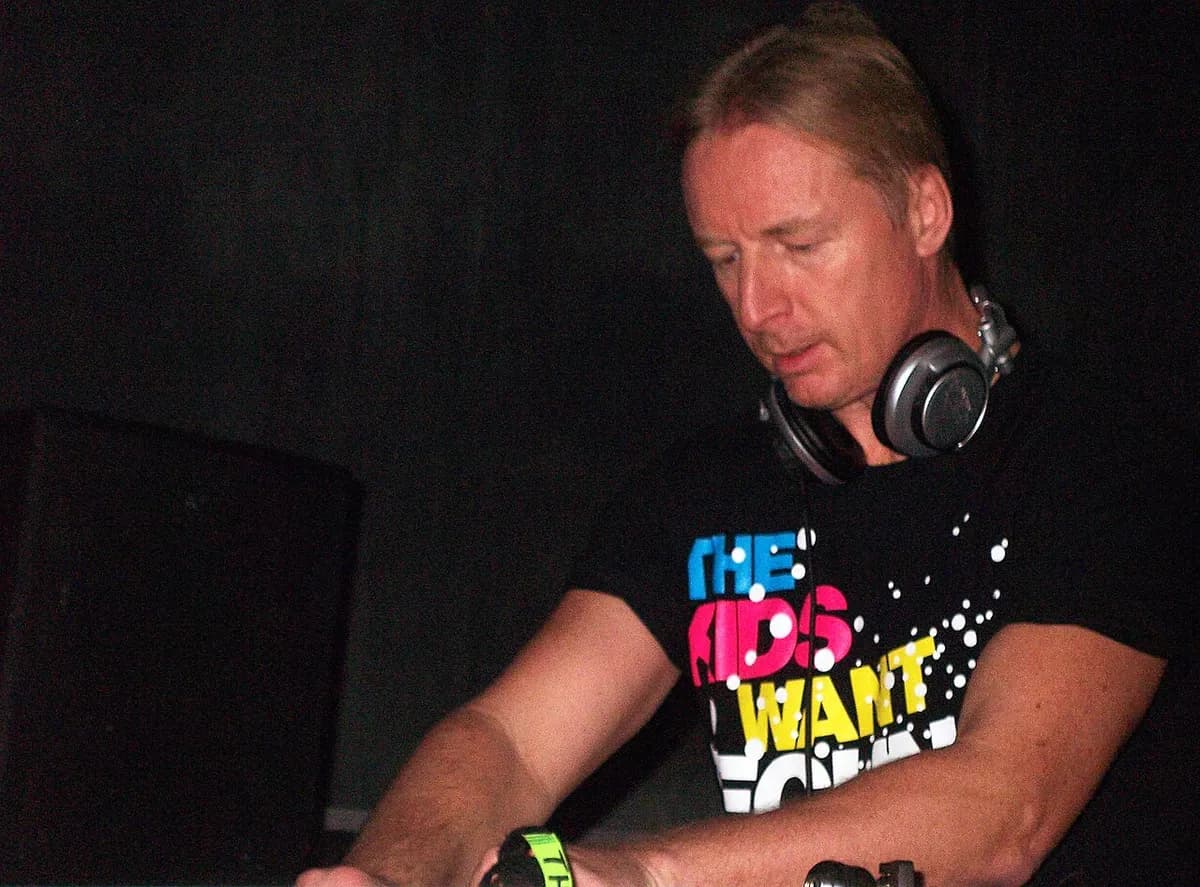
The movement's home was Munich. DJ Hell founded International DeeJay Gigolo Records in the mid-1990s, and the label became the clearing house for the new sound. Christopher Just's "I'm a Disco Dancer" came out on Gigolo in 1997, and the label reissued Chris Korda's "Save the Planet, Kill Yourself", first released in 1993. Hell's own album Munich Machine (1998) is counted among the genre's groundwork, and he is widely credited with assembling the scene; Wikipedia's article on the genre goes further and names him as the one who gave it its name.
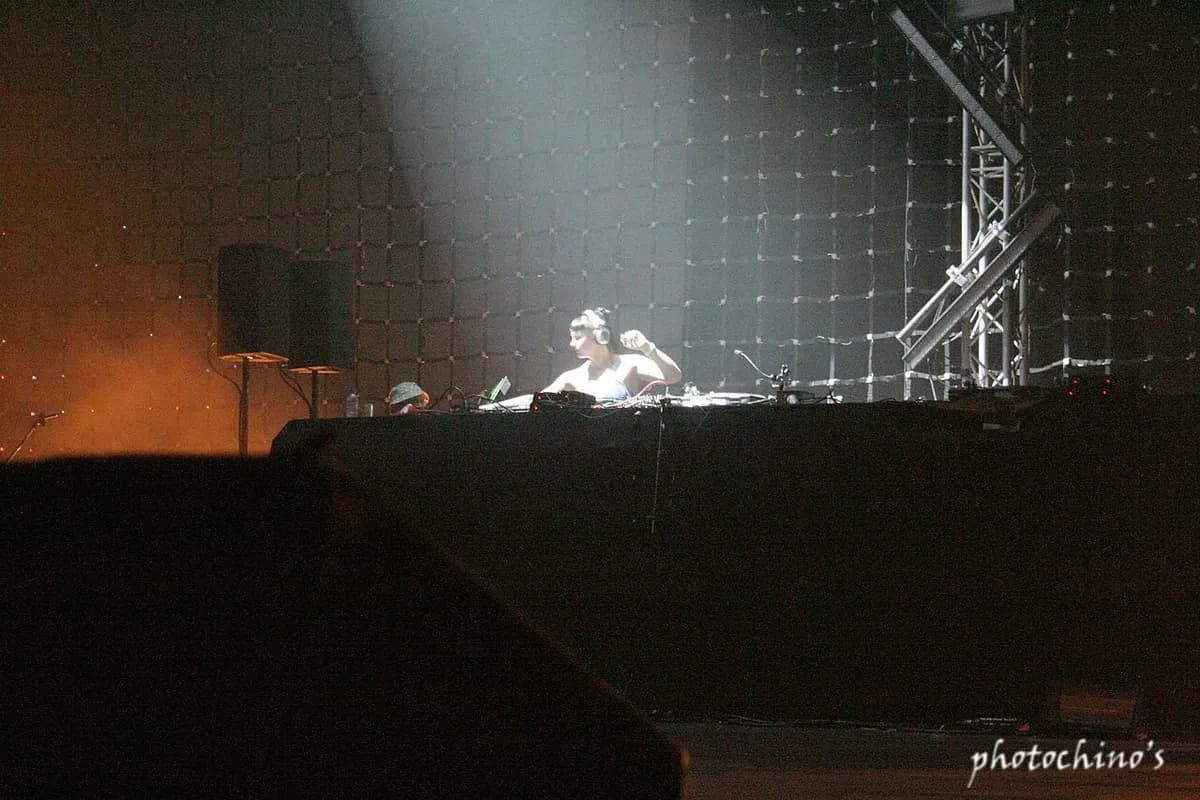
The first records now treated as unmistakably electroclash came from France. In July 1998 Gigolo released Champagne, the EP that carried "1982" and "Frank Sinatra" by Miss Kittin & The Hacker from Grenoble: Caroline Hervé's bored, half-spoken vocal over Michel Amato's cold electro. "Frank Sinatra", with its deadpan list of celebrity excess, set the tone for the movement. Around the same time the Dutch producer I-F (Ferenc van der Sluijs) released "Space Invaders Are Smoking Grass" (1997), a vocodered homage to arcade-era electro that is regularly named as a founding track.
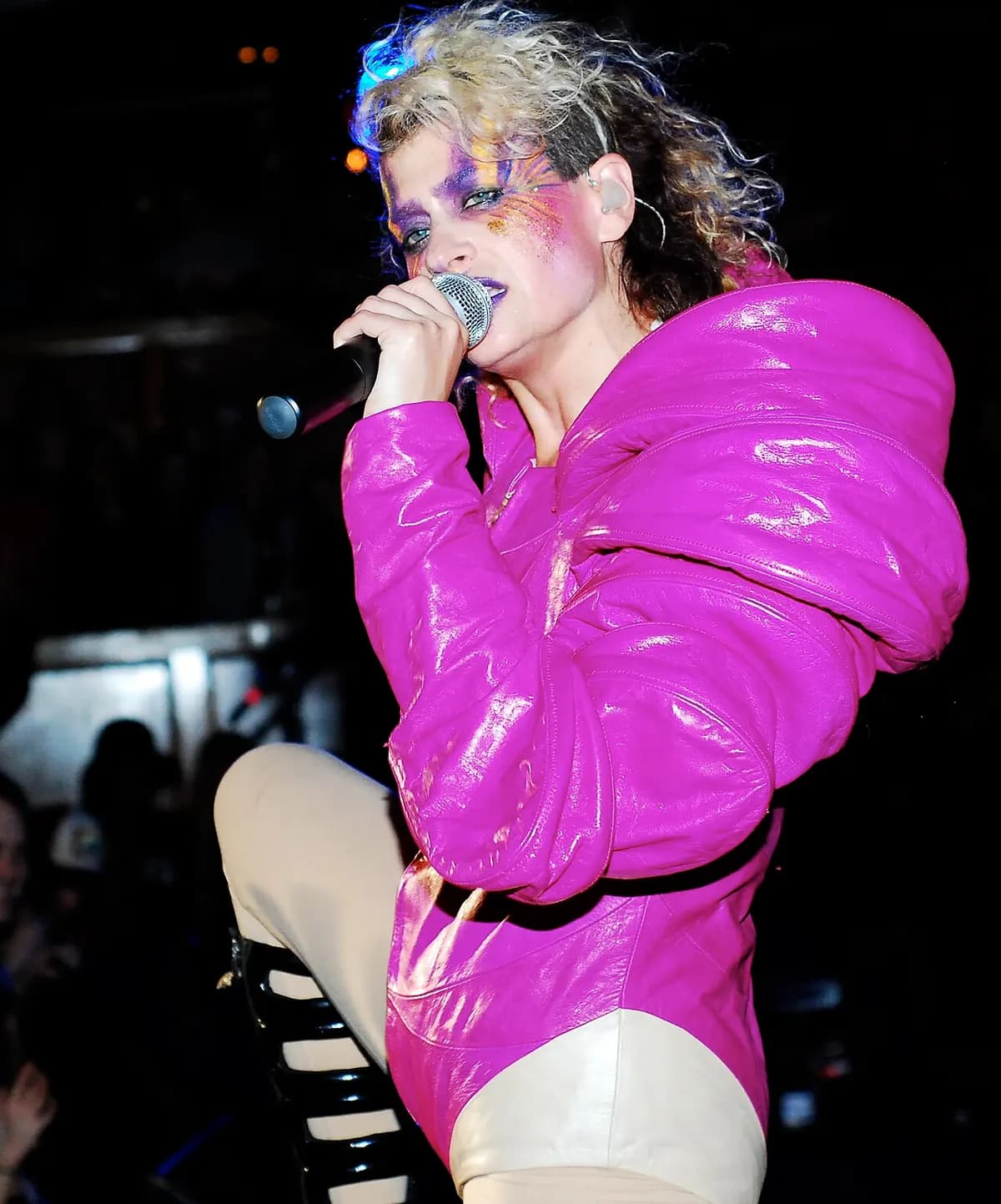
Around 2000 the cast widened. Peaches, a Canadian performer based in Berlin, released The Teaches of Peaches (2000), whose "Fuck the Pain Away", built on a bare drum machine, a single bassline and an unprintable chorus, became one of the movement's signature records. Chicks on Speed, founded by art students at Munich's Academy of Fine Arts in 1997, treated the format as art-school provocation; ADULT. in Detroit made colder, more paranoid versions on their own Ersatz Audio label; Toktok vs. Soffy O. released "Missy Queen's Gonna Die" on BPitch Control in 2000. Liverpool's Ladytron, whose debut 604 appeared in 2001, were frequently filed alongside, though the band rejected the tag.
2001 was the peak. Gigolo released "Emerge" by Fischerspooner, the duo of Warren Fischer and Casey Spooner, who had formed in 1998 as a band and performance troupe. Tiga & Zyntherius covered Corey Hart's "Sunglasses at Night", and Chicago house veteran Felix da Housecat recruited Miss Kittin for "Silver Screen Shower Scene" on Kittenz and Thee Glitz (2001). In October 2001 the New York DJ and promoter Larry Tee, usually credited with popularising the term in the US, staged the Electroclash Festival across venues in Williamsburg, Brooklyn, and put the word into American media. It returned in 2002, followed by touring packages through 2003 and 2004 that featured acts such as ADULT., Tiga, Princess Superstar and Scissor Sisters.
The backlash came almost as fast. Several of the movement's own pioneers turned on the label: I-F and other artists signed an "anti-electroclash" manifesto complaining that a living scene was being packaged and sold by the music business. The hype faded by the middle of the decade. Its sound carried on: the mid-2000s wave of electro-house, blog house and "nu rave" inherited electroclash's distorted synths, fashion links and DIY persona, and Goldfrapp's Black Cherry (2003) and Supernature (2005) took its glam-electro textures into the mainstream. In the 2020s, with the "indie sleaze" nostalgia for the 2000s, writers and labels have spoken of an electroclash revival, though critics such as The Quietus have questioned how real it is.
Key Characteristics & Sound
What identifies an electroclash record:
- Tempo: roughly 118–135 BPM, with most tracks near 125–130, which is house and techno territory, not the 100–120 of classic synth-pop.
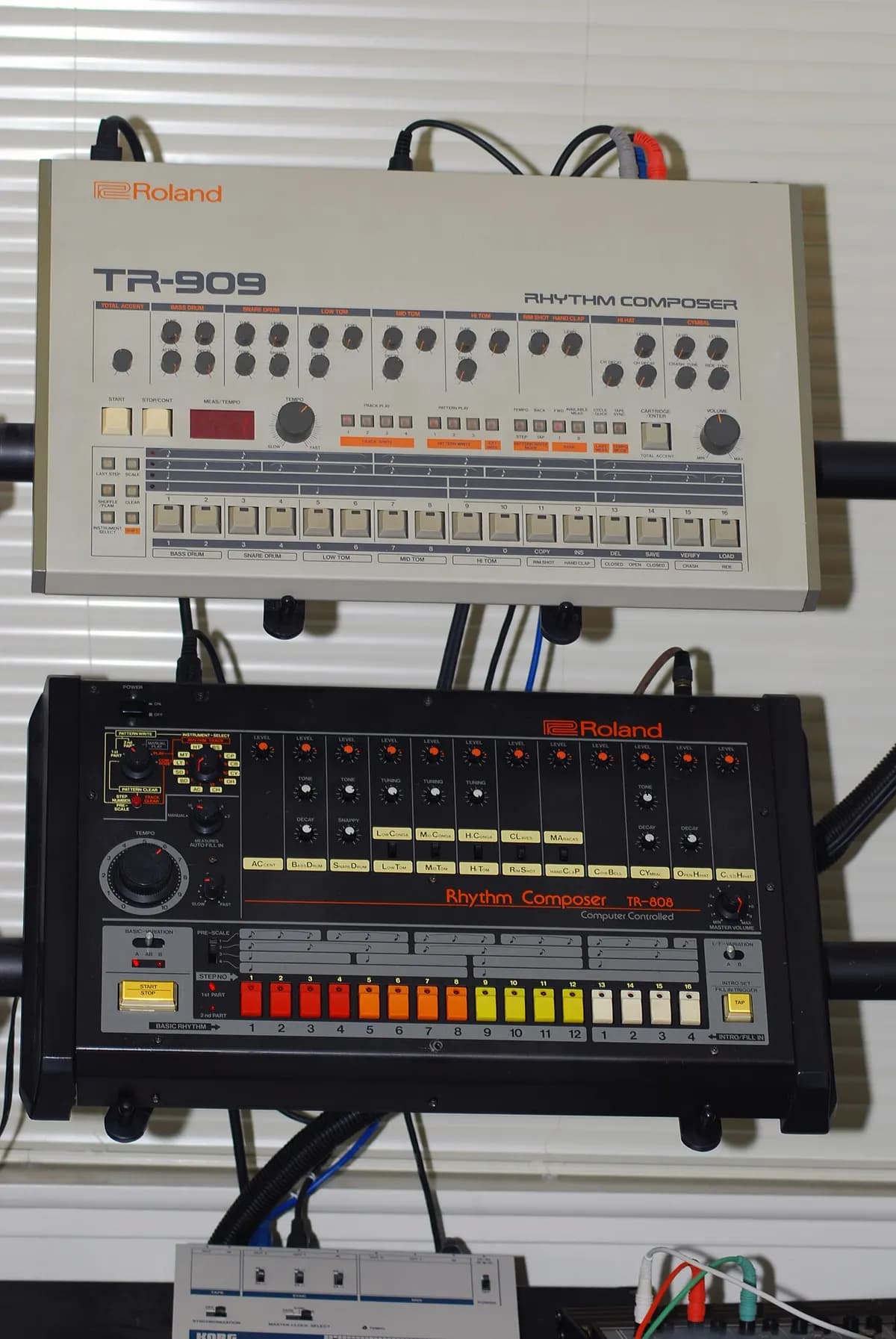
- Drums: Roland TR-808 and TR-909 sounds or their samples, in straight four-on-the-floor or electro-style broken patterns, with dry handclaps, snappy snares and little swing.
- Synths: analogue or analogue-sounding monosynths, buzzing sawtooth basslines, simple two- or three-note riffs, arpeggiators and occasional vocoders.
- Vocals: spoken, monotone, deadpan or sneered, often female and often in accented English; choruses chanted, not sung.
- Harmony: minimal, one or two chords, frequently minor or modal, with the hook carried by rhythm and voice.
- Lyrics: fame, fashion, sex, celebrity, consumerism and boredom, treated with irony.
- Production: lo-fi by design, with short arrangements, few layers and distortion on synths and voice.
- Presentation: costume, choreography and art-world staging; the performance was part of the genre.
Where it sits among its neighbours:
| Trait | Electroclash | Synth-Pop | Italo Disco | EBM |
|---|---|---|---|---|
| Peak period | 1998–2004 | 1979–1986 | 1979–1988 | 1981–1990 |
| Typical BPM | 118–135 | 100–125 | 115–130 | 110–130 |
| Vocals | Deadpan, spoken, ironic | Sung, melodic | Sung, often accented English | Shouted, militant |
| Mood | Arch, sexual, cool | Melancholic or bright | Romantic, camp | Aggressive, physical |
| Production | Raw, minimal, distorted | Polished, layered | Lush, arpeggiated | Hard sequenced bass |
| Reference track | Frank Sinatra | Don't You Want Me | Dolce Vita | Der Mussolini |
Instruments & Production
Electroclash was cheap music by intention, and its toolkit reflects that:
- Drum machines: the 808 and 909, or their samples in a sampler or software, programmed with few variations and almost no fills.
- Vintage and budget synthesizers: monosynths, early polysynths and their software clones, used for one dirty bassline and a single lead riff.
- Vocoders and talkboxes, borrowed directly from early-1980s electro.
- Distortion and bit-crushing on synths and vocals, to rough up what would otherwise sound like a clean synth-pop demo.
- Home-studio recording: many key records were made in bedrooms and small project studios on minimal equipment.
- DJ-friendly arrangement: intros and outros long enough to mix, even on songs with a pop structure.
The label map was concentrated: Gigolo in Munich, Disko B, Kitty-Yo in Berlin, Ersatz Audio in Detroit, and in New York a network of clubs and promoters around Larry Tee. Designers, magazines and art galleries belonged to the scene as much as record shops did.
Scenes & Related Styles
Electroclash was never a single sound; it gathered several scenes under one banner:
- Munich and the Gigolo school: DJ Hell's circle, with dry electro, Italo references and cold European glamour.
- French deadpan electro: Miss Kittin & The Hacker and their followers, with spoken vocals and minimal synths.
- Berlin performance electro: Peaches and Chicks on Speed, with provocation, gender play and art-school DIY.
- Detroit electro-punk: ADULT. and the Ersatz Audio circle, paranoid, harsh and close to post-punk.
- New York electroclash: Fischerspooner, Larry Tee's parties and the festival circuit; the most theatrical branch.
- Dance-punk: a parallel New York movement (LCD Soundsystem, the Rapture) with live bands and disco basslines instead of machine-only tracks.
- Electro-house and blog house: the mid-2000s heirs, faster and more distorted, spread by MP3 blogs and festivals.
Its roots run through electro, synth-pop, Italo disco and EBM; its legacy runs into electropop, indie dance and the electro-house of the mid-2000s.
Key Artists & Tracks
Where to start:
- Miss Kittin & The Hacker: "Frank Sinatra" and "1982" (1998); First Album (2001).
- I-F: "Space Invaders Are Smoking Grass" (1997).
- DJ Hell: Munich Machine (1998), and the International DeeJay Gigolo catalogue as a whole.
- Peaches: The Teaches of Peaches (2000); "Fuck the Pain Away".
- Fischerspooner: "Emerge" (2001).
- Tiga & Zyntherius: "Sunglasses at Night" (2001).
- Felix da Housecat: "Silver Screen Shower Scene" with Miss Kittin, from Kittenz and Thee Glitz (2001).
- Ladytron: 604 (2001) and Light & Magic (2002), adjacent but never card-carrying.
- ADULT.: the Ersatz Audio singles; the darkest end of the movement.
- Chicks on Speed: the art-collective wing.
- Goldfrapp: Black Cherry (2003), electroclash textures carried into a pop album.
Electroclash vs Electro, Synth-Pop and Electropop
The names overlap, so it helps to be precise:
- Electro is the early-1980s American style born from Afrika Bambaataa's "Planet Rock" and the Detroit and Miami scenes: 808 breakbeats, vocoders, hip-hop roots. Electroclash borrowed its machines and vocoders but replaced the funk with European cool and punk attitude.
- Synth-pop is a song form first: melodic, sung vocals over synthesizer arrangements, aimed at the charts. Electroclash keeps the synths but swaps the melody for deadpan delivery and the pop polish for raw club production.
- Electropop, in its 2008-onward sense, took electroclash's distorted synths and made them glossy, sung and radio-friendly. If the vocal is a clean pop melody and the mix is loud and bright, it is electropop.
- EBM shares the sequenced bass and the shouted vocal but is martial and physical, with none of electroclash's irony or glamour.
| If you hear… | It is more likely… |
|---|---|
| Spoken, bored vocal over a buzzing synth and an 808 at 125 BPM | Electroclash |
| Vocoder and breakbeat with hip-hop swing at 110–125 BPM | Electro |
| Sung melody, verse–chorus, polished 1980s synths | Synth-Pop |
| Clean pop vocal, big loud mix, distorted synth hook | Electropop |
| Shouted commands over a sequenced bass, no irony | EBM |
| Arpeggiated bass, romantic lyrics, lush pads | Italo Disco |
Electroclash is defined as much by attitude and context as by sound, and attitude does not show up in a spectrogram. What a model can hear is a four-on-the-floor or broken 808 pattern, buzzing analogue synth tones, little harmonic movement and a voice that barely changes pitch. Genre AI has no dedicated electroclash label, but "electroclash" is one of the text prompts of its Electro label, so the most likely answer is Electronic Dance with Electro as the fine label. Song-structured tracks such as Ladytron's are the likeliest to come back as Synth Pop instead, and the harder, mostly instrumental Gigolo records may land on Techno; both are Electronic Dance subgenres, so they can also appear as alternatives. The model has no EBM label to confuse it with. A deadpan spoken vocal over a sparse beat may occasionally pull a track into the Rap Hip-Hop family, because the model hears speech-like rhythm without sung pitch. Treat the result as a placement in the family, then use the era, the label and the delivery to call it electroclash.