Norteño (música norteña, "northern music") is a regional Mexican style from the border states of northern Mexico and south Texas, built on two instruments: the button accordion and the twelve-string bajo sexto. A modern conjunto norteño adds electric bass and drums, and in some regions an alto saxophone. Its repertoire runs from fast polkas and redovas to rancheras, love ballads, cumbias and, above all, corridos: narrative songs about real events, heroes and outlaws.
Norteño is easily confused with two neighbours. A corrido is a song form that norteño bands play, not a band style; and banda is a brass-band tradition from Sinaloa with tuba and clarinets instead of accordion. Below: where the style came from, how a norteño record is put together, the regional variants, the main artists, and those two distinctions in more detail. To hear where an accordion-and-bajo-sexto track lands with a classifier, try it in our free AI music genre detector.
What Is Norteño?
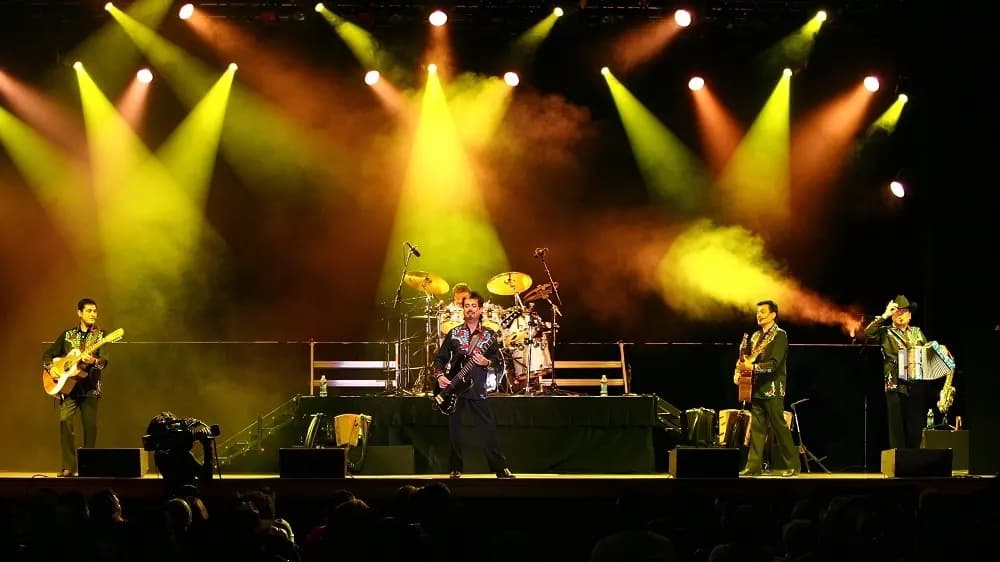
Norteño is a band format first and a repertoire second. Strip a norteño record down and you hear a conversation between two instruments. The accordion plays the melody, fills between vocal lines with fast runs, and doubles the singers in parallel harmony. The bajo sexto, a large twelve-string guitar tuned low, strums chords on the off-beat and plays bass runs that link one chord to the next. Under them the electric bass, or in older recordings the upright tololoche, marks the downbeat, and a drum kit gives the music its bounce.
On top sit one or two voices, very often a duo singing in parallel thirds, a habit taken from the Mexican duet tradition and from the first norteño stars. The lyrics carry as much weight as the music: corridos tell stories of revolution, migration, smuggling and local heroes; canciones rancheras deal with love, betrayal and pride; and more recent norteño ballads are as romantic as any pop song.
The rhythmic foundation is European. Polka, redova (a Mexican relative of the mazurka), schottische (chotís) and waltz arrived in northern Mexico in the 19th century, and norteño bands still play them as instrumentals and as the beat under sung songs. The polka's "oom-pah" in 2/4 is the pulse most people associate with the style.
History & Origins
Central European dance music reached Mexico in the second half of the 19th century in two ways: through military bands during the reign of Emperor Maximilian (1864–1867), and through German, Czech and Polish immigrants in Texas and northern Mexico, who also brought the accordion. Along the border, around Monterrey and in the Rio Grande valley, local musicians combined the accordion with the bajo sexto and the Mexican song tradition.
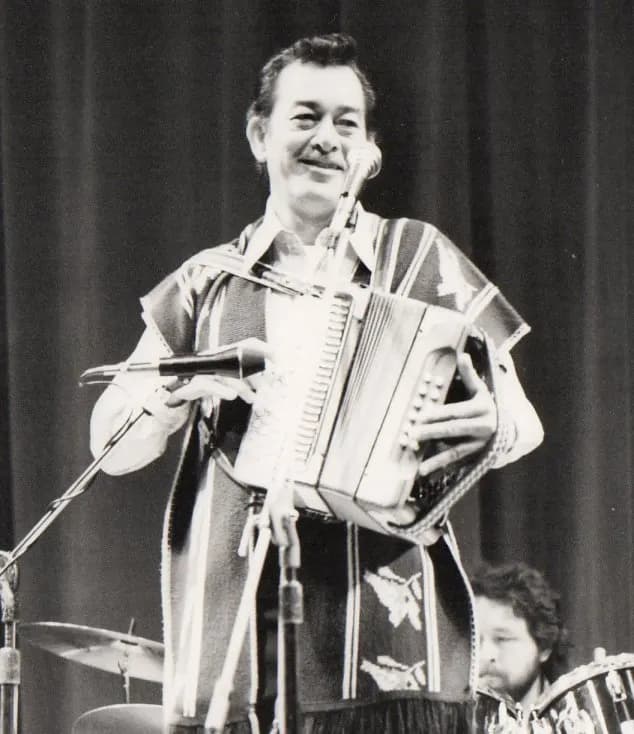
The recording era began in the 1920s and 1930s, when record companies set up temporary studios in hotels in San Antonio and other Texas cities to record Mexican and Mexican-American musicians. Accordionist Narciso Martínez, who made his first 78 for Bluebird in 1935 or 1936 (sources give both years) with bajo sexto player Santiago Almeida, defined the accordion-plus-bajo-sexto duo and is often called the father of Texas-Mexican conjunto. Corridos, which had flourished during and after the Mexican Revolution, became a core part of the recorded repertoire.
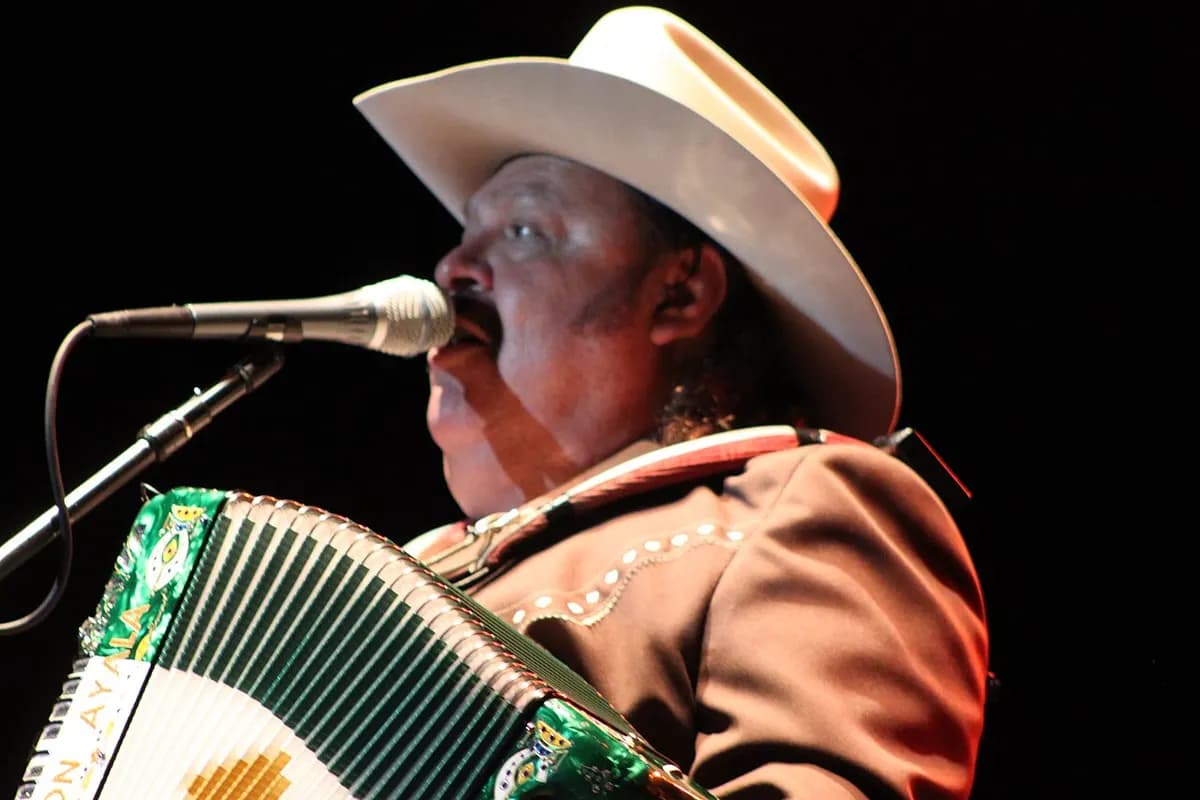
On the Mexican side, Los Alegres de Terán (accordionist Eugenio Abrego and singer and bajo sexto player Tomás Ortiz, from Nuevo León, first recorded around 1948) and Los Donneños became the model for norteño as a vocal duo with accordion and bajo sexto. In the 1960s Los Relámpagos del Norte, with Ramón Ayala on accordion and Cornelio Reyna on bajo sexto and vocals, modernised the sound. Reyna left in 1971 for a solo ranchera and film career, and Ayala's new group, Ramón Ayala y sus Bravos del Norte, made him the "king of the accordion". By the 1970s and 1980s most bands had swapped the tololoche for electric bass and the lone snare for a full kit.
The 1970s brought Los Tigres del Norte, a family band from Rosa Morada in Mocorito, Sinaloa, that moved to San José, California, in the late 1960s. Their 1974 recording of "Contrabando y traición" made the narco-corrido a commercial force. Since then they have become the most famous norteño act in the world, known for corridos about migration and life in the United States as much as for smuggling ballads. Los Tucanes de Tijuana ("La Chona", 1995), Los Cadetes de Linares, Los Invasores de Nuevo León and Carlos y José kept the format at the centre of regional Mexican radio.
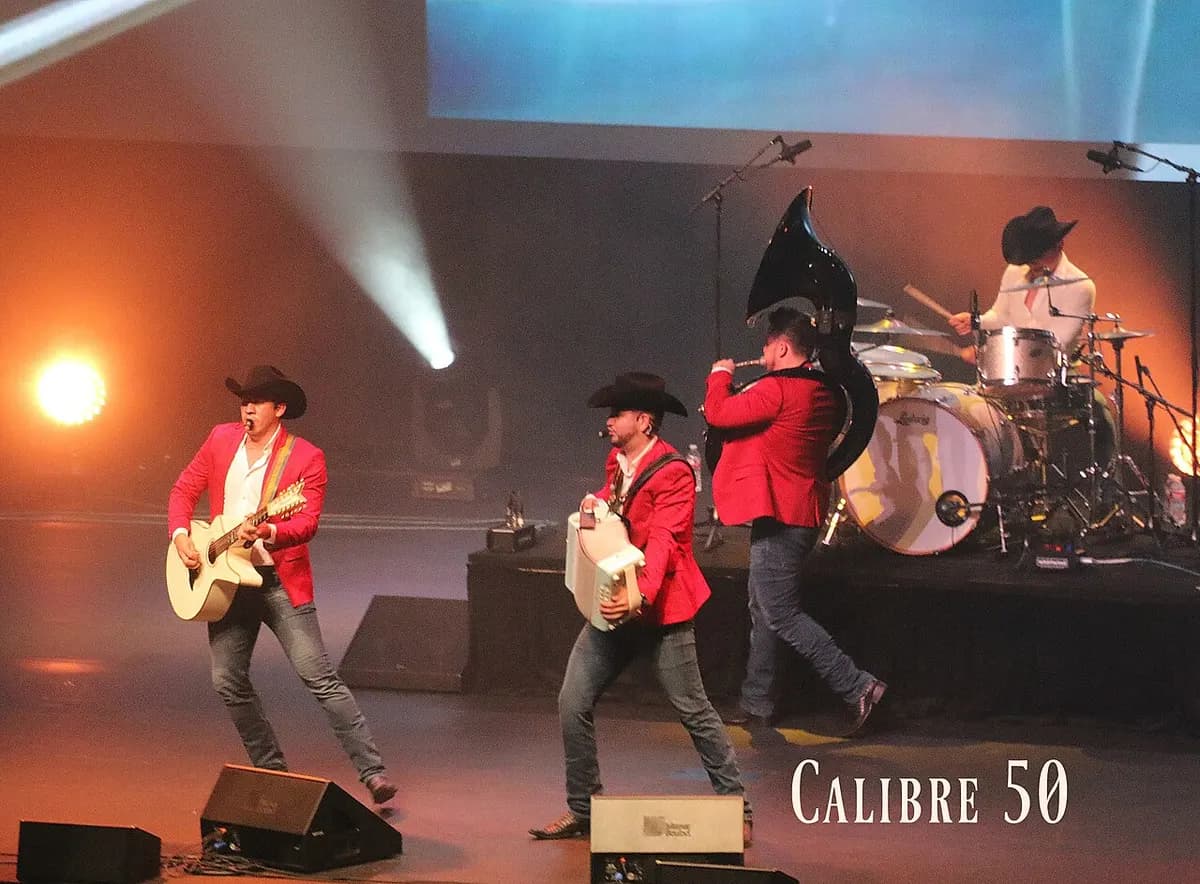
From the 1990s the Texas band Intocable and others introduced a smoother, rock- and pop-influenced "norteño light", and in the 2010s Sinaloan groups such as Calibre 50, formed in Mazatlán in 2010 by accordionist and singer Edén Muñoz, fused norteño with banda by swapping the bass for a sousaphone. In 2023 Grupo Frontera's collaboration with Bad Bunny, "un x100to", took that softer norteño-pop sound to global streaming charts, while the corridos tumbados of the same years carried the corrido tradition onto guitar-and-trap-influenced arrangements.
Key Characteristics & Sound
What identifies a norteño recording:
- Rhythms: polka in 2/4, waltz in 3/4, redova, schottische, huapango norteño and cumbia norteña. Polka-based tracks are fast and bouncy, with a strong two-beat "oom-pah"; cumbias sit at a relaxed mid-tempo, and romantic ballads and some corridos slow down further.
- Accordion lead: a three-row button accordion playing melody, intros, fills between vocal phrases and harmony lines in thirds and sixths.
- Bajo sexto strum: chords on the off-beat ("chuck"), with bass runs between chords. This is where norteño's skipping feel comes from.
- Bass on the downbeat: a root-fifth "oom-pah" line on electric bass.
- Duet vocals: two voices in close parallel harmony, often with a slightly nasal, bright tone and a grito (shout) at the end of a phrase.
- Harmony: major keys and simple I–IV–V progressions; minor keys for some corridos and laments.
- Form: accordion introduction, verse, accordion interlude, verse. Corridos often end with a despedida, a farewell verse naming the song.
Norteño beside its closest regional Mexican neighbours:
| Trait | Norteño | Banda | Texas Conjunto / Tejano | Mariachi |
|---|---|---|---|---|
| Core instruments | Button accordion, bajo sexto, bass, drums | Brass, clarinets, tuba, tambora | Accordion, bajo sexto (later keyboards) | Violins, trumpets, vihuela, guitarrón |
| Home region | Nuevo León, Tamaulipas, Chihuahua, Sinaloa, Texas | Sinaloa | South Texas | Jalisco |
| Signature rhythm | Polka, redova, corrido | Polka, son, cumbia | Polka, ranchera | Son jalisciense, ranchera |
| Lead sound | Accordion | Clarinet and trumpet melodies | Accordion | Violins and trumpets |
| Ensemble size | 4–5 musicians | 10–20 musicians | 4–5 musicians | 6–15 musicians |
| Reference act | Los Tigres del Norte | Banda El Recodo | Flaco Jiménez | Vicente Fernández |
Instruments
- Button accordion: a diatonic accordion with three rows of buttons, most famously made by Hohner. Different keys suit different singers, so many accordionists keep several instruments.
- Bajo sexto: a twelve-string guitar in six courses, tuned lower than a standard guitar and played with a pick. It provides both rhythm and bass runs. The bajo quinto, with ten strings, is a close relative.
- Tololoche / electric bass: the upright bass of early recordings, replaced by electric bass in most groups since the 1970s and 1980s.
- Drums: originally a snare (tarola), now a full kit with a crisp snare on the off-beat and a busy hi-hat.
- Alto saxophone: in norteño-sax groups of Chihuahua and Durango, doubling or replacing parts of the accordion line.
- Sousaphone: in norteño-banda, replacing the bass and borrowing banda's low end.
Regional Styles & Subgenres
- Northeastern norteño: the traditional style of Nuevo León, Tamaulipas and Coahuila: Los Alegres de Terán, Ramón Ayala, Los Cadetes de Linares, Carlos y José, Los Invasores de Nuevo León.
- Pacific norteño: rougher, with Sinaloan banda influence: Los Tigres del Norte, Los Tucanes de Tijuana, Los Buitres de Culiacán.
- Norteño-sax: accordion plus alto saxophone, popular in Chihuahua and the central highlands: Conjunto Primavera, Los Rieleros del Norte.
- Norteño-banda: norteño with a sousaphone instead of bass guitar: Calibre 50 and many Sinaloan groups of the 2010s.
- Norteño light / norteño-pop: smoother, pop- and rock-influenced: Intocable, Duelo, Siggno, Grupo Frontera.
- Cumbia norteña: the Colombian cumbia rhythm played on accordion and bajo sexto, a staple of Monterrey dance halls.
- Narcocorrido and corridos tumbados: lyric-defined branches of the corrido; the first was largely carried by norteño bands, the second moved to acoustic guitars and trap influence.
Key Artists & Recordings
Names and records to start with:
| Artist | Era | Known for | Start with |
|---|---|---|---|
| Narciso Martínez | 1930s–1950s | Defining the accordion–bajo sexto duo (Texas conjunto) | His 1930s Bluebird instrumentals |
| Los Alegres de Terán | Late 1940s–1980s | The classic northeastern duo sound | Their corridos and rancheras |
| Ramón Ayala | 1960s– | The 'king of the accordion'; Los Relámpagos, Los Bravos del Norte | Los Bravos del Norte's 1970s recordings |
| Cornelio Reyna | 1960s–1990s | Bajo sexto, songwriting, Los Relámpagos del Norte | His work with Ramón Ayala |
| Los Tigres del Norte | 1970s– | Corridos of migration and the border; the genre's biggest act | Contrabando y traición; Jefe de jefes (1997) |
| Los Cadetes de Linares | 1960s– | Traditional Nuevo León corridos | Their classic corridos |
| Los Tucanes de Tijuana | 1990s– | Pacific norteño, fast-paced hits | La Chona (1995) |
| Intocable | 1990s– | Norteño with rock and pop production | Their late-1990s and 2000s albums |
| Calibre 50 | 2010s– | Norteño-banda from Sinaloa | Their 2010s hits |
| Grupo Frontera | 2020s– | Norteño-pop on global streaming | un x100to (with Bad Bunny, 2023) |
Norteño vs Corrido, Banda and Tejano
Norteño vs corrido. A corrido is a ballad form defined by its lyrics: a story, often with a date, a place and named people, and a closing farewell. Corridos can be played by a norteño band, a banda, a mariachi or two acoustic guitars. Norteño is the ensemble and its sound. Many of the most famous corridos are norteño recordings, which is why the terms get mixed up.
Norteño vs banda. Banda is a Sinaloan brass band of trumpets, clarinets, trombones, tuba and percussion, with ten or more players and a much louder, brassier sound. Norteño is a four- or five-piece accordion group. They share repertoire (polkas, corridos, cumbias) and meet in the hybrid norteño-banda.
Norteño vs Tejano conjunto. Texas-Mexican conjunto grew from the same accordion and bajo sexto roots on the US side of the border. Conjunto accordionists such as Flaco Jiménez are known for flashy instrumental technique, and later Tejano added synthesizers, cumbia and pop. Norteño is the Mexican-side tradition with a stronger corrido and vocal-duet focus. The overlap is large, and many fans treat them as one family.
Norteño vs mariachi and ranchera. Mariachi is a violin-and-trumpet ensemble from Jalisco; ranchera is a song type both mariachi and norteño groups perform. The accordion is the quickest way to tell norteño apart.
How AI Detects Norteño
To an audio model, norteño has a distinctive surface: the reedy, bright button accordion, the dry off-beat strum of the bajo sexto, a bass alternating root and fifth on the downbeat, a snappy snare, and duet vocals in Spanish. Those cues separate it easily from rock, electronic music or hip-hop. The harder question is which accordion tradition a track belongs to, because polka, Cajun and Texas conjunto use many of the same sounds.
The model also cannot read lyrics, so it cannot tell a corrido from a love song played by the same band. Drop a track into the Genre AI music genre detector and treat the result as the family. The lyric and the lineup decide the rest.
Genre AI has no norteño label. Its production taxonomy files regional Mexican music under the coarse Latin label, which has no finer breakdown, and that label rarely ends up as the answer: the model prefers any coarse genre that has subgenres if one is in its top five. For an accordion, a strummed twelve-string and a bouncing 2/4 bass, that is most likely Folk / Country, so the probable result is Country, with Folk as the only possible alternative. If brass-heavy norteño-banda tips the model towards Jazz instead, the fine label to expect is Big Band / Swing, which carries "norteño banda" among its text prompts. Latin itself may come back for tracks where none of those coarse genres registers. The model will not separate norteño from Corrido or Banda as named genres, because those distinctions live in the lyric and the lineup.