Melodic death metal, "melodeath" to its fans, keeps the harsh vocals and driving drums of death metal and builds its songs around melody: harmonised twin-guitar leads, riffs that owe more to Iron Maiden than to Morbid Angel, and clear verse-and-chorus shapes. It took shape in Gothenburg, Sweden, in the first half of the 1990s with At the Gates, In Flames and Dark Tranquillity, spread to Finland and beyond, and became one of the main ingredients of 2000s metalcore.
This guide is the dedicated page for the melodic branch; for the brutal, Florida-and-New-York lineage see the main death metal article. Below: the history, what the riffs are made of, the regional scenes, the records that matter and how melodeath differs from its neighbours. To check how a track reads to a classifier, run a clip through our free AI music genre detector.
What Is Melodic Death Metal?
Melodic death metal is extreme metal with tunes you can hum. The vocal stays harsh, usually a mid-range rasp or scream instead of the deepest gutturals, and the drums still use double kick and occasional blast beats. The guitars, though, play recognisable melodies, typically as two harmonised lines a third apart, and the riffs move through clear minor-key progressions instead of the chromatic, atonal clusters of brutal death metal.
Songs are shorter and more structured than in classic death metal: a melodic intro or lead theme, verses on driving riffs, a chorus that returns to the main melody, a solo and a final restatement. Acoustic intros, keyboard layers and occasional clean vocals are common, especially from the late 1990s onwards. The lyrics change as well, swapping death metal's gore and horror for melancholy, longing and Nordic imagery.
"Gothenburg sound" and melodic death metal are often used as synonyms. Strictly, the Gothenburg sound is the specific Swedish scene of the 1990s; melodic death metal is the wider style that includes Finnish, British and American bands as well.
History & Origins
The style has two roots. One is the New Wave of British Heavy Metal: Iron Maiden's harmonised twin leads are the direct ancestor of melodeath guitar writing. The other is late-1980s and early-1990s death metal opening up to melody. Carcass, from Liverpool, made the decisive move on Heartwork (1993), trading their earlier grindcore gore for clean, catchy, Maiden-like riffing with guitarist Michael Amott; it is still one of the style's most influential albums, though it came from England. Chuck Schuldiner's Death moved in a similar direction on Symbolic (1995).
In Sweden, a cluster of Gothenburg bands took the idea and made a scene of it. Dark Tranquillity released Skydancer in August 1993 and The Gallery in 1995. In Flames, founded in 1990 by Jesper Strömblad as a side project, debuted with Lunar Strain (1994); with Anders Fridén on vocals from 1995 it set out the folk-tinged, twin-lead style on The Jester Race (1996), Whoracle (1997) and Colony (1999). At the Gates released Slaughter of the Soul on Earache in November 1995, a faster, tighter and angrier record than its peers that opens with "Blinded by Fear". The band split in 1996 and stayed apart until 2007, and the album became the template a generation of American bands copied.
Much of the scene was recorded at Studio Fredman in Gothenburg with producer Fredrik Nordström, Slaughter of the Soul included, and his crisp, bright guitar sound became the scene's sound. Labels such as Nuclear Blast and Century Media carried it abroad.
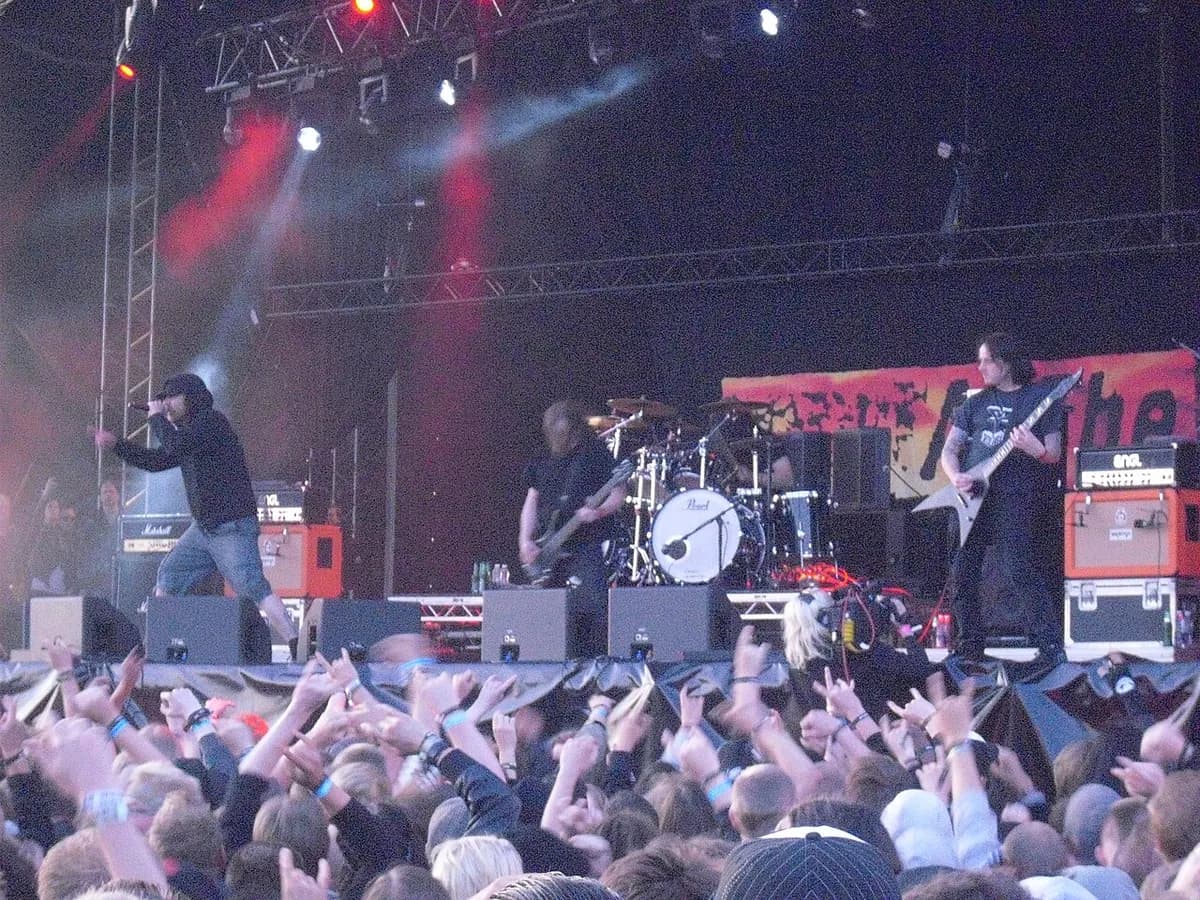
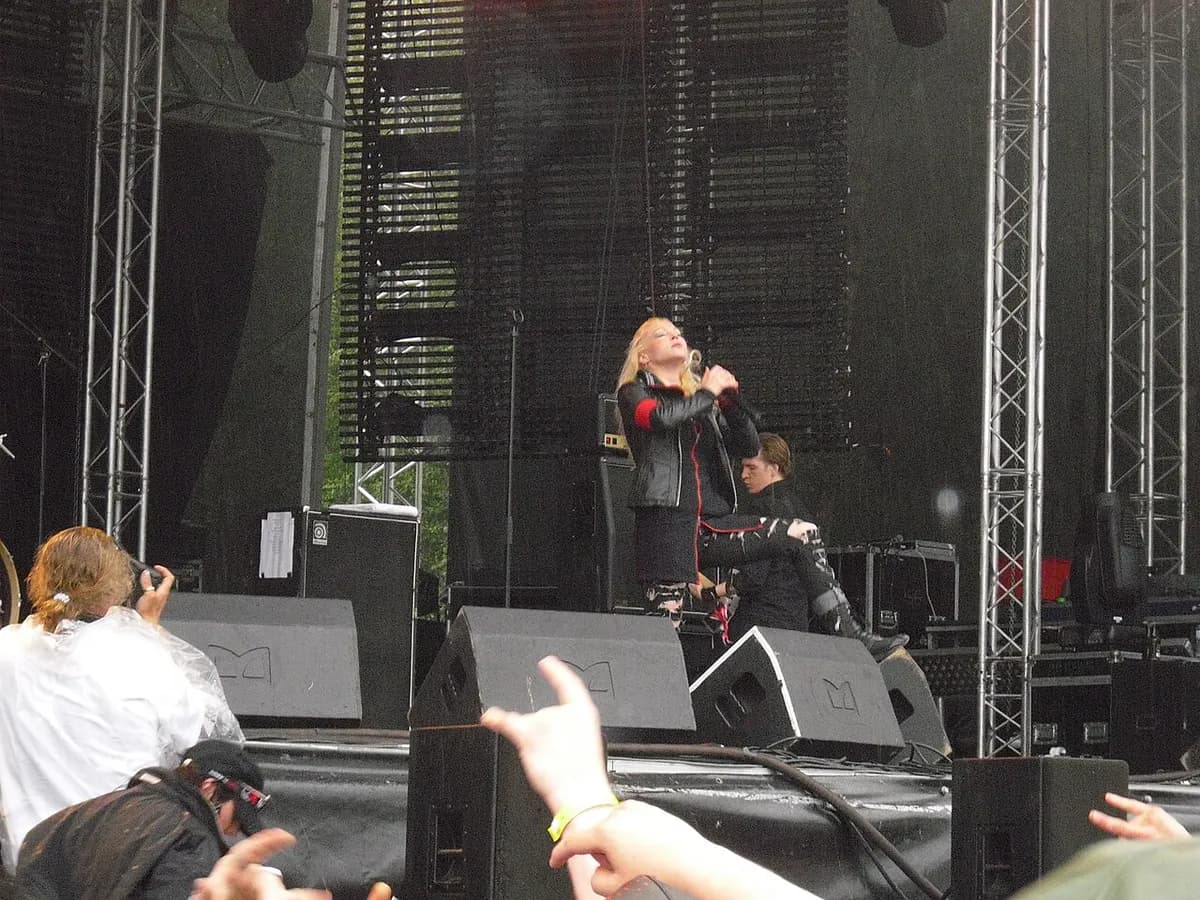
Melodeath branched quickly. Arch Enemy, founded in 1995 by Carcass guitarist Michael Amott with singer Johan Liiva, became a major international act after Angela Gossow replaced Liiva in 2000; Wages of Sin (2001) was her first album. Soilwork, from Helsingborg, added clean choruses on Natural Born Chaos (2002). Amon Amarth slowed the tempo and wrote about Norse mythology. In Finland, Children of Bodom combined melodeath with neoclassical keyboard-and-guitar duels on Hatebreeder (1999) and Follow the Reaper (2000), while Insomnium, Omnium Gatherum and Kalmah developed a more melancholic Finnish strand.
Two things happened around 2000. The Gothenburg bands themselves moved towards cleaner, more eclectic sounds, with In Flames' Reroute to Remain (2002) the usual example, and that split their audience. Meanwhile American bands absorbed the At the Gates template: Killswitch Engage, As I Lay Dying, All That Remains, Shadows Fall and others fused Gothenburg riffing with hardcore breakdowns, which produced the 2000s metalcore boom. US bands such as The Black Dahlia Murder kept a faster, more aggressive melodeath going on their own terms.
Key Characteristics & Sound
What identifies a melodic death metal track:
- Tempo: usually 130–200 BPM, with a driving thrash-style beat as the default and blast beats reserved for climaxes; Amon Amarth-style mid-tempo melodeath sits nearer 100–130.
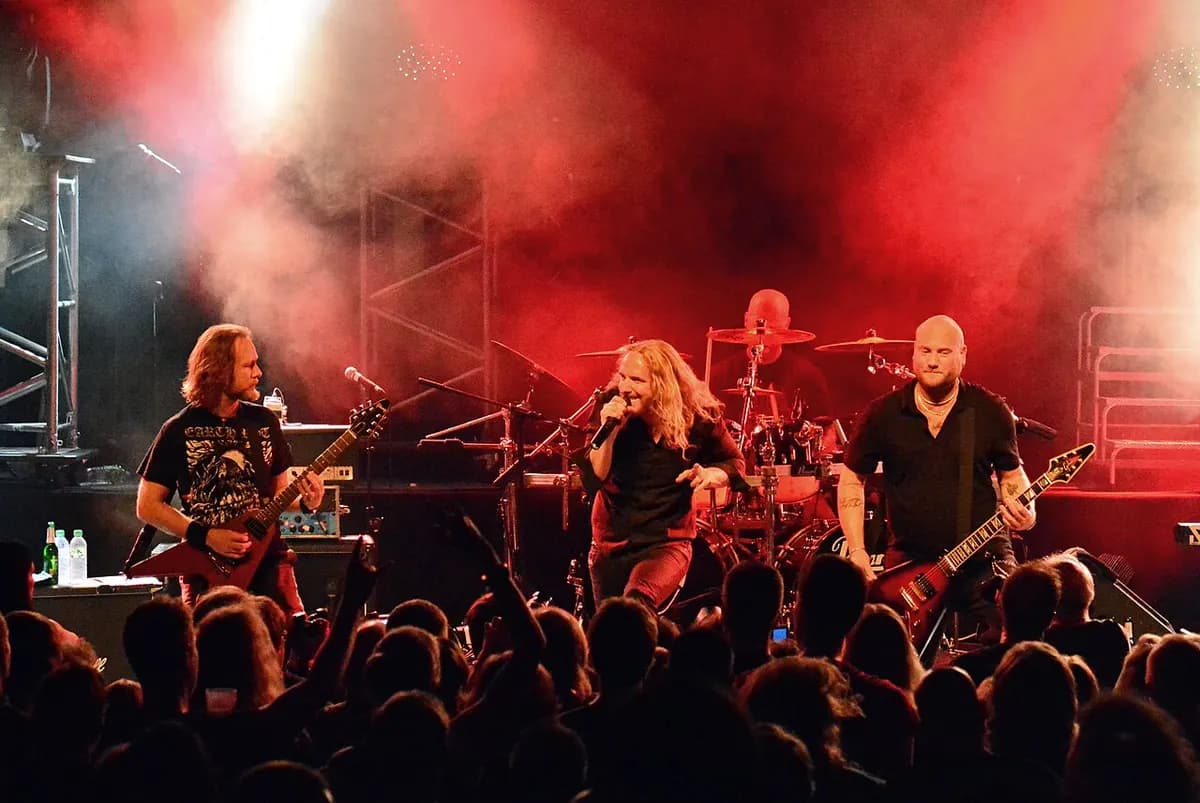
- Harmonised twin leads: two guitars playing the same melody in thirds or sixths, the style's most recognisable trait.
- Riff language: natural minor and Aeolian melodies, often with a folk-like contour; less chromaticism and dissonance than other death metal.
- Vocals: mid-to-high harsh rasp or scream, intelligible enough to follow; deep gutturals are uncommon; clean vocals appear in later and Finnish bands.
- Structure: clear verse-and-chorus forms, a recurring main theme, songs of three to five minutes.
- Tuning: commonly D standard to B standard, lower than thrash and generally higher than modern deathcore.
- Keyboards and acoustics: pads, leads and acoustic intros, especially in Dark Tranquillity and the Finnish scene.
- Themes: melancholy, nature, inner conflict and mythology; gore is rare.
Where it sits among related styles:
| Trait | Melodic Death Metal | Death Metal | Metalcore | Power Metal |
|---|---|---|---|---|
| Peak period | 1993–2005 | 1987–1995 | 1999–2010 | 1987–present |
| Typical BPM | 130–200 | 160–240 | 130–190 | 160–200 |
| Vocals | Harsh rasp/scream | Guttural growl | Screams + clean chorus | High clean tenor |
| Guitar focus | Harmonised melodies | Chromatic, tremolo riffs | Riffs + breakdowns | Gallops, twin leads |
| Mood | Melancholic | Brutal, dark | Aggressive, emotional | Uplifting |
| Reference | Slaughter of the Soul | Altars of Madness | The End of Heartache | Keeper of the Seven Keys |
Instruments & Production
The Gothenburg records share a recognisable production style, which later metalcore and melodic metal bands copied for two decades:
- Two lead-capable guitarists. The format depends on harmony parts, so most bands field twin guitars, tracked separately and panned wide.
- Bright, defined distortion instead of the cavernous low end of American death metal, so the melody stays audible through the gain.
- Driving drums with double kick, tight but not as relentlessly edited as later metalcore and deathcore.
- Keyboards, from atmospheric pads in Dark Tranquillity to the lead synths that duel with the guitar in Children of Bodom.
- Acoustic guitars and folk instruments for intros and interludes, a nod to Swedish and Finnish folk melody.
- Studio Fredman's sound: Fredrik Nordström's mixes, clear and mid-forward, became a reference for the whole style.
Scenes & Branches
Melodeath is best understood as a set of regional and stylistic schools:
- Gothenburg sound: the 1990s Swedish core: At the Gates, In Flames, Dark Tranquillity, and later Soilwork and Arch Enemy.
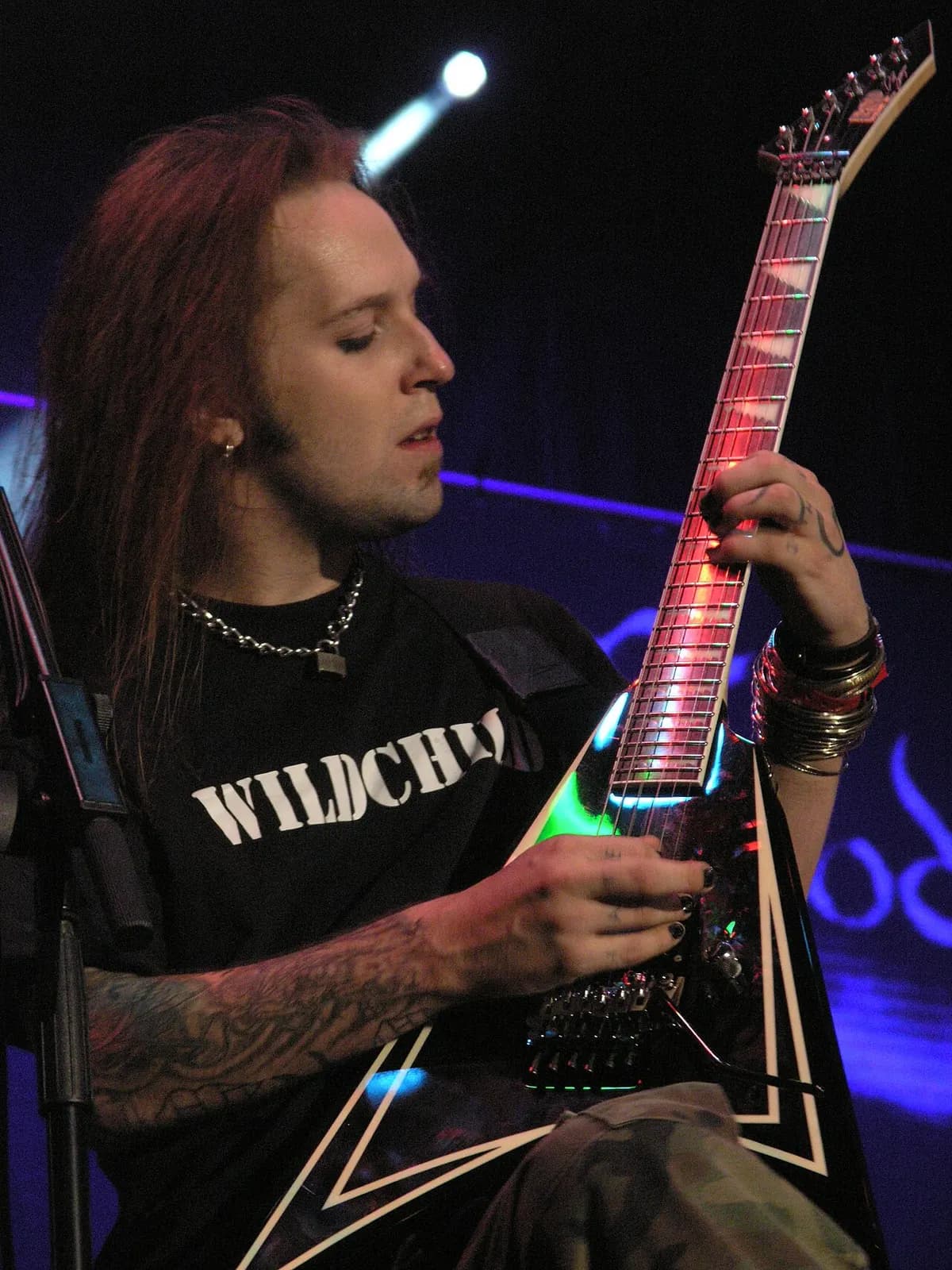
- Finnish melodeath: more melancholic, keyboard-rich and often slower: Insomnium, Omnium Gatherum, Kalmah, Wintersun; Children of Bodom at the virtuosic, neoclassical end.
- Viking melodeath: mid-tempo and anthemic, with mythological lyrics; Amon Amarth.
- American melodeath: faster and more aggressive: The Black Dahlia Murder, Arsis.
- Melodic black/death: the crossover with black metal pioneered by Dissection on Storm of the Light's Bane (1995).
- Melodic metalcore: the American offshoot that added hardcore breakdowns and clean choruses; see metalcore.
For how melodeath fits the bigger picture, see our guide to metal subgenres and the comparison of death metal vs black metal.
Key Bands & Records
Where to start:
- Carcass: Heartwork (1993), the British blueprint.
- At the Gates: Slaughter of the Soul (1995); "Blinded by Fear".
- In Flames: The Jester Race (1996), Whoracle (1997), Colony (1999), Clayman (2000).
- Dark Tranquillity: The Gallery (1995), Damage Done (2002).
- Dissection: Storm of the Light's Bane (1995).
- Children of Bodom: Hatebreeder (1999), Follow the Reaper (2000).
- Arch Enemy: Wages of Sin (2001), Doomsday Machine (2005) with "Nemesis".
- Soilwork: Natural Born Chaos (2002).
- Amon Amarth: Twilight of the Thunder God (2008).
- The Black Dahlia Murder: Nocturnal (2007).
- Insomnium: Above the Weeping World (2006).
Melodic Death Metal vs Death Metal & Metalcore
The two boundaries people most often ask about:
- Against death metal: listen to the vocal register and the harmony. Death metal growls low and writes chromatic, dissonant riffs; melodeath screams higher and writes tunes. Melodeath also tends to be tuned higher, mixed brighter and built on verse-and-chorus forms.
- Against metalcore: metalcore borrowed the melodeath riff wholesale but added hardcore's breakdown and, usually, a clean sung chorus. If the heaviest section is a half-time chug, it is metalcore; if it is a harmonised lead over a driving beat, it is melodeath.
- Against thrash metal: the drum beat is often the same, but thrash vocals are shouted, not screamed, and its riffs are downpicked and percussive where melodeath's are melodic.
- Against power metal: both love twin leads and keyboards, but power metal is sung cleanly and resolves to major-key uplift; melodeath stays harsh and minor.
Genre AI has no separate melodic death metal label. The coarse answer for a full-band section is likely to be Metal, and within it the closest subgenre is Death Metal, whose text prompts include the phrase "melodic death metal" itself. Alternatives, when shown, come only from the other Metal subgenres. Metalcore is the likeliest one, since metalcore was built from Gothenburg riffs and its prompts include "melodic metalcore"; Heavy Metal may also appear for the Maiden-style twin leads. Later, cleaner albums in the In Flames and Soilwork mould, with sung choruses, may come back with Metalcore on top. Acoustic intros and keyboard interludes, sampled on their own, carry no metal cues at all, so test a section where the twin guitars and the vocal are both present.