Folk rock is the fusion of folk songwriting with the electric instruments, drums and backbeat of rock. It broke through in 1965, when the Byrds turned Bob Dylan's "Mr. Tambourine Man" into a chart-topping single built on a chiming twelve-string Rickenbacker and Beatles-style harmonies, and Dylan himself plugged in at the Newport Folk Festival. Its hallmarks are jangling guitars, close vocal harmonies, literate, often socially aware lyrics and songs that keep folk's melodic and narrative core while adding a rock band underneath.
This guide covers how folk rock began in the United States and Britain, what it sounds like, its branches from country rock to Celtic rock, the records to start with, and how it differs from acoustic folk, country and Americana. To hear whether a track reads as folk, rock or both, drop a clip into our free AI music genre detector.
What Is Folk Rock?
Folk rock starts with a song that could be sung with one acoustic guitar and then gives it to a band. The material comes from the folk tradition or from singer-songwriters working in its style: strophic verses that tell a story or make an argument, simple diatonic chords, melodies anyone in the audience could sing. What rock adds is the electric guitar, bass and drum kit, a steady backbeat and studio production that makes the song work on the radio.
Folk rock is seldom aggressive. Its subjects are protest, love, landscapes, old ballads and personal reflection, sung with clear diction so the words come through. Harmony singing carries more weight than in most rock: the Byrds, Simon & Garfunkel, the Mamas & the Papas and Crosby, Stills & Nash all made blended voices a signature.
The term covers two related traditions. In America, folk rock grew from the Greenwich Village singer-songwriter scene and leaned on original songs. In Britain, bands such as Fairport Convention and Steeleye Span electrified traditional ballads and dance tunes, a branch sometimes called electric folk or British folk rock.
History & Origins
The early-1960s folk revival of Pete Seeger, Joan Baez, Peter, Paul and Mary and the young Bob Dylan made acoustic music commercially popular and politically charged. At the same time the Beatles and the British Invasion were remaking pop. Several musicians in the folk scene, including Roger McGuinn, David Crosby and Gene Clark, heard the Beatles and wanted to combine the two. The Animals' electric version of the traditional "The House of the Rising Sun" had already topped the US chart in 1964, and Dylan later named it as one reason he went electric.
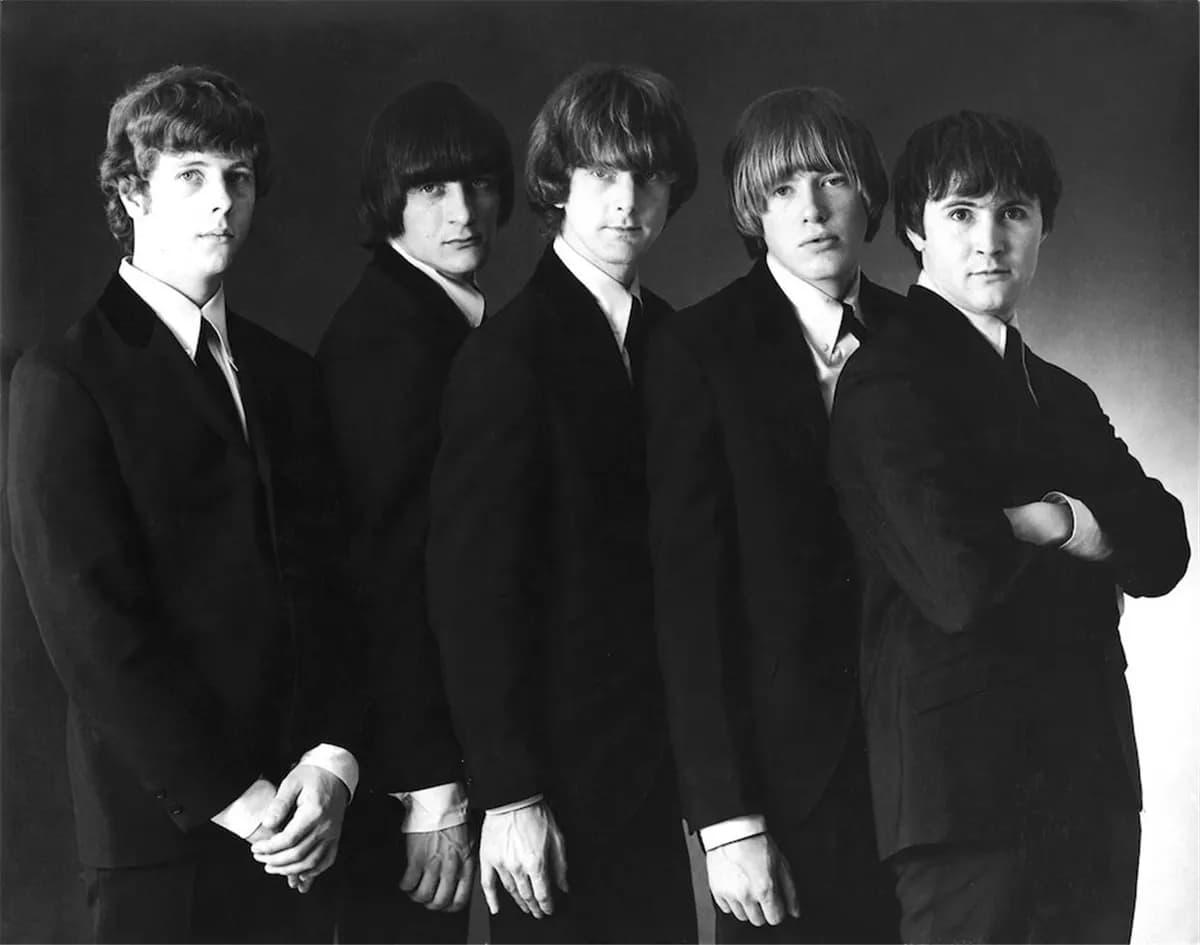
Most of it happened in 1965. In March, Dylan released Bringing It All Back Home, with one side recorded with an electric band. In April, the Byrds released their version of "Mr. Tambourine Man", built on McGuinn's twelve-string Rickenbacker and tight three-part harmony; it reached number one in the US and the UK that summer. In June the Billboard journalist Eliot Tiegel used the term "folk rock" to describe the Byrds' sound. On 25 July, Dylan played a loud electric set at the Newport Folk Festival with members of the Paul Butterfield Blues Band, and part of the crowd booed, an episode that has been retold and argued over ever since. "Like a Rolling Stone" and the album Highway 61 Revisited followed.
A wave of hits came quickly. The Byrds' "Turn! Turn! Turn!", adapted by Pete Seeger from the Book of Ecclesiastes, topped the US chart at the end of 1965. Producer Tom Wilson overdubbed electric guitar, bass and drums onto Simon & Garfunkel's acoustic "The Sound of Silence" without telling the duo, and it reached number one in the first week of 1966. Records by the Turtles and the Lovin' Spoonful, Barry McGuire's "Eve of Destruction" and the Mamas & the Papas' "California Dreamin'" came out in the same year or so. In Los Angeles, Buffalo Springfield released "For What It's Worth", and Stephen Stills of that band, David Crosby of the Byrds and Graham Nash of the Hollies later formed Crosby, Stills & Nash (debut album 1969), joined by Neil Young for Déjà Vu (1970).
In Britain the movement took a more traditional turn. Fairport Convention, with singer Sandy Denny and guitarist Richard Thompson, recorded Liege & Lief (December 1969), electric arrangements of English ballads. Its success did more than any other record to establish British folk rock as a genre of its own. Bassist Ashley Hutchings left to form Steeleye Span, and Pentangle mixed folk with jazz. Donovan, the Incredible String Band and others moved toward psychedelic folk.
From the late 1960s the style splintered. The Byrds' Sweetheart of the Rodeo (1968) helped launch country rock, which led to the Eagles and much 1970s California soft rock. In the 1980s R.E.M.'s jangling guitars and the Waterboys' Fisherman's Blues (1988) revived the sound, and the Pogues fused Irish folk with punk. In the late 2000s and 2010s, Mumford & Sons (Sigh No More, 2009) and the Lumineers brought stomping, banjo-driven folk rock back to the charts.
Key Characteristics & Sound
What marks a folk rock recording:
- Tempo: mostly moderate, with ballads slower and stomping 2010s folk rock faster.
- Rhythm: a steady rock backbeat on 2 and 4, often lighter than in hard rock; some British folk rock uses jigs and reels in 6/8.
- Harmony: simple diatonic chords, frequent use of major keys, modal melodies in traditional material.
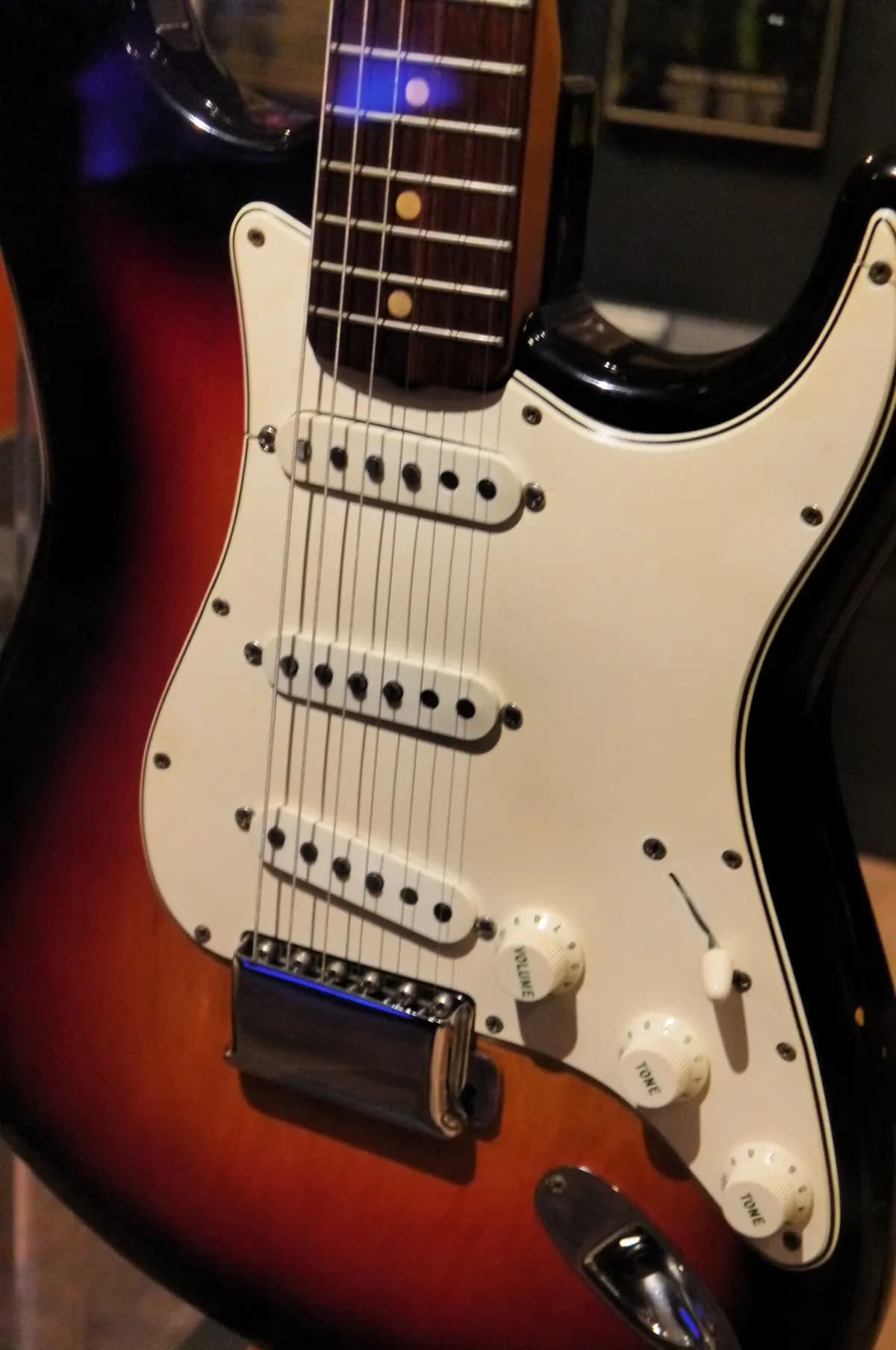
- Guitars: jangling electric twelve-string, strummed acoustic guitar layered with electric lead, clean or lightly overdriven tones.
- Vocals: clear, narrative singing and close two- or three-part harmony.
- Lyrics: protest and social commentary, personal reflection, story ballads and traditional texts.
- Folk instruments: harmonica, banjo, mandolin, fiddle and accordion added to the rock band.
How it compares with its neighbours:
| Trait | Folk Rock | Folk | Country Rock | Americana |
|---|---|---|---|---|
| Peak period | 1965–1972, revivals since | Traditional; revival 1958–1965 | 1968–1980 | 1995–present |
| Drums | Rock backbeat | Usually none | Rock backbeat | Varies, often light |
| Signature sound | Jangling 12-string, harmonies | Acoustic guitar and voice | Pedal steel, twang | Roots blend, acoustic and electric |
| Lyric focus | Protest, poetry, ballads | Tradition, story, protest | Love, road, Southern life | Roots storytelling |
| Typical line-up | Rock band plus acoustic | Solo or small group | Rock band plus pedal steel | Band with fiddle, mandolin |
| Reference track | Mr. Tambourine Man (Byrds) | Blowin' in the Wind | Take It Easy (Eagles) | Wagon Wheel |
Instruments & Production
Folk rock grafts folk instruments onto the rock band:
- Electric twelve-string guitar: Roger McGuinn's Rickenbacker gave the Byrds the chiming, bell-like tone most associated with the genre.
- Acoustic guitar: strummed rhythm or fingerpicked patterns, usually still present under the electric parts.
- Bass and drums: a plain pulse and a backbeat for radio, seldom pushed to the front.
- Harmonica: Dylan's rack harmonica is the most famous example.
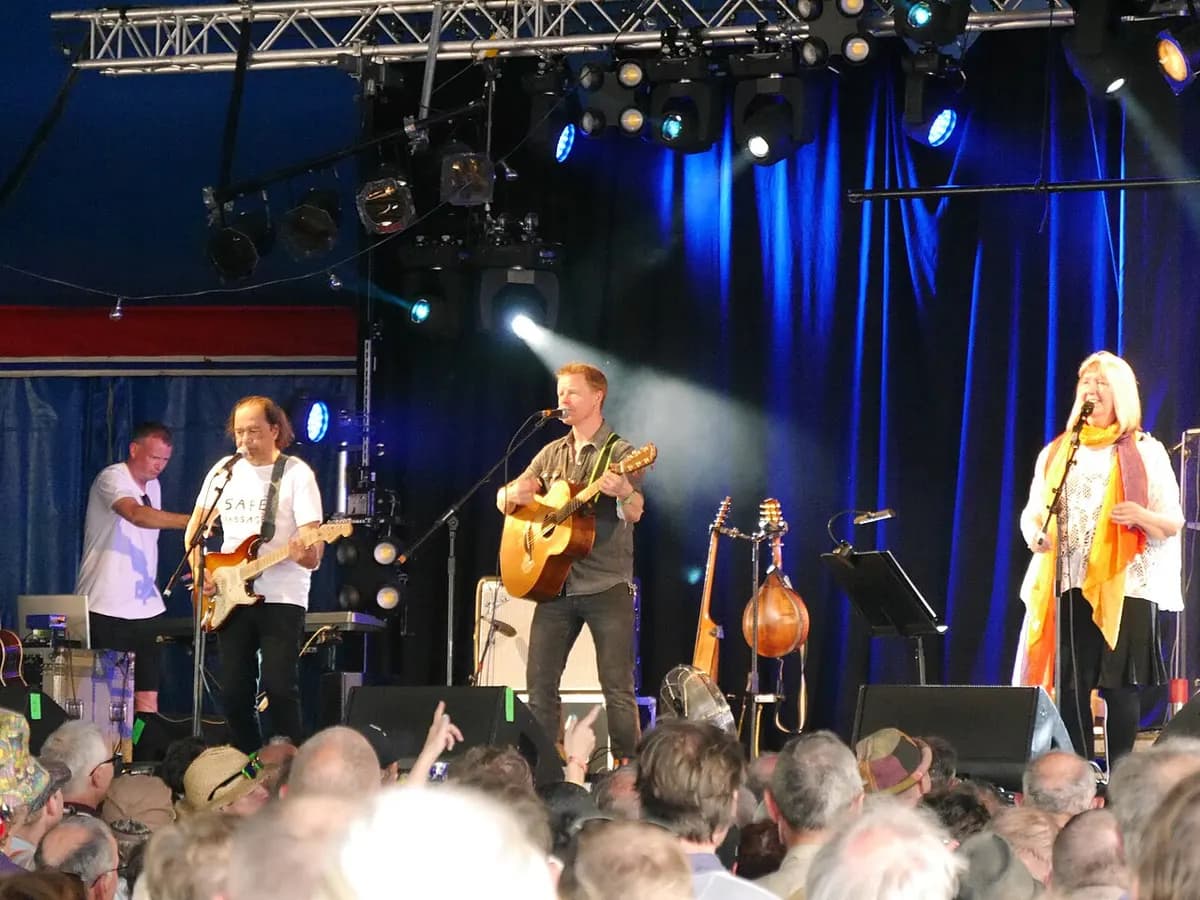
- Fiddle, mandolin, banjo, accordion: central in British folk rock (Dave Swarbrick's fiddle in Fairport) and in the 2010s revival.
- Organ: Al Kooper's organ line on "Like a Rolling Stone" is one of the best-known examples.
Production in the 1960s was bright and compressed for AM radio, with harmonies stacked high in the mix. Later folk rock, from CSNY onward, leaned toward warmer, more acoustic production; the 2010s revival favoured big, roomy recordings with group vocals and kick drum stomps.
Branches & Related Styles
- American folk rock: the 1965–1967 core, the Byrds, Dylan, Simon & Garfunkel, the Turtles, the Mamas & the Papas.
- British folk rock / electric folk: traditional songs electrified, by Fairport Convention, Steeleye Span, Lindisfarne.
- Psychedelic folk: folk with Eastern instruments, drones and studio effects, as played by the Incredible String Band, Donovan. Overlaps with psychedelic rock.
- Country rock: folk rock moving toward Nashville, from the Byrds' Sweetheart of the Rodeo, the Flying Burrito Brothers, the Eagles. The road to Americana.
- Celtic rock and folk punk: Irish and Scottish traditions with rock or punk energy, from Horslips, the Pogues, the Waterboys. See Celtic music.
- Jangle pop: the 1980s indie revival of the Byrds' sound, in R.E.M., the Smiths' guitar textures. Closely tied to indie rock.
- Stomp folk / nu-folk: the 2010s revival led by Mumford & Sons, the Lumineers, Of Monsters and Men.
Folk rock's gentler studio side also fed directly into 1970s soft rock and singer-songwriter music, and its metal cousin is folk metal.
Key Artists & Essential Albums
A starter shelf, in rough chronological order:
| Album | Artist | Year | Why it matters |
|---|---|---|---|
| Mr. Tambourine Man | The Byrds | 1965 | The jangling twelve-string template; the genre's first big hit |
| Highway 61 Revisited | Bob Dylan | 1965 | Dylan fully electric; 'Like a Rolling Stone' |
| Sounds of Silence | Simon & Garfunkel | 1966 | The overdubbed hit that made the duo stars |
| Buffalo Springfield Again | Buffalo Springfield | 1967 | Stills and Young before CSNY |
| Liege & Lief | Fairport Convention | 1969 | Founding record of British folk rock |
| Déjà Vu | Crosby, Stills, Nash & Young | 1970 | Harmony-led folk rock at its commercial peak |
| Below the Salt | Steeleye Span | 1972 | Traditional songs electrified; 'Gaudete' |
| Murmur | R.E.M. | 1983 | The jangle revival of the 1980s |
| Fisherman's Blues | The Waterboys | 1988 | Celtic folk rock in full flight |
| Sigh No More | Mumford & Sons | 2009 | The banjo-driven 2010s revival |
Folk Rock vs Folk vs Country
The clearest dividing line against folk is the drum kit. Traditional and revival folk is usually acoustic and drumless, carried by voice and guitar; once a full rhythm section and electric guitars arrive, the same song becomes folk rock. Folk rock also tends to be shorter and more radio-shaped, with choruses and arranged harmonies.
Against country and country rock, the tells are pedal steel, twangy Telecaster licks and a Southern vocal accent, which pull a track toward Nashville; folk rock is more likely to feature jangling twelve-string, harmonica and protest or literary lyrics. Against Americana, the difference is partly era: Americana is a later umbrella that absorbs folk rock, country and roots music. For the longer comparison of the two root traditions, see country vs folk.
How AI Detects Folk Rock
An audio model hears folk rock as a mixture: the strummed acoustic guitar, harmonica and clear vocal of folk, plus the electric guitar, bass and steady backbeat of rock. Bright twelve-string jangle and stacked vocal harmony are distinctive cues, and the absence of heavy distortion separates it from most other rock.
Because the balance shifts within a song, from an acoustic intro to a full-band chorus, the sampled section matters. Genre AI has a label for the style: Folk Rock, under the coarse Rock label. Try different parts of the same track in the Genre AI music genre detector, and see why songs have multiple genres for why two readings can both be right.
Folk rock has its own label in Genre AI: Folk Rock, one of the fine labels under the coarse Rock label, so a full-band track with jangling guitars and harmonies has a good chance of landing on it. When Rock wins, the alternatives can only be other Rock subgenres, and the most likely one is Soft / Pop Rock: polished 1970s productions such as CSNY or late Simon & Garfunkel share clean guitars, gentle drums and harmony vocals with soft rock. Sparse, acoustic-led verses with little drumming may instead push the coarse Folk / Country label above Rock, and then the answer becomes Folk, or Country for tracks with pedal steel or fiddle. The clearest folk rock reading is likely to come from a full-band chorus with acoustic and electric guitars together.