Djent is a style of modern progressive metal built around one sound: a tightly palm-muted, heavily gated chord on a very low string, struck in syncopated patterns that seem to drift across the bar line while the drummer's cymbal keeps a steady 4/4. The word is an onomatopoeia for that note. The source is the Swedish band Meshuggah; the scene that turned the sound into a movement grew online in the late 2000s around bands such as Periphery, TesseracT and Animals as Leaders.
This guide covers where the name came from, how the riffs work, the gear and home-studio production behind the scene, the key records, and where djent ends and metalcore or prog metal begins. To hear how a polymetric riff reads to a classifier, run a few seconds through our free AI music genre detector.
What Is Djent?
Say "djent" out loud and you have the sound: a short, percussive, almost metallic bark from a high-gain amplifier, cut off instantly by palm muting and a noise gate. On its own that is a guitar tone. What makes it a style is how the tone is used. Djent riffs are written as rhythmic cells of odd lengths (five, seven, eleven or thirteen sixteenth notes) repeated against a drum pattern whose snare and cymbal stay in plain common time. The kick drum usually follows the guitar exactly, so the low end moves in the odd pattern while the top of the kit marks the regular bar. The ear hears both at once, and the riff seems to slip in and out of phase until the cycles line up again.
Around that core sit other traits: extended-range seven- and eight-string guitars and very precise, often grid-edited performances. In the post-2010 wave the mechanical riffing is often set against wide, clean, ambient passages with sung vocals. Many djent records are instrumental, and many of the best-known players are guitarists first and bandleaders second.
Whether djent is a genre at all is a running argument inside the scene. Plenty of musicians treat it as a technique or a production aesthetic, and Periphery titled their 2023 album Periphery V: Djent Is Not a Genre as a joke about exactly that. In practice the word is used both ways: as a tone, and as a label for the bands that build their music on it.
History & Origins
Everything starts with Meshuggah, formed in Umeå, Sweden in 1987. Their early records were technical thrash, but by Destroy Erase Improve (1995) and Chaosphere (1998) guitarists Fredrik Thordendal and Mårten Hagström and drummer Tomas Haake had settled on the method djent later borrowed wholesale: low, palm-muted riffs in long odd-length cycles over a steady 4/4 hi-hat or cymbal. Nothing (2002) slowed the tempo and dropped the tuning further. The band moved to eight-string guitars after that album, and in 2006 they reissued Nothing with re-recorded guitar parts. obZen (2008), and especially its track "Bleed" with its relentless double-kick figure, became the reference point for a generation of home recordists.
A second influence came from England. SikTh, from Watford, mixed odd-metre riffing, two vocalists and a manic, glitchy energy on The Trees Are Dead & Dried Out Wait for Something Wild (2003). Periphery's Misha Mansoor has named them as a major influence, and their fingerprints are all over the later UK scene.
The scene itself formed on the internet. In the second half of the 2000s, guitarists recording at home with amp-modelling software and hardware posted demos to forums (SevenString.org above all) and to MySpace and YouTube. Misha Mansoor, recording as Bulb in the Washington, D.C. area, was the most visible of them; his demos became the band Periphery, whose self-titled debut arrived on Sumerian Records in April 2010. The word itself is usually traced to Meshuggah's guitarists, most often Thordendal, imitating their own palm-muted tone. Mansoor has said he picked it up on the Meshuggah fan forum, and it travelled from there with the forum threads and stuck to the whole movement.
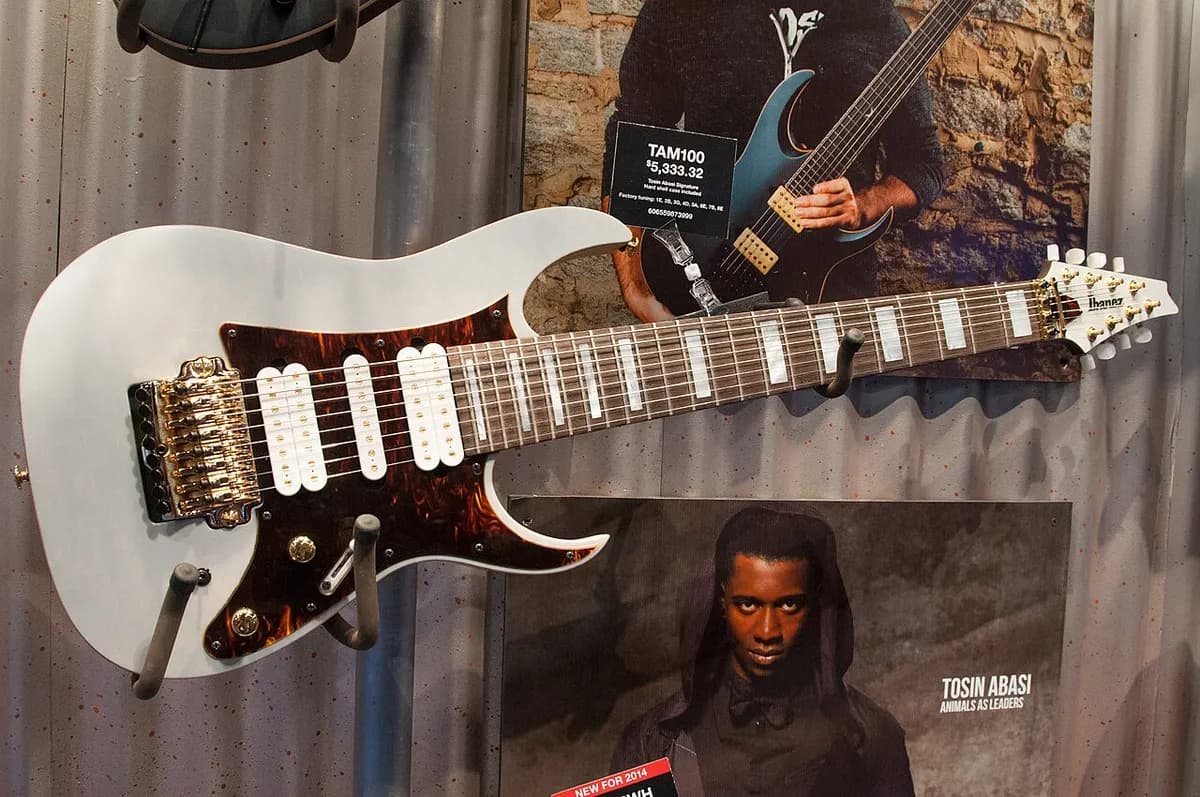
Around the same time, TesseracT from Milton Keynes released One (2011), pairing the riffing with atmospheric clean vocals. Animals as Leaders, led by eight-string guitarist Tosin Abasi, released a self-titled instrumental debut on Prosthetic Records in 2009 that pushed the style towards jazz fusion harmony; Mansoor produced it and programmed its drums. Textures in the Netherlands, Monuments in the UK, Uneven Structure in France and Vildhjarta in Sweden filled out the map. Vildhjarta's Måsstaden (2011) gave the scene its slower, murkier "thall" offshoot.
By the mid-2010s djent was no longer a separate scene so much as an ingredient. Its riffing and its eight-string tunings spread into progressive metalcore (Architects, Northlane, Erra), into deathcore (Born of Osiris, Veil of Maya, After the Burial) and into the instrumental guitar world of players such as Plini and Intervals. Canada's Spiritbox carried djent-derived low riffs to a much larger audience: "Holy Roller" (2020) entered Billboard's Hot Hard Rock Songs chart at No. 25, and their debut album Eternal Blue followed in 2021.
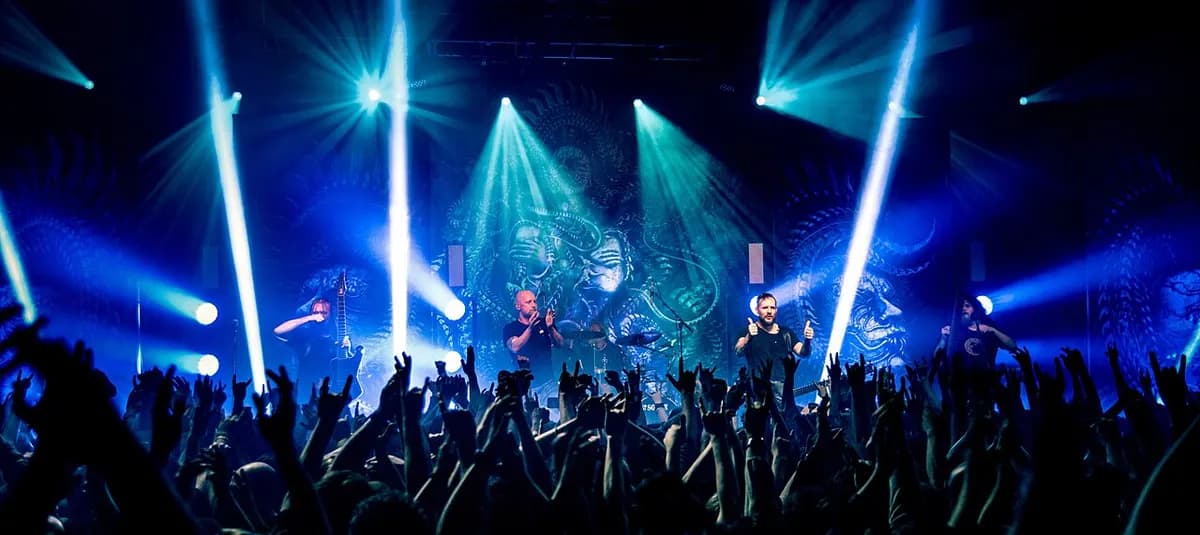
Key Characteristics & Sound
What identifies a djent track:
- Tempo: usually mid-paced, roughly 90–140 BPM. The density comes from subdivisions and syncopation, not from raw speed; blast beats are rare.
- Polymeter: guitar and kick play a repeating figure of odd length against a 4/4 snare and cymbal pattern; the two cycles resolve after several bars.
- Syncopation and rests: the gate cuts each note to nothing, so the silences between hits carry as much of the rhythm as the hits, and the riff reads like a drum part.
- Low tuning: seven-string guitars commonly in drop A or lower, eight-strings with a low F♯ or F; the riff often sits almost entirely on the lowest string.
- Tone: high gain but tight, with a sharp pick attack, a strong upper-mid "click" and very little low-end bloom.
- Harmony: riffs are often single-note or open fifths; melody and colour arrive in clean passages built from extended chords such as major sevenths, add9s and suspensions.
- Vocals: anything from none at all to a mix of harsh screams and soaring clean singing.
- Precision: performances quantised or edited to a tight grid; the music is meant to sound exact.
Where it sits among its neighbours:
| Trait | Djent | Progressive Metal | Metalcore | Math Rock |
|---|---|---|---|---|
| Typical BPM | 90–140 | 80–200 | 130–190 | 100–180 |
| Rhythmic idea | Odd cycles over a 4/4 pulse | Changing time signatures | Breakdowns, half-time | Odd meters, tapping |
| Guitar range | 7- and 8-string, very low | 6- or 7-string | 6- or 7-string, drop tunings | 6-string, clean or light drive |
| Tone | Gated, percussive, tight | Varied, often lush | Thick, chugging | Clean, bright |
| Vocals | None, or screamed + clean | Mostly clean | Screamed verses, clean choruses | Often instrumental |
| Reference | Meshuggah, Periphery | Dream Theater, Tool | Killswitch Engage | Battles, TTNG |
Instruments & Production
Djent is unusual among metal styles in that technology shaped its sound as much as players did:
- Extended-range guitars. Seven-string guitars were already common after the late-1990s nu metal boom; djent made eight-strings normal, and fanned-fret ("multiscale") necks became standard so that the lowest string stays tight enough to articulate.
- Amp modelling and direct recording. Hardware modellers such as the Fractal Audio Axe-Fx and software amp simulators let players record a finished-sounding guitar at home without a microphone. The scene grew up on that bedroom-studio economy.
- Noise gates. A fast gate on the guitar signal is what makes the rests silent; without it the riffs would smear.
- Programmed and edited drums. Many early demos used drum software, and even live-drummed records are usually edited tightly. Kick drums are triggered or replaced for a uniform, clicky attack.
- Bass often doubles the guitar exactly, an octave down or in unison, sometimes on five- or six-string instruments, and is processed to sit underneath the guitar.
- Ambient layers. Clean guitars with long delay and reverb, synth pads and post-rock swells give the heavy sections room to land.
The result is a mix with a very specific profile: extremely controlled low end, a hard transient on every guitar hit, and large dynamic contrast between gated riffs and open, washy clean sections.
Branches & Related Styles
The djent label covers several distinct directions:
- Meshuggah school: cold, relentless, almost no melody. Meshuggah themselves and their direct followers.
- Progressive or atmospheric djent: riffing plus large clean vocal choruses and ambient textures. Periphery, TesseracT, Monuments, Skyharbor.
- Instrumental djent: guitar-led, fusion-influenced, often eight-string. Animals as Leaders, Plini, Intervals, and Chon at the lighter end.
- Thall: slower, darker and deliberately murky, with dissonant low riffs and heavy reverb. Vildhjarta and the bands they influenced.
- Djent-influenced metalcore: breakdown-driven songwriting with djent tunings and syncopation. Northlane, Erra, Architects in their mid-2010s period, Spiritbox.
- Djent-influenced deathcore: Born of Osiris, Veil of Maya, After the Burial; see deathcore.
Djent also sits close to math rock in its love of odd groupings, though math rock usually changes time signatures openly where djent keeps a 4/4 frame and hides the odd lengths inside it. For the wider family tree, see our guide to metal subgenres.
Key Bands & Records
Where to start:
- Meshuggah: Destroy Erase Improve (1995), Nothing (2002), obZen (2008) with "Bleed", Koloss (2012).
- SikTh: The Trees Are Dead & Dried Out Wait for Something Wild (2003), the UK precursor.
- Periphery: Periphery (2010), Periphery II: This Time It's Personal (2012), Juggernaut: Alpha and Omega (2015).
- TesseracT: One (2011), Altered State (2013), Polaris (2015).
- Animals as Leaders: Animals as Leaders (2009), The Joy of Motion (2014).
- Textures: Silhouettes (2008).
- Vildhjarta: Måsstaden (2011), the origin of thall.
- Monuments: Gnosis (2012).
- After the Burial: Rareform (2008), the djent and deathcore crossover.
- Spiritbox: Eternal Blue (2021), djent tone in a modern metalcore frame.
Djent vs Prog Metal, Metalcore & Nu Metal
The three comparisons that come up most:
- Djent vs progressive metal. Progressive metal is the parent category: long forms, technical playing, shifting metres. Djent is a narrower subset defined by a specific rhythmic method and tone. A Dream Theater song changes time signature in plain sight; a Meshuggah riff keeps the cymbal in 4/4 and does its counting underneath.
- Djent vs metalcore. Metalcore is built around verse-chorus songwriting and the breakdown, a slowed-down section designed for the pit. Djent riffs can sound like breakdowns, but they are organised around the polymetric cycle, and the tempo usually stays where it is. Many modern bands do both.
- Djent vs nu metal. Both use low-tuned seven-strings and syncopated, muted riffs. Nu metal grooves on simple, hip-hop-derived rhythms with a loose, bouncy feel; djent is denser, more exact and far more interested in odd cycles.
| Listen for | Points to djent | Points elsewhere |
|---|---|---|
| Cymbal against riff | Steady 4/4 cymbal, riff out of phase | Cymbal follows the riff's metre (prog, math rock) |
| Silence between hits | Hard-gated, near-total silence | Sustained chords ring out (metalcore, nu metal) |
| Lowest note | Eight-string F/F♯ range | Drop C/D (metalcore) or standard E (thrash) |
| Tempo feel | Mid-paced, precise | Fast and blasting (death metal) or loose bounce (nu metal) |
| Clean sections | Ambient, delay-heavy, extended chords | Pop-structured choruses (metalcore) |
How AI Detects Djent
Djent gives a classifier a strong rhythmic fingerprint and a confusing harmonic one. The onset pattern is distinctive: hard, regular transients from the gated guitar and kick that do not line up with the steady pulse in the cymbal band, and near-silence between them. So is the bottom of the spectrum, with energy concentrated unusually low for a guitar, a clicky upper-mid attack and little in between.
The difficulty is that genre classifiers work with broad labels, and djent is a narrow one. Genre AI's production taxonomy has no djent label. A riff section will most likely be read as Metal, and the fine-grained answer is then picked among the Metal subgenres. Clean, ambient passages share almost nothing with the riffs and can sound like post-rock or atmospheric rock, in which case the Rock family may win instead; a vocal-led chorus with screams pulls the reading towards metalcore. Try a riff section and a clean section of the same song in the Genre AI music genre detector and compare the answers.
Genre AI's production taxonomy has no separate djent label. The likely coarse answer for a heavy section is Metal, and the result you see is the top fine label inside it. On gated, low riff sections the nearest candidates are Metalcore, the closest match for syncopated, chugging guitar under screamed vocals, and Nu Metal, which shares the low seven-string tuning and muted, rhythmic riffing. Any alternatives shown will be other Metal subgenres, such as Death Metal or Heavy Metal. Instrumental djent in the Animals as Leaders mould is the hardest case: with no vocal and fusion-style clean playing between riffs, the Rock family may win, and then the answer is likely to be Progressive / Psychedelic Rock (the label whose text prompts include "progressive metal"); a jazz-heavy passage could even land on Jazz and its Fusion subgenre. A clean, delay-soaked interlude sampled on its own can leave metal altogether, so for a fair read, test a passage where the eight-string riff and the drums are both playing.