Children's music is music written or performed for children: nursery rhymes, lullabies, play and action songs, educational songs, and the songs of children's television, film and, today, YouTube. It is defined by its audience and purpose, not by one sound. It is usually built from short, repetitive, singable melodies in a comfortable range, with clear lyrics and bright, simple arrangements. The composers and performers are almost always adults, and a good deal of it is written so that the parents listening alongside can stand hearing it many times.
Children's music overlaps with folk (many nursery songs are folk songs), musical theatre and film music (Disney songs), and Christmas music. This guide covers its history from nursery rhymes to streaming, how kids' songs are constructed, the main styles, key artists and songs, and how it differs from its neighbours. To hear how a kids' song reads to a classifier, run a clip through our free AI music genre detector.
What Is Children's Music?
The genre has always served three purposes at once. The first is care: lullabies and soothing songs that help babies sleep, found in almost every culture that has been studied. The second is play: clapping games, circle songs, counting-out rhymes and action songs such as "If You're Happy and You Know It" or "Head, Shoulders, Knees and Toes", where the music tells the body what to do. The third is learning: alphabet and counting songs, songs about colours, animals, manners and routines, and, since the 1960s, the deliberately educational songs of children's television.
Those functions shape the music. Melodies are short, stepwise and repetitive so that young voices can follow them. Lyrics are concrete and often include actions or call-and-response, and arrangements stay uncluttered so the words come through. A great deal of children's music is in the public domain (traditional rhymes and folk tunes reused for generations), and new commercial children's music is often built on the same patterns.
"Children's music" is also a large commercial industry: soundtrack albums of animated films, records by children's entertainers, TV theme songs, cover albums of pop hits re-sung by children, and the preschool video channels that now dominate streaming platforms.
History & Origins
Rhymes, lullabies and early print. Nursery rhymes and lullabies are among the oldest living songs in many languages, passed down orally long before they were written. Many English-language favourites have well-documented origins: "Twinkle, Twinkle, Little Star" sets words from Jane Taylor's 1806 poem "The Star" to the French melody "Ah! vous dirai-je, maman", the same tune Mozart used for a set of piano variations; "Mary Had a Little Lamb" was published by Sarah Josepha Hale in 1830. "Happy Birthday to You" grew out of "Good Morning to All", a song the Hill sisters wrote for kindergarten children in the 1890s.
The recording era. Children's songs are tied to the history of recording itself: Thomas Edison recited "Mary Had a Little Lamb" on his phonograph in 1877, and early record catalogues included separate children's sections. From the 1930s to the 1950s major labels issued albums of nursery rhymes, story records and read-alongs. Disney became central after Snow White and the Seven Dwarfs (1937), whose songs "Whistle While You Work", "Heigh-Ho" and "Some Day My Prince Will Come" set the pattern of a fairy tale told in animation with songs built into the story. At the first Grammy Awards in 1959, Best Recording for Children went to "The Chipmunk Song", the novelty hit by Ross Bagdasarian (as David Seville) and the Chipmunks.
Folk singers and educational television (1950s–1970s). Folk performers including Woody Guthrie, Pete Seeger and Ella Jenkins recorded songs for children, many of them for the Folkways label, and wrote them for children to sing back, not just to hear. Jenkins's first Folkways album, Call and Response: Rhythmic Group Singing, came out in 1957. Sesame Street launched in 1969 with songs by staff composers such as Joe Raposo and Jeff Moss, whose "Bein' Green" and "Rubber Duckie" were later covered by Frank Sinatra, Ray Charles and Little Richard. Mister Rogers' Neighborhood and Schoolhouse Rock! (from 1973) used songs to teach feelings, grammar, maths and civics.
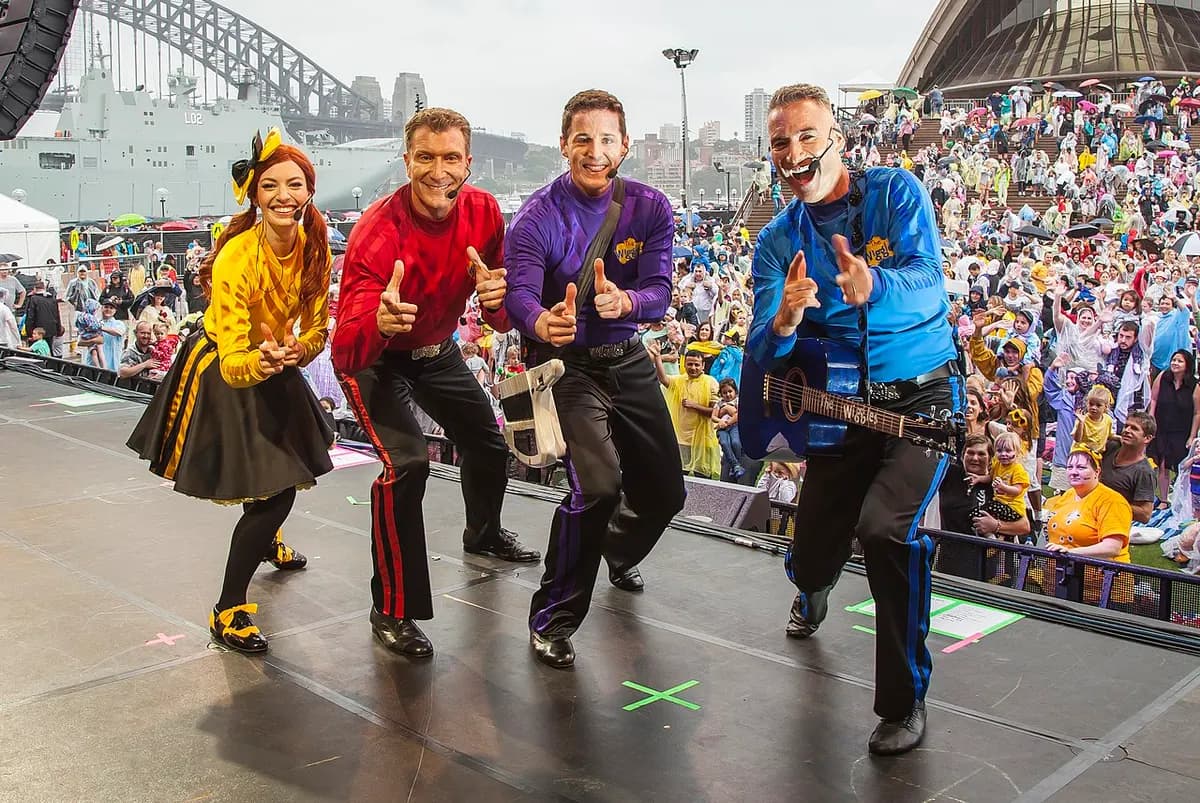
The children's music industry (1970s–1990s). In the late 1970s Canadian singer Raffi helped establish children's music as a distinct retail category; his "Baby Beluga" (1980) became a standard. Sharon, Lois & Bram, Fred Penner and others followed. Disney's animated revival from The Little Mermaid (1989) onward produced Oscar-winning songs, and in Australia The Wiggles, formed in 1991, grew into one of the best-known preschool acts in the world; their 1991 debut album is among the best-selling Australian albums. Kidz Bop, cover albums of current pop hits sung by children with edited lyrics, released its first album in October 2001.
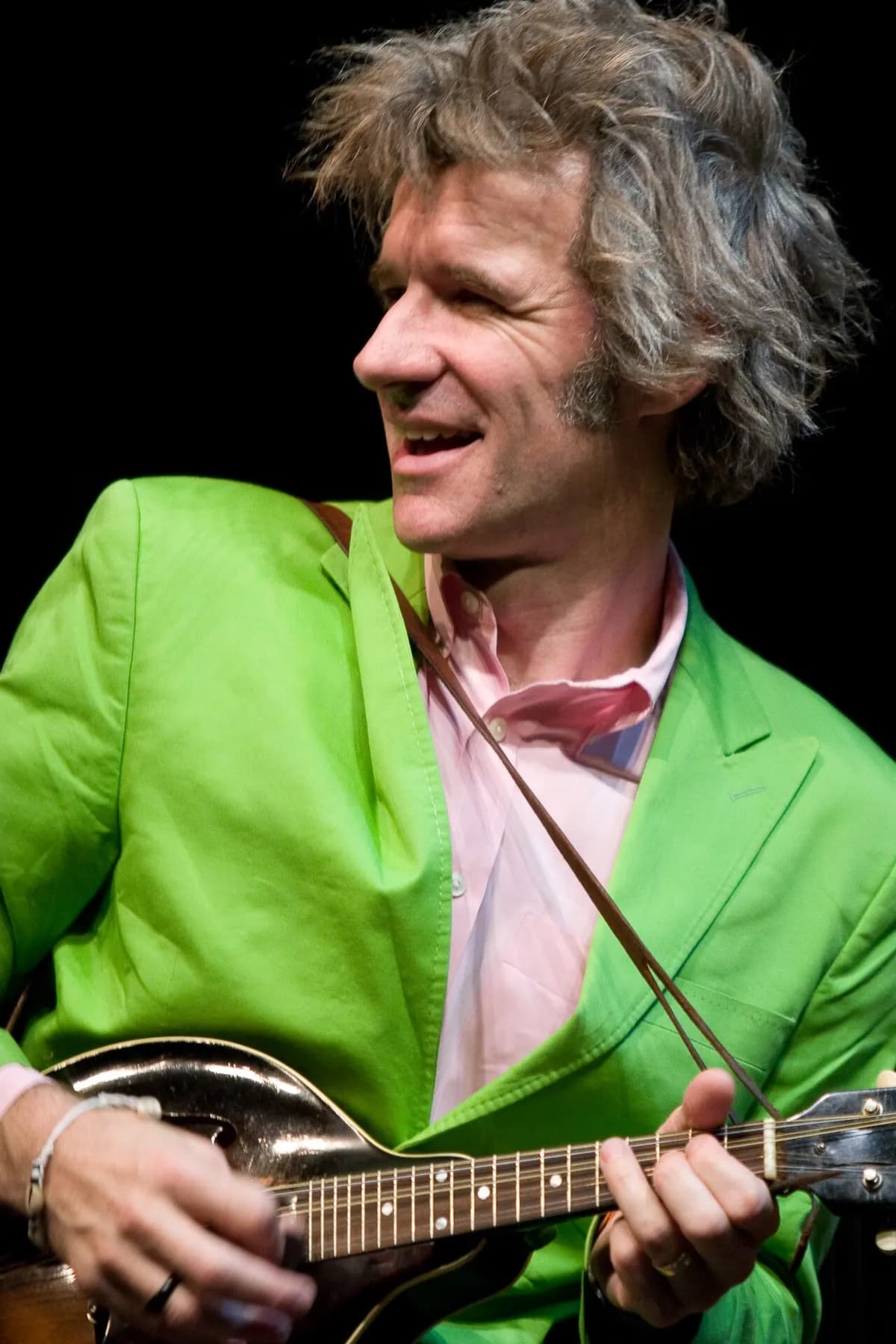
Kindie and the streaming era (2000s–today). A wave of independent "kindie" artists, among them Dan Zanes, Laurie Berkner and the alternative-rock band They Might Be Giants with its children's albums, made kids' music meant to be shared with parents. Then YouTube changed how the music was paid for and found. Animated nursery-rhyme channels such as Cocomelon and South Korea's Pinkfong built enormous audiences, and Pinkfong's 2016 "Baby Shark Dance" video passed "Despacito" in November 2020 to become the most-viewed video on YouTube, the first children's video to hold that spot. Film songs such as Frozen's "Let It Go" (2013) became playground anthems worldwide.
Key Characteristics & Sound
- Tempo: lullabies are slow, very roughly 60–80 BPM; singalongs and nursery rhymes moderate, around 90–120 BPM; action and dance songs a little faster. These are working figures, not a standard.
- Melody: short phrases, mostly stepwise motion and small leaps, and a narrow range; music-education texts put the comfortable range of three- to five-year-olds at roughly middle C to the A above.
- Harmony: overwhelmingly major keys and simple progressions built on I, IV and V; pentatonic melodies are common.
- Repetition: repeated choruses, cumulative verses ("Old MacDonald", "The Wheels on the Bus") and call-and-response so children can join in quickly.
- Lyrics: concrete and often instructional: counting, letters, animals, body parts, routines, feelings.
- Instruments: acoustic guitar, ukulele, piano, glockenspiel and xylophone, hand percussion, claps and shakers; modern productions add bright synths and programmed drums.
- Vocals: clear, friendly adult voices, often with a children's chorus; character voices and sound effects are common.
- Production: bright and uncluttered, vocals loud in the mix, few dynamic extremes.
How the main kinds of children's music compare:
| Type | Purpose | Typical tempo | Example |
|---|---|---|---|
| Lullaby | Soothing, sleep | 60–80 BPM | "Rock-a-bye Baby", "Brahms' Lullaby" |
| Nursery rhyme | Language, memory, play | 90–120 BPM | "Twinkle, Twinkle, Little Star" |
| Action / movement song | Physical play, coordination | 100–130 BPM | "Head, Shoulders, Knees and Toes" |
| Educational song | Teaching letters, numbers, facts | 90–120 BPM | Sesame Street, Schoolhouse Rock! |
| Film and TV songs | Storytelling, character | Varies | Disney soundtracks, TV themes |
| Kindie | Shared listening for kids and parents | Varies | Laurie Berkner, Dan Zanes |
Styles & Scenes
- Traditional nursery songs and lullabies: public-domain rhymes and folk tunes in every language, the core repertoire of the genre.
- Folk for children: participatory songs in the tradition of Pete Seeger, Ella Jenkins and Raffi, close to folk.
- Educational TV music: Sesame Street, Schoolhouse Rock! and the many preschool shows that teach through song.
- Film musical songs: Disney and other animated musicals, which share craft with musical theatre.
- Kids' pop: children's entertainers such as The Wiggles, and Kidz Bop's re-sung pop hits; close to bubblegum pop and teen pop in sound.
- Kindie: independent children's music made to be enjoyed by the whole family, often in rock, folk or indie-pop styles.
- Preschool video music: the animated nursery-rhyme channels of YouTube, with bright synth-pop arrangements of traditional songs.
- Holiday songs: "Rudolph the Red-Nosed Reindeer" and many seasonal favourites straddle children's music and Christmas music.
Key Artists & Classic Songs
A starter list of the names and songs that shaped children's music:
| Artist / source | Era | Known for | Why it matters |
|---|---|---|---|
| Disney (Snow White) | 1937 | "Whistle While You Work", "Heigh-Ho" | Set the template for animated film songs |
| The Chipmunks | 1958 | "The Chipmunk Song" | Novelty hit; early children's Grammy winner |
| Ella Jenkins | 1950s–2000s | Participatory call-and-response songs | The 'first lady of children's music' |
| Sesame Street | 1969–present | Songs by Joe Raposo and Jeff Moss | Raised the musical bar for kids' TV |
| Raffi | Late 1970s–present | "Baby Beluga" (1980) | Helped create children's music as a market |
| The Wiggles | 1991–present | Preschool songs and live shows | Global preschool phenomenon |
| Kidz Bop | 2001–present | Pop hits sung by kids | Children's versions of the pop charts |
| Pinkfong | 2010s–present | "Baby Shark Dance" (2016) | YouTube's most-viewed video from 2020 |
Children's Music vs Folk, Pop and Musical Theatre
Children's music vs folk. Much of the traditional children's repertoire is folk music: anonymous songs passed on by ear. The difference is the audience: a folk song becomes a children's song when it is chosen, adapted or simplified for children. Folk revival singers deliberately blurred the line.
Children's music vs pop. Modern kids' music borrows pop production wholesale, and pop for teenagers (teen pop, bubblegum pop) targets young listeners too. Children's music has simpler melodies, a narrower vocal range, a stated learning or play purpose and lyrics written for young children.
Children's music vs musical theatre and film music. Disney songs are written by theatre-style songwriters and follow musical theatre craft: they advance a story and reveal character. They become children's music because of their audience, and they tend to be more complex than nursery songs. For a broader look at how genre labels work, see our guide to music genres explained.
How AI Detects Children's Music
Children's music has a recognisable acoustic profile: bright timbres such as glockenspiel, xylophone, ukulele and toy-like synths, a clean vocal-forward mix, major-key stepwise melodies, very regular rhythms and, often, a children's chorus or exaggerated character voices. An audio model can use these cues even though it does not understand the lyrics.
The difficulty is overlap. A Disney ballad sounds like musical theatre, a Kidz Bop track sounds like the pop original, and a lullaby sounds like gentle instrumental or classical music. Genre AI does have a Children / Jingle label, but it has no subgenres, and the model gives priority to broad labels that do, so it rarely comes up (see the note below). Try a nursery rhyme and a film song in the Genre AI music genre detector and compare the labels.
Genre AI's production taxonomy has a broad Children / Jingle label, which covers kids' songs alongside jingles, short commercial tunes with a similarly bright, repetitive sound. Because that label has no finer subgenres, and the model picks any broad label that has them whenever one is among its top five, Children / Jingle wins only in the rare case that none is, and it never appears as an alternative: the alternatives are other subgenres of the winning label. The main answer will probably follow the arrangement: a synth-pop nursery-rhyme video may come back as Electronic Dance with Synth Pop underneath, a guitar-and-voice singalong as Folk / Country with Folk, a Kidz Bop cover as Rock with Soft / Pop Rock or under Electronic Dance, and a piano or music-box lullaby as Classical. Disney-style ballads, close to musical theatre, sound like Soundtrack or Pop, but those labels also lack subgenres and rarely come up; such a ballad is more likely to land on Jazz with Easy Listening or on Classical. The model hears the sound, not the intended audience, so a song written for children but arranged like adult pop will be classified by its arrangement.