
Shoegaze is guitar music in which the guitars stop sounding like guitars. Layers of distortion, reverb and pitch-bending effects are stacked until the band becomes a single moving texture, and the vocals sit inside that texture instead of on top of it. It formed in southern England between 1988 and 1991, spent two decades as a cult taste, and since around 2021 has found a large new audience of teenagers and twenty-somethings online.
This guide covers where the name came from, how the wall of sound is actually built, how shoegaze differs from alternative and dream pop, and which records to start with. To hear how a track reads to a classifier, run a few seconds through our free AI music genre detector.
What Is Shoegaze?
Shoegaze is a style of guitar rock defined by texture over articulation. Individual notes and words are deliberately blurred: heavy effects processing, feedback held as a musical element, and vocals mixed at the level of another instrument. The result is loud but rarely aggressive. The volume goes into density.
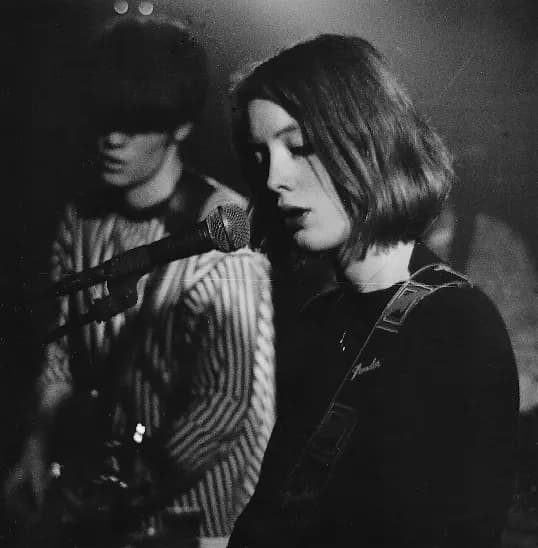
The name was an insult. In 1990 the British weekly music press (Melody Maker and Sounds among them) mocked these bands for standing motionless on stage, staring down at their banks of effects pedals instead of engaging the crowd. Musicians hated the term, journalists kept using it, and it stuck. The competing label of the moment, "the scene that celebrates itself", referred to the same London circuit of bands who went to each other's shows.
What separates it from its neighbours is where the emotion lives. In grunge or punk the vocal carries the song; in shoegaze the guitar tone carries it and the vocal is one more layer of the chord. Dream pop shares the haze but keeps the melody legible and the arrangement lighter. Cocteau Twins are dream pop's centre and shoegaze's direct ancestor, which is why the two terms are so often confused.
History & Origins
The pre-history runs through three records: The Jesus and Mary Chain's Psychocandy (1985), which put pop melodies under a sheet of feedback; Cocteau Twins' work on 4AD, which established the reverberant, wordless voice; and Sonic Youth's alternate tunings, which showed that a guitar could be treated as a tuned noise source.
The scene itself was concentrated in the Thames Valley and London around 1988–1991. My Bloody Valentine moved from noisy indie-pop to Isn't Anything (1988) and then to Loveless (1991), an album whose two-year, studio-hopping production famously ran up bills large enough to become part of Creation Records folklore. Ride (Nowhere, 1990), Slowdive (Souvlaki, 1993), Lush, Chapterhouse, Swervedriver and Pale Saints filled out the roster, mostly on Creation and 4AD.
The collapse was fast. In 1992–1994 the British press pivoted to Britpop's wit and lad-culture swagger, and shoegaze, inward and apolitical, became a punchline. Souvlaki got harsh reviews on release; Creation dropped Slowdive about a week after Pygmalion came out in 1995; My Bloody Valentine went silent for twenty-two years.
The rehabilitation came from outside Britain, from bands who used the old records as a technique manual. In France, Alcest welded the guitar wall to black metal, and San Francisco's Deafheaven took the idea further on Sunbather (2013). In the US, DIIV, Nothing, Whirr and Cloakroom carried a heavier version through the 2010s. Slowdive and Ride reformed in 2014, and My Bloody Valentine finally released m b v in 2013.
The most recent turn was algorithmic. From roughly 2021 short-video platforms pushed slowed, reverb-drenched clips of both the 1990s catalogue and a new bedroom generation (wisp, Julie, Parannoul, Weatherday, plus Duster's back catalogue) to an audience born long after the original scene ended.
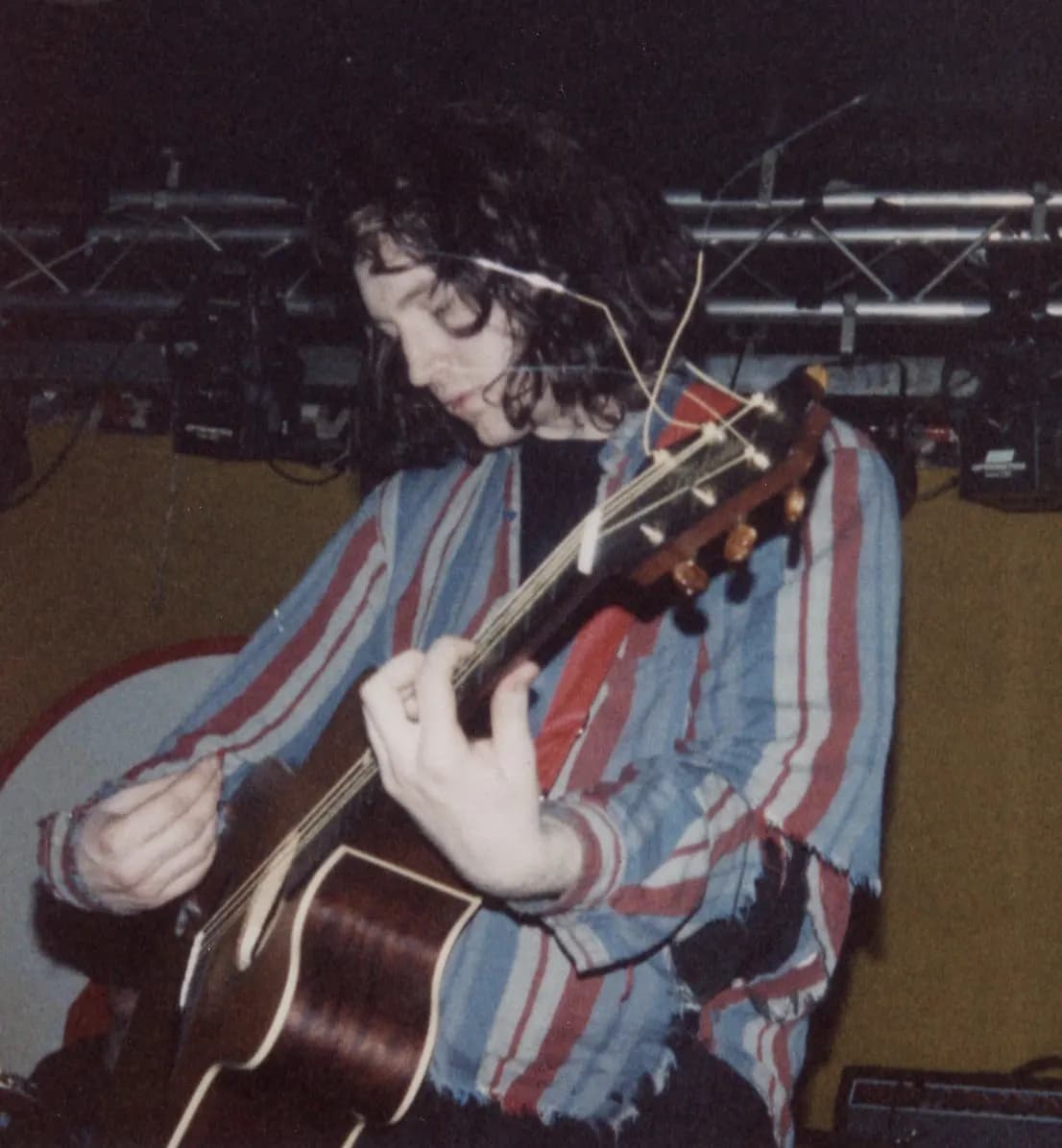
Key Characteristics & Sound
What identifies a shoegaze track:
- Guitar as texture: several tracks of overdriven guitar layered until no single part is audible on its own.
- Reverb and modulation as structure: reverse reverb, long decays and chorus cover whole sections, not single notes.
- Buried vocals: mixed level with the guitars, often androgynous, frequently unintelligible by design.
- Pitch instability, or the "glide": vibrato-arm bends held through a chord so the whole harmony sags and rises.
- Tempo: nothing is fixed, but most of the canon sits at 90–140 BPM. The slow feel comes from long chords and washed-out transients.
- Drums: simple, steady and often set back in the mix, a floor for the guitars to sit on.
- Harmony: major-key melodies clouded by dissonant overtones, so sweetness and noise share one chord.
- Dynamics: mostly loud and level, without grunge's quiet-loud swings; the wall is there from the first bar.
How it sits among close relatives:
| Trait | Shoegaze | Dream Pop | Grunge | Post-Punk |
|---|---|---|---|---|
| Guitar role | Texture, wall | Atmosphere, chime | Riff | Rhythm, scratch |
| Vocal placement | Inside the mix | Floating on top | Front and centre | Declaimed, dry |
| Distortion | Constant, layered | Light or none | Heavy, dynamic | Minimal |
| Effects | Reverb, pitch bend, chorus | Reverb, delay | Fuzz, wah | Delay, flange |
| Emotion carried by | Tone | Melody | Voice | Rhythm and lyric |
| Key album | Loveless (1991) | Heaven or Las Vegas (1990) | Nevermind (1991) | Unknown Pleasures (1979) |
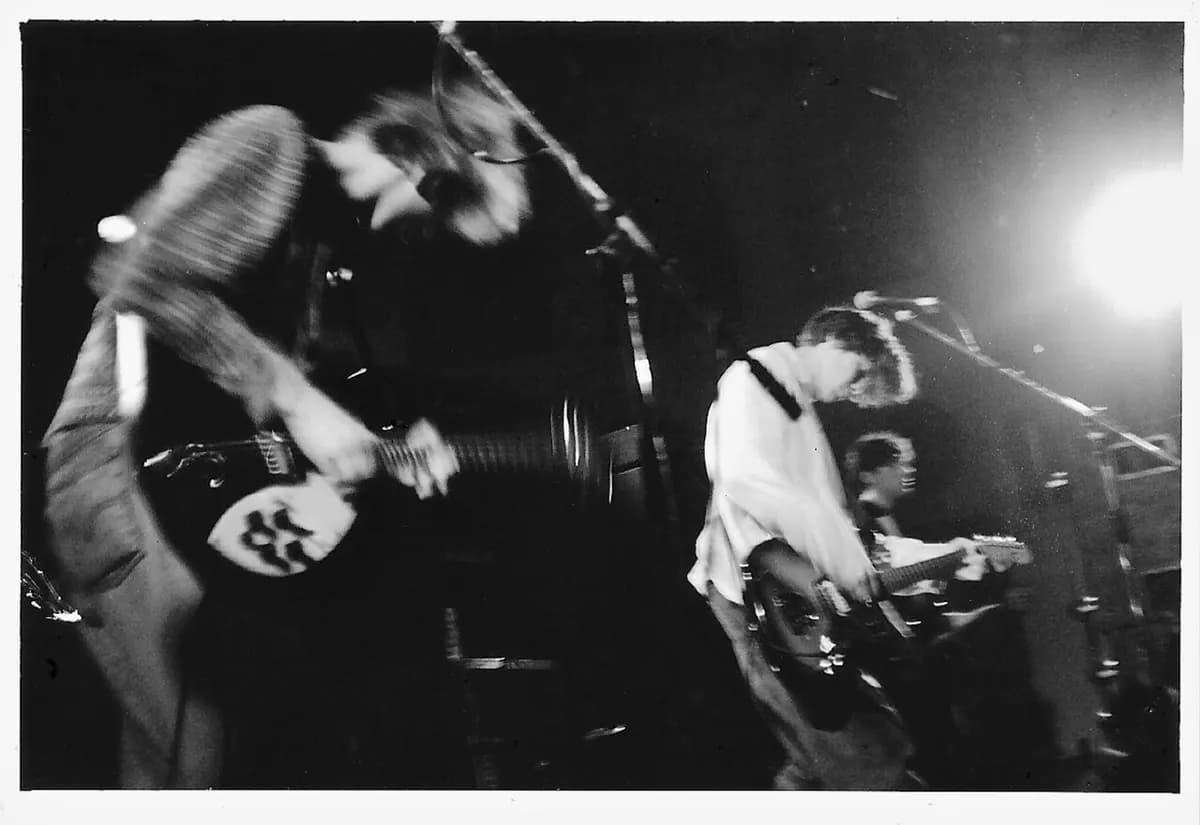
Instruments & Production
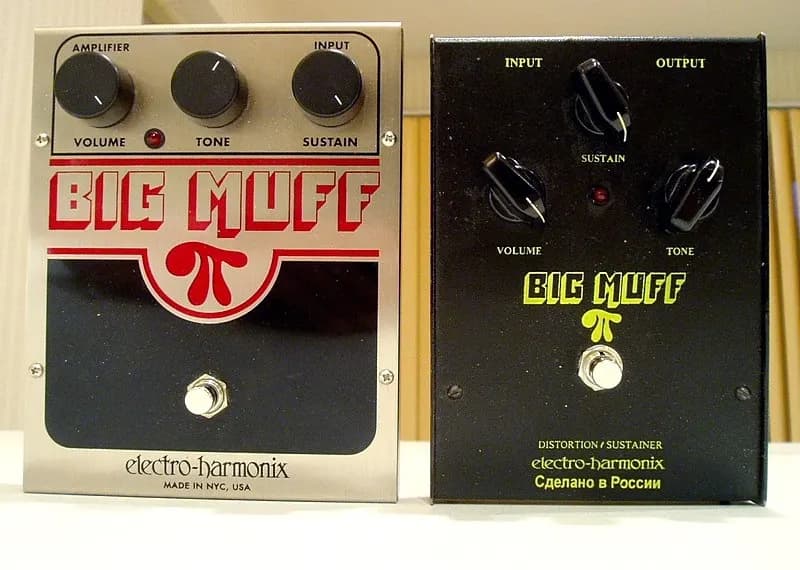
Shoegaze is one of the few genres where the equipment list is close to a definition:
- Offset guitars: the Fender Jazzmaster and Jaguar, prized for floating tremolo arms, the mechanism behind the glide.
- Large pedalboards: overdrive into modulation into reverb, where the order of the chain is itself a compositional choice.
- Reverse reverb: the reverse patch on the Yamaha SPX90 is the best-known processed sound of the era and is all over Loveless.
- Alternate and slack tunings: loosened strings that let chords detune under the vibrato arm.
- Layer counts in double figures: guitar parts recorded many times over and blended into one bed, not panned as separate voices.
- Vocal treatment: doubled, soaked in reverb, often deliberately low in the mix and sometimes fed through the same reverb bus as the guitars.
- Sampling and looping: Kevin Shields' method of sampling his own guitar and playing it back from a sampler blurred the line between performance and edit years before that was common in rock.
The modern bedroom version reproduces all of this in software, which is a large part of why the revival happened: a genre whose original records were famous for being expensive and slow to make is now achievable on a laptop with a stock reverb and a guitar plugin.
Subgenres & Related Styles
The family around it:
- Dream pop, the melodic and less distorted parent style: Cocteau Twins, Mazzy Star, Beach House.
- Blackgaze puts shoegaze textures over black metal tremolo picking and blast beats. Alcest, Deafheaven.
- Nu-gaze is the revival wave of the 2000s and 2010s, cleaner and more song-shaped: DIIV, The Pains of Being Pure at Heart.
- Noise pop means pop songwriting under feedback: The Jesus and Mary Chain, Yo La Tengo.
- Space rock is the longer, more repetitive neighbour: Spacemen 3, Loop.
- Slowcore shares the mood without the volume: Duster, Low.
- Emo is not a subgenre, but a frequent hybrid in the 2020s, where "shoegaze" often means emo songwriting with a shoegaze guitar bed.
Notable Artists & Tracks
Where to start:
- My Bloody Valentine: Loveless (1991), "Only Shallow", "Soon".
- Slowdive: Souvlaki (1993), "When the Sun Hits", "Alison".
- Ride: Nowhere (1990), "Vapour Trail", "Dreams Burn Down".
- Cocteau Twins: Heaven or Las Vegas (1990), from the dream-pop line shoegaze grew out of.
- Lush: Spooky (1992).
- Swervedriver: Raise (1991), the heavy, motorik end of the scene.
- Chapterhouse: Whirlpool (1991).
- Deafheaven: Sunbather (2013).
- DIIV: Oshin (2012), Deceiver (2019).
- Parannoul: To See the Next Part of the Dream (2021), the landmark of the bedroom era.
If you only have time for a few: Loveless for the invention and Souvlaki for the songs, then Sunbather to hear the texture meet metal.
How AI Detects Shoegaze
Shoegaze is unusually legible to a classifier because its defining traits live in the spectrum, not in song structure. A model sees a dense, continuous mid-band with almost no silence, high spectral flatness where the guitars sit, long reverb tails that smear note onsets, and a vocal formant sitting at roughly the same level as the instruments instead of above them. Tempo tells it almost nothing: the same 120 BPM appears in half the guitar music ever recorded.
The predictable confusions are with neighbours that share the wall: dream pop when the distortion drops, alternative or indie rock when the vocal is pushed forward, metal when tremolo picking and blast beats enter. Run a track through the Genre AI music genre detector and see our full explainer on shoegaze for more on the scene itself.
Testing this style in Genre AI ourselves, Shoegaze behaves less like a genre with its own skeleton and more like a filter laid over another genre. Take the same chord progression, mix the vocal up and dry it out, and the reading moves to Indie Rock; leave the vocal buried and let the reverb tails overlap, and Shoegaze and dream pop dominate the alternatives list. The clearest single signal is what happens between notes: in most guitar rock the sound decays and leaves gaps, and in shoegaze it never does. Tracks with tremolo-picked guitar over blast beats sit almost exactly halfway between this label and Black Metal, which is a fair description of blackgaze.