Chopped and screwed is a Houston hip-hop remix technique, and also the regional sound that grew out of it. A DJ slows an existing rap record on the turntable until the tempo sinks to roughly 60–75 BPM and the voices drop into a low drawl ("screwed"). Then the DJ cuts it up with stuttered repeats, skips and rewinds between two copies of the same record ("chopped"). DJ Screw worked it out on Houston's South Side in the early 1990s, and it spread on hand-dubbed cassettes years before radio played it.
This guide covers where the style came from, how the technique works, the Screwed Up Click and Swishahouse scenes, records to start with, and how it differs from two relatives: Memphis rap, which developed at the same time a few hundred miles away, and phonk, which later borrowed from both. To hear how a slowed, pitched-down track reads to a classifier, drop a clip into our free AI music genre detector.
What Is Chopped and Screwed?
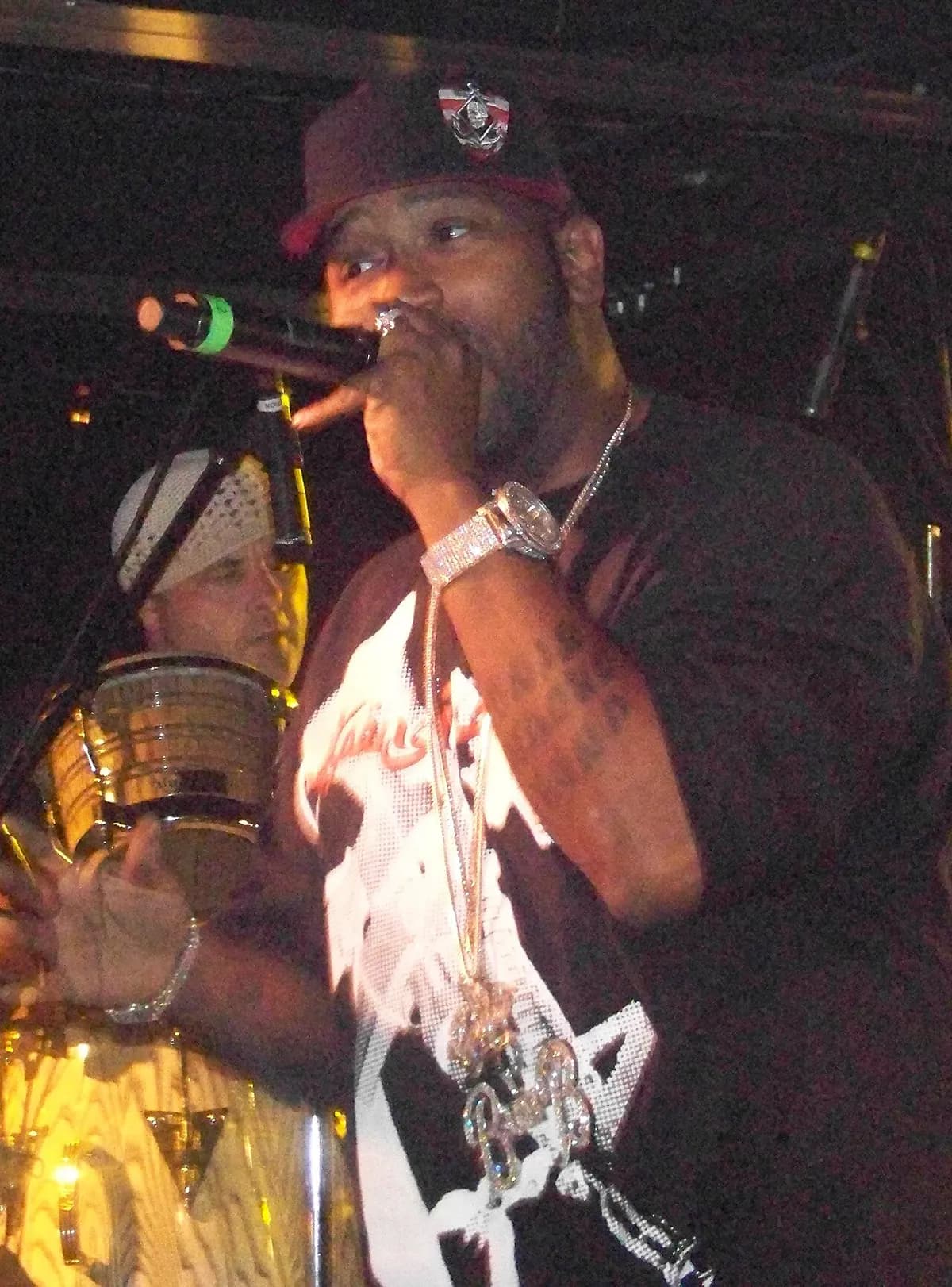
Strictly speaking, chopped and screwed is a way of playing records, not of writing songs. A DJ takes a finished track (usually Southern rap, often a local Houston single, sometimes an R&B ballad) and changes it in two ways. Screwing lowers the playback speed. On a turntable, unlike in time-stretching software, tempo and pitch fall together: the beat drags, the bass gets deeper, the hi-hats lose their crispness and every voice drops several semitones. Chopping is the second layer. With the same record on both decks, the DJ cuts back and forth to repeat a word, stutter a bar, let a phrase echo or hold a line.
A three-minute song can stretch past five. The lyrics get easier to follow word by word, and the mood turns heavy and unhurried. In Houston it is music for driving slowly ("slow and throwed", in the local phrase), and it is tied to the city's car culture of candy-painted "slabs" on protruding "swangas" rims.
Over time the term also came to cover original productions made to sound screwed from the start, and the Houston rap tradition that grew up around the tapes. Today's "slowed + reverb" uploads on YouTube and TikTok are distant descendants. They keep the slowdown but usually drop the chopping, the DJ's choice of which bar to repeat, and the Houston context.
History & Origins
DJ Screw was born Robert Earl Davis Jr. in 1971 in Smithville, Texas, and later moved to Houston. He was slowing records down by the late 1980s, and in the early 1990s he was selling cassettes from his house on Houston's South Side. Customers ordered custom tapes: a list of songs, slowed and chopped, with Screw's own commentary and dedications. The gray cassette shells gave the genre its first nickname, the gray tapes.
Screw also invited local rappers to freestyle over slowed instrumentals at his house, and those sessions turned into a collective called the Screwed Up Click (S.U.C.). Members included Fat Pat, Big Hawk, Big Moe, Lil' Keke, E.S.G., Big Pokey, Lil' Flip, Z-Ro and the Botany Boyz. The tape June 27th (1996), built around a long group freestyle over one slowed beat, is still quoted by Houston rappers, and Fat Pat's "Tops Drop" became a local anthem after he was killed in 1998.
Screw's official releases, among them 3 'N the Mornin' (Part One) and (Part Two) in the mid-1990s, let people outside Houston hear what the tapes sounded like. In 1998 he opened Screwed Up Records & Tapes on Cullen Boulevard. Several members of the scene died young. DJ Screw died in November 2000, aged 29, of a codeine overdose; Big Hawk was shot dead in 2006, and Big Moe died in 2007. "Lean" or "purple drank" (codeine cough syrup mixed with soda) runs through the music, celebrated on records like Big Moe's City of Syrup (2000) and mourned after the deaths it caused.
On the North Side, a separate scene formed around Michael "5000" Watts and the Swishahouse label, which he co-founded in the late 1990s. Watts and his DJs, OG Ron C among them (his slogan "chopped not slopped" became a brand), ran their own mixtape series. Swishahouse also put out early work by the artists who took Houston national in the mid-2000s: Mike Jones, Paul Wall, Slim Thug and Chamillionaire. "Still Tippin'" (2004), with Mike Jones, Slim Thug and Paul Wall, got the attention of major labels, and their albums arrived in 2005, often with an official "chopped and screwed" edition alongside.
From there the sound travelled. UGK from Port Arthur, Texas, had already brought slow Southern rap to listeners across the country. New York's A$AP Rocky built much of his early sound on Houston textures. Drake's Houston-referencing "November 18th" (2009) used a slowed, screwed vocal, and Houston's own Travis Scott made pitched-down passages part of his signature. Chopped and screwed editions of big albums are still released, and OG Ron C's "ChopNotSlop" remixes have covered mainstream releases too.
How Chopping and Screwing Works
The technique is easy to describe and hard to do well. A chopped and screwed record usually has these traits:
- Turntable slowdown. The platter runs below its normal speed, typically pulling a 90–100 BPM rap track down to around 60–75 BPM, and pitch drops with it, so a voice falls by several semitones.
- Pitch tied to tempo. Modern time-stretching keeps the two apart; a slowed turntable changes the timbre. Kick drums turn boomy, snares get heavier, vocals sound deeper and slurred.
- Chops. With two copies of the same record, the DJ repeats a word or a bar, lets a phrase double up as an echo, or jumps back a beat, all decided live.
- Stops and rewinds: brief halts, backspins and "throwback" repeats that let a line land twice.
- Long running times. Slower playback makes every song longer, and the tapes play as continuous sets with no gaps between tracks.
- Commentary and shout-outs. On the original gray tapes, Screw and guests dedicate songs to friends, neighbourhoods and customers.
- Source material. Southern rap with roomy, mid-tempo beats works best. Soul and R&B ballads get screwed too, and a slowed hook can become almost hypnotic.
How the same track changes when it is screwed:
| Property | Original record | Chopped and screwed version |
|---|---|---|
| Tempo | 90–100 BPM | About 60–75 BPM |
| Pitch | Original key | Several semitones lower |
| Vocals | Natural register | Deep, slurred, drawling |
| Drums | Tight, punchy | Heavy, boomy, spacious |
| Song length | 3–4 minutes | 5–7 minutes |
| Structure | Verse–hook as written | Repeated words, doubled bars, rewinds |
| Context | Single or album track | Continuous tape or mix |
Scenes, Labels & Related Styles
The Houston tradition has several branches, and a few outside styles sit close to it:
- South Side / S.U.C.: DJ Screw's tapes and the rappers who freestyled on them. Looser and more communal, and where the style began.
- North Side / Swishahouse: Michael "5000" Watts and OG Ron C, with tighter mixtapes, a label structure and the 2000s commercial breakthrough.
- Official screwed editions: major-label albums released with a companion chopped and screwed version. Houston artists started it; national acts followed.
- Memphis rap: a separate 1990s Southern tape scene with its own lo-fi, dark sound. Later listeners often slow it down, but it is not a screw tradition itself.
- Phonk: the 2010s internet genre that samples Memphis tapes and borrows screwed vocal pitch-downs, then adds cowbell melodies and distorted 808s.
- Cloud rap: hazy, reverb-heavy rap from the early 2010s that took the mood of screwed music but not its turntable method.
- Slowed + reverb: the YouTube and TikTok edit format that slows a song and adds reverb. It is the closest mass-market relative, minus the chopping.
- Vaporwave: online music that also slows and pitches down existing recordings, mostly 1980s pop and muzak instead of rap.

Key Artists & Records
Where to start:
- DJ Screw: 3 'N the Mornin' (Part Two), plus the tape June 27th (1996) for the freestyle side.
- Fat Pat: "Tops Drop", from Ghetto Dreams (1998).
- Big Moe: City of Syrup (2000), half sung, half rapped, and very slow.
- Lil' Keke: Don't Mess wit Texas (1997).
- E.S.G.: "Swangin' and Bangin'", a song about the slab car culture.
- UGK: Ridin' Dirty (1996), a Port Arthur album that reached listeners far outside Texas.
- Mike Jones, Slim Thug & Paul Wall: "Still Tippin'" (2004), the Swishahouse breakthrough.
- Paul Wall: The Peoples Champ (2005).
- Chamillionaire: "Ridin'" (2005).
- A$AP Rocky: Live. Love. A$AP (2011), New York rap built on Houston textures.
- Travis Scott: Rodeo (2015) and Astroworld (2018), named after the Houston theme park.
A good exercise: play a Houston single, then its screwed version straight after. What changes between the two is the genre.
Chopped and Screwed vs. Memphis Rap, Phonk & Slowed + Reverb
People mix these styles up because they share a slow, dark mood, and the two oldest grew up on 1990s cassettes. The table shows where they part ways:
| Trait | Chopped and Screwed | Memphis Rap | Phonk | Slowed + Reverb |
|---|---|---|---|---|
| Origin | Houston, early 1990s | Memphis, early 1990s | Online, 2010s | YouTube/TikTok, 2010s |
| What it is | DJ remix technique + scene | Original tape rap | Production genre | Edit format |
| Typical BPM | 60–75 | Varies; slow, half-time feel | 130–160 (drift phonk) | Source minus 10–20% |
| Signature move | Chops, repeats, rewinds | Lo-fi, dark, triplet flows | Cowbell, distorted 808 | Reverb wash |
| Vocals | Pitched down, slurred | Raw, often eerie | Sampled Memphis lines | Original vocal, lowered |
| Key name | DJ Screw | Three 6 Mafia, DJ Spanish Fly | DJ Smokey, Kordhell | Anonymous uploaders |
How AI Hears Chopped and Screwed Music
For a classifier, chopped and screwed is an odd case: the genre is a transformation of the recording, and the instruments stay the same. The rhythm is still a rap rhythm, the drums are still drum machines and the voice is still rapping, so the parent label hip-hop is clear. What changes is the spectrum. Energy slides downwards, transients soften, vocal formants drop as if a deeper voice were rapping, and the tempo estimate lands in a range rap rarely uses at normal speed.
The chops are hard for any model that listens to a short window. A ten-second clip may hold one repeated word or none, and the slowed texture looks the same to a model whether a DJ made it on two turntables in 1995 or someone exported a "slowed" edit last week. Run a screwed track and its original through the Genre AI music genre detector and compare the two readings. The parent genre usually survives the slowdown; the second-place labels show how far the texture moved.
What to expect from an audio classifier such as Genre AI: the production taxonomy has no separate chopped and screwed label, so look for the parent, Rap / Hip-Hop. The slowdown tends to shift the sub-labels. Heavy, slow, dark material can drift toward Trap or Gangsta, since a deep 808-style low end and a slow tempo are what those categories share, and a screwed R&B ballad may come back as R&B. The likeliest mix-up is with phonk and Memphis rap: all three are slowed and low, and a short audio window cannot tell a Houston turntable from a modern edit. Read the result as "rap, slowed", and use the source record and its history to decide which tradition it belongs to.