
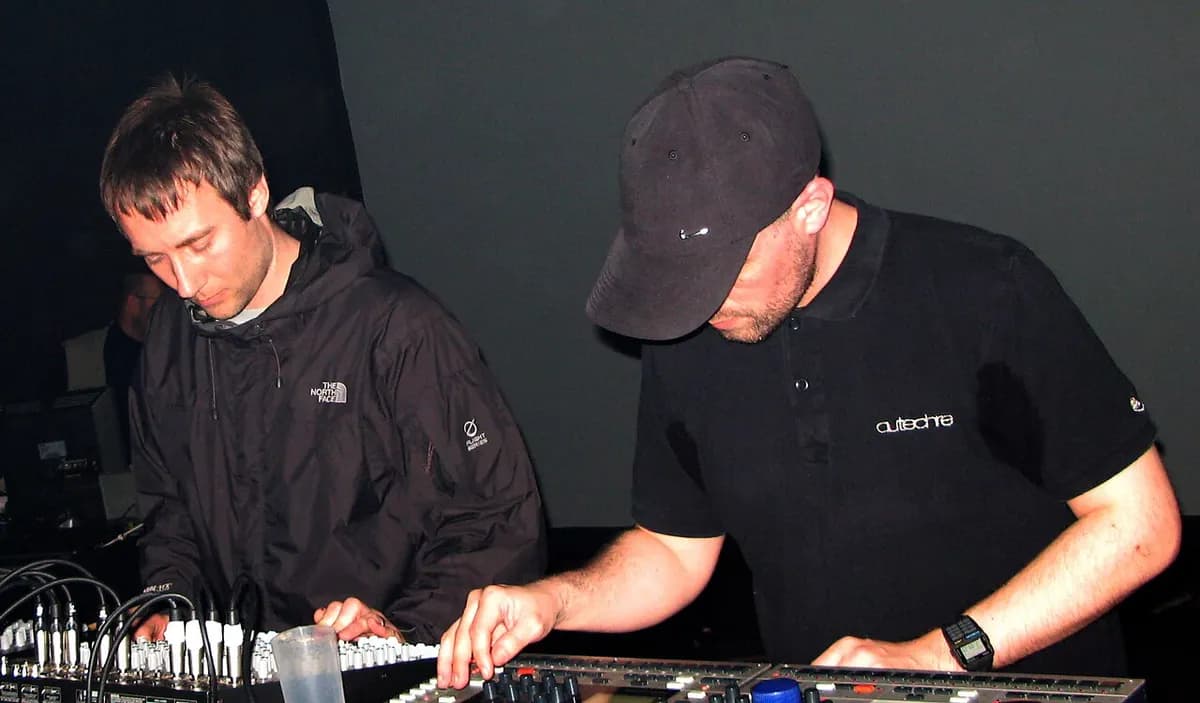
IDM (intelligent dance music) is electronic music that borrows the machines and rhythms of the dance floor and uses them for home listening. It formed around Warp Records in Sheffield in the early 1990s, and its central artists are Aphex Twin, Autechre and, from 1998, Boards of Canada.
This guide covers where the label came from, why nearly every artist attached to it disowns the term, what the music actually sounds like, and how it differs from ambient, techno, and breakbeat. To test where a track lands, run a few seconds through our free AI music genre detector.
What Is IDM?
IDM is electronic music made from dance-music materials (drum machines, samplers, synthesizers, breakbeats) and arranged to be listened to closely, not mixed in a DJ set. Tracks change constantly instead of looping, rhythms are programmed and edited beyond what a drummer could play, time signatures wander, and the structure ignores the eight-bar phrasing that DJs rely on. Tempos run anywhere from 60 to 170 BPM, sometimes within one track.
The genre is defined more by intent than by any single sound. An IDM record can be beatless and melodic (Boards of Canada), violently rhythmic (Squarepusher), or abstract to the point of sounding broken (Autechre's later albums). What they share is that none of it is made for a club: it works on headphones with no crowd and no DJ.
About the name. The musicians it describes mostly dislike it. Richard D. James and Autechre have both rejected it, since "intelligent" implies that the rest of dance music is not. Rephlex Records, which James co-founded, used "braindance" instead, and Warp's own phrase was "electronic listening music." The term survived anyway because listeners needed a word, and more than thirty years later it is still the one people search for.
History & Origins
The founding document is a compilation. In 1992 Warp Records released Artificial Intelligence, with the cover line "electronic listening music from Warp" and a sleeve showing an android relaxing in an armchair beside Kraftwerk and Pink Floyd records. It gathered Aphex Twin (as The Dice Man), Autechre, B12, Speedy J, The Black Dog, Richie Hawtin (as UP!) and The Orb's Alex Paterson. The pitch was rave-derived music sold as an album for sitting down and listening at home.
The name arrived a year later, and it came from listeners, not from the label. In August 1993 an internet mailing list called IDM was set up in the United States to discuss exactly these records, and the acronym spread from there into the music press, where the artists soon started complaining about it.
Much of the core catalogue came out in the mid-1990s. Aphex Twin's Selected Ambient Works 85–92 (1992) and …Richard D. James Album (1996), Autechre's Incunabula (1993) and Tri Repetae (1995), and records by µ-Ziq, Plaid and Luke Vibert set the vocabulary. Squarepusher pushed programmed breakbeats past what a drummer could play into drill'n'bass, and Aphex Twin's "Come to Daddy" (1997), with its Chris Cunningham video, got the sound onto MTV.
In parallel, German and Austrian artists on labels such as Mille Plateaux, Mego and Raster-Noton turned digital error into material. The result was glitch: Oval's records built from skipping CDs, and later Fennesz and Alva Noto. The two strands overlapped throughout.
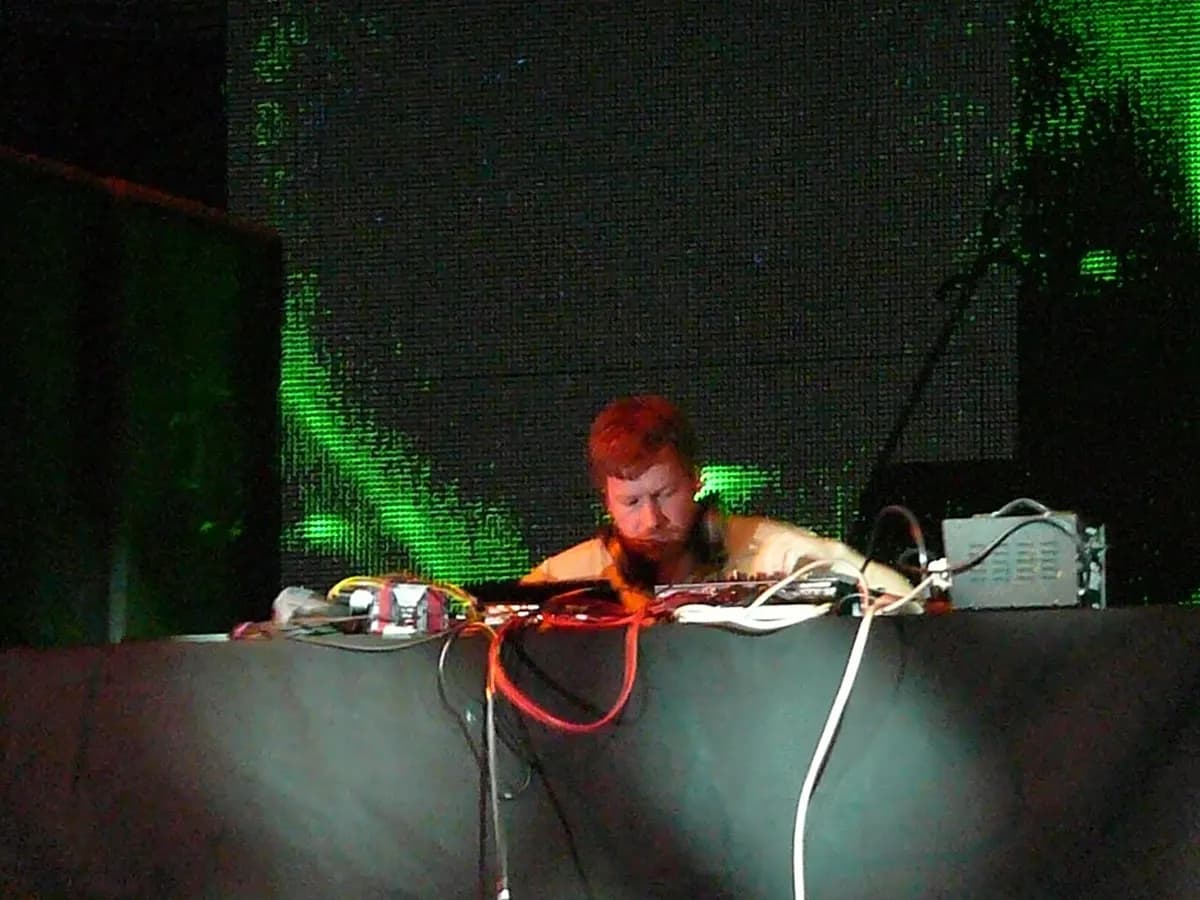
After 2001, when Autechre's Confield leaned on generative, algorithm-driven rhythm, the genre split between abstraction and melody. Warp, Rephlex, Skam and Planet Mu kept releasing it, and a later generation (Clark, Jlin, Oneohtrix Point Never, Arca, Lorenzo Senni) took up the approach without much using the name. Arca, for example, went on to co-produce for Kanye West, Björk and FKA twigs.
Key Characteristics & Sound
What tends to be true of IDM records:
- Tempo: anywhere from 60 to 170 BPM, and frequently unstable within a track.
- Rhythm: programmed breakbeats micro-edited beyond human performance; odd meters (5/4, 7/8) and shifting subdivisions.
- Structure: through-composed; sections rarely repeat identically, and there is no DJ-friendly intro or outro.
- Harmony: unusually developed for electronic music; modal, chromatic, often deliberately detuned.
- Timbre: granular synthesis, resampling, bit reduction, digital artefacts used as instruments.
- Mood: nostalgic and pastoral (Boards of Canada) or cold and mechanical (Autechre), rarely euphoric.
- Format: album-oriented, with track lengths set by the material, not by a DJ's needs.
Against its nearest neighbours:
| Trait | IDM | Ambient | Techno | Drum and Bass |
|---|---|---|---|---|
| Purpose | Listening | Atmosphere | Dancing | Dancing |
| Tempo | 60–170 BPM, unstable | 50–90 BPM | 125–150 BPM | 160–180 BPM |
| Rhythm | Programmed, irregular | Often none | Four-on-the-floor | Breakbeat, steady |
| Repetition | Avoided | Central | Central | Central |
| Format | Album | Album | 12-inch / DJ set | 12-inch / DJ set |
| Typical label | Warp, Rephlex, Skam | Kranky, 12k | Ostgut, Tresor | Hospital, Metalheadz |
Instruments & Production
IDM is a producer's genre, and its history tracks the history of music software:
- Samplers: Akai S-series and E-mu machines, used to chop the Amen and other breaks into individual hits.
- Trackers and sequencers: early records were often made in tracker software, which encourages exactly the kind of per-step editing the genre is known for.
- Max/MSP and custom patches: Autechre's generative rhythms and Aphex Twin's homemade tools treat code as an instrument.
- Analogue synths and drum machines: TR-909, TB-303, Roland and Korg polysynths, run through unusual processing.
- Tape and hardware degradation: Boards of Canada's characteristic wow and flutter, deliberate pitch drift, VHS-era saturation.
- Granular and spectral processing: stretching, freezing, and reconstructing sounds beyond recognition.
The working method matters as much as the tools. IDM producers typically build a track by continuous transformation, so that no loop survives unedited from start to finish, which is why the music resists the copy-paste arrangement that most dance genres depend on.
Subgenres & Related Styles
The family around IDM:
- Braindance: Rephlex's counter-name for the same music, covering Aphex Twin, µ-Ziq, and Cylob.
- Drill'n'bass: hyper-edited breakbeats at extreme speed (Squarepusher, Luke Vibert).
- Glitch: digital error as raw material (Oval, Fennesz, Alva Noto).
- Ambient techno: the slower, atmospheric side of the early Warp catalogue (B12, The Black Dog).
- Electroacoustic and modern computer music: the academic tradition IDM keeps borrowing from.
- Ambient: the closest neighbour when the drums drop away.
- Lo-Fi: a distant descendant, via Boards of Canada's tape-warmth aesthetic.
Notable Artists & Tracks
The core listening list:
- Aphex Twin: Selected Ambient Works 85–92 (1992), …I Care Because You Do (1995), "Windowlicker" (1999).
- Autechre: Incunabula (1993), Tri Repetae (1995), Confield (2001).
- Boards of Canada: Music Has the Right to Children (1998).
- Squarepusher: Feed Me Weird Things (1996), Big Loada (1997).
- µ-Ziq: Lunatic Harness (1997).
- Plaid: Not for Threes (1997), Double Figure (2001).
- The Black Dog: Bytes (1993).
- Oval: 94diskont (1995).
- Clark: Body Riddle (2006).
- Jlin: Black Origami (2017).
If you only hear three: Selected Ambient Works 85–92 for melody, Tri Repetae for rhythm, Music Has the Right to Children for atmosphere.
How AI Detects IDM
IDM is one of the hardest genres for an audio classifier, because it is defined by intent and context, not by a consistent set of acoustic features. A Boards of Canada track and an Autechre track share almost nothing measurable (tempo, timbre and rhythmic density all differ), yet both are IDM. Models trained on audio alone tend to route the melodic end toward ambient and the rhythmic end toward breakbeat or drum and bass.
The cues that do work are rhythmic irregularity and editing density: beat trackers struggle to lock onto a stable grid, and onset patterns show far more unique events per bar than a loop-based genre produces. That instability is itself a signal. Try it in the Genre AI music genre detector and read how AI music genre detection works for why intent-defined genres are the difficult case.
Testing this style in Genre AI ourselves, IDM is the clearest example of a genre a model can hear but not name. Beatless, tape-warm material reads as Ambient or Lo-Fi; chopped-break material reads as Breakbeat or Drum and Bass; the Autechre end usually returns Electronic with low confidence across the board. Low confidence spread across several electronic labels, with no single strong winner, is in practice a decent fingerprint for the genre: the model is telling you the track does not fit any one label.