Bhangra is dance music from Punjab, the region divided between India and Pakistan. It is driven by the bouncing rhythm of the dhol drum and the one-string tumbi, with loud Punjabi vocals broken up by shouts of "balle balle" and "hoi". It began as a folk dance at Vaisakhi, the spring harvest festival, and in the 1980s the Punjabi diaspora in Britain turned it into pop and club music played on synthesizers and drum machines, later mixed with hip-hop and reggae.
The word covers two things: the folk dance and the music made for it. This guide covers both: the village roots, the British bhangra boom, the Indian Punjabi pop of Daler Mehndi, the international hit "Mundian To Bach Ke" and the line between bhangra and today's Punjabi hip-hop. It also explains how bhangra differs from Bollywood film songs, which borrow its beat constantly. To see how a classifier reads a dhol-driven track, try a few seconds in our free AI music genre detector.
What Is Bhangra?
In Punjab, bhangra is first of all a dance, traditionally performed by men in a circle with raised arms, shoulder shrugs and leaps, at harvest time and later at weddings. Its female counterpart is giddha, built on clapping and sung couplets called boliyan. The music that accompanies these dances is rhythmic folk song over dhol, with call-and-response lines and short, often humorous or proud verses about village life, love and the land.
Outside Punjab, "bhangra" usually means the popular music that grew from that tradition: Punjabi-language songs on dhol rhythms and folk melodies, arranged with modern instruments for dancing. You can pick it out within a bar or two. The drum pattern is heavy and swung, a plucked tumbi riff sits high above it, and the singer uses an open-throated, high register meant to carry over a crowd.
Bhangra is not the same as Bollywood music, though the two share audiences. A Hindi film song is written for a scene, sung mostly in Hindi or Urdu and arranged by a film composer; when it borrows a dhol beat and a Punjabi hook, it is quoting bhangra. Bhangra also differs from the Sufi devotional song qawwali, another Punjabi tradition, which is built on harmonium, tabla and handclaps and is sung at shrines and religious gatherings.
History & Origins
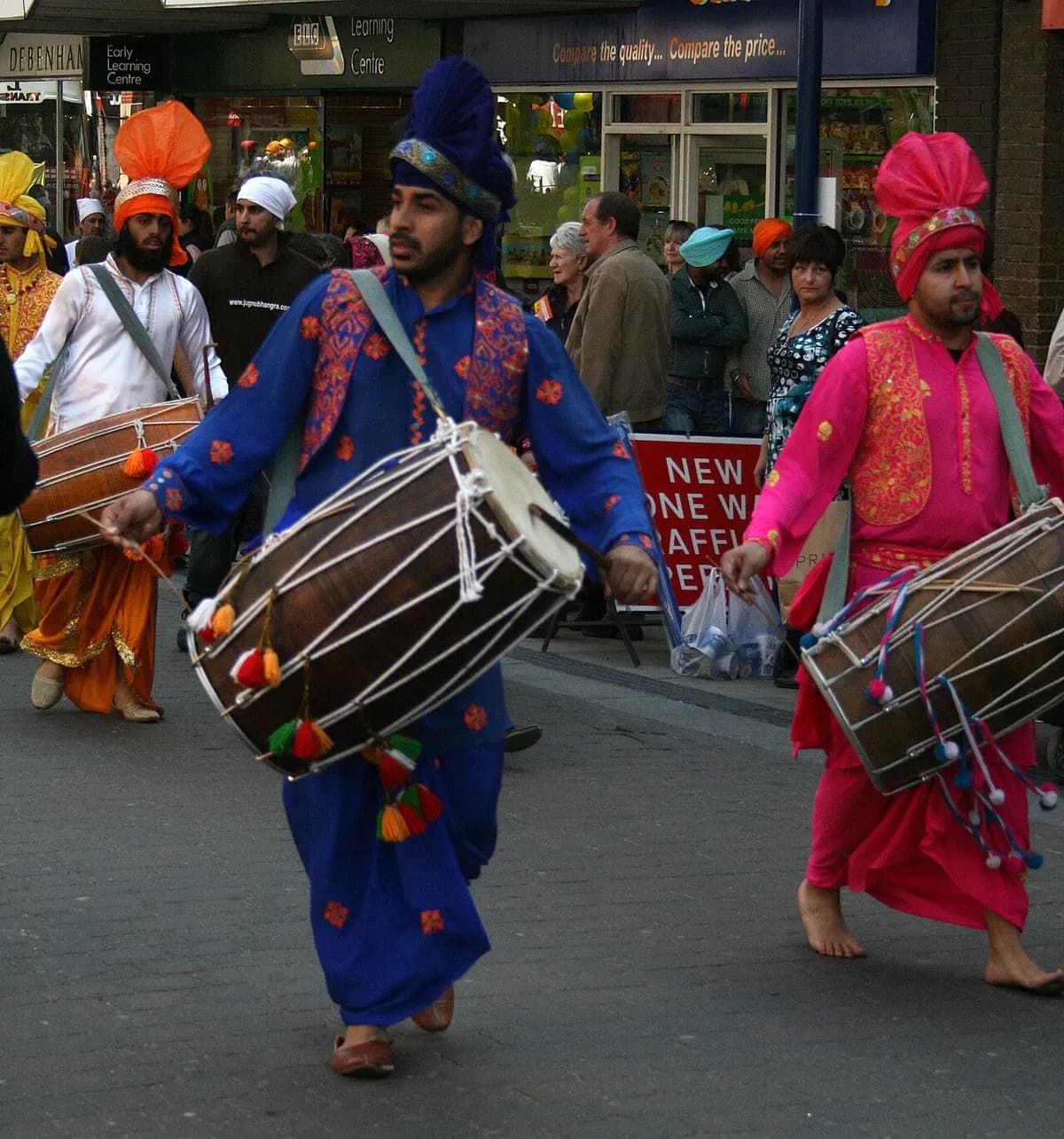
The roots of bhangra lie in the farming communities of Punjab, where the dance celebrated the wheat harvest at Vaisakhi in April. Districts had their own dances and rhythms, among them jhummar, luddi and dhamaal, and after the Partition of 1947 many of these were combined into the staged, choreographed form of bhangra performed at college competitions and cultural events in Indian Punjab.
Recorded Punjabi folk music of the mid-20th century supplied the musical vocabulary. Lal Chand Yamla Jatt made the tumbi his trademark; Kuldeep Manak and the duo of Amar Singh Chamkila and Amarjot made rustic, rhythmic Punjabi song popular on record from the 1960s to the 1980s.
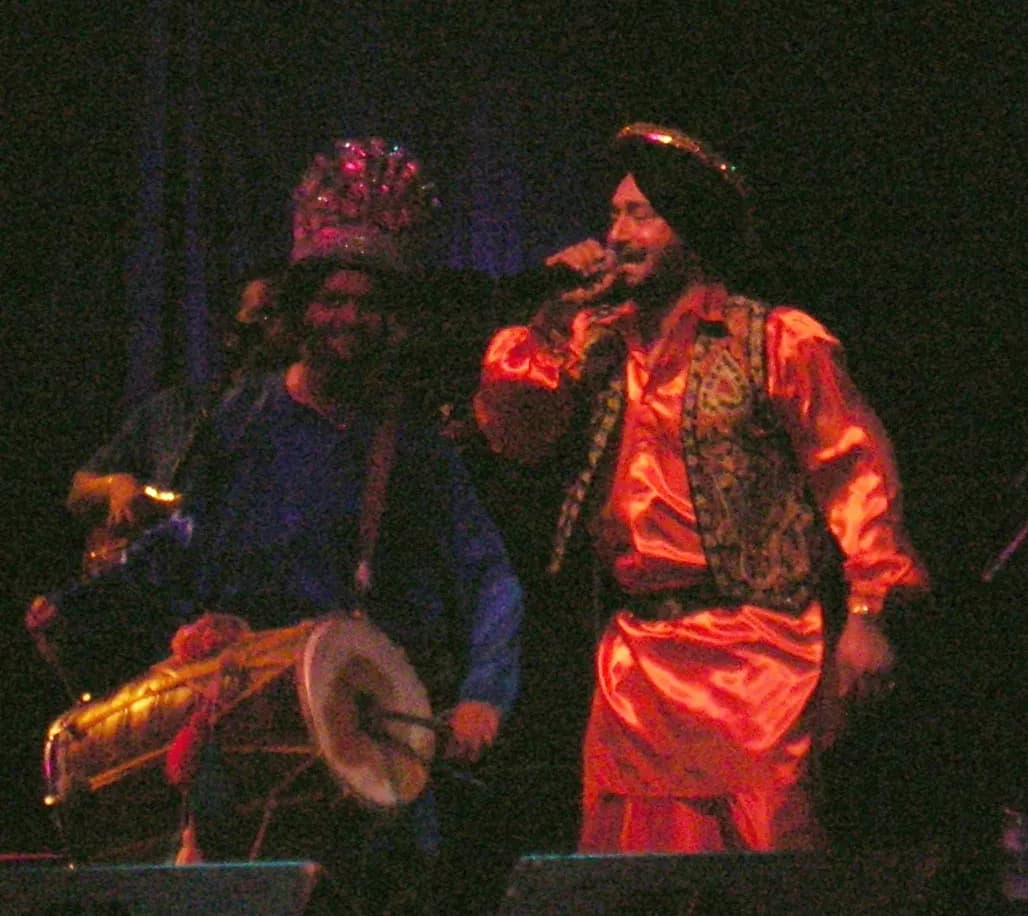
The modern genre was made in Britain. Punjabi immigrants had settled in Southall in west London, in Birmingham and the Midlands, and in other industrial towns, and their wedding bands began mixing folk songs with electric guitar, keyboards and drum machines. Alaap, formed in Southall in 1977 by Channi Singh and Harjeet Gandhi, is usually named among the first bands of the new British bhangra; Heera, Apna Sangeet, Premi and the singer Malkit Singh followed. In the 1980s bhangra became the music of daytime club events for young British Asians, held in the afternoon, and many of those who came were skipping school to be there.
From the late 1980s, British producers began fusing bhangra with the sounds around them. Apache Indian, from Handsworth in Birmingham, mixed Punjabi references with dancehall toasting (a blend nicknamed bhangragga) and had UK chart hits in the early 1990s, including "Boom Shack-A-Lak" (1993). The Birmingham producer Bally Sagoo, signed by Sony, remixed Punjabi and Hindi songs over hip-hop and R&B beats. B21, the Canadian-based singer Jazzy B and the producer Rishi Rich carried the sound into the 2000s.
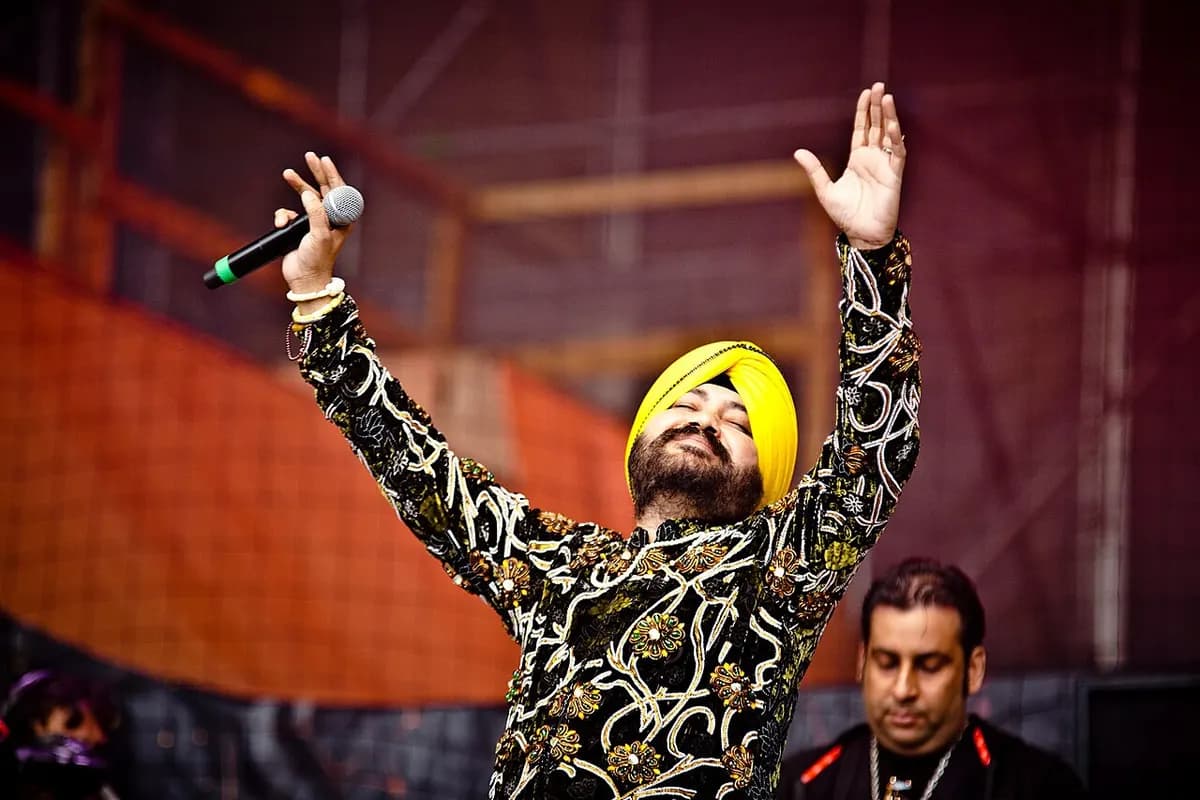
In India, the 1990s brought a parallel Punjabi pop boom. Daler Mehndi, a Sikh singer known for a huge voice and flamboyant costumes, broke through with his debut album Bolo Ta Ra Ra (1995, Magnasound). His 1998 song "Tunak Tunak Tun", with a video in which he appears as several copies of himself, later spread around the world as an internet meme. Gurdas Maan and Sukhwinder Singh were other major figures.
The biggest international hit came from Coventry. Panjabi MC first recorded "Mundian To Bach Ke" for his 1998 album Legalised. It borrows the bass line of Busta Rhymes's "Fire It Up", which is itself built on the Knight Rider TV theme. Issued as a single in 2002, it reached number two in Germany and number five in the UK in January 2003, and a 2003 remix with Jay-Z, "Beware of the Boys", reached number 33 on the US Billboard Hot 100. In the 2010s and 2020s Punjabi music became one of the most streamed regional styles in India, led by artists such as Diljit Dosanjh, who in April 2023 became the first Punjabi-language artist to perform at Coachella.
Key Characteristics & Sound
How to recognise bhangra by ear:
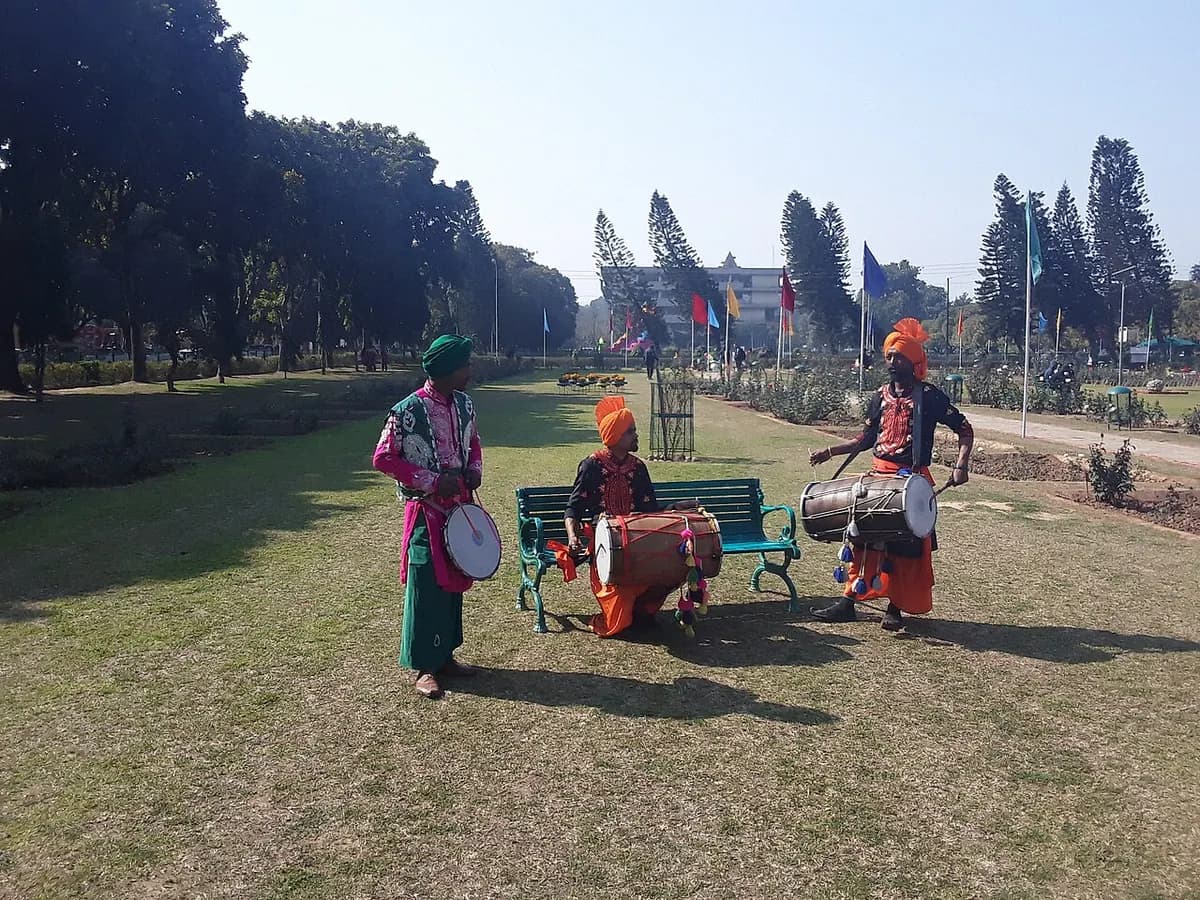
- The dhol: a large double-headed barrel drum hung from the shoulder. The bass side is struck with a thick curved stick (dagga), the treble side with a thin cane (tilli or tihli), producing a deep thud answered by a sharp crack. Its rhythms have a strong bounce, felt as a swung pulse.
- Tempo: there is no fixed BPM. Most songs sit at mid-to-fast dance tempos, very roughly 90 to 130 BPM, and live folk performances often speed up towards the end.
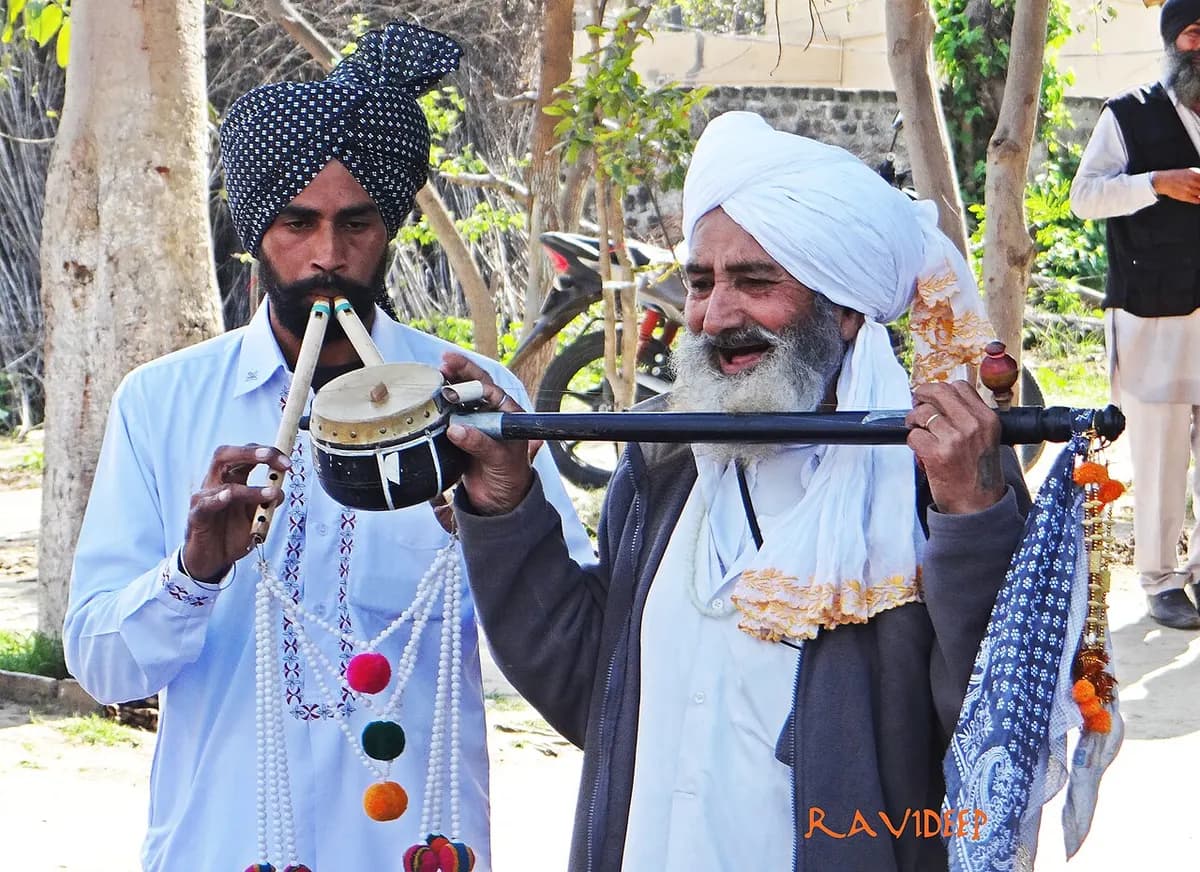
- The tumbi: a small, high-pitched lute with a single string, plucked in short repeating riffs that become the song's main hook.
- Vocals: loud, open, high-register singing with ornamented Punjabi melodies, over shouted interjections ("hoi", "balle balle", "burrah") from the band and crowd.
- Lyrics: in Punjabi; village life, the harvest, love and pride, and in modern songs cars, parties and status.
- Harmony: largely modal and melody-driven over a drone or simple bass; the modern style adds keyboard chords and basslines without changing the melodic focus.
- Structure: verses alternate with instrumental breaks where the dhol and tumbi take over, and that is where the dancers leap.
The instruments you will hear:
| Instrument | Type | Role |
|---|---|---|
| Dhol | Double-headed barrel drum | The defining beat; played with dagga and tihli sticks |
| Tumbi | One-string plucked lute | High, twangy riff that is often the hook |
| Dholak | Smaller hand-played barrel drum | Lighter rhythm, especially at weddings and in giddha |
| Chimta | Long metal tongs with jingles | Bright metallic accents on the beat |
| Algoza | Pair of joined wooden flutes | Folk melody with a built-in drone |
| Harmonium, keyboards | Reed organ / synthesizer | Melody and chords in modern arrangements |
| Drum machine, bass, guitar | Electric band | Added by UK bands from the late 1970s |
Styles & Scenes
Bhangra has branched in several directions, and the label is used loosely:
| Style | Where / when | Sound | Names |
|---|---|---|---|
| Folk bhangra | Punjab, mid-20th century onward | Dhol, tumbi, algoza, chimta; live vocals | Lal Chand Yamla Jatt, Kuldeep Manak |
| British bhangra | Southall, Birmingham, 1970s–1990s | Folk songs over keyboards, guitar, drum machines | Alaap, Heera, Malkit Singh, Apna Sangeet |
| Bhangra fusion / remix | UK, late 1980s–2000s | Bhangra with reggae, hip-hop, R&B, garage | Apache Indian, Bally Sagoo, Panjabi MC, Rishi Rich |
| Punjabi pop | India, 1990s onward | Polished studio pop with dhol and tumbi hooks | Daler Mehndi, Gurdas Maan, Sukhwinder Singh |
| Modern Punjabi music | India, UK, Canada, 2010s– | Bhangra rhythms mixed with hip-hop, trap and R&B | Diljit Dosanjh, Sidhu Moose Wala, AP Dhillon, Karan Aujla |
Key Artists & Records
A starting list:
- Lal Chand Yamla Jatt: the folk singer most associated with the tumbi.
- Kuldeep Manak: a master of the kali folk ballad, one of the defining Punjabi voices of the 1970s and 80s.
- Alaap: the Southall band formed in 1977, one of the first of British bhangra.
- Malkit Singh: the singer who moved to Birmingham in 1984 and leads the Golden Star band; "Gur Nalo Ishq Mitha" is his best-known song.
- Apache Indian: the Handsworth artist who mixed bhangra with dancehall in early-1990s Britain.
- Bally Sagoo: the Birmingham producer whose remixes put Punjabi and Hindi songs over hip-hop and R&B beats.
- Daler Mehndi: Bolo Ta Ra Ra (1995) and "Tunak Tunak Tun" (1998), the sound of 1990s Punjabi pop.
- Panjabi MC: "Mundian To Bach Ke", a top-five single in Germany and the UK.
- Jazzy B and Sukshinder Shinda: major names of 2000s bhangra.
- Diljit Dosanjh: singer and actor, the first Punjabi artist to play Coachella (2023).
Bhangra vs Bollywood, Punjabi Hip-Hop & Dancehall
Bhangra sits close to several other styles. Here is where each line runs:
- Bhangra vs Bollywood: Bollywood is film music in Hindi and Urdu, written by composers for specific scenes, and drawing on every style from classical ragas to EDM. A "bhangra number" in a film is a borrowing; real bhangra is in Punjabi and built from Punjabi folk forms.
- Bhangra vs Punjabi hip-hop: much of today's Punjabi chart music is rap or R&B with a trap beat. When the dhol and tumbi are gone and the rhythm is a programmed 808 pattern, it is Punjabi hip-hop, even though the language is the same.
- Bhangra vs dancehall: 1990s British fusion mixed the two, but dancehall's riddims are Jamaican, its vocals are toasting in patois, and its drum programming sits on a different, syncopated grid.
- Bhangra vs Hindustani classical music: both come from North India and share some melodic modes, but classical music is improvised raga performance for listening, while bhangra is short, rhythmic dance song.
How AI Detects Bhangra
A traditional bhangra arrangement puts the same few sounds in almost every bar: the dhol's deep low end with a cracking treble answer, the narrow, nasal twang of the tumbi, and shouted interjections between vocal lines. Those are the cues an audio model has to work with.
Genre AI's production taxonomy has no bhangra label. The nearest is the coarse Indian label, which has no finer breakdown, and the classifier prefers coarse labels that do have one when they appear among its top five. So Indian rarely comes up at all: it can win only when no such label is in the top five. A folk recording with dhol, tumbi and algoza may land on Folk / Country with the fine label Folk. A modern Punjabi track that keeps the vocal but swaps the dhol for programmed drums and 808 bass loses most of the bhangra evidence and is likely to read as Rap Hip-Hop, with Trap or Pop Rap underneath. Try a clip in the Genre AI music genre detector, and see why one song can carry several genres.
Genre AI has no bhangra label. The closest broad one is Indian, but it has no fine subgenres, and the model favours coarse labels that do, so for a dhol-and-tumbi track Indian rarely comes up at all. The alternatives shown under a result are only sibling fine labels of the winning coarse label. What wins depends on the arrangement. Folk bhangra with live dhol, tumbi and algoza may come back as Folk / Country (fine label Folk). 1980s British bhangra on keyboards and drum machines may be pulled toward Electronic Dance. Modern Punjabi releases with trap drums, 808 bass and Auto-Tuned vocals are likely to read as Rap Hip-Hop, with Trap or Pop Rap as the fine label, because the drums and bass dominate the spectrum and the folk instruments become short ornaments. Apache Indian's dancehall blend is unlikely to come back as Reggae, which, like Indian, has no fine labels and rarely wins.