Psychedelic rock is rock music that tries to reproduce the experience of an altered state in sound. Between 1965 and 1969 it treated the recording studio as an instrument (backwards tape, phasing, heavy reverb, Indian drones) and stretched three-minute songs into modal jams. Hard rock, progressive rock and metal all grew out of bands that came through it.
This guide covers where psychedelia came from, which studio techniques define it, how it differs from prog, and how it keeps returning. To hear how a track reads to a classifier, run a few seconds through our free AI music genre detector.
What Is Psychedelic Rock?
Psychedelic rock is defined by intent: the music is arranged to disorient pleasantly. That produces a recognisable toolkit: sounds that move around the stereo field, pitch that bends where it should be stable, timbres that are hard to identify, and structures that drift instead of resolving.
Musically the markers are droning or modal harmony with few functional chord changes, long instrumental passages, heavy use of studio effects, and a general refusal of the tight verse-chorus discipline of mid-1960s pop. Lyrics move from romance to surrealism, childhood imagery, mysticism and Eastern philosophy.
Two related terms are worth separating. Acid rock usually means the heavier, louder, jam-based American version (Blue Cheer, early Grateful Dead), while psychedelic pop means the same production ideas applied to short, melodic songs. And unlike progressive rock, which grew out of it, psychedelia is not about formal complexity: a psychedelic song is usually simple, just heavily transformed.
History & Origins
The style crystallised in 1965–1966 on both sides of the Atlantic. In Austin, Texas, the 13th Floor Elevators put the word on a record sleeve with The Psychedelic Sounds of the 13th Floor Elevators (1966), where Tommy Hall's amplified jug burbles under the guitars. In Los Angeles, The Byrds' "Eight Miles High" imported John Coltrane's modal phrasing to a twelve-string Rickenbacker. In London, The Beatles recorded "Tomorrow Never Knows" for Revolver (1966) using sixteen tape loops chosen by George Martin, a vocal fed through a Leslie organ speaker and a guitar solo played back in reverse. Much of the studio vocabulary of 1967 is already in those three minutes.
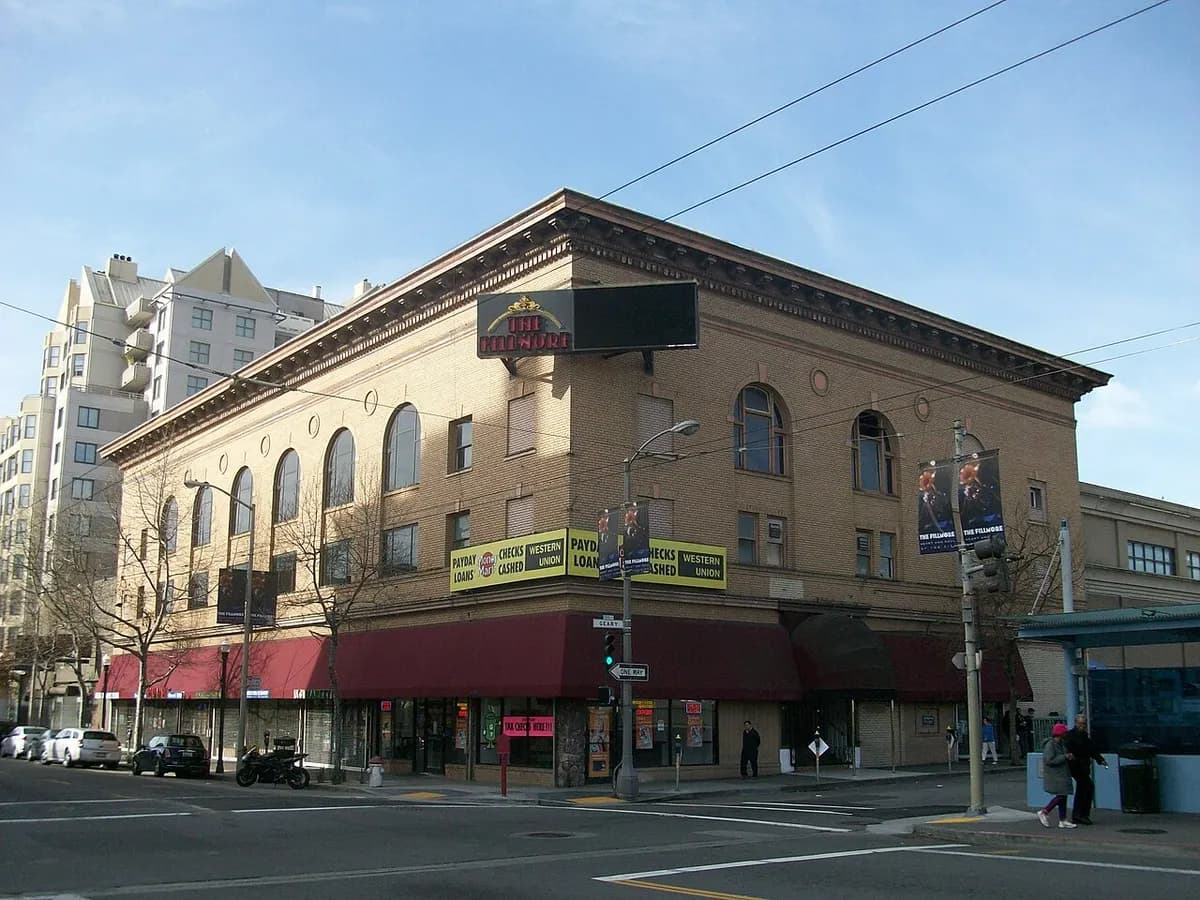
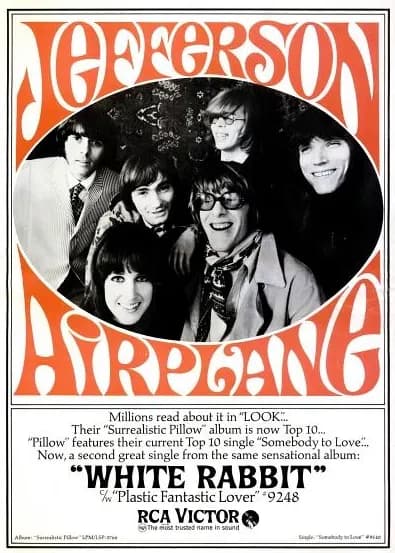
San Francisco supplied the scene. Around Haight-Ashbury and the Fillmore, Jefferson Airplane, the Grateful Dead, Quicksilver Messenger Service and Big Brother and the Holding Company built a live culture of long improvisation, light shows and free concerts that peaked in the 1967 Summer of Love.
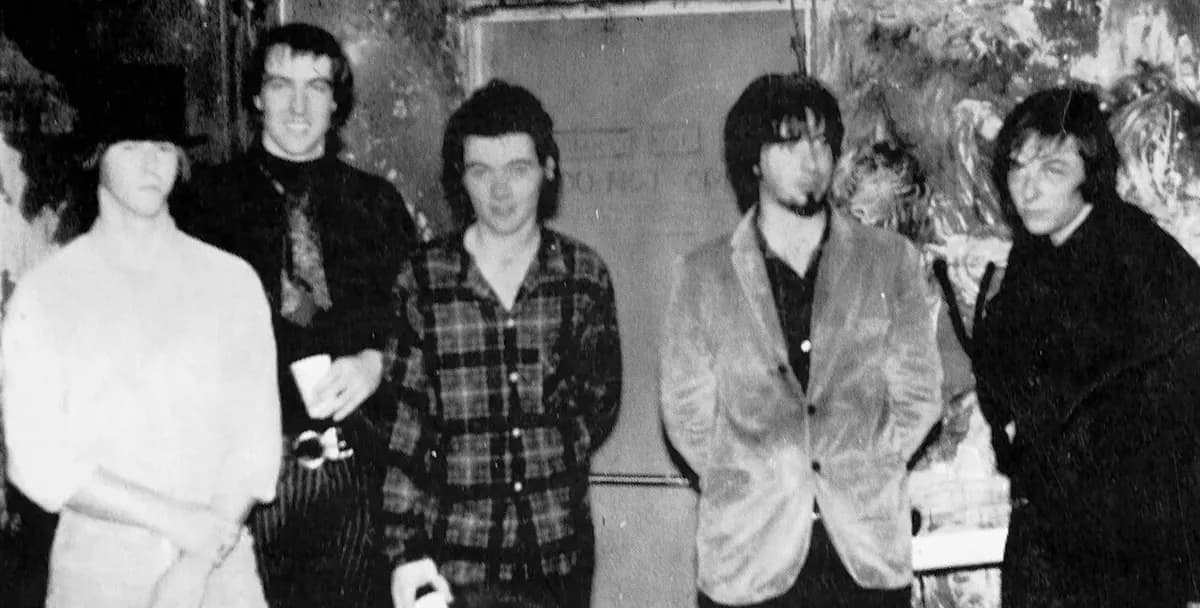
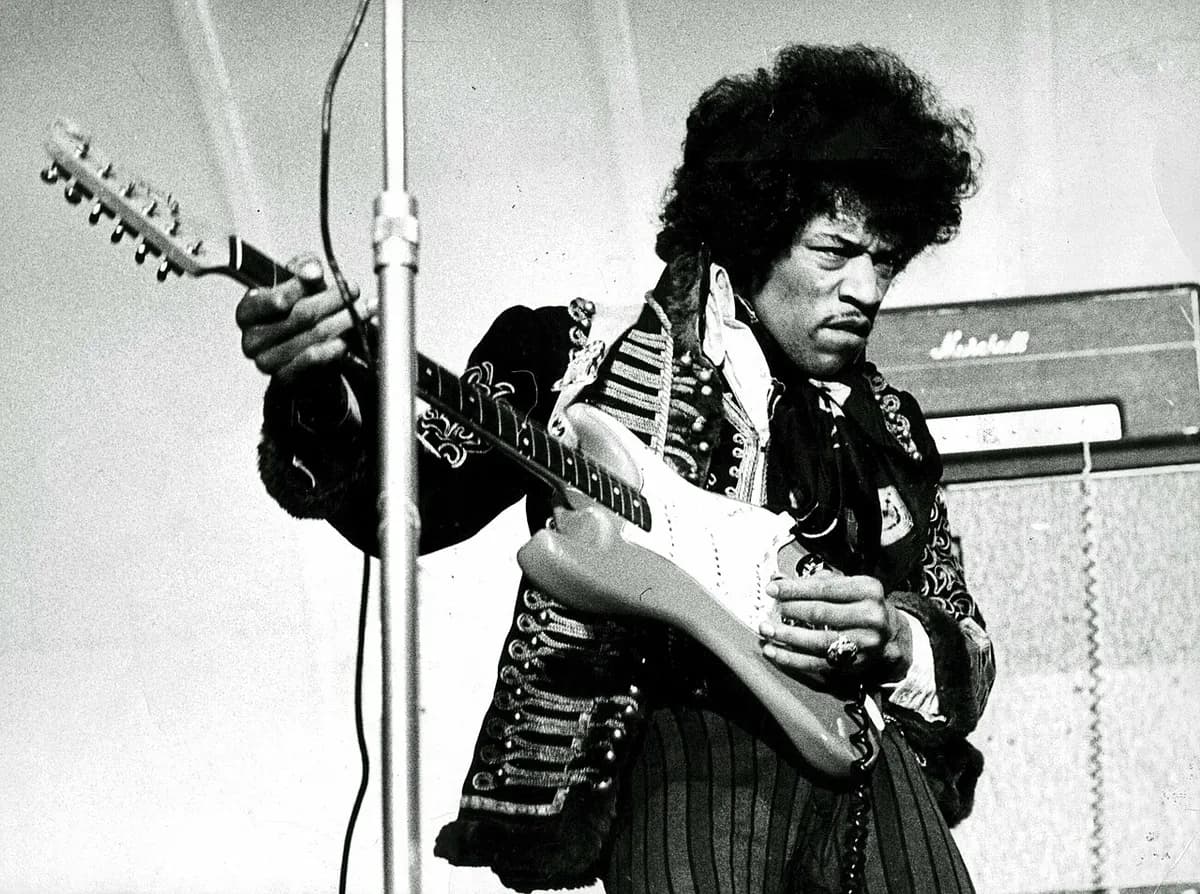
London ran its own version at the UFO Club, where Pink Floyd under Syd Barrett made The Piper at the Gates of Dawn (1967), English whimsy set to experimental sound. Jimi Hendrix, an American working in Britain, changed what the electric guitar could sound like on Are You Experienced (1967): controlled feedback, Roger Mayer's Octavia octave fuzz on "Purple Haze", and stereo panning used as part of the arrangement. The Doors, Love, Cream and The Yardbirds filled the rest of the map.
The peak was brief. By 1969–1970 the counterculture's optimism had soured after Altamont, drug deaths and band breakups, and the music split into its descendants: heavier and louder became hard rock and metal, longer and more composed became progressive rock, softer and more rural became acid folk and country rock, and the German scene took the repetition into Krautrock.
The sound keeps coming back: the 1980s Paisley Underground and Spacemen 3, the 1990s neo-psychedelia of The Verve and Super Furry Animals, the Elephant 6 collective in America, and a large 2010s wave led by Tame Impala, King Gizzard & the Lizard Wizard, Ty Segall and Unknown Mortal Orchestra, which took it back to festival main stages with modern production.
Key Characteristics & Sound
What identifies a psychedelic rock track:
- Studio effects as content: backwards tape, phasing, flanging, extreme reverb, ping-pong stereo panning.
- Modal and drone harmony: long stretches on one chord, often over a pedal note, borrowed from Indian classical music.
- Extended instrumental sections: improvised jams, sometimes far longer than the song.
- Unconventional instruments: sitar, tambura, tabla, harpsichord, theremin, mellotron, electric jug.
- Guitar effects: fuzz, wah-wah, Uni-Vibe, feedback treated as melody.
- Tempo: typically 100–140 BPM, often deliberately loose; a drifting, unquantised feel is part of the style.
- Vocals: processed through Leslie speakers, doubled, drowned in echo or filtered.
- Lyrics: surreal imagery, mysticism, childhood, altered perception.
How it sits among its neighbours and descendants:
| Trait | Psychedelic Rock | Progressive Rock | Acid Rock | Neo-Psychedelia |
|---|---|---|---|---|
| Period | 1965–1970 | 1969–1978 | 1966–1971 | 1980s onward |
| Core idea | Altered perception | Composed complexity | Volume and jamming | Revival plus modern production |
| Harmony | Modal, drone | Extended, developing | Blues-based | Modal, chorus-drenched |
| Structure | Loose, drifting | Multi-part suites | Extended jams | Song-shaped |
| Key effect | Backwards tape, phasing | Mellotron, Moog | Fuzz, feedback | Reverb, tape saturation |
| Reference album | The Piper at the Gates of Dawn | Close to the Edge | Vincebus Eruptum | Innerspeaker |
Instruments & Studio Technique
Psychedelic rock is the first genre where the recording studio is unambiguously an instrument:
- Backwards recording: tape reversed so that notes swell instead of decaying, used on guitars, cymbals and vocals.
- Artificial double tracking, invented at Abbey Road by engineer Ken Townsend in 1966, plus phasing and flanging, which give the sweeping, hollow movement most listeners hear as "psychedelic".
- Leslie rotating speakers, built for Hammond organs, applied to vocals and guitars.
- Tape loops and varispeed: pitch and time altered as a compositional choice.
- Fuzz, wah-wah and, from the late 1960s, Uni-Vibe pedals, effects meant to bend and distort the guitar's tone.
- Indian instruments: sitar and tambura, after George Harrison's sitar on "Norwegian Wood" (1965) and his studies with Ravi Shankar in 1966.
- Extreme stereo: early stereo mixing used as a special effect, with instruments hard-panned or sweeping across the field.
Modern psychedelia reproduces this with plugins and tape emulation, which is why 2010s records can sound vintage and very clean at once. The effects match the period; the fidelity does not.
Subgenres & Descendants
The family around it:
- Acid rock: the loud, jam-based American branch; Blue Cheer, early Grateful Dead.
- Psychedelic pop: short songs with the same production toolkit; The Beach Boys, The Zombies.
- Acid folk: the acoustic version; The Incredible String Band, Vashti Bunyan.
- Krautrock: the German repetition-based descendant; Can, Amon Düül II.
- Neo-psychedelia: every revival since 1980; Spacemen 3, The Flaming Lips, Tame Impala.
- Stoner rock: the heavy, slow, riff-based branch via Black Sabbath and Kyuss.
- Psytrance: the electronic descendant of the same psychedelic project, by way of Goa.
- Shoegaze: the late-1980s and early-1990s inheritor of the "sound as environment" idea.
Notable Artists & Albums
Where to start:
- The Beatles: Revolver (1966), Sgt. Pepper's Lonely Hearts Club Band (1967).
- Pink Floyd: The Piper at the Gates of Dawn (1967).
- The Jimi Hendrix Experience: Are You Experienced (1967), Electric Ladyland (1968).
- 13th Floor Elevators: The Psychedelic Sounds of... (1966).
- Jefferson Airplane: Surrealistic Pillow (1967).
- The Doors: The Doors (1967).
- Love: Forever Changes (1967).
- The Byrds: Fifth Dimension (1966).
- Tame Impala: Innerspeaker (2010), Lonerism (2012).
- King Gizzard & the Lizard Wizard: Nonagon Infinity (2016).
Three albums for the arc: Revolver for the studio revolution, The Piper at the Gates of Dawn for the scene at its strangest, Lonerism for how the sound survives modern production.
How AI Detects Psychedelic Rock
Psychedelia gives a classifier two very different kinds of evidence. The era-specific one is a recording fingerprint: narrow or bizarre stereo imaging, limited high-frequency content, tape saturation and heavy modulation artefacts. The style-specific one is harmonic: long static passages with no chord change, drones under the melody, and pitch that slides continuously instead of moving in steps.
The confusions follow the genre's family tree. Loud, riff-based psychedelia reads as hard rock or blues rock; long instrumental passages read as progressive rock; modern revival records read as indie rock or alternative because their production has none of the 1967 fingerprint. Test both an original and a revival track in the Genre AI music genre detector.
Testing this style in Genre AI ourselves, Psychedelic Rock shows how much of a genre can live in the recording instead of the composition. The live model files it under Progressive / Psychedelic Rock. 1967 records carry a fingerprint it picks up quickly (modulation artefacts, odd stereo, rolled-off highs), and they cluster tightly. Modern psychedelia written to the same rules but recorded cleanly scatters instead, most often into Indie Rock and Alternative. The most durable musical cue across both eras is harmonic stasis: when a section stays on one chord for thirty seconds while the timbre keeps changing, psychedelia climbs the alternatives list even where the drums and guitars sound ordinary.