Garage rock is the raw, amateur strain of American rock made between roughly 1963 and 1967 by thousands of teenage bands who had just watched the British Invasion on television and decided it looked achievable. Fuzz guitar, a cheap combo organ, one great idea per song, and playing that ranges from tight to barely holding together: it is the direct ancestor of punk, and the words "punk rock" were first used in print to describe it.
This guide covers where the style came from, what the records actually sound like, how a 1972 compilation created the genre retroactively, and how it came back in the 2000s. To hear how a fuzz-and-Farfisa single reads to a classifier, run a few seconds through our free AI music genre detector.
What Is Garage Rock?
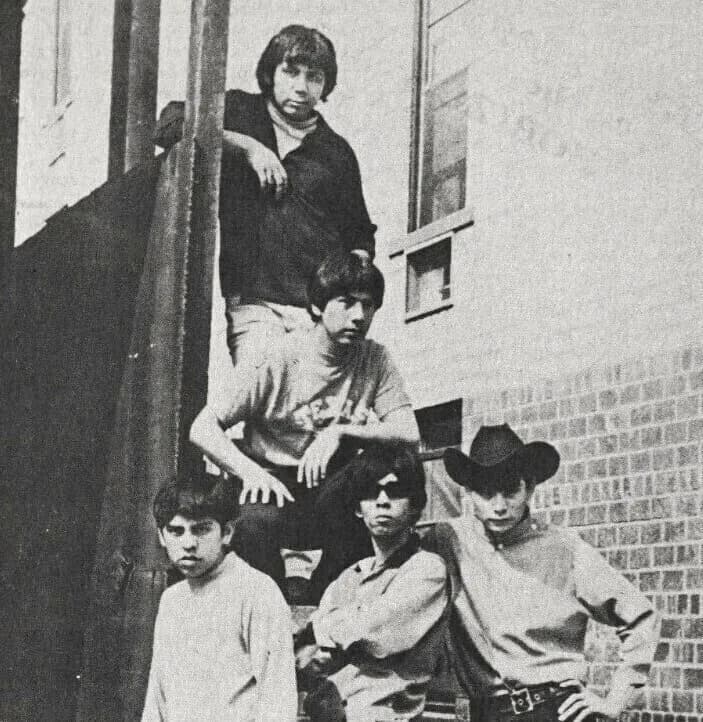
Garage rock is defined by circumstances as much as by sound: young bands, cheap equipment, local labels, and recordings made fast in small studios for regional radio. The name refers to where many of them rehearsed, the family garage. Very few of these groups had a national hit; most released one or two singles on a small label, played high-school dances and broke up when their members went to college or to Vietnam.
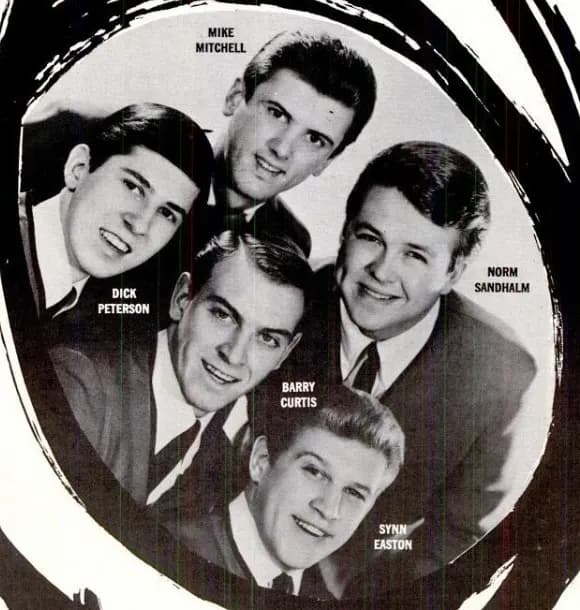
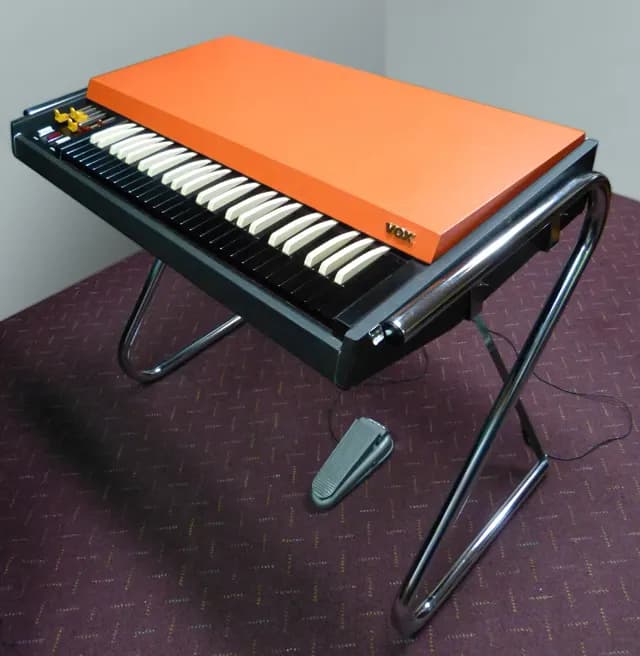
The music is short, loud and simple. Two or three chords, a shouted vocal delivered with more attitude than range, a fuzz-toned guitar solo, and a Farfisa or Vox Continental combo organ (the cheapest keyboard a teenage band could carry) playing a repeated riff. Songs run two to three minutes and end abruptly. The lyrics are almost always about a girl who has wronged the singer, delivered with an aggrieved snarl that would be comic if it were not so committed.
The limitations produced a consistent aesthetic, and that is why it counts as a genre: distortion used as a texture on purpose, energy prized over accuracy, and a directness that professional rock had already lost by 1967. That directness is what later generations rediscovered.
History & Origins
Two American precursors set it up. Instrumental surf rock (Dick Dale, The Ventures) taught teenagers that a guitar band could be a viable local business, and frat rock gave them a repertoire. The single most important record is "Louie Louie". Richard Berry wrote it in the mid-1950s and released it in 1957; in April 1963 The Kingsmen of Portland, Oregon, recorded a slurred, three-chord version that reached number two on the Billboard Hot 100. Their vocal was so hard to make out that the FBI spent 31 months investigating the lyrics for obscenity and concluded it could not interpret any of the words.
Then in February 1964 The Beatles appeared on The Ed Sullivan Show, and the number of American teenage bands multiplied. The Rolling Stones, The Kinks (whose "You Really Got Me" of 1964 is the fuzz-riff template), The Yardbirds and The Animals supplied the model: aggressive, blues-derived, guitar-first, and apparently within reach.
The boom peaked around 1966. The Trashmen's "Surfin' Bird" (1963) and Sam the Sham's "Wooly Bully" (1965) were the crossover hits; The Sonics in Tacoma cut "The Witch" (first released in 1964) and "Psycho" with a recording approach so overloaded it still sounds violent; The Standells had "Dirty Water" (1966); The Seeds "Pushin' Too Hard"; The Count Five "Psychotic Reaction". Two garage records topped the Billboard Hot 100: The McCoys' "Hang On Sloopy" in October 1965, and a year later "96 Tears" by ? and the Mysterians, a Michigan band from Mexican-American migrant-worker families, driven entirely by a Vox Continental organ line.
The scene died quickly. By 1967 psychedelia, studio experimentation and album-oriented rock had raised the technical bar past what a garage band could clear, and the market for regional singles collapsed.
Its legacy was created retroactively, by a record. In 1972 Elektra released Nuggets: Original Artyfacts from the First Psychedelic Era, 1965–1968, a double LP compiled by the critic and future Patti Smith Group guitarist Lenny Kaye, whose liner notes used the phrase "punk rock" for this music. It was one of the term's first appearances in print, after Dave Marsh's use in Creem in May 1971, where he called a ? and the Mysterians show an "exposition of punk rock". Nuggets gave the scattered singles a name, a canon and an argument, and everything since (the Pebbles series, the 1980s revival bands, the Sub Pop and Crypt Records catalogues) descends from it.
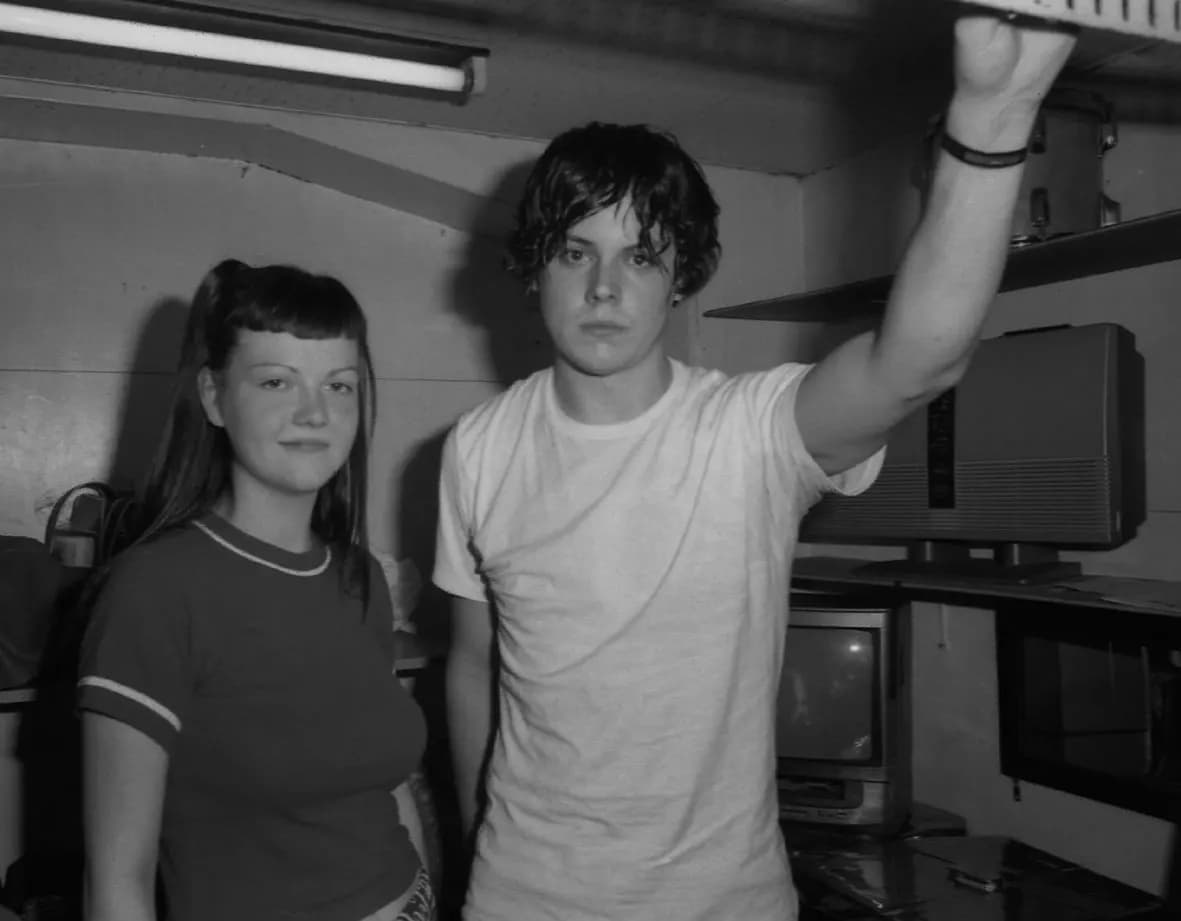
The garage rock revival of 2000–2005 brought it back commercially: The White Stripes, The Strokes, The Hives, The Vines, Yeah Yeah Yeahs and a press narrative about rock being saved. Underneath the hype the deeper tradition never stopped. Billy Childish's bands, The Mummies, The Black Lips, Jay Reatard, Ty Segall and Thee Oh Sees have kept the format working continuously.
Key Characteristics & Sound
What identifies a garage rock record:
- Tempo: mostly 120–170 BPM, straight eighths, driving, with no swing.
- Song length: two to three minutes, verse, chorus, solo, chorus, with no development section.
- Fuzz guitar: the Maestro FZ-1 Fuzz-Tone, made famous by "(I Can't Get No) Satisfaction" in 1965, became standard equipment almost immediately.
- Combo organ: Farfisa Compact or Vox Continental, thin and reedy, carrying riffs as often as the guitar does.
- Vocals: shouted, sneering, often doubled or drenched in slapback echo, with limited range and maximum attitude.
- Harmony: three chords, frequently minor-key with a modal flavour; the I–♭VII–IV progression is everywhere.
- Rhythm section: simple backbeat, snare heavy, tambourine, occasional maracas; timing that wanders under pressure.
- Recording: two- to four-track, live in one room, clipped and distorted, with the vocal often the loudest thing in the mix.
Where it sits among its neighbours:
| Trait | Garage Rock | Surf Rock | Punk | Psychedelic Rock |
|---|---|---|---|---|
| Peak period | 1963–1967 | 1961–1965 | 1976–1980 | 1966–1970 |
| Typical BPM | 120–170 | 140–180 | 160–200 | 90–140 |
| Signature colour | Fuzz and combo organ | Reverb-drenched guitar | Overdriven power chords | Effects and studio work |
| Vocals | Shouted, snarling | Often instrumental | Shouted, faster | Layered, treated |
| Track length | 2–3 min | 2–3 min | 2–3 min | 4–10 min |
| Reference track | 96 Tears | Misirlou | Blitzkrieg Bop | Eight Miles High |
Instruments & Recording
The equipment list is short and it explains most of the sound:
- Affordable electric guitars: Danelectro, Teisco, Silvertone, Kay, bought from catalogues and department stores.
- Fuzz pedals: the Maestro FZ-1 and its imitators, or simply an amp turned up until it broke up.
- Farfisa and Vox Continental organs, transistor keyboards light enough for a teenager to carry to a dance.
- Small valve amplifiers pushed past their limits, which is where the compression and distortion of these records comes from.
- Two- to four-track studios in local radio stations and storefronts, with sessions booked by the hour and mixed on the spot.
- Slapback echo and spring reverb on vocals, an inheritance from 1950s rock and roll practice.
- Regional labels and 45s: pressings of a few hundred copies for local radio, which is why original singles are now collector items and why so much of the music survived only through compilations.
Related Styles & Descendants
The family around it:
- Frat rock: the party-band repertoire of "Louie Louie" and "Wooly Bully" that garage bands grew out of.
- Proto-punk: The Stooges, MC5 and The Velvet Underground, the harder, arty end that connects garage directly to punk.
- Garage punk: the post-1980 term for bands playing 1960s-style garage with punk volume, such as Billy Childish's groups, The Mummies and The Oblivians.
- Freakbeat: the British parallel, mod-adjacent and heavier on the fuzz.
- Paisley Underground: the 1980s Los Angeles scene that fused garage revival with psychedelic rock jangle.
- Psychedelic rock: where many garage bands went in 1967, from The 13th Floor Elevators onward.
- Garage rock revival: the 2000s wave of The White Stripes, The Strokes, The Hives and Black Lips.
Key Bands & Tracks
Where to start:
- The Kingsmen: "Louie Louie" (1963), the record that started it.
- The Sonics: "The Witch" (1964), "Psycho" (1965); the most extreme band of the era.
- ? and the Mysterians: "96 Tears" (1966), a US number one.
- The McCoys: "Hang On Sloopy" (1965), the other garage number one.
- The Standells: "Dirty Water" (1966).
- The Seeds: "Pushin' Too Hard" (1966).
- The Count Five: "Psychotic Reaction" (1966).
- The Shadows of Knight: "Gloria" (1966), the Chicago reading of Van Morrison's song.
- The 13th Floor Elevators: "You're Gonna Miss Me" (1966), garage turning psychedelic.
- The Trashmen: "Surfin' Bird" (1963).
- The White Stripes: White Blood Cells (2001), the album that made them the face of the revival.
Two compilations do more than any single band: Nuggets (1972) for the canon, and the Pebbles series for everything the canon left out.
How AI Detects Garage Rock
Garage rock is a period sound, and the period is audible. Original-era records carry clear production evidence: narrow bandwidth, mono or near-mono imaging, heavy clipping, a loud shouted vocal with slapback echo, and a spectrum crowded in the mid-range with very little sub-bass or high-frequency air. Add a fast straight backbeat and a fuzz-toned guitar, and an audio model has plenty to go on.
The difficulty lies in what it borders. The distinction from early rock and roll, punk and psychedelic rock is often a matter of a few BPM or a single effect, and modern revival bands are recorded deliberately to imitate 1965, which removes the production clue entirely. Genre AI has no garage rock label, so the answer will be a Rock subgenre, with other Rock subgenres as alternatives. Try a track in the Genre AI music genre detector.
Genre AI's production taxonomy has no garage rock label, and an electric guitar band of this kind is likely to land in the Rock family. The specific answer will then be one of its subgenres: RocknRoll and Punk are the closest fits, with Progressive / Psychedelic Rock possible for the 1966–1967 records that were already turning psychedelic, and Blues Rock for the harder British Invasion covers. Alternatives, when shown, come from the same Rock list. For revival bands, production may matter more than songwriting: The White Stripes and Black Lips, recorded on old equipment, sound close to their 1960s models, while the cleaner, tightly played records of The Strokes may come back as Indie / Alternative (see indie rock and alternative). One quirk of the label set: the phrases "garage rock" and "garage punk" are text prompts of Gilded Age, a Classical subgenre, which is a naming accident, and fuzz guitar and a pounding backbeat should keep a track well away from it. Punk as an answer for The Sonics would be a fair verdict on music that predates the word.