
Britpop was a British guitar-pop movement that ran from roughly 1993 to 1997, defined as much by what it rejected as by what it played: American grunge, and the inward-looking shoegaze scene at home. In their place it offered melody, wit, 1960s British influences and lyrics about British life sung in British accents. For about four years it dominated the UK charts and a good part of the national press.
This guide covers how Britpop started, what the sound is made of, the Blur-versus-Oasis chart battle, and why it ended so abruptly. To hear how a track reads to a classifier, run a few seconds through our free AI music genre detector.
What Is Britpop?
Britpop is a movement more than a strict genre: a group of British bands who, in the mid-1990s, converged on melodic guitar pop rooted in their own country's 1960s and 1970s music. Musically it is straightforward, with verse, chorus, a big hook and guitars, rarely more than five minutes long. The identity comes from the details.
The first detail is the accent. Singers stopped imitating American vowels, which had long been common in British rock. The second is subject matter: supermarkets, commuter trains, council estates, class and package holidays, everyday Britain observed closely. The third is lineage. The Kinks, The Beatles, Small Faces, Bowie, The Jam, Madness and The Smiths were openly named as influences.
It also had a media dimension few other 1990s genres had. Britpop was covered by broadsheet newspapers, television news and politicians, and by 1997 it had been absorbed into the "Cool Britannia" branding associated with the incoming Labour government. On 30 July 1997 Noel Gallagher was photographed with Tony Blair at a Downing Street reception, a photograph that came to stand for the Cool Britannia moment.
History & Origins
In 1992–1993 British guitar music was commercially adrift. Grunge from Seattle had taken much of the audience, and the domestic alternatives, shoegaze and baggy, had lost momentum. Suede arrived first. Their self-titled 1993 debut is described in Wikipedia's Britpop article as the fastest-selling debut album in UK history at the time (other accounts say the fastest since 1984), a record Oasis's Definitely Maybe later broke, and it reasserted a specifically English, glam-influenced identity.
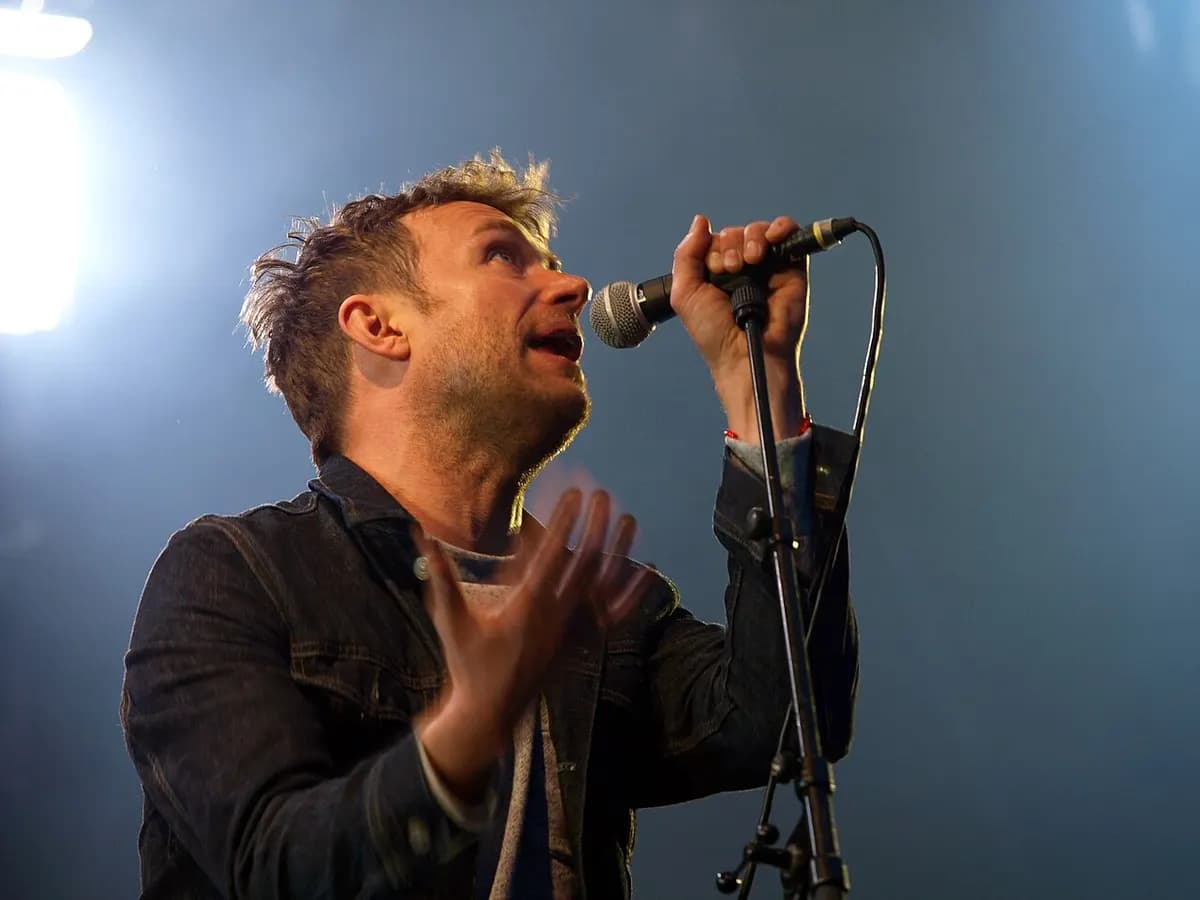
Blur supplied the manifesto. After a miserable American tour in 1992, Damon Albarn wrote Modern Life Is Rubbish (1993) as a deliberate rejection of grunge, and Parklife (1994) turned that into a national success with character sketches, a Kinks-like eye for detail, and a title track narrated by the actor Phil Daniels in a Cockney voice.
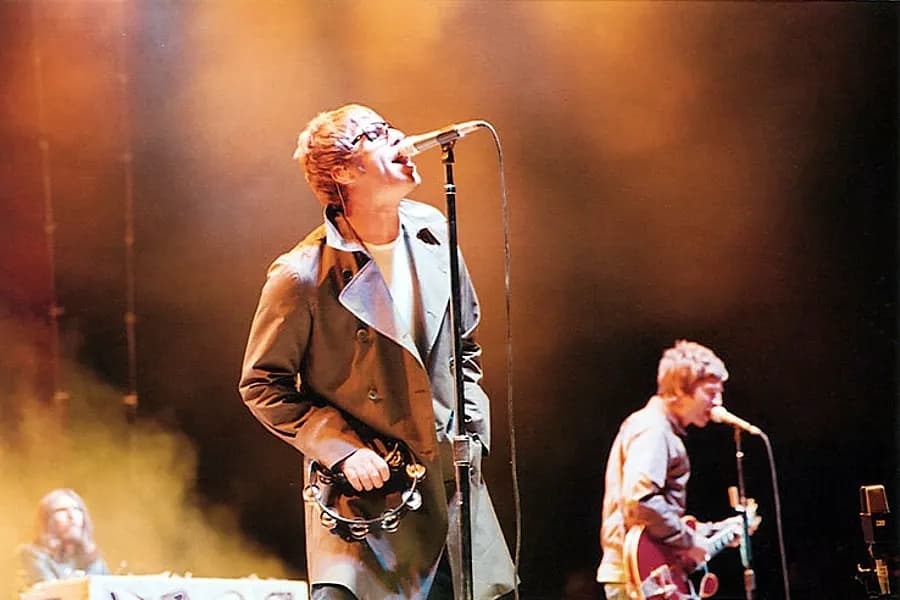
From Manchester, Oasis arrived with none of the irony. Definitely Maybe (1994) and (What's the Story) Morning Glory? (1995) fused Beatles melody to a wall of overdriven guitars and sold on a scale British guitar bands had not reached in decades. In August 1996 they played two nights at Knebworth to roughly a quarter of a million people.
The defining media event came on 14 August 1995, when Blur's "Country House" and Oasis's "Roll With It" were released on the same day. The chart battle made the national television news. Blur won the week, roughly 274,000 copies to 216,000, and took number one; Oasis went on to be the more commercially successful band. The rivalry was framed as north versus south and working class versus art school, which shows how far beyond music the story had travelled.
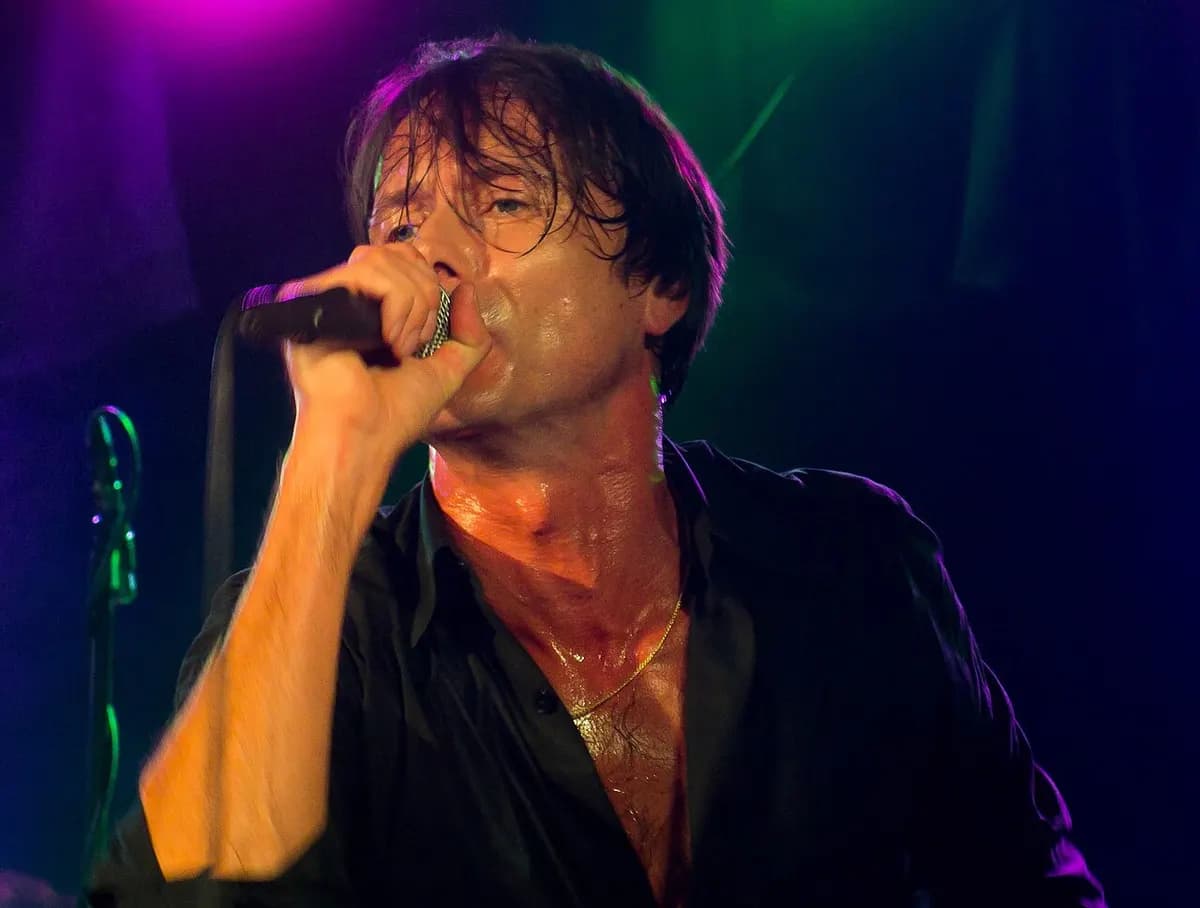
Pulp, formed in Sheffield in 1978, finally broke through with Different Class (1995) and "Common People", the movement's sharpest song about class. Around them were Supergrass, Elastica, Sleeper, The Verve, Ash, Cast and Ocean Colour Scene.
The end is usually dated to 1997. Oasis's Be Here Now sold fast on release and was reassessed within months as bloated; the critic Jon Savage pinpointed it as the moment Britpop ended. Radiohead's OK Computer, released the same year, made Britpop's cheerfulness look thin, and Blur's self-titled album had already turned toward American indie rock. What followed (Travis, Coldplay, Stereophonics, Keane) is usually called post-Britpop: the melodies without the swagger. The next big wave of British guitar bands arrived in the mid-2000s with The Libertines and Arctic Monkeys.
Key Characteristics & Sound
What identifies a Britpop track:
- Melody first: strong vocal hooks and singalong choruses, written to be sung back at a festival.
- 1960s British harmony: Kinks and Beatles chord movement, modal touches, occasional music-hall phrasing.
- Guitars: jangly and clean, or thick and overdriven, rarely virtuosic.
- Tempo: commonly 110–150 BPM, in straightforward 4/4.
- Vocals in a British accent, with regional inflection treated as an asset.
- Lyrics about ordinary British life: class, boredom, cities, holidays, other people's lives observed closely.
- Arrangement extras: brass, strings, keyboards and mock-orchestral touches borrowed from 1960s pop.
- Production: big, bright and radio-ready, with layered guitars and compressed drums.
Where it sits against the styles it defined itself against:
| Trait | Britpop | Grunge | Shoegaze | Post-Britpop |
|---|---|---|---|---|
| Mood | Witty, extroverted | Angry, weary | Inward, dreamlike | Earnest, melancholy |
| Vocal | British accent, front | Rasped, strained | Buried in the mix | Sung, wide-ranging |
| Guitar | Jangly or overdriven | Fuzzed, heavy | Layered, effected | Clean, atmospheric |
| Lyrics | Class, everyday life | Alienation | Abstract, wordless | Introspective |
| Influences | Kinks, Beatles, Bowie | Punk, Sabbath | MBV, Cocteau Twins | Britpop, Radiohead |
| Reference album | Parklife (1994) | Nevermind (1991) | Loveless (1991) | The Man Who (1999) |
Instruments & Production
Britpop's kit list is deliberately traditional. Much of it could have been found in a studio in 1966:
- Vintage-style guitars: Rickenbacker, Epiphone Casino, Telecaster, chosen for jangle and bite.
- Vox and Marshall amplifiers, often with several rhythm tracks layered to build width instead of heaviness.
- Hammond organ, Mellotron, piano and brass used as period colour.
- Strings on the singles, played by real string sections on several of the movement's biggest songs.
- Live-band tracking with overdubs, at a time when loop-based production was spreading through pop.
- Loud, bright mastering aimed at daytime radio, which is why the era's records sound forward next to their 1960s models.
Related Styles & Aftermath
What surrounds it:
- Post-Britpop: the melodic, earnest successor, with Travis, Coldplay, Stereophonics and Doves.
- Baggy / Madchester: the immediate predecessor, guitar pop with dance rhythms, led by the Stone Roses and Happy Mondays.
- Britrock and dad rock: the heavier and more traditionalist edges of the same moment.
- Art pop: where Blur, Pulp and Suede went once the movement collapsed.
- Indie Rock: the broader category Britpop briefly turned into mainstream pop.
- Shoegaze: the scene Britpop displaced, which later had a revival of its own.
- The 2000s British indie revival: The Libertines, Arctic Monkeys and Franz Ferdinand kept the accent and the observational lyrics but swapped 1960s pop for post-punk rhythm.
Notable Artists & Albums
Where to start:
- Blur: Parklife (1994), The Great Escape (1995).
- Oasis: Definitely Maybe (1994), (What's the Story) Morning Glory? (1995).
- Pulp: Different Class (1995).
- Suede: Suede (1993), Dog Man Star (1994).
- Supergrass: I Should Coco (1995).
- Elastica: Elastica (1995).
- The Verve: Urban Hymns (1997).
- Ash: 1977 (1996).
- Sleeper: The It Girl (1996).
- Manic Street Preachers: Everything Must Go (1996), adjacent to the movement but one of the era's biggest British records.
For a short route: Parklife for the idea, Morning Glory for the scale, Different Class for the writing.

How AI Detects Britpop
Britpop is a hard label for a classifier, because much of what makes a record Britpop is not in the sound. Accent, lyrical subject matter, nationality and the year of release carry the identity. The underlying music is mid-tempo 4/4 guitar pop with a clean structure, which to a model is rock or pop.
Genre AI's production taxonomy has no Britpop label. Inside the Rock family, the closest fine labels are Indie / Alternative and Soft / Pop Rock, with Hard Rock possible for the loudest Oasis-style guitar walls; the coarse Pop label is the other likely answer. Production era may help a little: 1990s British records share a bright, layered guitar sound with compressed drums and prominent vocals. Expect answers spread across indie rock, alternative, rock and pop depending on how loud the guitars are. Try one in the Genre AI music genre detector.
Britpop is a genre that listeners identify largely from information a model cannot hear. Human recognition runs on accent, lyrics and cultural memory. Genre AI has no Britpop label, so a classifier hearing mid-tempo guitar pop is likely to answer Rock with Indie / Alternative (the label closest to Alternative) or Soft / Pop Rock underneath, or Pop, and for the audio alone that is a fair answer. Heavily overdriven tracks may lean toward Hard Rock. What may group these records is production era: bright layered guitars, compressed drums and vocals pushed forward are common to many mid-1990s British recordings, more than to a modern band playing the same chords.