
Bluegrass is American acoustic string-band music played on banjo, fiddle, mandolin, guitar and upright bass, with high, close vocal harmonies and fast instrumental solos. It takes its name from Bill Monroe's Blue Grass Boys, and its classic sound took shape in 1945–1946, when Lester Flatt and Earl Scruggs were in Monroe's band. It grew out of the old-time and folk music of the Appalachian South.
This guide covers where bluegrass came from, how to recognise it by ear, the instruments and their jobs in the band, its subgenres and key artists, and how it differs from mainstream country and old-time music. To see how a classifier files a fast banjo tune, play a clip into our free AI music genre detector.
What Is Bluegrass Music?
Bluegrass is usually filed as a branch of American roots and country music. Mainstream Nashville country is amplified and drum-driven; bluegrass is almost entirely acoustic and rarely uses a drum kit. The rhythm comes from the offbeat chop of the mandolin, the upright bass on the beat, and the continuous roll of the five-string banjo.
Its best-known vocal quality is the "high lonesome" sound: a high, piercing lead voice with two to four harmony parts, the top one often modal or slightly dissonant, singing about longing, faith and hard rural life. Players also improvise. As in jazz, they take turns "breaking" into solos over the song's chord changes. Fast solos and close harmony are what separate bluegrass from the broader folk and old-time traditions it grew from, where a fiddle and banjo typically play the tune together and nobody steps out.
History & Origins
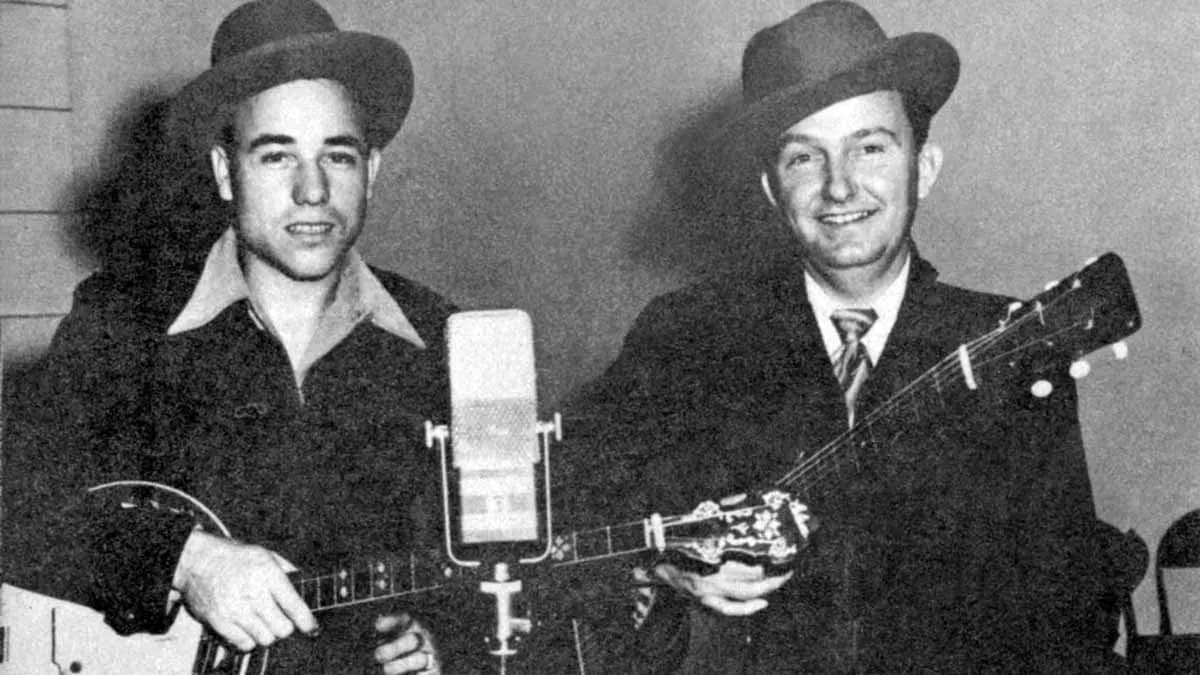
Bluegrass takes its name from Bill Monroe and his band the Blue Grass Boys, named after Monroe's home state of Kentucky, the "Bluegrass State." Sources date the band's formation to 1938 or 1939; it joined the Grand Ole Opry in 1939. The classic line-up formed in 1945, when guitarist Lester Flatt joined and banjoist Earl Scruggs followed in December. Scruggs's three-finger roll, a rapid, syncopated picking pattern now called "Scruggs style", changed the band's sound, and nearly every bluegrass banjo player since has learned it. The word "bluegrass" for the whole style is believed to date from the late 1950s.
The music drew together several older strands: the fiddle tunes and ballads of Scots-Irish settlers in Appalachia, African-American blues and banjo traditions, gospel harmony singing, and the string-band "old-time" music of the early twentieth century. Monroe sped this material up, added jazz-like improvised solos and pitched the vocals high.
Flatt and Scruggs left in early 1948 to form the Foggy Mountain Boys. Their "Foggy Mountain Breakdown", recorded in 1949, became widely known after it was used in the 1967 film Bonnie and Clyde. Through the 1950s and 1960s the Stanley Brothers, Jimmy Martin and others built the repertoire, and the folk revival brought the music to college audiences. In 2000 the soundtrack to the film O Brother, Where Art Thou? put old-time and bluegrass recordings in front of a mass audience; in 2002 it won the Grammy for Album of the Year.
Key Characteristics & Sound
You can usually identify bluegrass by these traits:
- Tempo: anything from slow waltzes to very fast breakdowns; instrumental breakdowns in particular are known for rapid tempos.
- Instrumentation: acoustic strings only (banjo, fiddle, mandolin, guitar, upright bass, sometimes resonator guitar, often called by the brand name Dobro). No drum kit.
- Banjo roll: Earl Scruggs's three-finger picking keeps a constant stream of notes under the band.
- Vocals: the "high lonesome" lead with tight two-, three-, and four-part harmonies.
- Solos ("breaks"): instrumentalists take turns improvising over the changes, jazz-style.
- Rhythm: the mandolin "chop" on the offbeat and the upright bass on the downbeat drive the groove.
A fast, all-acoustic string band with a rolling banjo, a high harmony voice and players trading solos is very likely bluegrass. The tempo ranges below are rough guides, not fixed rules:
| Style | Typical BPM | Feel |
|---|---|---|
| Traditional Bluegrass | 120–180 | Fast, driving, high lonesome |
| Bluegrass Gospel | 90–140 | Reverent, harmony-forward |
| Bluegrass Waltz / Ballad | 80–110 | Slow, mournful, lyrical |
| Progressive Bluegrass | 100–170 | Experimental, jazz- and rock-tinged |
| Newgrass | 110–180 | Extended jams, eclectic harmony |
Instruments & Production
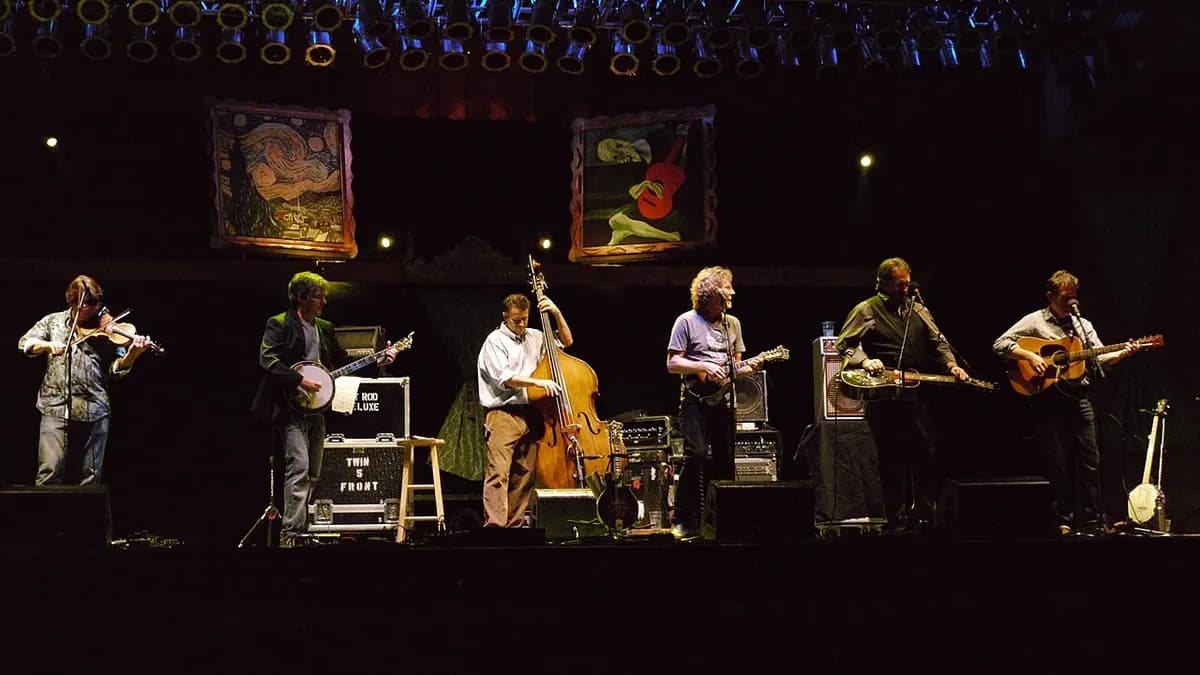
Bluegrass is defined by a fixed acoustic ensemble, with each instrument playing a specific role:
- Five-string banjo: played "Scruggs style" with three fingerpicks, providing the rapid, rolling drive.
- Fiddle: carries melodies, long bowed lines and solos rooted in old-time tunes.
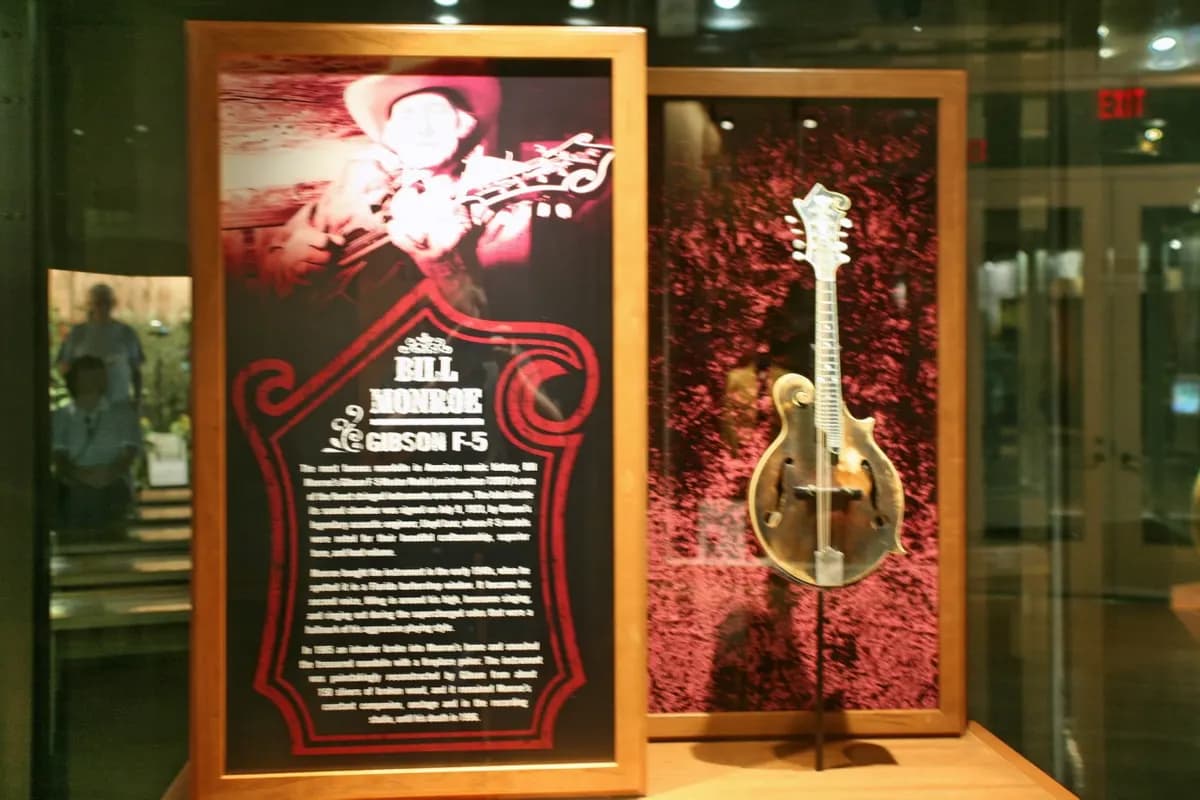
- Mandolin: Bill Monroe's instrument; plays the percussive offbeat "chop" and fast lead lines.
- Acoustic guitar: flat-picked, handling rhythm and bass runs plus melodic solos in the Doc Watson tradition.
- Upright (double) bass: plucked, anchoring the downbeat and the harmony.
- Resonator guitar (Dobro): a slide-played addition that adds a bluesy, vocal-like cry.
Classic bluegrass bands often worked around a single microphone, each player stepping in to take a solo and stepping back afterwards, and some bands still perform that way. Recordings tend to be close to a live band sound, with few studio effects. New Grass Revival brought electric instruments into the music in the 1970s and 1980s, but most progressive bands still keep the acoustic line-up at the centre.
Subgenres of Bluegrass
Bluegrass has branched into several recognisable styles:
- Traditional Bluegrass: the classic Monroe/Flatt-and-Scruggs sound: acoustic, fast, and high lonesome.
- Progressive Bluegrass: expands the harmony and instrumentation, drawing on jazz and rock.
- Newgrass: a 1970s offshoot with long improvised jams and rock and jazz material, led by New Grass Revival (formed 1971, with Sam Bush).
- Bluegrass Gospel: sacred harmony singing, often a cappella or with restrained backing.
- Old-Time Adjacent / String-Band: closer to the pre-bluegrass Appalachian tradition it grew from.
- Jamgrass: bluegrass instruments combined with the extended improvisation of jam bands, mostly heard at festivals.
Each style stays close to its neighbours: traditional bluegrass borders country and old-time folk, while its blues-derived phrasing and slide guitar link it to the blues.
Bluegrass vs Country vs Old-Time
Bluegrass is easy to confuse with mainstream country and with the old-time string-band music that preceded it. All three share Appalachian roots, but the sound and approach differ:
| Trait | Bluegrass | Country | Old-Time |
|---|---|---|---|
| Origin | 1940s, codified by Bill Monroe | 1920s onward, Nashville | Pre-1940s Appalachia |
| Instruments | Acoustic strings, no drums | Guitars, drums, often electric | Fiddle & banjo, communal |
| Solos | Improvised individual 'breaks' | Arranged, song-serving | Ensemble, few solos |
| Vocals | High lonesome, tight harmony | Lead-focused, storytelling | Group or simple lead |
| Tempo | Often fast, 90–180 BPM | Moderate, 80–140 BPM | Steady, dance-driven |
Notable Artists & Tracks
Foundational and influential bluegrass acts include:
- Bill Monroe: "Blue Moon of Kentucky," usually called the father of bluegrass.
- Flatt & Scruggs: "Foggy Mountain Breakdown," "The Ballad of Jed Clampett."
- The Stanley Brothers: "Man of Constant Sorrow," high-lonesome pioneers.
- Jimmy Martin: "the King of Bluegrass," known for driving rhythm and clear tenor.
- Doc Watson: a flat-picking guitar master who bridged bluegrass and folk.
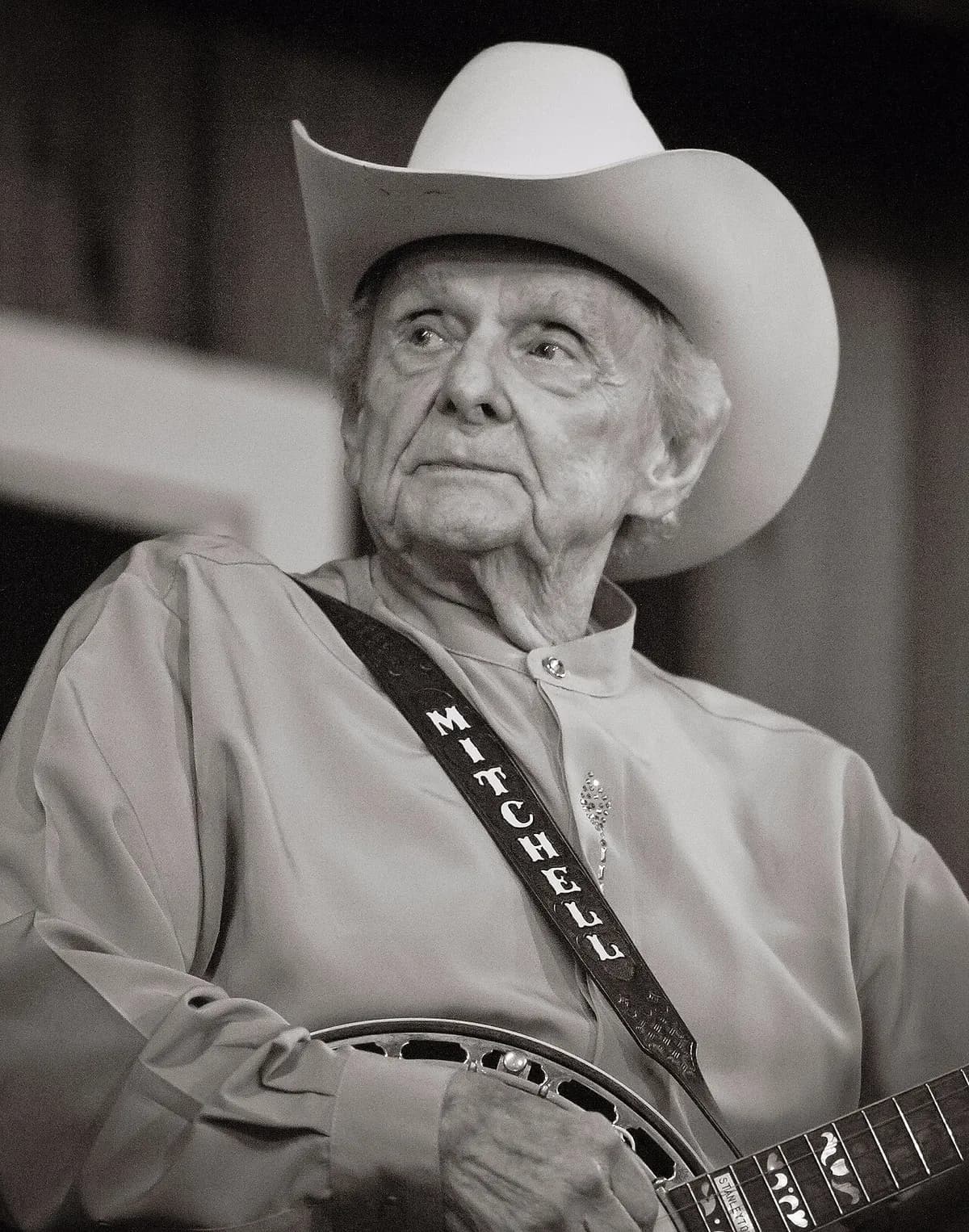
- Ralph Stanley: "O Death," from the O Brother, Where Art Thou? soundtrack, which won him his first Grammy in 2002 at 75.
- Del McCoury, Tony Rice, and Béla Fleck: from the traditional side to the progressive one.
- Alison Krauss: "When You Say Nothing at All," number three on Billboard's Hot Country Songs in 1995.
Start with "Blue Moon of Kentucky," "Foggy Mountain Breakdown," and "Man of Constant Sorrow" to hear the genre's foundations.
How AI Detects Bluegrass Music
The audio cues of bluegrass are the rapid three-finger banjo roll, the percussive mandolin chop, bowed fiddle lines, the woody attack of an upright bass and high, stacked vocal harmonies, usually with no drum kit at all. Genre AI compares a clip with text descriptions of its genre labels and returns a ranked list of labels with scores.
The production taxonomy has no bluegrass label. The closest is the coarse Folk / Country label, which splits into two fine labels, Folk and Country, so a bluegrass recording will likely come back as one of the two. One oddity to know about: the word "mandolin" appears among the text prompts of the Breakbeat / Drum & Bass label, so on a mandolin-heavy tune the model may occasionally pick Electronic Dance as the main answer for no musical reason. Try a clip in the Genre AI music genre detector and compare a fast breakdown with a slow gospel number. If you want the theory underneath that call, read our breakdown of how AI music genre detection works.
Genre AI has no bluegrass label, so the answer for a bluegrass track will be the coarse Folk / Country label with either Folk or Country as the fine label. Which one wins is hard to predict: an all-acoustic string band with banjo, mandolin and fiddle sits between the two descriptions. Electric guitar, drums and a slower tempo are likely to push the result toward Country; a softer, banjo-free song with a single voice is more likely to read as Folk. The alternatives shown under the result can only be the other of those two. Singer / Songwriter and Blues have no fine subgenres, so they rarely come up at all.