
Rock and roll is the American genre that appeared in the early 1950s, when rhythm and blues, boogie-woogie and country met on the same records: a hard backbeat, a 12-bar form and songs about being young. Everything filed under rock today descends from a set of singles cut between 1951 and 1959.
This guide covers where the music came from, what makes it recognisable in two bars, why the classic era ended so abruptly, and how "rock and roll" differs from the broader category "rock." Curious what a model makes of a 1956 single? Try a few seconds in our free AI music genre detector.
What Is Rock and Roll?
Rock and roll is up-tempo popular music, usually 140–180 BPM and under three minutes, built on a 12-bar blues or simple I–IV–V progression with a heavy accent on beats two and four (the backbeat). Underneath runs a boogie-woogie eighth-note bassline, borrowed from 1940s jump blues and played on upright bass, the piano's left hand or guitar. The singers shout more than they croon, and the lyrics are about cars, dancing, school and sex, in the language teenagers actually used.
The term is used in two ways, and the difference matters. In the narrow sense, rock and roll means the 1950s style described here. Rock means the much larger family that grew out of it after 1964, once the British Invasion, the album format and louder amplification changed the music. A Chuck Berry single is rock and roll; a Led Zeppelin album is rock.
History & Origins
Nobody invented rock and roll in one go. Its ingredients (rhythm and blues, boogie-woogie, jump blues, gospel, country and western swing) were all in place by the late 1940s, sold in racially segregated markets. What changed in the early 1950s was distribution: radio and the 45 rpm single put Black rhythm and blues records in front of white teenage buyers in large numbers for the first time.
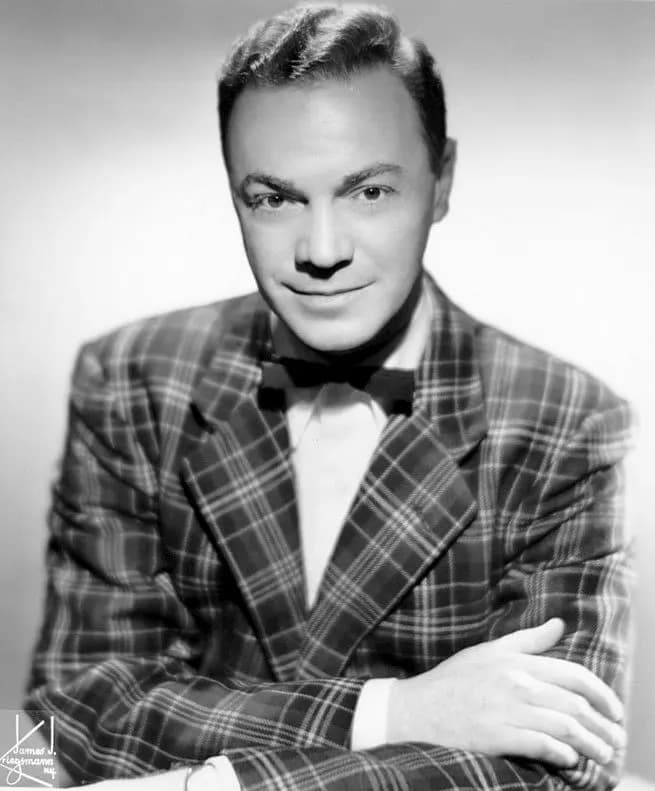
The Cleveland DJ Alan Freed popularised the name. From 1951 his Moondog House show on WJW played R&B to a mixed audience, and he used the phrase "rock and roll", older slang borrowed from blues lyrics, to sell the music without the racial coding the R&B label carried.
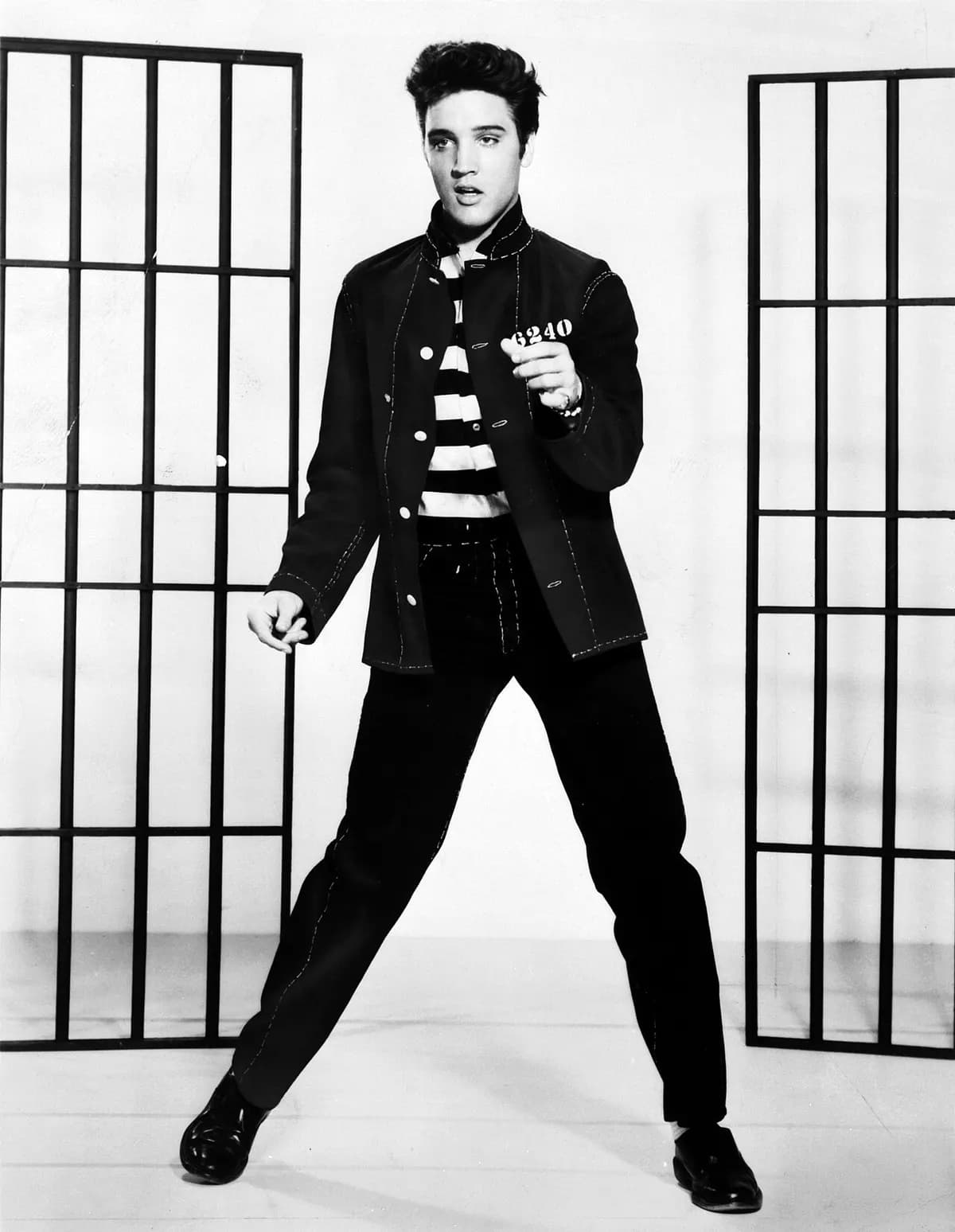
The argument over the first record will never be settled. "Rocket 88" (1951), credited to Jackie Brenston and his Delta Cats but played by Ike Turner's Kings of Rhythm, was cut at Sam Phillips's Memphis Recording Service with a damaged amplifier stuffed with paper, which gave it a distorted sound; it went to number one on the Billboard R&B chart and has the strongest claim. Bill Haley & His Comets' "Rock Around the Clock" (1954) topped the Billboard pop chart in July 1955 after it played over the opening credits of Blackboard Jungle. And in July 1954 a young truck driver named Elvis Presley recorded "That's All Right" at Sun, singing Arthur Crudup's blues song with country phrasing.
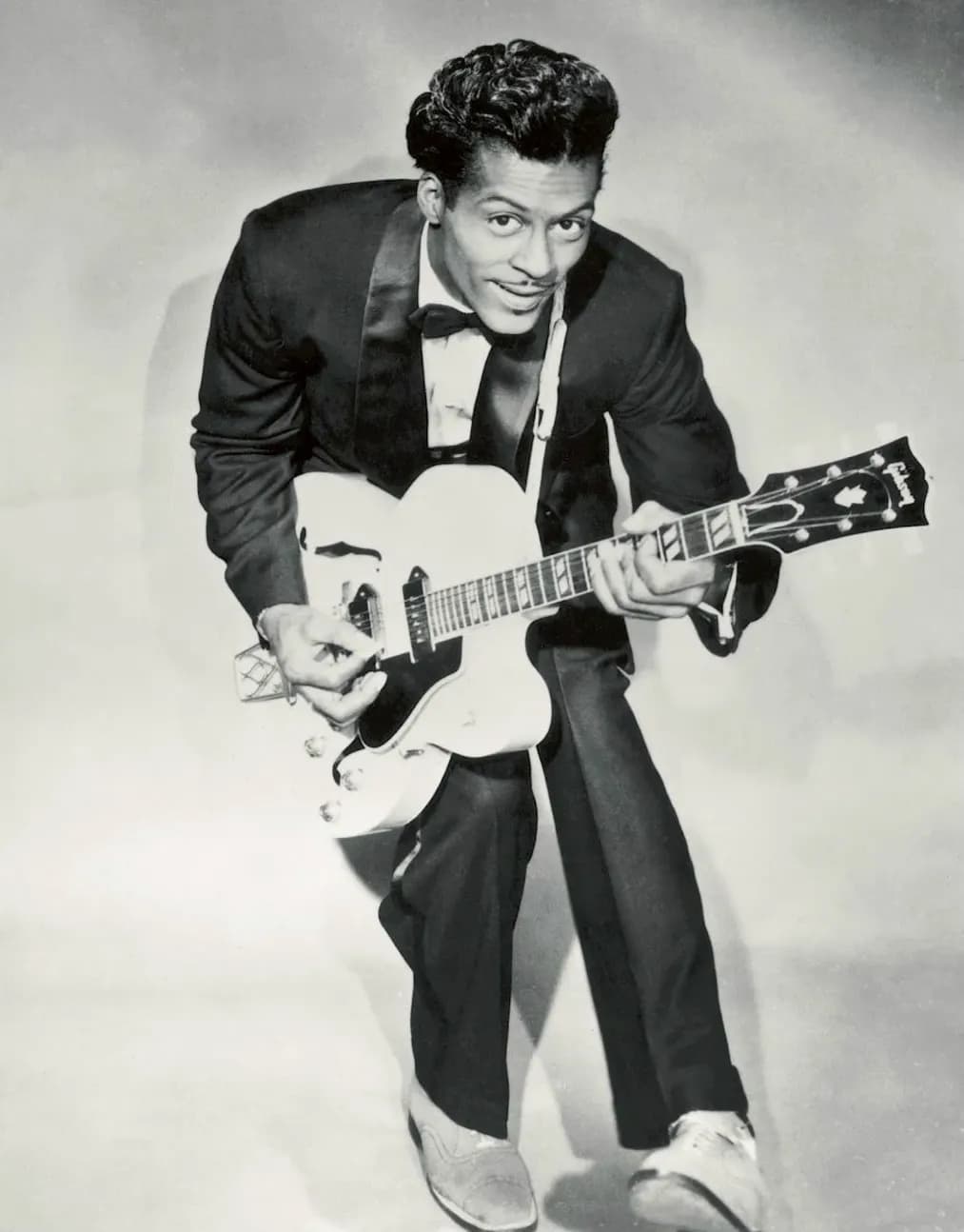
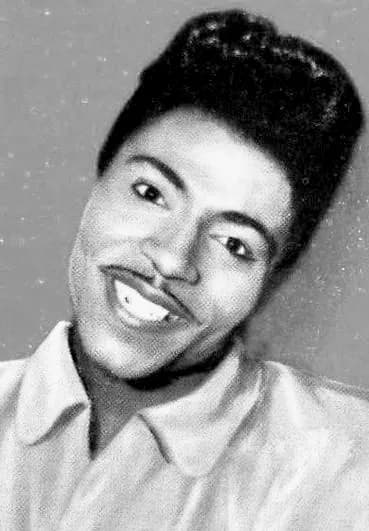
1955–1958 is the classic era. Chuck Berry sets out the guitar language of double-stop intros and boogie riffs ("Maybellene", "Johnny B. Goode"); Little Richard pushes voice and piano as hard as they will go ("Tutti Frutti", "Long Tall Sally"); Fats Domino brings New Orleans rhythm; Bo Diddley contributes a beat so distinctive it carries his name. Jerry Lee Lewis, Buddy Holly, the Everly Brothers and Elvis, now at RCA, make it the main sound of American youth. Independent labels made most of it: Sun in Memphis, Chess in Chicago, Specialty in Los Angeles.
The first era ended within a few years. Little Richard quit for the ministry in 1957; Elvis was drafted in 1958; Jerry Lee Lewis's career collapsed that year after he married his 13-year-old cousin; Chuck Berry was arrested in 1959 and later jailed; Alan Freed was brought down by the payola scandal; and on 3 February 1959 a plane crash killed Buddy Holly, Ritchie Valens and the Big Bopper. What followed was smoother, more managed teen pop, until the Beatles and the Rolling Stones sold America its own music back in 1964 and the rock era began.
Key Characteristics & Sound
The elements that make a record sound like 1956:
- Tempo: 140–180 BPM for the up-tempo material; ballads sit near 70–90 BPM with a triplet feel.
- Form: 12-bar blues or I–IV–V, verse and chorus, one instrumental solo, all done in two and a half minutes.
- Backbeat: snare hard on two and four. This is the rhythmic definition of the genre.
- Bassline: walking or boogie eighth notes, on upright bass or the piano's left hand.
- Feel: shuffled and swung early on, straightening toward even eighths by 1958.
- Solos: tenor saxophone at first, then more and more electric guitar after Chuck Berry.
- Vocals: shouted, gospel-derived, with call-and-response backing.
- Recording: mono, live in a room, with slapback echo (the Sun Studio sound).
How it sits against its parents and children:
| Trait | Rock and Roll | Rhythm & Blues (1940s) | Rockabilly | Rock (post-1964) |
|---|---|---|---|---|
| Era | 1951–1960 | 1940s–1950s | 1954–1959 | 1964–present |
| Tempo | 140–180 BPM | 120–160 BPM | 150–190 BPM | 90–160 BPM |
| Lead instrument | Sax, then guitar | Saxophone, piano | Guitar, slap bass | Electric guitar |
| Rhythm feel | Shuffle to straight | Shuffle | Straight, driving | Straight |
| Format | 45 rpm single | 78 / 45 single | Single | Album |
| Amplification | Modest | Modest | Modest | Loud, distorted |
Instruments & Production
A rock and roll band in 1956 was small, and every part had a job:
- Electric guitar: hollow-body Gibsons such as Chuck Berry's ES-350T, later the Fender Telecaster and Stratocaster, lightly overdriven, playing double-stops and boogie patterns.
- Upright bass: slapped for percussive attack; electric bass takes over toward the end of the decade.
- Piano: pounding boogie left hand and glissandi, and most of the personality of Little Richard and Jerry Lee Lewis records.
- Tenor saxophone: the lead solo instrument of the early years, inherited from jump blues.
- Drums: small kit, brushes or sticks, with the backbeat up front.
- Slapback echo: Sam Phillips's tape-delay trick at Sun, the most recognisable production sound of the era.
Everything was cut live to mono tape in one room, usually in a few takes. The limits are audible and part of why the records sound urgent: no overdubs to fix a performance, no separation between instruments, and a running time set by what fitted on one side of a single.
Subgenres & Related Styles
The immediate family:
- Rockabilly: the country-facing branch, with slap bass, echo and no saxophone (Carl Perkins, Gene Vincent, early Elvis).
- Doo-wop: vocal-group harmony from the same years, sharing charts and audiences.
- Rhythm and blues: the direct parent, and the market rock and roll records were first sold into.
- Surf rock: the instrumental, reverb-heavy early-1960s offshoot (Dick Dale, The Ventures).
- Garage rock: the amateur mid-1960s reaction, later the model for punk.
- British Invasion: the 1964 return trip that turned rock and roll into rock.
- Blues: the harmonic and formal source of nearly all of it.
Notable Artists & Tracks
The essential singles:
- Jackie Brenston & his Delta Cats: "Rocket 88" (1951).
- Bill Haley & His Comets: "Rock Around the Clock" (1954).
- Chuck Berry: "Maybellene" (1955), "Johnny B. Goode" (1958).
- Little Richard: "Tutti Frutti" (1955), "Long Tall Sally" (1956).
- Elvis Presley: "That's All Right" (1954), "Hound Dog" (1956).
- Fats Domino: "Ain't That a Shame", "Blueberry Hill".
- Bo Diddley: "Bo Diddley" (1955).
- Jerry Lee Lewis: "Great Balls of Fire" (1957).
- Buddy Holly & The Crickets: "Peggy Sue", "That'll Be the Day".
- The Everly Brothers: "Bye Bye Love", "Wake Up Little Susie".
If you hear only three: "Rocket 88" for the beginning, "Tutti Frutti" for the energy, and "Johnny B. Goode" for the guitar intro that rock players still learn first.
How AI Detects Rock and Roll
1950s rock and roll gives a classifier two strong, unusual cues. The first is the recording itself: mono or narrow stereo, limited bandwidth (little content below 80 Hz or above 12 kHz), audible tape noise and slapback echo. The second is rhythm: a shuffled subdivision with a hard backbeat, plus a walking or boogie bassline that later genres rarely use.
The ambiguity comes from the genre's parents. Rock and roll, jump blues, early rhythm and blues and rockabilly were often played by the same musicians in the same rooms, so a model may return blues, R&B or country alongside rock, and each of those is defensible for a given record. Test it in the Genre AI music genre detector.
Testing this style in Genre AI ourselves, Rock and Roll is one of the few genres where the era gives itself away before the style does. The narrow, midrange-heavy mono of a 1956 master is easy to spot, and the model reliably returns Rock with Blues close behind. Instrumentation shifts the reading: piano-led records pull Blues and Soul up, saxophone-led records pull Jazz up, and guitar-led Chuck Berry material sits most cleanly on Rock. A modern re-recording of the same song in the same style, cut with full bandwidth, loses most of that certainty, a reminder that a classifier hears the recording as well as the music.